Free drug paraphernalia cleanup tool
Drug Paraphernalia Cleanup Waste & Disposal Classifier
Five questions about the material point to the likely waste category and which authority to confirm the rules with.
One scene with drug items can create three or four kinds of waste. Mixing them up is where people get hurt. The Waste and Disposal Classifier asks five questions about the item in front of you. Is it a needle or something else that can poke through skin? Is it wet with blood or another body fluid? Does it hold, or is it coated with, an unknown powder or liquid? Is it a soft material like carpet or a seat cover that soaked something up? Did it come from a home, a business, a motel, or a vehicle? From those answers, it suggests a likely category. It might be sharps, regulated medical waste, hazardous waste, or regular trash. It also names the kind of office that should confirm it.
The result is a starting point for a talk with a company or a regulator, not a ruling. Needle rules, medical waste definitions, and rules for homes versus businesses vary by state and county. So check with the local authority before anything leaves the property. The classifier is most useful for gray areas. One is a baggie with residue that might be regular trash, or might need to be checked as hazardous waste. Another is a mattress with a small stain. Another is a pile of foil and pipes that seems harmless until you see a needle in the middle of it. Working through the questions also builds a good habit: never let anything go loose into a dumpster.
How to use it
- 1Describe one type of item at a time, not the whole pile, since each one may go a different way.
- 2Answer the five questions based on what you can see without touching or moving anything.
- 3Read the likely category and the office named. Confirm the route with your company or the local agency before anything is thrown out.
- 4Repeat for each distinct material and keep the results with your incident file.
Prefer to ask a person?
Your request is sent to the follow-up inbox. A coordinator can reply by email. Not for emergencies; call 911 first if anyone is in danger.
Work out the likely waste path
Drug Paraphernalia Cleanup waste and disposal classifier
Points you to the likely waste category and who confirms the rule. State and local definitions control; verify before anything leaves the property.
Likely regulated medical waste (biohazard)
- Materials saturated with blood or other potentially infectious material, or that would release liquid if compressed, are treated as regulated medical waste in most states.
- Packaging usually means red bags inside rigid containers, labeled with the biohazard symbol, and a licensed transporter with a manifest.
Who confirms the rule
- State health or environmental agency (regulated medical waste program)
- The remediation provider, who should name the transporter and treatment facility in writing
This is an educational sorting aid, not a regulatory determination. Waste rules vary by state and county.
A worked example
Imagine this made-up scene. A maintenance lead at an apartment complex checks an empty unit. She finds a coffee can with used needles and a pile of foil and glass pipes. There is a sandwich bag with white powder in the corner and a stained patch of carpet near the mattress. She runs each item through the classifier on its own. The needles get yes for poking through skin and yes for possible body fluid contact. The tool points to sharps handling on the regulated medical waste path. It names the state environmental or health agency as the one to confirm. The foil and pipes get no for poking, no for fluids, and unsure for residue. The tool says they are likely regular trash once handled with gloves. But it flags that any powder on them changes the picture. The bag of powder gets yes for unknown substance. The tool points to a hazardous waste check, and maybe police, before disposal. The carpet gets yes for soft material and yes for possible fluids. That leads to regulated medical waste if body fluids are confirmed. She hands all four results to the cleanup company. She asks it to confirm each route in writing before the unit is emptied.
Facts worth knowing
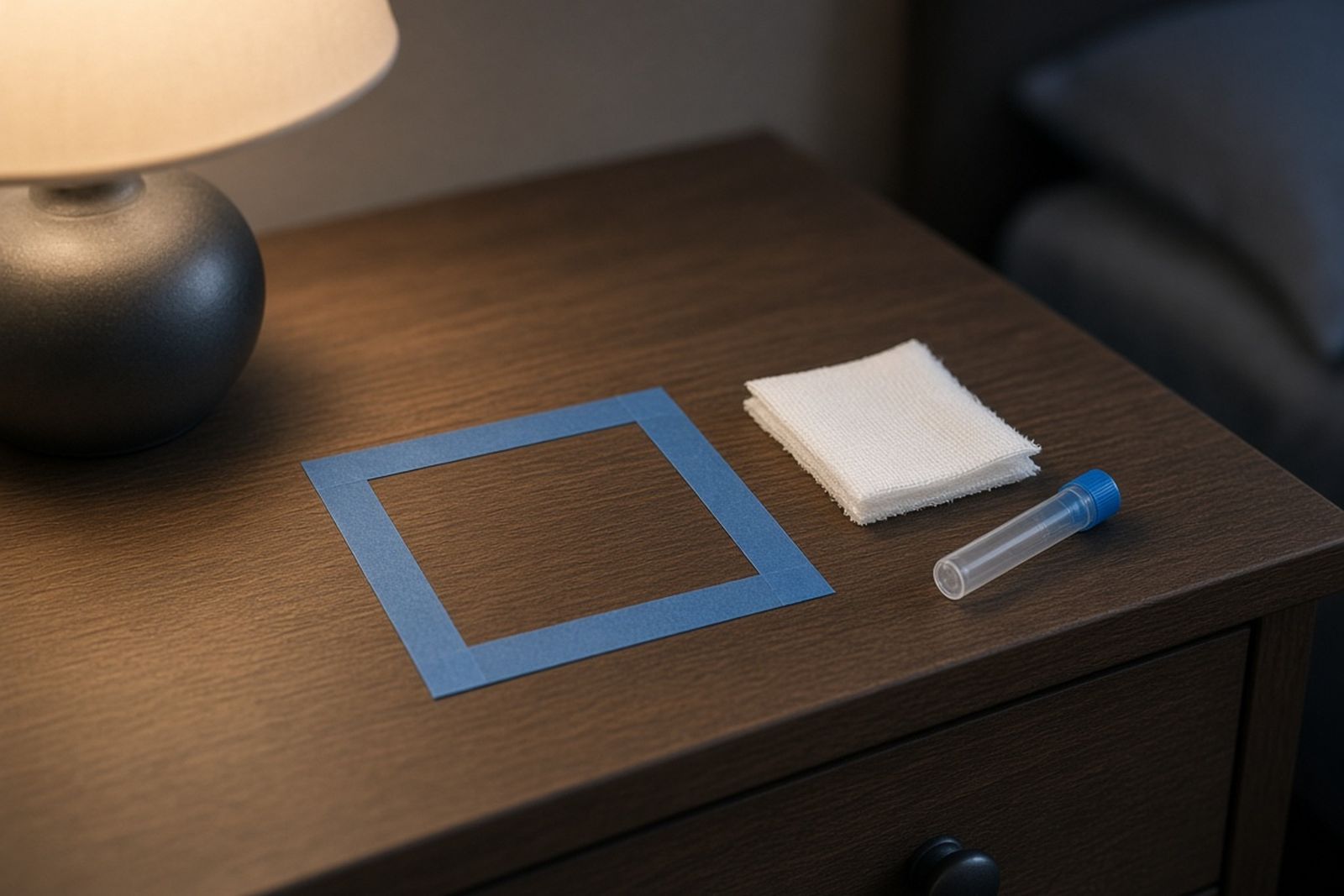
Washington's health department advises hiring a decontamination contractor if fentanyl residue is above 1 microgram per 100 square centimeters of surface.
Why it matters: If your test results come back above this level, cleaning it yourself may not be advised; ask a qualified contractor.
As of 2021, EPA said there were no state or federal standards for deciding when a closed fentanyl lab site has been cleaned well enough.
Why it matters: Ask your cleanup company what level it cleans to and how it will show you the result with testing.
EPA says homeowners can usually handle moldy areas smaller than about 10 square feet themselves, while larger areas call for professional guidance.
Why it matters: Measure the moldy area before you decide; this rule does not cover sewage or biohazard contamination, which needs different handling.
Waste & Disposal Classifier questions for drug paraphernalia cleanup
Are used pipes and foil considered hazardous waste?
Usually not on their own, but the residue on them can raise the question. A pipe with powder you can see, or foil with a heavy deposit, may need to be checked rather than tossed. Rules vary by state and county, so check with the local authority. In practice, companies often bag these items apart from regular trash and write down the choice.
What makes something regulated medical waste in this setting?
Contact with blood or other body fluids is the usual trigger. Examples are a needle used to inject, a towel used to stop bleeding, or a soaked piece of mattress from an overdose scene. These usually follow the regulated path. That means special containers, labels, and a licensed hauler. The exact rules depend on the state, so confirm with the environmental or health office.
Can I put a syringe in a sharps container and take it to a pharmacy?
Some towns have drop-off programs for household needles, and a single needle from a home may qualify. Needles from a business, a motel, or a rental turnover are often treated as business waste with different rules. That is why the classifier asks where the waste came from. Check the program's rules before you carry anything anywhere. Never carry needles loose.
What should I do with a bag of unknown powder?
Leave it exactly where it is. Do not open, move, or smell it. The classifier will point toward a hazardous waste check. But in many cases the first call is to police, not a waste hauler, because the powder may be evidence or an illegal drug. A cleanup company will usually leave it to police when there is more than a trace.
Who verifies the category the tool suggests?
The tool names the kind of office to ask. For medical and hazardous waste, that is usually the state environmental agency or health department. For regular trash rules, it is the local solid waste office. For illegal drugs, it is the police. Your cleanup company should already know these routes. It should write the chosen category for each item on your disposal record.
What if one item seems to fit more than one waste category?
Use the stricter category. For example, a broken glass pipe with blood on it is both a possible sharp and a blood-soiled item. So it goes in a hard container on the regulated path. The classifier is built to show the safer answer when categories overlap. Ask your company to list mixed items on their own lines in the disposal record, so the choice is on paper.
Does the classifier work for waste from a vehicle cleanup?
Yes. Choose vehicle as the setting and answer the questions for each material, such as floor mats, seat covers, loose debris, and any sharps. Vehicle waste often includes porous items like headliner fabric or seat foam that absorbed residue or fluids. If the vehicle belongs to a business or fleet, the waste may be treated as commercial, which can change the route. Confirm locally before anything leaves the site.
Related community polls
Vote to see how other people answered. You can change your answer at any time.
You open a vacated rental and see foil, a pipe, and one syringe. What is your first move?
Which hazard worries you most in a unit with drug debris?
Other drug paraphernalia cleanup tools
Cost Range Estimator
Set the affected area, surface types, severity and extras to see a rough cost range and what pushes it up or down.
OpenCompany Vetting Checklist
Fifteen questions to ask any cleanup company, a score that shows how ready you are to hire, and a list of what is still unanswered.
OpenInsurance Claim Organizer
A guided checklist from finding the policy to tracking the insurer’s decision, with a printable summary of where the claim stands.
OpenFirst 24 Hours Planner
Tell the planner a few facts about the situation and get an ordered list of who to call, what not to touch, and what to photograph.
OpenDIY or Call a Pro? Risk Check
Eight yes-or-no questions that produce a risk level and explain when professional help is the safer choice.
OpenMore on drug paraphernalia cleanup
Drug Paraphernalia Cleanup services
See how needle pickup, residue cleaning, vehicle work, and turnover paperwork fit together, and what to expect from a company on site.
Costs explained
What drives the price, published cost ranges, and how to read a written quote line by line.

Insurance and payment
Which policies may respond, how to document a claim, and what to do if coverage is denied.
Community polls
Compare your gut calls with other owners and managers on police reports, what to tell tenants, who pays, and when lab testing is worth it.
Knowledge quiz
Test whether you would make the safer call when you find foil, pipes, syringes, or unknown powder, then review the study guide.
Articles and resources
Read longer articles on getting a unit ready after drug use, safe cleaning when fentanyl may be present, and how to tell drug use from drug making.