Emergency Vehicle Decon for Ambulance, Fire, and Police
Practical guidance for getting a soiled unit cleaned and back in service.
This page is for EMS supervisors, fire officers, police fleet managers, and private ambulance operators. It covers what to do when a unit comes back soiled, what a decon crew does, how cost is handled, and how to pick a company.
Get an email reply about emergency vehicle decontamination
Send a short message to the follow-up inbox. A coordinator can reply by email. This form does not send emergency help; call 911 first if anyone is in danger.
A unit came back soiled. What comes first?
Take care of the crew, then the vehicle. These steps keep the unit from going out before it is ready.
- 1Mark the unit out of service with dispatch and hang a tag on the steering wheel so no one takes it by mistake.
- 2If a crew member had a needle stick or got blood in the eyes, mouth, or broken skin, wash the area right away. Report it to your designated infection control officer and get a medical check the same shift.
- 3Park the unit in a bay or lot spot away from clean units, with room to open every door. Keep waste bins and a sharps container close.
- 4If investigators may need the vehicle, such as after an in-custody death or a shooting, leave it as it is until they release it.
- 5Take photos of the soiled areas and note the run or case number, the type of fluid, and which seats, straps, and cabinets were involved.
- 6Call your in-house decon team or outside company and share those notes. Say whether the patient had a known infection, if that was shared through proper channels.
Call 911 if anyone is hurt. For a splash of cleaning product in the eyes or mouth, Poison Control is at 1-800-222-1222. Crew members shaken by a hard call can reach the 988 Suicide and Crisis Lifeline by call or text.
Want this as a checklist for your situation? Try the first 24 hours planner.
What is emergency vehicle decontamination?
It is a deep cleaning and disinfecting of a vehicle's patient area, cab, or rear seat after blood, vomit, or other fluids, or after a patient with a known infection. People in EMS often call it a terminal clean. That means going past the quick wipe done between calls to reach every surface, strap, and seam before the unit goes back out.
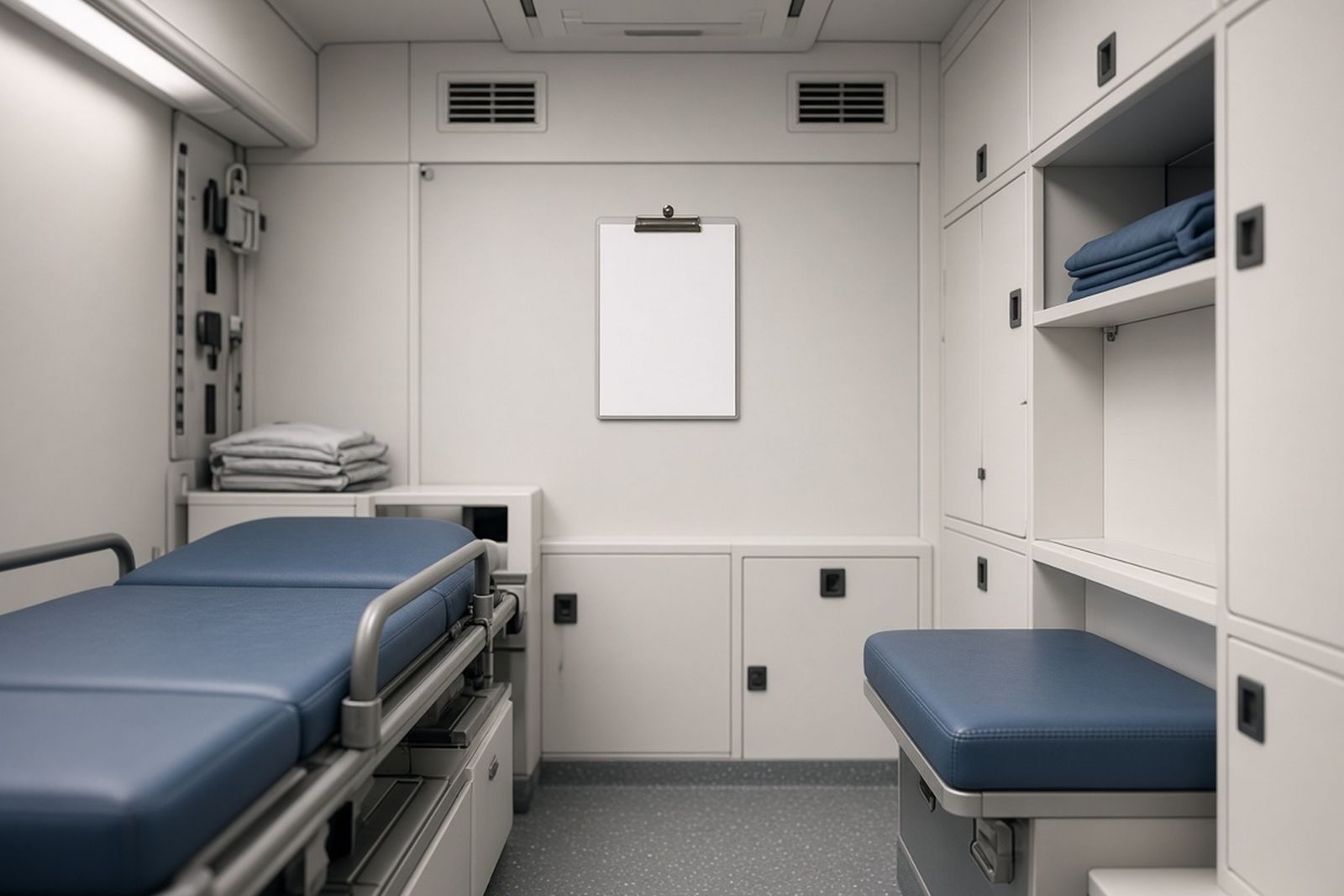
Vehicles are hard to clean well. Patient compartments are packed with cabinets, rails, mounts, and seat belts, and fluids slide into tracks and gaps. Many surfaces are vinyl, rubber, or touchscreens that some products can damage. A good crew knows which products are safe for each material and which items must be replaced instead of wiped.
Ambulance services, fire departments, sheriff's offices, police departments, and hospital transport teams all use this work. Some call for it after a single messy call. Others set up a regular schedule for the whole fleet. It is different from a car wash or detailing shop, which is not set up for body fluids or medical waste.
Each type of work is explained step by step on the emergency vehicle decontamination services page.
Photos
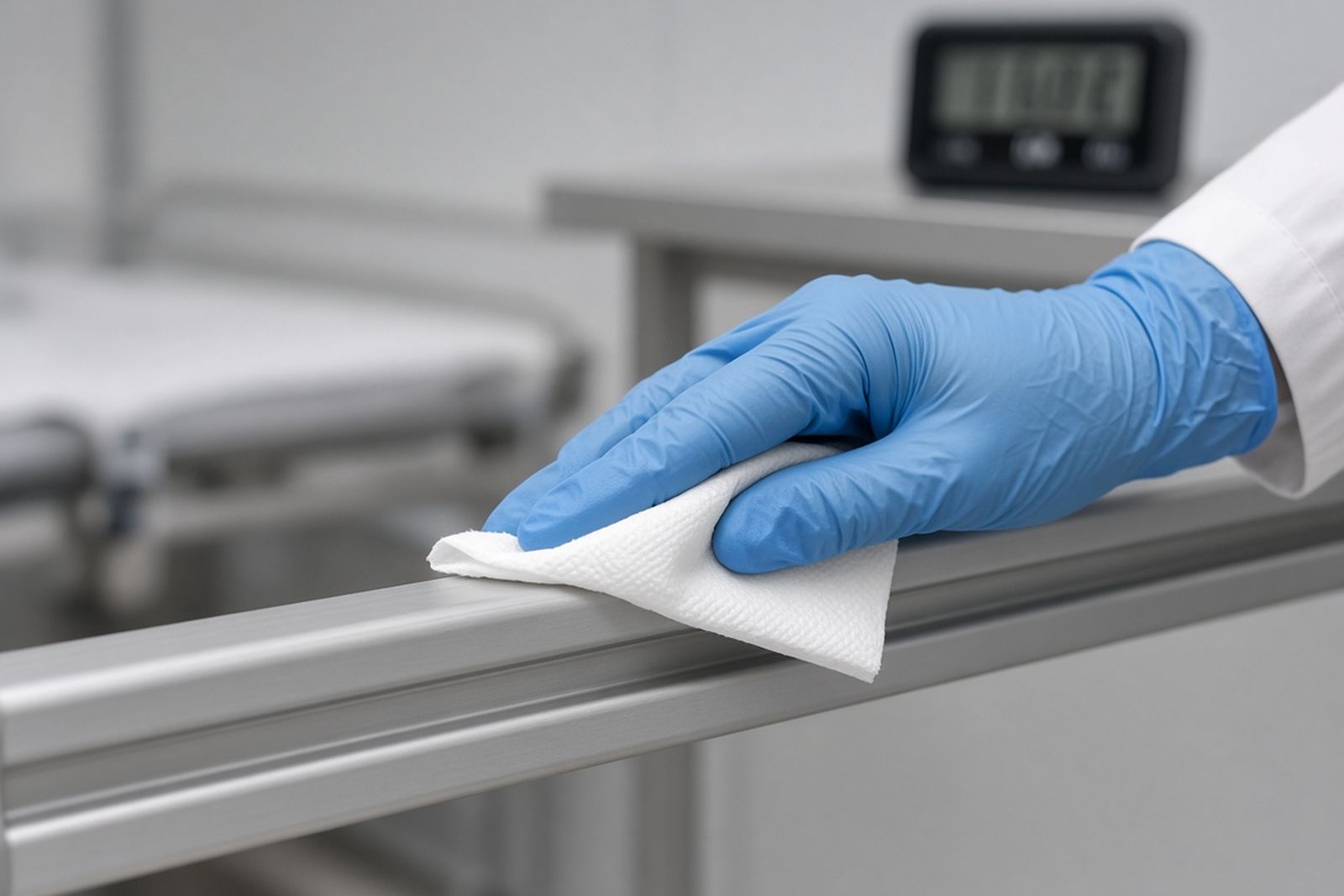
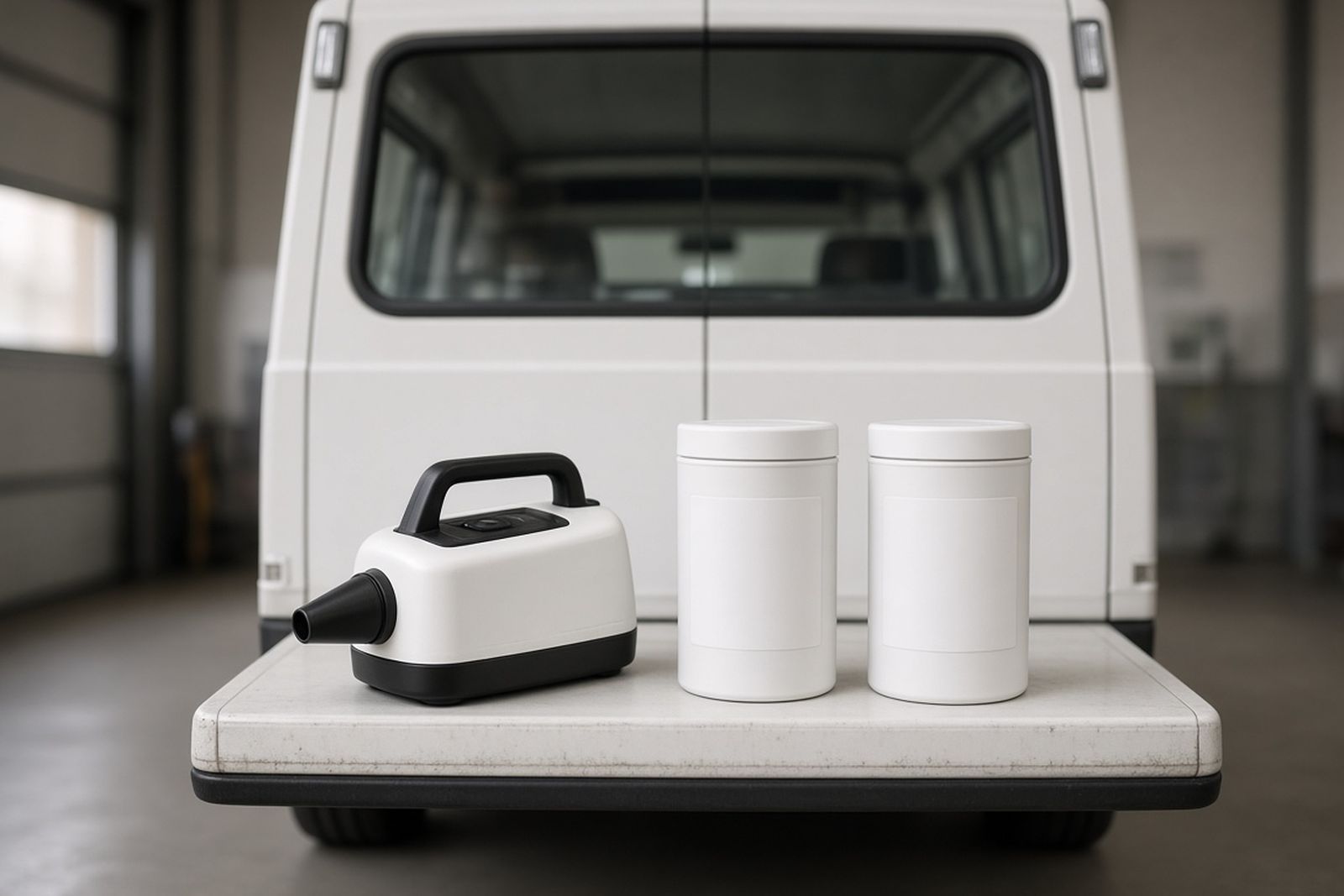
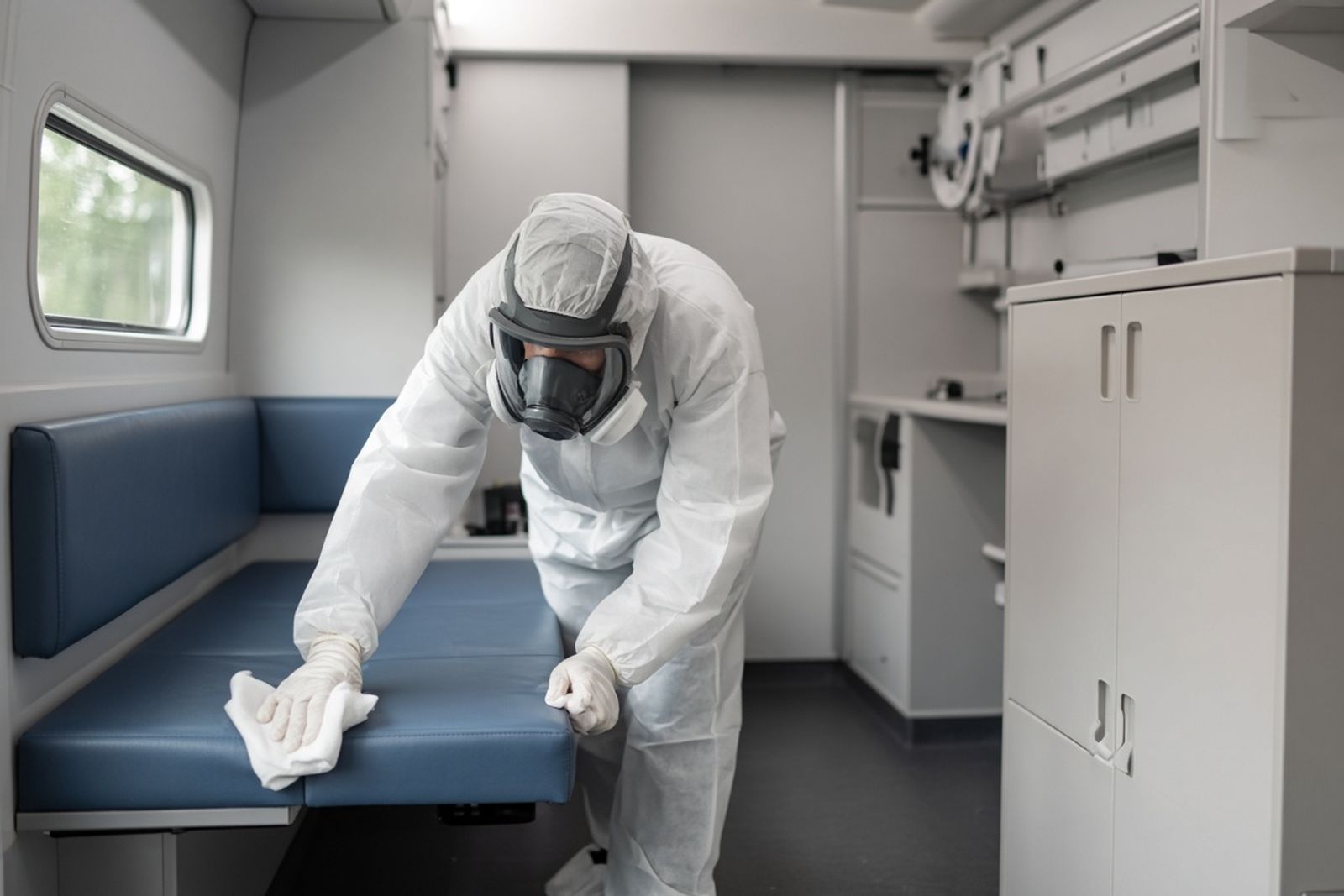
These photos are stock-style illustrations of vehicle decon work, not images from real calls.
How does a terminal clean usually go?
Crews follow a steady order so nothing gets missed. Knowing it helps you check the unit when it comes back.
- 1
Strip the unit
Portable equipment, bags, linens, and loose items come out. Clean gear is set aside so it stays clean.
- 2
Remove visible soil
Blood, vomit, and other fluids are picked up with absorbent pads and disposable cloths. The crew checks under cabinets, in seat tracks, and around the stretcher mount.
- 3
Clean and disinfect
Surfaces are cleaned first, then disinfected from the ceiling down and from clean areas toward dirty ones. Each surface stays wet for the time on the product label.
- 4
Decide on soft goods
Straps, cushions, and mattress covers are checked for tears and soaking. Anything that cannot be cleaned through is bagged and listed for replacement.
- 5
Handle waste and sharps
Soiled items go into medical waste bags, and sharps go into a hard container. The bay is left clear for the next shift.
- 6
Log and hand back
The crew records the unit number, times, and products used. Your supervisor then checks the unit and puts it back in service.
Facts worth knowing
In five South Korean ambulances, all six high-touch surfaces tested were contaminated before daily disinfection, and the air vents carried the most bacteria.
Why it matters: Ask whether air vents are part of your daily cleaning routine, since this small study found the highest counts there.
Source: International Journal of Emergency Medicine (PMC), 2025
In a study of 20 ambulances at two US agencies, 60% of ambulances marked ready for service still had at least one of the germs tested for.
Why it matters: A ready label may not mean germ-free, so ask how your crews check that cleaning between calls actually worked.
In one ambulance test, a harmless tracer germ spread from the starting surfaces to 27 of 48 other spots checked.
Why it matters: Germs can travel well beyond the visible mess, so ask that the whole cab and patient area of your vehicle be cleaned.
What does it cost, and who pays?
Price depends on how much fluid there was and how far it spread. Blood that stayed on the floor is quicker than blood that ran under cabinets or into a seat seam. Replacing a stretcher mattress, straps, or seat covers adds parts cost. Travel to your station, after-hours work, and the number of units in a program also change the total.
Most agencies treat routine decon as an operating cost. For a big event, check with your risk manager, since many public agencies are self-insured or belong to a risk pool rather than buying regular auto coverage. If another party caused the contamination, such as in a crash, their insurer may be asked to pay. Crew exposure is handled separately through workers' compensation.
Keep the run or case number, photos, the decon log, and the invoice together. Add a list of soft goods replaced with part numbers and the hours the unit was out of service. Those records support budget requests, risk pool claims, and any later questions from an accrediting body or state EMS office.
How do you pick a decon company?
A good company fits your infection control policy instead of bringing its own shortcuts. Ask these first.
Questions to ask
- Which products will you use, and are they safe for our vinyl, monitors, and touchscreens? Ask them to check the vehicle and equipment makers' cleaning guides.
- What is the wet time for each product, and how does your crew track it? The label sets that number.
- Can you work at our stations, and how will waste leave the bay? Moving a soiled unit to a shop adds risk and downtime.
- How do you decide whether a mattress, strap, or seat can be cleaned or must be replaced? Torn covers let fluid soak in.
- Will you follow our infection control officer's policy and use our log format? Records should match your own system.
- Have your workers been offered the hepatitis B vaccine and passed background checks? Police and fire facilities often require both.
Warning signs
- Uses scented sprays to hide odor instead of finding the source.
- Cannot tell you how long a product must stay wet.
- Leaves no written record for the unit.
- Pushes to return the unit before surfaces dry as the label directs.
Checking a company you already have in mind? Work through the provider vetting checklist.
What can your crews handle in-house?
Crews already wipe down high-touch areas between calls, and that is the right thing to keep doing. Many agencies also do their own terminal cleans when staff are trained, have time, and have the right products. Clear written triggers help crews know when a unit needs more than a wipe.
An outside crew makes sense when fluid has spread into hard-to-reach places, when staff are short, or when a unit still smells after cleaning. It also suits a large fleet that needs the same records at every station.
Usually fine to do yourself
- Wipe high-touch surfaces between calls with your agency's approved disinfectant, following its label.
- Bag soiled linens and disposable items under your agency's waste policy.
- Place visible sharps in the unit's sharps container with tongs or a scoop, never bare hands.
Leave to a trained crew
- Fluids that ran under cabinets, into seat seams, or along floor tracks.
- Soaked stretcher mattresses, cushions, or seats with torn covers.
- Odor that returns after a normal cleaning.
- Fluids that may have reached the air vents or cabin air system.
Not sure where your situation falls? The DIY risk check asks eight yes-or-no questions.
Free emergency vehicle decontamination planning tools
Cost Range Estimator
The price of a deep clean on an emergency vehicle depends on things a home cleanup estimate never looks at.
Company Vetting Checklist
Picking a vendor to clean emergency vehicles is not like hiring a car detailer or a general biohazard company.
Insurance Claim Organizer
Paying for a vehicle clean is rarely as simple as filing a claim.
First 24 Hours Planner
The first day after a unit comes back very dirty is a string of small choices.
Waste & Disposal Classifier
One deep clean can make a surprising mix of waste.
DIY or Call a Pro? Risk Check
Every station has done its own cleaning at some point.
What would you do?
Vote to see how other people answered. You can change your answer at any time.
After a bloody transport, what usually decides whether your unit gets a full deep clean?
Who performs terminal cleans on your fleet most of the time?
How do you decide whether a stretcher mattress or seat cushion is replaced rather than cleaned?
Common questions about emergency vehicle decontamination
Does the patient's illness change how the unit is cleaned?
Sometimes. Most blood and fluid calls follow the same steps. Some germs call for a product whose label lists them, and a few, like C. diff spores, need a product whose label covers spores. Your infection control officer should tell the crew what product to use when a known infection is involved. The patient's name and full medical details are not needed.
What should crews do with uniforms after a heavy exposure?
Follow your agency's policy. Many agencies do not let crews take visibly soiled uniforms home, and instead have them bagged and laundered by a service or at the station. Spare uniforms at the station make this easier. Crew members should shower and change before going home, and report any fluid that soaked through to skin.
Do police cars need the same cleaning as ambulances?
The steps are similar, but the spaces differ. Many patrol cars have hard plastic rear seats and a partition, which are easier to clean than cloth. Spit, blood, and vomit can reach the partition holes, seat belts, and door panels. Transport vans and K-9 units have their own seams and cages. Evidence rules may also delay cleaning.
Why clean the cab when the mess was in the back?
Crew members often drive back with gloves still on or with fluid on their hands and boots. That can transfer to the steering wheel, radio, shifter, door handles, and floor mats, so the cab belongs in every terminal clean. Taking gloves off before getting in the driver's seat helps reduce this problem.
How can a small or volunteer department manage decon?
Start with a written plan: who decides a unit needs a terminal clean, which product to use, and where waste goes. Keep a small kit of spare straps and covers. Some departments share an outside company with nearby agencies or the county. Your state EMS office or regional group may have sample policies to borrow.
Is a fogger safe to use in a patient compartment?
A fogger or electrostatic sprayer can reach many surfaces, but it does not remove dirt or fluids. Surfaces must be cleaned first. Some products can harm electronics or leave residue on monitors and screens. Use only products labeled for that method, follow the label on how long to keep the unit closed, and air it out before crews return.
Should monitors and jump bags go with the unit to be cleaned?
Yes, if they were in the compartment during the call. Monitors, suction units, and bags can pick up droplets even when they look clean. Clean them by the maker's directions, often with a damp cloth rather than a spray. Soft bags with soaked fabric may need to be replaced. List each item cleaned on the decon log.
More on emergency vehicle decontamination
Emergency Vehicle Decontamination services
Learn how deep cleans of ambulances, fire trucks, and police cars are planned. See needle sweeps, choices about soft items, and records by unit number.
Costs explained
What drives the price, published cost ranges, and how to read a written quote line by line.
Insurance and payment
Which policies may respond, how to document a claim, and what to do if coverage is denied.
Planning tools
Guided planners for fleet managers. Get cost ranges, vendor checks, insurance steps, first-day actions, waste sorting, and in-house versus vendor risk.
Community polls
See how other EMS, fire, and police fleets handle time pressure, new soft items, records, and product choices in their own bays.
Knowledge quiz
Test what you know about cabin hazards, who pulls a unit from service, containment, contact time, waste, and cleaning records before the next hard call.
Articles and resources
Articles on fleet infection-control plans and picking products that are safe on electronics and seats. Read about turnaround planning, evidence in patrol cars, and records that pass an audit.
Related guidance sites
Each site covers one situation. If yours overlaps, start with the closest match.
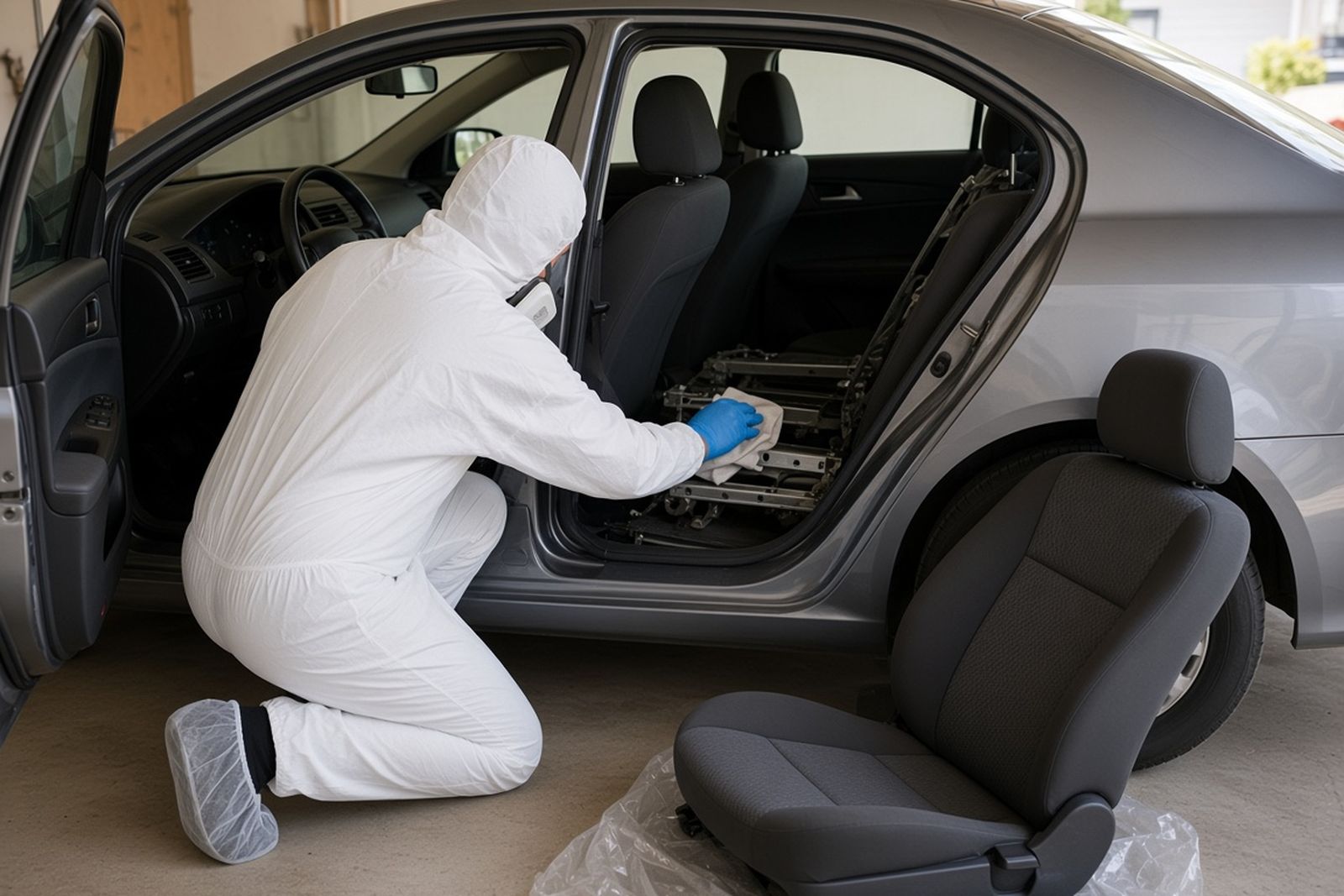
Vehicular Biohazard Cleanup (Vehicle Recovery Care)
Calm, clear steps for when blood or body fluids are inside a vehicle.
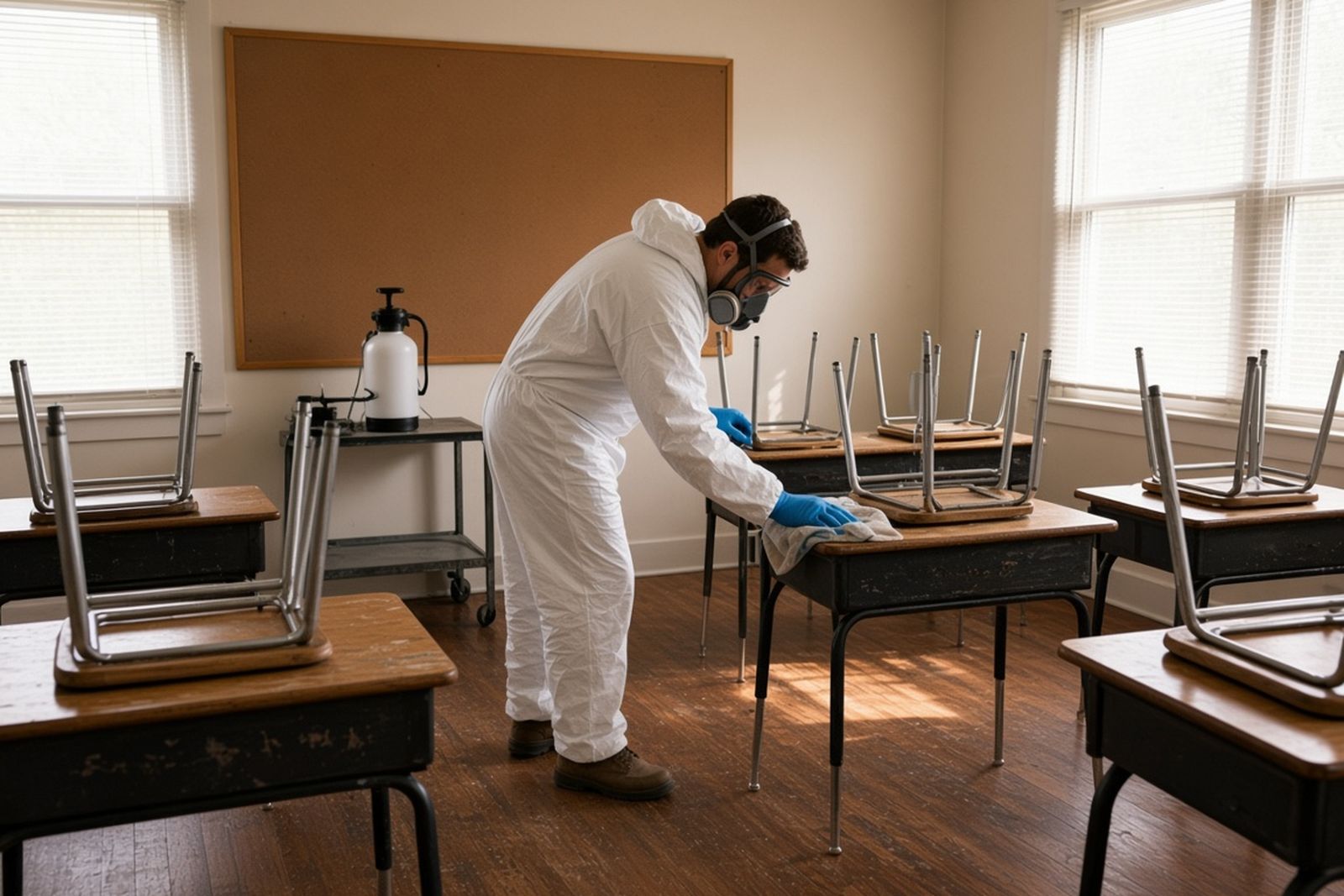
Infectious Disease Disinfection (Facility Disinfection Guide)
Clear steps for cleaning up after a stomach bug, flu, or other illness.
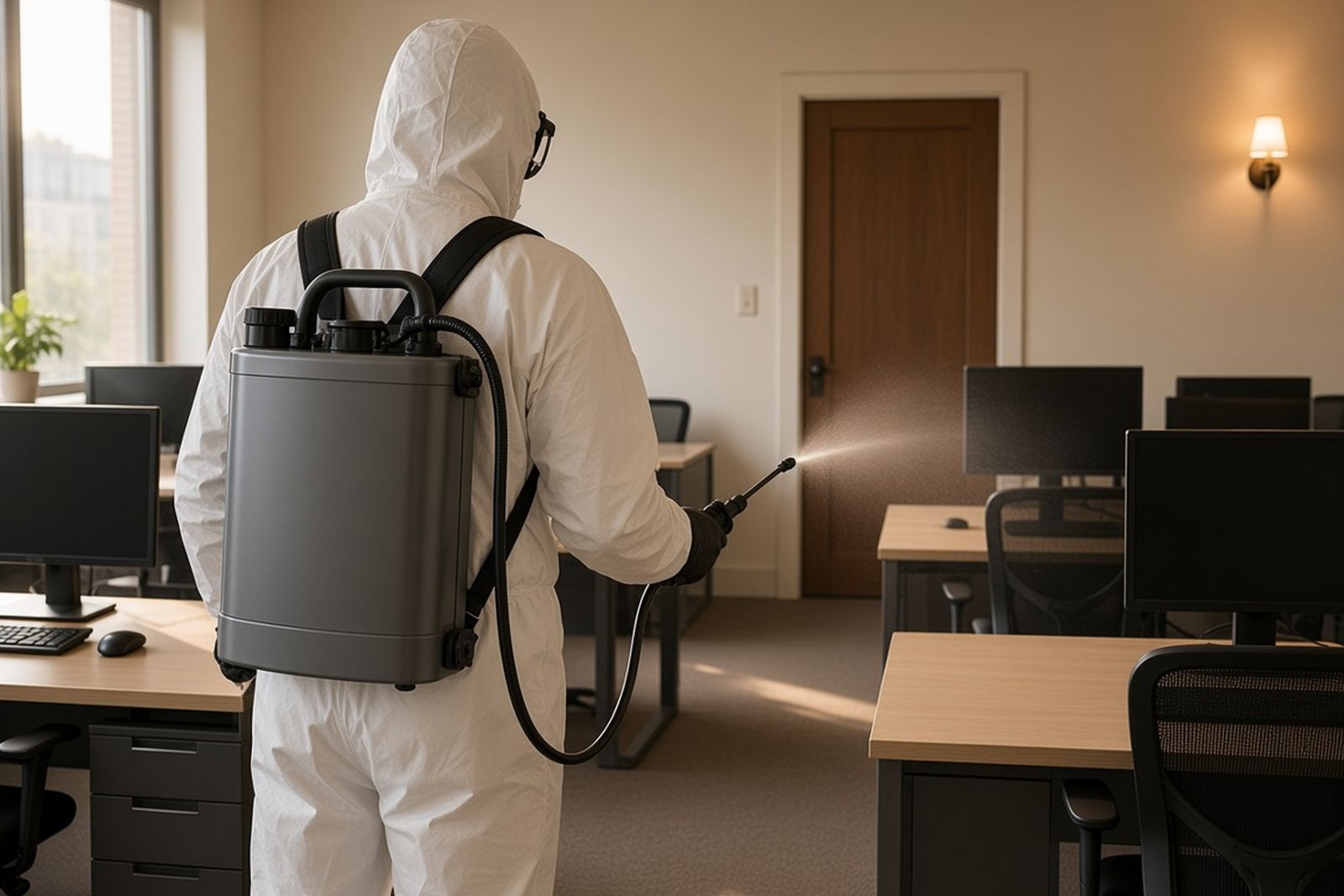
Sanitization & Fogging (Surface Care Guide)
What disinfectant fogging and spraying can do, what they can't, and what to ask.
Get answers by email
Send a short message about your emergency vehicle decontamination situation. Your request is sent to the follow-up inbox. A coordinator can reply by email. There is no obligation.
Your request is sent to the follow-up inbox. A coordinator can reply by email.
If anyone is hurt or in danger, call 911 first.