Free emergency vehicle decontamination tool
Emergency Vehicle Decontamination Cost Range Estimator
Set the affected area, surface types, severity and extras to see a rough cost range and what pushes it up or down.
The price of a deep clean on an emergency vehicle depends on things a home cleanup estimate never looks at. The dirty area may be just one patient area. But that area holds a stretcher with a mattress and straps, and bench seats with foam. It also has cabinets with edges and latches, belts, grab rails, monitors, radios, and a floor with mats and channels. Soft items that cannot be proven clean must be replaced, and each one is a separate cost. Product choice is limited by what the electronics and seats can handle. Some things add time. These include after-hours work to keep coverage and more than one unit from the same call. Odor treatment for soaked foam and removing built-in parts add time too. This estimator lets you describe those factors. It gives back a learning range and explains what drives it.
The result is not a quote, so do not use it as one. Local labor rates, vendor schedules, unit design, and your agency's buying process all affect the real cost. What the estimator does is show how the cost is built. Then a quote that leaves out soft items, records, or waste handling stands out. It also makes a list of items to ask for in writing. This gives your buying office a fair way to compare vendors. Run it before quotes arrive. Run it again with the vendor's numbers. Use the differences to ask questions, not just to bargain on price. Share the cost drivers with your infection-control officer. Then the job follows the agency's standard, not the vendor's habits.
How to use it
- 1Describe the dirty area. Count the patient area, cab, or rear seat as the main space, and add any nearby spots fluid reached.
- 2Choose the surface mix. It can range from mostly hard surfaces, like cabinets and floors, to mostly soft items, like mattresses, cushions, and straps.
- 3Set how bad it is based on how much fluid there was, whether foam is soaked, and whether electronics or vents were hit.
- 4Add extras like after-hours work, more than one unit, odor treatment, or removing built-in parts. Then review the cost drivers and the written-quote checklist.
Prefer to ask a person?
Your request is sent to the follow-up inbox. A coordinator can reply by email. Not for emergencies; call 911 first if anyone is in danger.
Estimate a cost range
Emergency Vehicle Decontamination cost range estimator
Educational only. Real pricing needs an on-site assessment and a written scope. Insurance coverage is decided by your carrier, not by this tool.
Educational range: $3,000 – $5,000
Scaled from a published reference range (typical biohazard cleanup project, national) reported by Fixr (2025). Your region, provider and the actual findings on site can move the real number outside this range.
Cost level: Mid range.
None of the big cost multipliers are selected. Minimum service charges, travel and waste fees still apply.
Ask every quote to itemize labor, containment, product, waste disposal, verification sampling, and any rebuild, and to state what is excluded.
A worked example
Say a county ambulance carries a trauma patient. It comes back with blood on the floor, the bench seat, the stretcher mattress, and the seat belt straps on the crew side. The stretcher mattress cover has a split seam. The bench cushion feels wet when pressed. The unit is part of a small fleet, and the overnight shift needs it if possible. The fleet coordinator opens the estimator. She enters one patient area as the space. She picks a mixed surface type, because the floor and cabinets are hard but the mattress, cushion, and straps are soft. She picks high severity because the foam is soaked. She adds after-hours work to keep coverage. She adds removal of built-in parts, because the bench cushion will likely be pulled and replaced. The tool gives a range. It names the biggest cost drivers: new soft items, labor set by contact time, and after-hours work. The written-quote checklist tells her what to ask each vendor. Which soft items will they replace, and which will they clean? What products will they use, and are they safe on the monitor and radio? What are the contact times and the waste plan? What format will the record take for the agency's infection-control file? She sends that list with her request for quotes. Now she can compare the answers side by side.
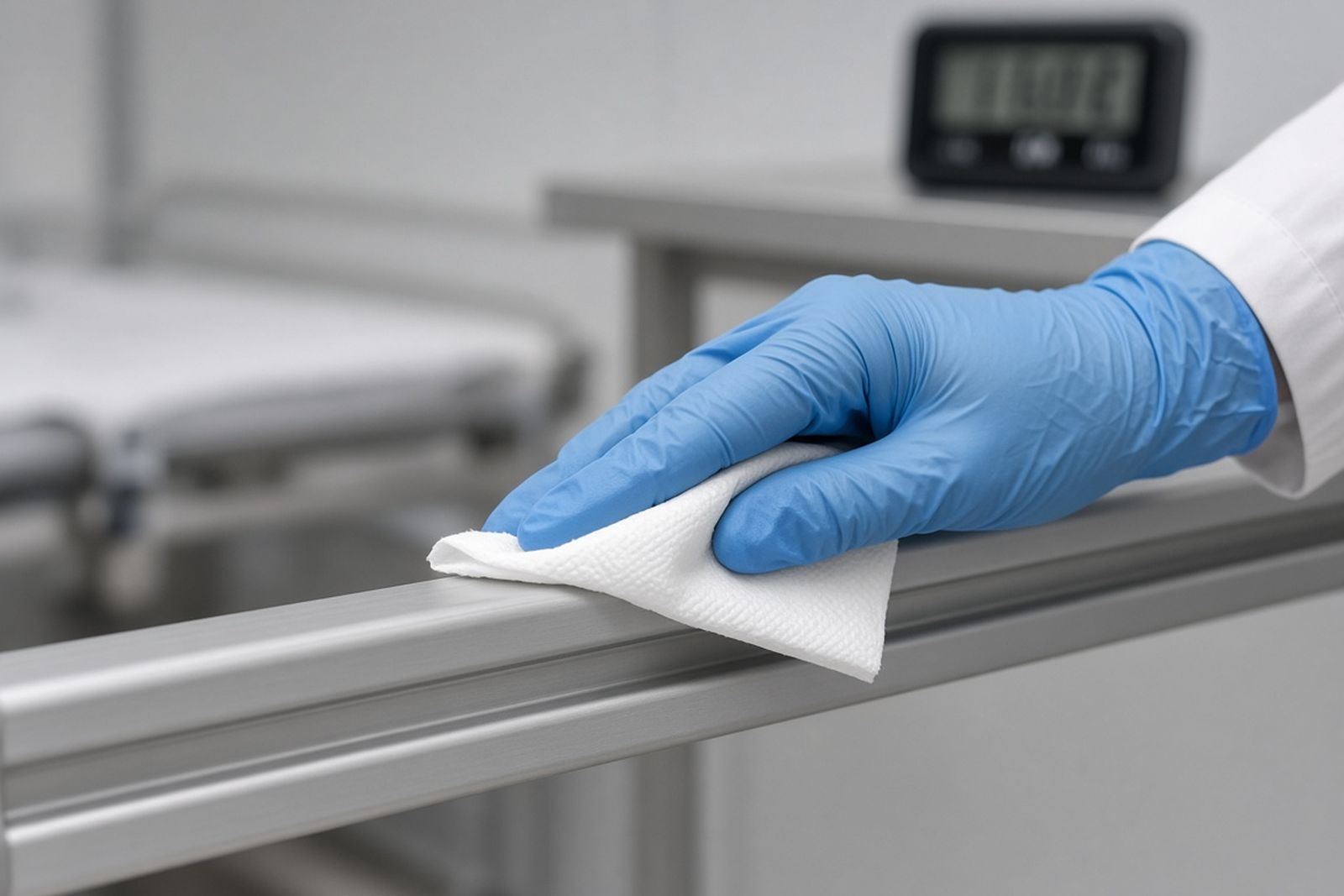
Facts worth knowing
Employers must offer the hepatitis B vaccine within 10 working days of putting an employee in a job with exposure to blood.
Why it matters: Before asking your own employees to clean up blood, check whether this duty and other OSHA rules apply to you.
One January 2025 cost guide puts the average U.S. biohazard cleanup at about $4,000, usually $3,000 to $5,000, with extremes from $1,500 to $25,000.
Why it matters: Use this range to sanity-check a quote, but expect your price to depend on the size of the job and local rates.
Across 16 EMS studies from 2010 to 2024, reported disinfection rates were 55% for stretchers and only 4.1% to 47% for stethoscopes.
Why it matters: Stretchers and stethoscopes may be skipped often; consider adding them to a checklist your crews sign after each call.
Source: Antimicrobial Resistance & Infection Control (PMC), 2025
Cost Range Estimator questions for emergency vehicle decontamination
Why do soft goods affect the estimate so much?
A stretcher mattress, bench cushion, or harness pad that has soaked up fluid cannot be proven clean by wiping. It usually must be replaced. New parts, labor to remove the old ones, and disposal each add cost. The unit may also be down until the part arrives. The estimator treats soaked soft items as a severity factor. That is because they change the job from cleaning to partly rebuilding.
Should I count the cab if only the patient compartment was contaminated?
Include only the areas that fluid, droplets, or tracked-in dirt really reached. If the crew moved between areas without changing gloves, the cab's door handles and controls may need cleaning even if no fluid is visible. If you are not sure, write it down as a question for the vendor. Do not make the space bigger than it is.
Does the range include documentation and verification?
The learning range assumes a full job. That includes a written record by unit number. It also includes any test the agency requires, such as swab checks on high-touch spots. When you ask for quotes, ask each vendor what is included and what costs extra. Ask about records, testing, and regulated waste pickup. That way, you can compare the quotes fairly.
How should I account for the unit being out of service?
The estimator covers the cost of the clean itself. Lost coverage, overtime for a spare crew, and mutual aid are running costs. Your command staff should weigh those on their own. The after-hours extra exists because agencies often pay more for a faster turnaround to cut those costs. So the two choices belong in the same talk.
What if a vendor's proposal is well outside the range?
A big gap either way is a reason to ask questions. A low quote may leave out soft items, waste, or records. A high one may include products that are safe for electronics, removal of built-in parts, or more than one unit. Ask the vendor to walk through their numbers line by line. Compare them to the cost drivers the estimator flagged.
Should I run the estimator for each unit when one call left several dirty?
Yes. Run it once per unit. Each vehicle's layout, soft items, and amount of dirt can differ, even after the same event. Then look at the whole picture when you talk with vendors. Some may offer a lower price per unit when they clean several vehicles in one visit. Keeping separate results also makes it easier to record each unit's cleaning for claims and files.
Can the estimator help plan a yearly cleaning budget?
It can help with planning, but it works best next to your own records. Use it to think through three kinds of jobs for your vehicle types. These are a typical scheduled deep clean, a clean after an exposure, and a soft-item replacement. Then multiply by how often each one happened last year, based on your logs. The result is an organized starting point for the talk with finance. It is not a final budget number.
Related community polls
Vote to see how other people answered. You can change your answer at any time.
After a bloody transport, what usually decides whether your unit gets a full deep clean?
Who performs terminal cleans on your fleet most of the time?
Other emergency vehicle decontamination tools
Company Vetting Checklist
Fifteen questions to ask any cleanup company, a score that shows how ready you are to hire, and a list of what is still unanswered.
OpenInsurance Claim Organizer
A guided checklist from finding the policy to tracking the insurer’s decision, with a printable summary of where the claim stands.
OpenFirst 24 Hours Planner
Tell the planner a few facts about the situation and get an ordered list of who to call, what not to touch, and what to photograph.
OpenWaste & Disposal Classifier
Five questions about the material point to the likely waste category and which authority to confirm the rules with.
OpenDIY or Call a Pro? Risk Check
Eight yes-or-no questions that produce a risk level and explain when professional help is the safer choice.
OpenMore on emergency vehicle decontamination
Emergency Vehicle Decontamination services
Learn how deep cleans of ambulances, fire trucks, and police cars are planned. See needle sweeps, choices about soft items, and records by unit number.
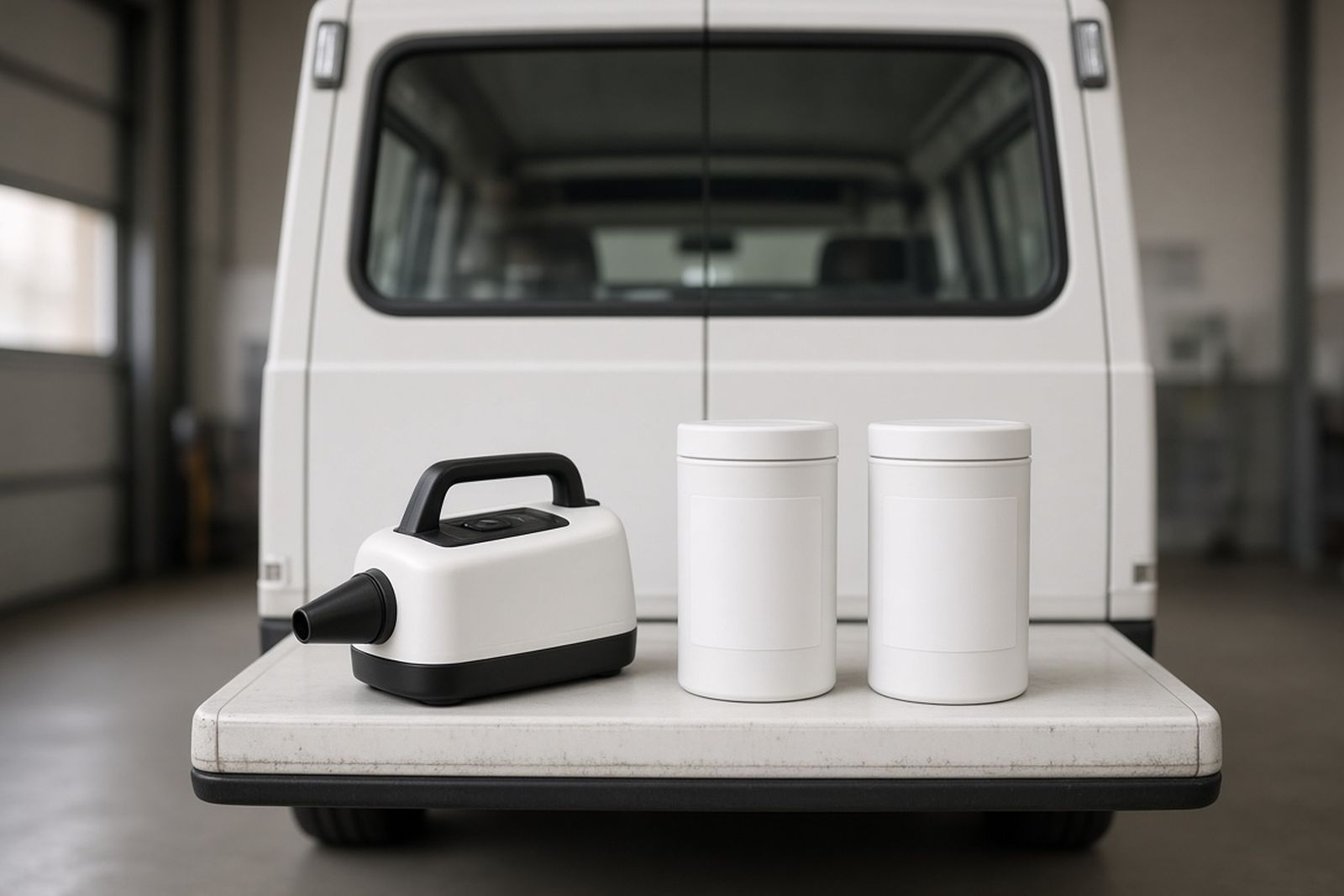
Costs explained
What drives the price, published cost ranges, and how to read a written quote line by line.
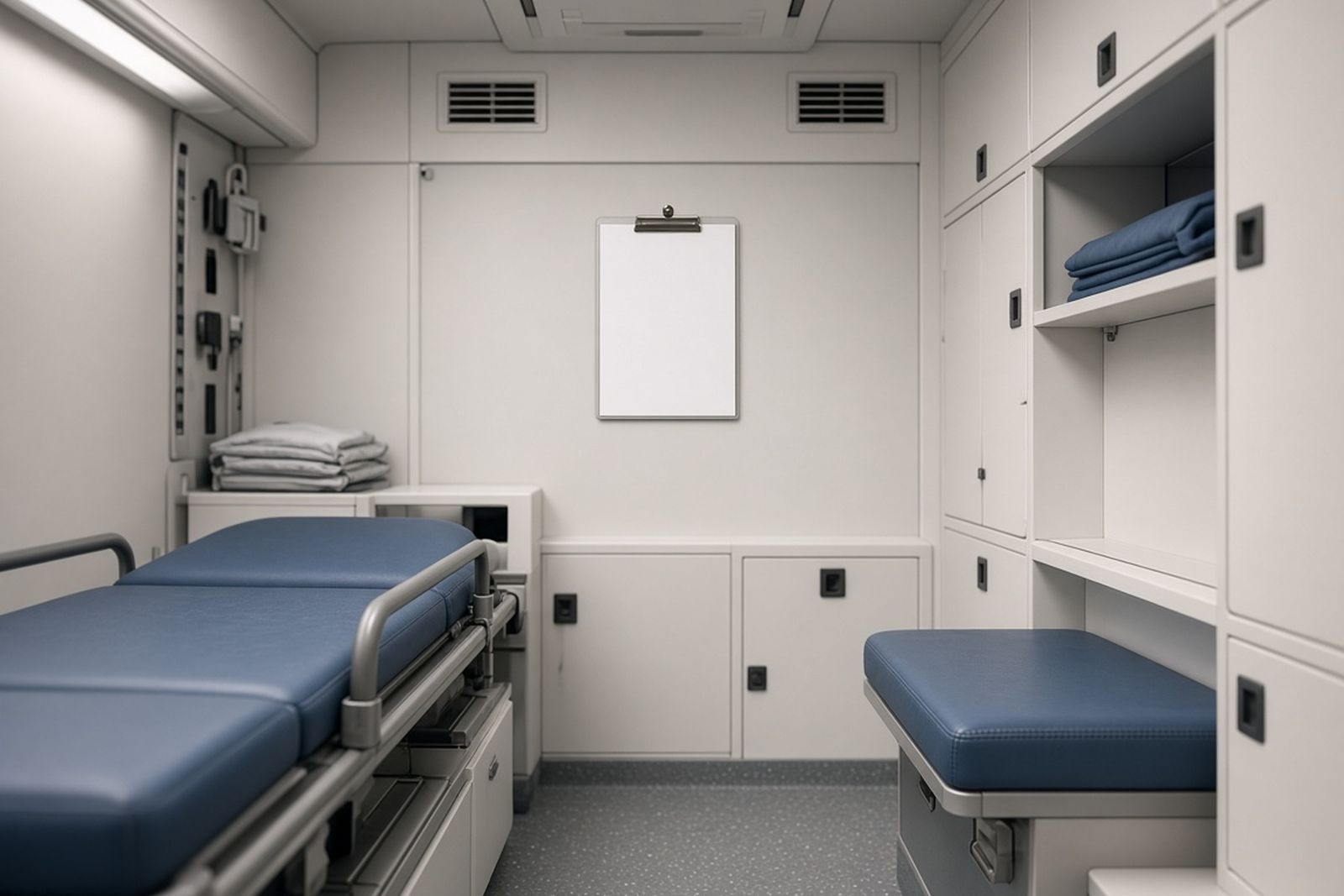
Insurance and payment
Which policies may respond, how to document a claim, and what to do if coverage is denied.
Community polls
See how other EMS, fire, and police fleets handle time pressure, new soft items, records, and product choices in their own bays.
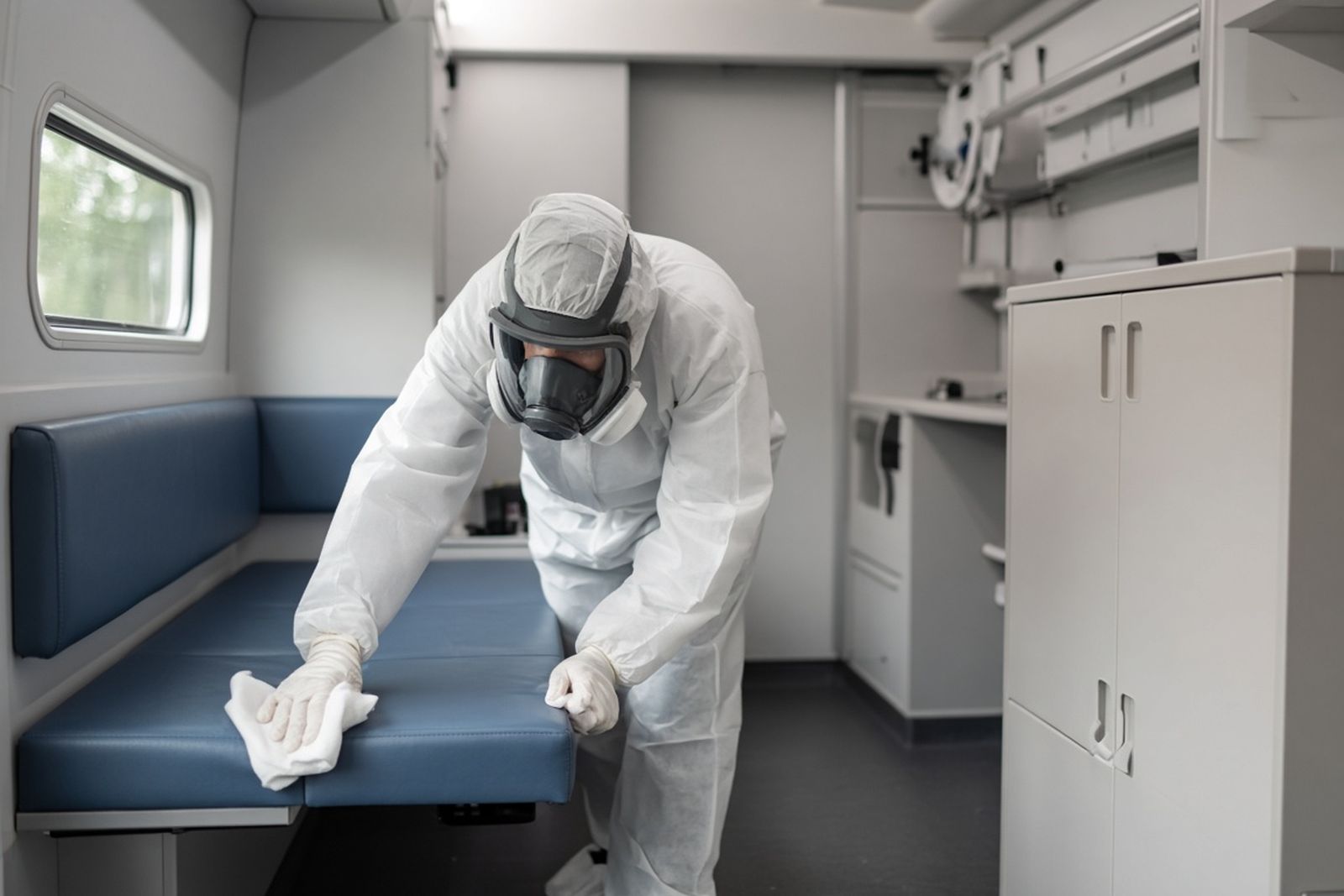
Knowledge quiz
Test what you know about cabin hazards, who pulls a unit from service, containment, contact time, waste, and cleaning records before the next hard call.
Articles and resources
Articles on fleet infection-control plans and picking products that are safe on electronics and seats. Read about turnaround planning, evidence in patrol cars, and records that pass an audit.