Loading...
Need Hazmat Spill Response help now?
EXTREME RISK — Confirm provider credentials and availability for the specific case
EXTREME RISK — Site-Specific Hazard Assessment Needed
24/7 Hazmat Spill Response & Cleanup Services
Chemical and fuel spill containment with compatible absorbents or neutralization, waste profiling, monitoring for re-entry, and permitted disposal—never improvising hose-downs of unknowns into drains or soil.
Hazmat spill response deploys HAZWOPER-trained teams for chemical, fuel, or unknown releases: site isolation, identification support from SDS/labels, compatible containment and cleanup, decontamination of tools and PPE, atmospheric or wipe monitoring when restart criteria require it, and RCRA-aware disposal. It is distinct from blood-only trauma cleaning, though mixed incidents are sequenced carefully.
What is Hazmat Spill Response?
Hazmat spill response deploys HAZWOPER-trained teams for chemical, fuel, or unknown releases: site isolation, identification support from SDS/labels, compatible containment and cleanup, decontamination of tools and PPE, atmospheric or wipe monitoring when restart criteria require it, and RCRA-aware disposal. It is distinct from blood-only trauma cleaning, though mixed incidents are sequenced carefully.
Responders isolate, identify, contain, clean with methods matched to the material, package profiled wastes, decontaminate equipment, and document air or wipe criteria for restart. Site staff should evacuate, deny entry, and consult SDS—not dilute unknowns into drains. Pollution coverage varies; notify brokers early. Community notifications expand when schools or residences are downwind.
In practical terms, hazmat spill response is a documented hazard-control project: assess what is contaminated, prevent spread into clean rooms or shared building systems, remove or disinfect materials using methods matched to this niche, package regulated waste correctly when required, and verify completion with records a property owner, landlord, estate, or facility manager can keep. It is not a fragrance service, a same-day remodel guarantee, or a substitute for medical care, law enforcement, or public-health authority decisions.
Risk classification for this niche in our taxonomy: EXTREME. That label describes typical hazard intensity for educational navigation—it is not a site-specific clearance certificate. Your written scope after assessment is the document that defines what will be done on your property.
In scope
- Spill containment with berms, booms, and absorbents
- Fuel/oil recovery support
- Unknown substance field categorization support
- HAZWOPER-trained spill response practices
- Contaminated media removal coordination
- Hardscape decontamination after spills
- Regulatory reporting assistance (NRC/EPA/state as applicable)
- Post-cleanup sampling coordination when required
- Drain protection and runoff control
- Documentation packages for pollution liability claims
Out of scope / exclusions
- Radioactive material spills
- Explosives or ordnance (bomb squad)
- Fire department command substitution
- Multi-year Superfund-scale remediation as a website claim
- Legal defense for violations
- Site security/evacuation authority
When does hazmat spill response need a qualified provider?
Responders isolate, identify, contain, clean with methods matched to the material, package profiled wastes, decontaminate equipment, and document air or wipe criteria for restart. Site staff should evacuate, deny entry, and consult SDS—not dilute unknowns into drains. Pollution coverage varies; notify brokers early. Community notifications expand when schools or residences are downwind.
Training Matched to the Task
Ask which safety program applies to the scope: bloodborne-pathogen controls for covered exposure, HAZWOPER where hazardous-substance or emergency-response rules apply, and a compliant respiratory-protection program when respirators are required. Verify current records and insurance for the actual work.
Case-Specific Availability
For immediate danger, contact public emergency services first. For remediation, confirm the provider's current availability, credentials, scope, and arrival estimate for the actual address. EXTREME risk situations should not be treated as DIY work.
Documented Completion
A closeout file can combine the scope, photos, products and label contact times, removal or waste records, and sampling results when the plan calls for them. ATP is only a relative residue indicator, not a stand-alone pathogen or clearance test.
Did You Know?
Training must match the task. Blood or other potentially infectious material can implicate OSHA's Bloodborne Pathogens standard; hazardous-substance or emergency-response work can implicate HAZWOPER. Ask which rule applies and request current records.
Quick Cost Estimator
126
Educational estimate only — not a quote
$6,800 - $11,050
Actual cost requires an on-site assessment. Insurance coverage varies by policy and cause of loss — we cannot promise approval.
When should you call a professional?
Vapors, fumes, or respiratory irritation from a spill
Evacuate, shut down HVAC if safe, and call trained hazmat responders. Do not sniff-test chemicals.
Fuel or oil release with fire/explosion risk
Flammables plus environmental migration into soil and drains create dual emergency pathways. Reportable quantities may require NRC notification.
Unknown abandoned containers or drums
Identify before handling. Unknown drums may be corrosive, flammable, toxic, or reactive.
Spill near storm drains or waterways
Immediate containment matters; waterway impacts trigger mandatory reporting.
Incompatible chemicals stored or spilled together
DIY neutralization of unknowns can cause violent reactions.
Confined-space spill with unknown atmosphere
Entry without monitoring can be fatal.
What hazards are specific to hazmat spill response?
Delaying professional hazmat spill response increases exposure for occupants and anyone who enters the space. This niche is classified extreme-risk in our taxonomy.
- Inhalation of toxic vapors
- Flammability and explosion risk
- Corrosive burns to skin and eyes
- Environmental migration to soil and water
- Incompatible chemical reactions from DIY neutralization
- Oxygen deficiency or toxics in confined spaces
- Ignition from static or electrical sources near flammable vapors
Educational summary — see OSHA 29 CFR 1910.1030, CDC environmental infection guidance, EPA disinfectant labels, and niche-specific state rules for authoritative requirements.
When should occupants leave the area?
Hot-zone guidance specific to hazmat spill response — not a substitute for emergency services.
- Evacuate immediately if vapors cause irritation, dizziness, or breathing difficulty
- Evacuate and deny entry when flammable vapors or unknown drums are present until categorized
- Leave confined spaces until atmospheric monitoring clears entry
- Downstream/downwind neighbors may need notification if vapors or runoff migrate — follow emergency plans
Why is DIY hazmat spill response dangerous?
Household products and consumer PPE are not a substitute for trained remediation in this category. Improvised cleanup often spreads contamination, creates aerosols, destroys insurance documentation, and leaves reservoirs in porous materials that return as odor or exposure later.
- ✕Neutralizing unknown acids/bases without training causes violent reactions.
- ✕Hosing spills into storm drains creates reportable environmental releases.
- ✕Using shop fans can push flammable vapors to ignition sources.
- ✕DIY absorbent piles left on-site remain hazardous waste.
- ✕Re-entering a vapor field without monitoring is life-threatening.
- ✕Treating chemical spills like bloodborne trauma cleanup with bleach.
What not to do
- ✕Sniff-testing unknown chemicals
- ✕Hosing to the drain
- ✕DIY neutralization of unknowns
- ✕Delaying required agency notifications
- ✕Assuming bloodborne disinfectant protocols fix chemical spills
Test Your Hazmat Spill Response Knowledge
Biohazard Knowledge Quiz
Q 1/5What determines a disinfectant contact time?
What does hazmat spill response include — and exclude?
We Provide
- Spill containment with berms, booms, and absorbents
- Fuel/oil recovery support
- Unknown substance field categorization support
- HAZWOPER-trained spill response practices
- Contaminated media removal coordination
- Hardscape decontamination after spills
- Regulatory reporting assistance (NRC/EPA/state as applicable)
- Post-cleanup sampling coordination when required
- Drain protection and runoff control
- Documentation packages for pollution liability claims
You Should Know
- Radioactive material spills
- Explosives or ordnance (bomb squad)
- Fire department command substitution
- Multi-year Superfund-scale remediation as a website claim
- Legal defense for violations
- Site security/evacuation authority
Available Now — Do Not Wait
Need Hazmat Spill Response Right Now?
Delays can increase exposure and material damage. Call for a live dispatch ETA for your location.
How does the hazmat spill response process work?
Responders isolate, identify, contain, clean with methods matched to the material, package profiled wastes, decontaminate equipment, and document air or wipe criteria for restart. Site staff should evacuate, deny entry, and consult SDS—not dilute unknowns into drains. Pollution coverage varies; notify brokers early. Community notifications expand when schools or residences are downwind.
- 1
Life safety first: evacuate, deny entry, and eliminate ignition sources when flammables are suspected.
Why it matters: People before product — vapor exposure and fire kill faster than property damage.
- 2
Identify material from labels/SDS or field categorization before choosing absorbents or neutralizers.
Why it matters: Wrong neutralization of unknowns causes violent reactions.
- 3
Stop the source if safe; contain spread toward drains and waterways with berms/booms.
Why it matters: Minutes matter for reportable waterway impacts.
- 4
Control HVAC and ventilation thoughtfully — do not push flammable vapors to ignition sources with fans.
Why it matters: Improper ventilation expands the hazard zone.
- 5
Recover product and contaminated absorbents as regulated waste under proper classification.
Why it matters: Absorbents become hazardous waste after use.
- 6
Decontaminate hardscapes; excavate soils when indicated by migration.
Why it matters: Surface sheen cleanup alone often misses subsurface contamination.
- 7
Complete required notifications (NRC/EPA/state) when reportable quantities or water impacts apply.
Why it matters: Reporting duties exist independent of insurance.
- 8
Coordinate post-cleanup sampling when regulators or due diligence require it.
Why it matters: Closure often needs data, not just a visual wipe.
- 9
Document SDS, photos, boom logs, and disposal manifests for the claim and agency file.
Why it matters: Late or missing documentation jeopardizes coverage and compliance.
- 10
Transition long-term remediation needs to appropriate environmental contractors when beyond emergency response.
Why it matters: Honest scope boundaries prevent overclaiming Superfund-scale work.
Service Lines Within This Niche
Chemical Spill Response
HAZWOPER-aware response to chemical releases: isolate, identify, contain, clean with compatible methods, and profile wastes.
- 1Isolate the area, deny entry, and obtain SDS/label information before wet cleanup
- 2Stop spread toward drains, soil, and incompatible materials
- 3Select absorbents or neutralization only when chemistry is known and compatible
- 4Recover product and decontaminate tools and PPE at controlled exit points
- 5Package wastes under RCRA-aware profiling for permitted disposal
- 6Document air or wipe criteria used for restart when required by EHS
Fuel & Oil Spill Cleanup
Fuel and oil release cleanup focused on ignitable vapors, absorbent recovery, and protecting drains and soil.
- 1Control ignition sources and ventilate as appropriate to vapor risk
- 2Contain liquid with compatible booms or absorbents; protect storm drains
- 3Recover free product and saturated absorbents for proper disposal
- 4Clean residual films from hard surfaces with compatible methods
- 5Assess soil or porous materials that may need excavation or removal
- 6Provide waste documentation and restart notes for the facility or transporter file
Unknown Substance Response
Conservative response when the material is unidentified—no random neutralization or hose-downs.
- 1Evacuate and isolate; treat unknowns as hazardous until identified
- 2Use detection and labeling clues; coordinate with authorities when required
- 3Avoid mixing, tasting, or improvising chemistry on unknowns
- 4Contain spread while identification support is obtained
- 5Transition to compatible cleanup methods only after identification or qualified direction
- 6Document decisions and wastes for the incident record
Transportation Incident Response
Roadway or transport-release support: traffic-aware staging, product recovery, and coordination with responders.
- 1Stage upwind/uphill when possible and coordinate with on-scene incident command
- 2Protect drains, waterways, and public rights-of-way from runoff
- 3Identify product from placards, shipping papers, or carrier information
- 4Contain and recover with methods matched to the material and volume
- 5Package wastes for permitted disposal; decontaminate equipment before leaving the scene
- 6Provide documentation suitable for carrier, agency, and insurance files
What standards should hazmat spill response follow?
1
Isolate & identify
SDS/labels before wet cleanup; unknowns are not randomly neutralized.
2
Compatible containment
Booms, berms, and drain protection matched to the product.
3
Monitoring gates
Air or wipe criteria may control entry and restart—ask what instruments will be used.
4
RCRA-aware disposal
Profiled wastes to permitted facilities with documentation.
5
Verification
SDS-based identification records
6
Primary hazard
Inhalation of toxic vapors
What equipment is typical for hazmat spill response?
1
Compatible absorbents / booms
Selected after SDS/label identification—not random kitty litter on unknown chemistry.
2
Air monitoring instruments
Used when vapor, oxygen, or toxic gas criteria gate safe entry or restart.
3
Chemical-protective PPE
Ensemble matched to the material; upgraded when the substance is unknown.
4
Drain seals / containment berms
Stop product from entering storm drains, soil, and incompatible process lines.
5
Neutralization only when directed
Applied solely for known compatible chemistry—never improvised on unknowns.
6
RCRA waste packaging
Profiled containers and permitted disposal paperwork for recovered product and absorbents.
How is hazmat spill response verified?
- SDS-based identification records
- Containment and recovery volume logs
- Disposal manifests for absorbents and contaminated media
- Post-cleanup sampling results when required
- Agency notification reference numbers in the file
Process & Equipment Visuals
technicianContainment
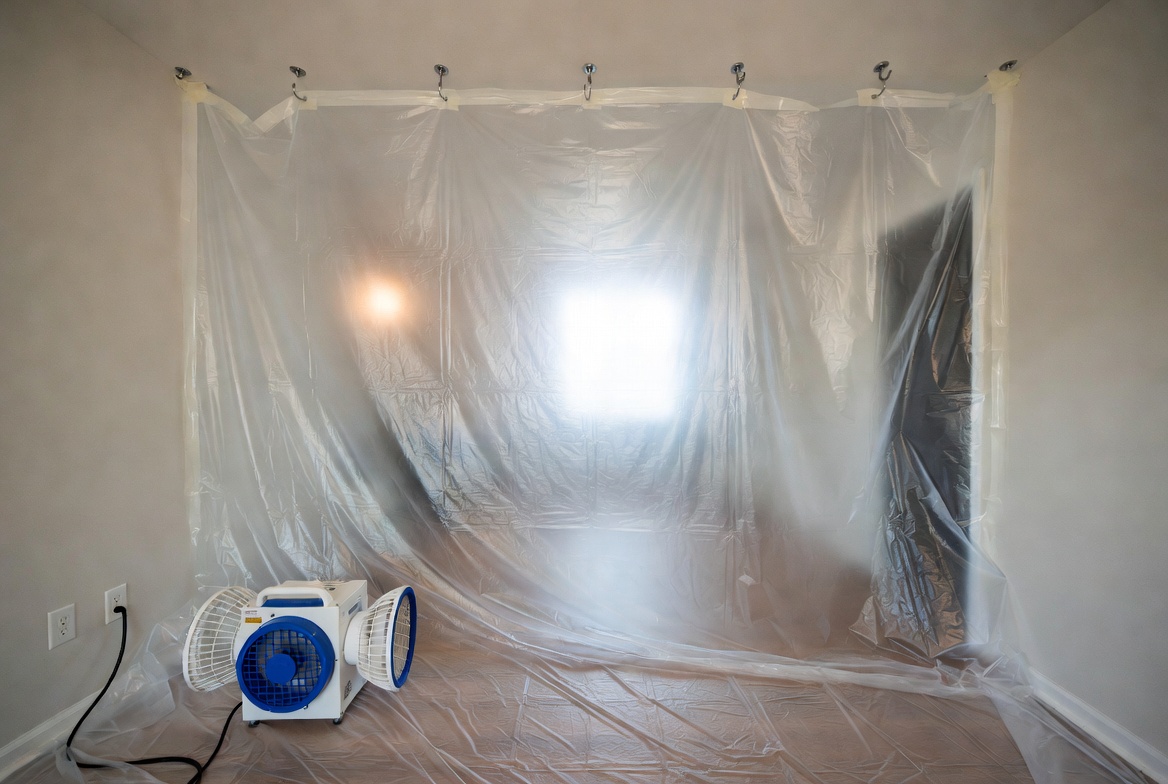
Containment
Professional hazmat spill containment deployment
equipmentSubstance ID

Substance ID
Unknown substance identification during hazmat response
educationDecon Corridor
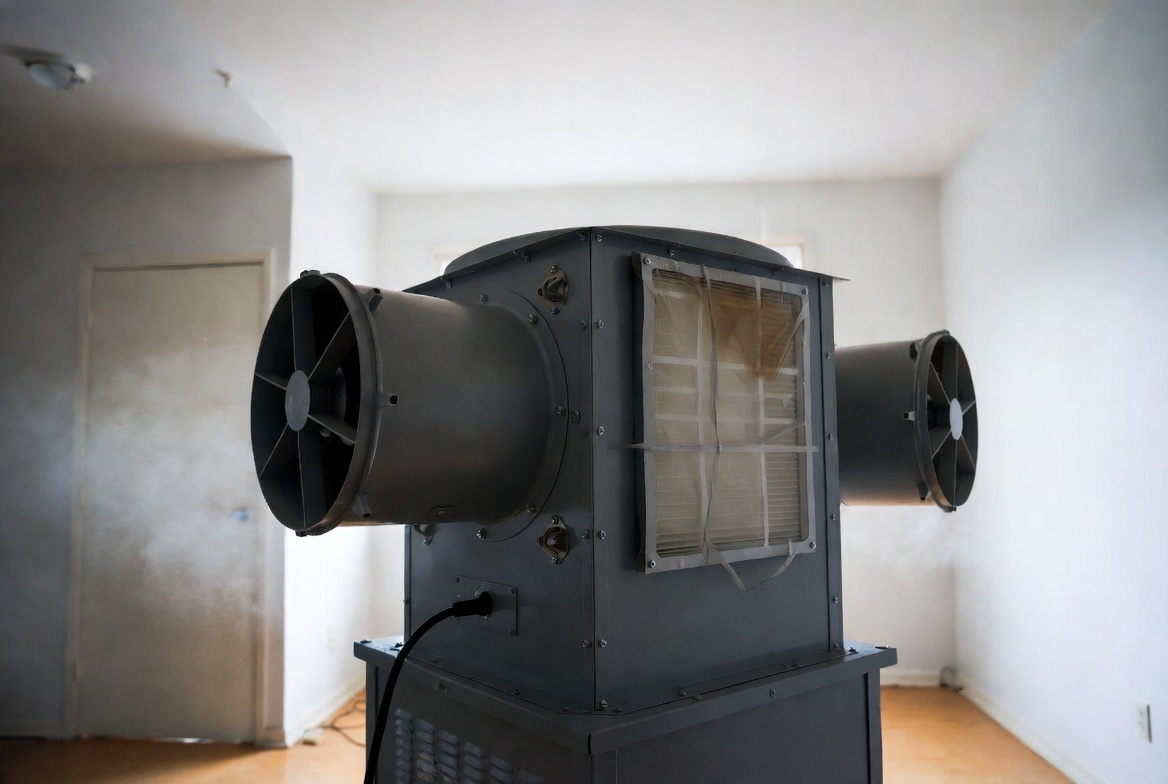
Decon Corridor
Professional hazmat decontamination corridor setup
technicianResponse Team

Response Team
HAZWOPER-certified hazmat spill response team
Process Overview
A 30-second overview: isolate, identify, contain with compatible methods, profile wastes, monitor for restart. No improvising on unknowns.
Transcript: Alternate restored-room walkthrough emphasizing re-entry readiness after verification.
Community Polls — What Others Think About Hazmat Spill Response
If you discovered a hazmat spill response situation, what would you do first?
No visitor votes yet
What is the biggest fear people have about hazmat spill response?
No visitor votes yet
Does insurance cover hazmat spill response?
Coverage Reality Check
Coverage depends on your policy language and the cause of loss. We do not publish invented approval rates.
- Pollution liability coverage is often required — standard GL may exclude spills.
- Report promptly; late notice can jeopardize coverage.
- Keep SDS, photos, boom logs, and disposal manifests for the claim file.
- Government reporting duties exist independent of insurance.
- Do not expect a biohazard trauma policy narrative to cover chemical pollution losses automatically.
- Ask carriers whether emergency response costs and soil excavation are covered differently.
$ What Affects Cost
- •Material identity & volume: Known fuels differ from unknowns or reactive chemicals in PPE and method cost.
- •Drain / environmental protection: Boom, berm, and soil/water protection add equipment and disposal streams.
- •Monitoring & re-entry criteria: Air or wipe criteria required by EHS extend on-site time.
- •Waste profiling: RCRA classifications and permitted disposal fees vary widely by chemistry.
- •Facility access delays: LOTO, permits, and production freezes affect labor even when spilled volume is small.
- •Mixed biological overlap: Incidents that also involve OPIM need sequenced scopes—not one generic wash.
Get a Free Consultation
Tell us about your situation for coordinator follow-up. Provider availability and timing depend on the address, hazard, and case details.
Frequently asked questions about hazmat spill response
What is hazmat spill response compared with blood-only trauma cleaning?▼
Hazmat spill response is emergency containment and cleanup of chemical, fuel, or unknown substance releases by HAZWOPER-trained teams, including identification support, neutralization or absorption, decontamination, and regulated disposal. It is distinct from blood-only trauma cleaning, though some incidents involve both and require sequenced controls. Scope should define whether air monitoring, soil excavation, waterway protection, or transportation transfers are included. Calling a janitorial service for a solvent release is a category error that endangers people and expands environmental damage. For definition and scope conversations, put these boundaries in the written estimate so stakeholders are not surprised later: focus on SDS-informed isolation before neutralization, require RCRA profiling of spent absorbents, and treat rebuild as a separate phase when materials leave the structure. In hazmat spill response projects specifically, ask the crew to explain how they will handle item 1 of this checklist in writing before mobilizing. Keep a property file that includes photos, product names, and waste or clearance records unique to this hazmat-spill-response response so future buyers, tenants, or auditors can reconstruct what was done.
What should staff do—and not do—before hazmat responders arrive?▼
Evacuate as needed, deny entry, shut off ignition sources if trained and safe, and consult the SDS if the material is known. Do not hose unknowns into drains, do not neutralize randomly, and do not become a casualty trying to save product. Rescue is for trained teams with proper PPE. If people are exposed, follow SDS first-aid guidance and seek medical care. Video the scene from a safe distance if it helps later investigation, but do not walk through the product to film. Early mistakes before arrival often dominate the final cleanup cost. For DIY decisions, the practical rule is isolation first—protect people from SDS-informed isolation before neutralization, wait on RCRA profiling of spent absorbents, and do not improvise tools that worsen air monitoring for re-entry. In hazmat spill response projects specifically, ask the crew to explain how they will handle item 2 of this checklist in writing before mobilizing.
How is spill waste characterized and disposed under RCRA concepts?▼
Spent absorbents and recovered liquids are profiled as hazardous waste when they meet RCRA characteristics or listed definitions, then transported with proper shipping names and manifests to permitted facilities. Mislabeling fuel absorbents as ordinary trash is a common compliance failure. Unknowns need identification before aggressive disposal decisions. Mixed loads can be rejected. Ask responders to explain waste codes and destinations. Disposal is not complete when product is only off your floor—it is complete when it is legally treated or disposed at a permitted site. For waste handling, demand a pathway that matches SDS-informed isolation before neutralization, keeps records suitable for air monitoring for re-entry, and never substitutes municipal trash for materials tied to downwind protection for schools and neighbors. In hazmat spill response projects specifically, ask the crew to explain how they will handle item 3 of this checklist in writing before mobilizing. Keep a property file that includes photos, product names, and waste or clearance records unique to this hazmat-spill-response response so future buyers, tenants, or auditors can reconstruct what was done.
Does insurance cover hazmat spill cleanup?▼
Contractors pollution liability, transportation policies, or site pollution legal liability may apply depending on who caused the release. Homeowner policies often exclude pollution. Notify brokers early; spill costs escalate with delayed containment. Responsible-party disputes between shippers, sites, and contractors are common. Vendors should not guarantee that a particular policy will pay. Documentation of cause, quantities, and response actions supports whichever coverage may apply. For insurance and payment, document air monitoring for re-entry with photos and scopes, ask the carrier about RCRA profiling of spent absorbents, and reject vendors who invent approval rates instead of explaining SDS-informed isolation before neutralization. In hazmat spill response projects specifically, ask the crew to explain how they will handle item 4 of this checklist in writing before mobilizing. Keep a property file that includes photos, product names, and waste or clearance records unique to this hazmat-spill-response response so future buyers, tenants, or auditors can reconstruct what was done.
What process do responders use for known and unknown spills?▼
Isolation, air monitoring, and field identification precede aggressive cleanup for unknowns. For known materials, SDS-informed containment, compatible absorbents or neutralization, decontamination of people and equipment, and waste packaging follow. Larger incidents use ICS coordination with facility or public responders. Guessing a chemical from smell is unsafe. Once classified, the method matches the hazard class. Stop-work authority remains if conditions change. Process discipline prevents improvisational mixing that creates heat, gas, or fires. For process quality, sequence work around RCRA profiling of spent absorbents, control SDS-informed isolation before neutralization, and finish with documentation that reflects downwind protection for schools and neighbors rather than a verbal “all set.” In hazmat spill response projects specifically, ask the crew to explain how they will handle item 5 of this checklist in writing before mobilizing. Keep a property file that includes photos, product names, and waste or clearance records unique to this hazmat-spill-response response so future buyers, tenants, or auditors can reconstruct what was done.
How do facilities verify a spill site is clear for re-entry or restart?▼
Verification may include visual clearance, air monitoring at or below agreed criteria, wipe sampling when needed, and confirmation that waste is removed and labeled. Re-entry standards should be written for the chemical class involved. ATP is not a chemical clearance meter. Document who authorized restart. If odors or readings persist, continue ventilation and assessment. Verification is IH-informed when the hazard warrants it—not a sniff test by the shift supervisor alone. For verification, define acceptance using downwind protection for schools and neighbors, retain proof related to air monitoring for re-entry, and do not reopen based on appearance alone when SDS-informed isolation before neutralization remains plausible. In hazmat spill response projects specifically, ask the crew to explain how they will handle item 6 of this checklist in writing before mobilizing. Keep a property file that includes photos, product names, and waste or clearance records unique to this hazmat-spill-response response so future buyers, tenants, or auditors can reconstruct what was done.
How long do hazmat spill responses take?▼
Small contained releases may resolve in hours; fuel in soil, waterway involvement, or unknown chemicals requiring lab ID can extend across shifts or days. Regulatory notifications and disposal approvals add calendar time beyond the physical pickup of absorbents. Ask for critical-path drivers: identification, excavated soil volumes, vacuum truck availability, and landfill or TSDF approvals. Duration honesty helps operations plan shutdowns. Optimistic reopen guesses before identification are unsafe. For timeline planning, build milestones around RCRA profiling of spent absorbents, contingency for air monitoring for re-entry, and honest drivers such as SDS-informed isolation before neutralization instead of brochure averages. In hazmat spill response projects specifically, ask the crew to explain how they will handle item 7 of this checklist in writing before mobilizing. Keep a property file that includes photos, product names, and waste or clearance records unique to this hazmat-spill-response response so future buyers, tenants, or auditors can reconstruct what was done.
How are chemical odors and vapors managed during spill response?▼
Ventilation and vapor control must match flammability and toxicity—fans in the wrong place create ignition or exposure hazards. Carbon filtration or other controls may be needed. Fragrance has no role in hazmat vapor management. Perimeter monitoring protects neighbors and other building tenants. If vapors migrate to multi-unit residences, expand isolation and notifications. Odor at the fence line is a response cue, not a public-relations scent problem. For odor and air quality, tie treatments to downwind protection for schools and neighbors, replace media when SDS-informed isolation before neutralization recirculates, and remember fragrance cannot replace RCRA profiling of spent absorbents. In hazmat spill response projects specifically, ask the crew to explain how they will handle item 8 of this checklist in writing before mobilizing. Keep a property file that includes photos, product names, and waste or clearance records unique to this hazmat-spill-response response so future buyers, tenants, or auditors can reconstruct what was done.
How should multi-tenant sites and HOAs respond when a spill affects shared areas?▼
Evacuate or shelter per the hazard, shut down shared HVAC if it spreads vapors, and call trained responders rather than maintenance with mops. Document whether the release began in a unit, a contractor bay, or a common element for cost recovery. Communicate factual instructions to residents without speculation about the chemical name until identified. Multi-tenant success depends on rapid isolation and clear authority—not on debates in the lobby while product spreads. For multi-unit and HOA coordination, assign authority for air monitoring for re-entry, protect shared pathways from SDS-informed isolation before neutralization, and communicate schedules without graphic detail while addressing RCRA profiling of spent absorbents. In hazmat spill response projects specifically, ask the crew to explain how they will handle item 9 of this checklist in writing before mobilizing. Keep a property file that includes photos, product names, and waste or clearance records unique to this hazmat-spill-response response so future buyers, tenants, or auditors can reconstruct what was done.
What protections apply for children, schools nearby, and medically vulnerable neighbors?▼
Expand evacuation or shelter-in-place distances when schools, playgrounds, or elder housing sit downwind. Medically vulnerable people may need earlier relocation when vapors are present. Coordinate with public responders on community notifications. Do not allow children to watch outdoor spill operations from close range. Re-entry for sensitive populations should follow monitoring criteria, not curiosity. Special-population protection in hazmat is geography and timing—move vulnerable people before they become patients. For children, elders, and other vulnerable occupants, relocate during SDS-informed isolation before neutralization, delay return until RCRA profiling of spent absorbents, and bias toward replacement when downwind protection for schools and neighbors cannot be verified on items they touch. In hazmat spill response projects specifically, ask the crew to explain how they will handle item 10 of this checklist in writing before mobilizing. Keep a property file that includes photos, product names, and waste or clearance records unique to this hazmat-spill-response response so future buyers, tenants, or auditors can reconstruct what was done.
How do you choose a hazmat spill response provider?
HAZWOPER training appropriate to emergency response roles
SDS-driven method selection (no random neutralization)
Air monitoring capability when re-entry criteria require it
RCRA-aware waste profiling and permitted disposal
Drain/soil protection methods in the work plan
Pollution liability insurance (request certificates)
Contact line available — provider timing is case-specific
Need Emergency Hazmat Spill Response?
Call for situation-specific planning questions. Confirm provider availability and timing for the actual address.
Call Now: 1-877-246-2532