Short answer
Several layers of rules apply. The police decide when your home is released. OSHA or a state plan protects the crew, and federal DOT rules cover hauling the waste. States control most medical waste handling and may register cleanup businesses. Local health and building offices can add rules. Your state's victim compensation program sets its own paperwork rules for any repayment.
Police release comes first
Before any cleanup rule applies, the police control the scene. Detectives, crime scene technicians and sometimes the medical examiner or coroner must finish their work. Only then do they release the property to the owner, the tenant or the person with legal authority.
No single national rule sets the timing of release. It depends on the investigation, the agency and the facts. Some homes are released within a day or two. Others stay sealed longer. Ask the police agency for a contact person. That person can tell you when the property will be released and whether any areas must stay untouched.
Starting cleanup before release can get in the way of an investigation. It may also expose you to legal problems. A good company will confirm the release before it enters. It may ask you for the officer's name or the case number.
Release does not always mean you get everything back at once. The police may keep certain items as evidence, and those items are not part of the cleanup. You may not know whether a missing item was taken as evidence or was damaged. Ask the detective before you assume it was thrown away.
Federal rules: OSHA, DOT and EPA
Once your home is released, federal rules shape how the work is done and how waste leaves the property. OSHA's Bloodborne Pathogens Standard requires cleanup employers to protect workers from blood and other body fluids that can carry disease. They do this through training, protective gear, an offer of vaccination and a written exposure plan. Related OSHA rules cover breathing masks and chemical hazards.
The U.S. Department of Transportation sets rules for how regulated medical waste is packed and hauled on public roads. Its rules reach the people who prepare shipments. Under 49 CFR 172.704, as published by DOT's Pipeline and Hazardous Materials Safety Administration, new hazmat employees must complete required DOT training within 90 days of employment. Until then, they may work only under direct supervision.
EPA registers the disinfectants used in your home and oversees certain chemical wastes. But it no longer runs a national medical waste program.
Worker protection rules also touch the emotional side of the job in a small way. OSHA does not regulate grief. But employers are expected to plan for known hazards. Many responsible companies build rest breaks and time to talk into homicide jobs, because the work is hard on the people doing it.
What role do states play in homicide cleanup?
States carry much of the weight. As EPA describes it, the federal Medical Waste Tracking Act regulations expired on June 21, 1991. That left medical waste regulated mainly by state environmental and health departments. So your state decides how blood-soaked materials from your home must be classified, stored, hauled and treated.
Some states require cleanup businesses or waste haulers to register or get a permit. Some set special steps for trauma scenes. Others rely on general medical waste or solid waste rules. States also decide whether a state workplace safety plan takes the place of federal OSHA enforcement for private employers.
The rules differ a great deal. So a company's experience in one state does not carry over to another by default. Ask any company which state agencies oversee its work at your address.
When you search a state website, try terms such as medical waste, biohazard, trauma scene and regulated waste. States use different words. The rule that applies to you may be filed under a heading you would not expect.
- How medical waste is classified, treated and disposed of
- Registration or permits for cleanup businesses or haulers, where required
- State workplace safety plans, where they exist
- Who qualifies for crime victim compensation, and the limits
Victim compensation programs
Every state runs a crime victim compensation program, often supported in part by federal money under the Victims of Crime Act (VOCA). These programs are a major source of help. In federal fiscal years 2019-2020, state VOCA-funded victim compensation programs paid $760,704,172 supporting 453,051 claims, according to the U.S. Department of Justice's Office for Victims of Crime.
Each program writes its own rules. Some cover crime scene cleanup and some do not. Many set a top amount and require you to apply within a certain time. Many ask for a police report and itemized invoices. Some pay the cleanup company directly. Others pay the family back.
Contact your state program or a victim advocate early. If you know what paperwork is needed before cleanup starts, it is far easier to file a complete claim later.
Local and private rules
County and city agencies may add rules of their own. A local health department may issue guidance, respond to complaints or clear a property for people to live in again after certain incidents. A building department may require permits if parts of the structure are removed and replaced.
Local solid waste offices decide what can go into city or county landfills and transfer stations. That affects how ordinary debris is handled. In rental housing, local codes may also cover a landlord's duty to make a unit fit to live in again.
Private rules matter as well. Condo associations, homeowners associations and commercial landlords may set work hours, entry steps or insurance rules for contractors.
If the homicide happened in a business, the safety of the business's own employees is a separate question. As the owner, you may need to keep staff away from the area until it is cleaned. You may also have reporting duties under OSHA or a state plan, depending on the facts.
One rental unit, several layers of rules
Follow a single rental apartment through the layers, and you can see how they overlap. Police hold the unit, then release it to the property manager and the next of kin.
The next of kin contacts the state victim compensation program, often through an advocate. They learn whether cleanup may be covered, up to what limit and with what paperwork, such as an itemized invoice and the police report number. It then makes sense to ask the property manager to use a cleanup company that knows that process.
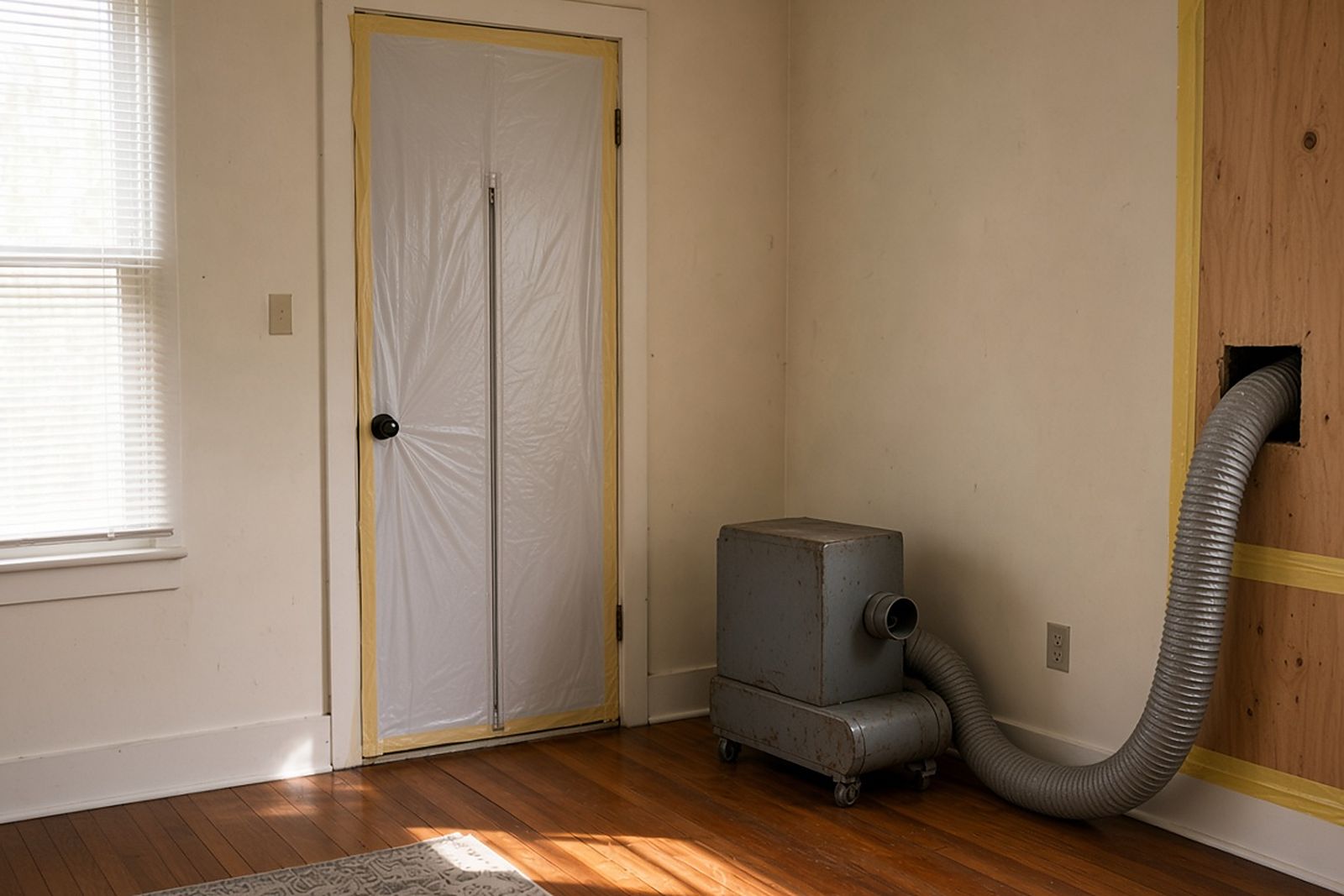
The crew works under federal OSHA or a state plan, depending on the state. Workers follow the company's written exposure plan. They wear protective gear chosen after a review of the hazards. Carpet, pad, a mattress and some drywall are packed under the state's medical waste rules. A hauler takes them to a permitted facility with whatever tracking papers the state requires.
If drywall was removed, the property manager may need a city permit for the repair. The building's lease may require the contractor to show proof of insurance before starting. The next of kin gets the itemized invoice and disposal records for the compensation claim.
Who is responsible for the cleanup in a rental?
It can be hard to tell who is responsible when a homicide happens in rented housing. In many cases, the landlord must restore the unit, while the family deals with personal belongings. Lease terms, local housing codes and state landlord-tenant laws all affect the answer.
If you are a family member, you do not have to agree to pay for cleanup just because a landlord asks. Talk with an attorney, a tenant advocate or a victim advocate about what you owe. If you are a landlord, check your lease, your insurance policy and local housing rules before you decide who will hire the cleanup company.
Whoever hires the company, the work itself must still follow federal, state and local rules.
Clear written agreements help everyone here. If you sign the cleanup contract, be sure you know what you are agreeing to pay. Know whether any part may be sent to insurance or victim compensation, and who will get the records afterward.
How can you confirm what applies where you live?
Several sources can help you. Your state health or environmental agency publishes medical waste rules and any lists of registered companies. OSHA's website shows whether your state runs its own workplace safety plan. Your state victim compensation program explains who qualifies and what paperwork it needs. Your local health and building departments can explain local rules.
Then ask each company to explain the rules it follows. A company that knows its work will name the agencies and describe clearly how it meets their rules. Rules vary by state and county; verify with the local authority.
- Has the police agency formally released the property?
- Which state agency regulates medical waste here, and are you registered if that is required?
- Who will haul the waste, and will I get records?
- Will your invoice meet the victim compensation program's rules?
- Are any local permits or health clearances needed?
What matters most for families
You should not have to become an expert in rules while you grieve a homicide. The goal is to choose a company that already understands them. Lean on advocates who can help with compensation and legal questions.
Please also make room for your own needs. Victim advocates, grief counselors and homicide survivor support groups exist to help families through exactly this kind of time. Accepting their help is not a sign of weakness. It is a way to protect yourself as you face the weeks ahead.