Homicide Cleanup Cost: Scope, Factors, and Payers
What a homicide cleanup estimate covers and why the job can grow.
A homicide leaves a family or property owner facing a scene that is often larger and harder than anyone expects. The cleanup estimate can feel impossible to judge. This page explains what the price covers and why violent crime scenes often need deeper work. It shows how to compare itemized quotes and which extra costs come up. It also covers who usually pays.
Get an email reply about homicide cleanup
Send a short message to the follow-up inbox. A coordinator can reply by email. This form does not send emergency help; call 911 first if anyone is in danger.
Estimate your range
Homicide Cleanup cost range estimator
Educational only. Real pricing needs an on-site assessment and a written scope. Insurance coverage is decided by your carrier, not by this tool.
Educational range: $3,000 – $5,000
Scaled from a published reference range (typical biohazard cleanup project, national) reported by Fixr (2025). Your region, provider and the actual findings on site can move the real number outside this range.
Cost level: Mid range.
None of the big cost multipliers are selected. Minimum service charges, travel and waste fees still apply.
Ask every quote to itemize labor, containment, product, waste disposal, verification sampling, and any rebuild, and to state what is excluded.
Open the full tool page for a worked example and more answers.
What goes into the price of homicide cleanup?
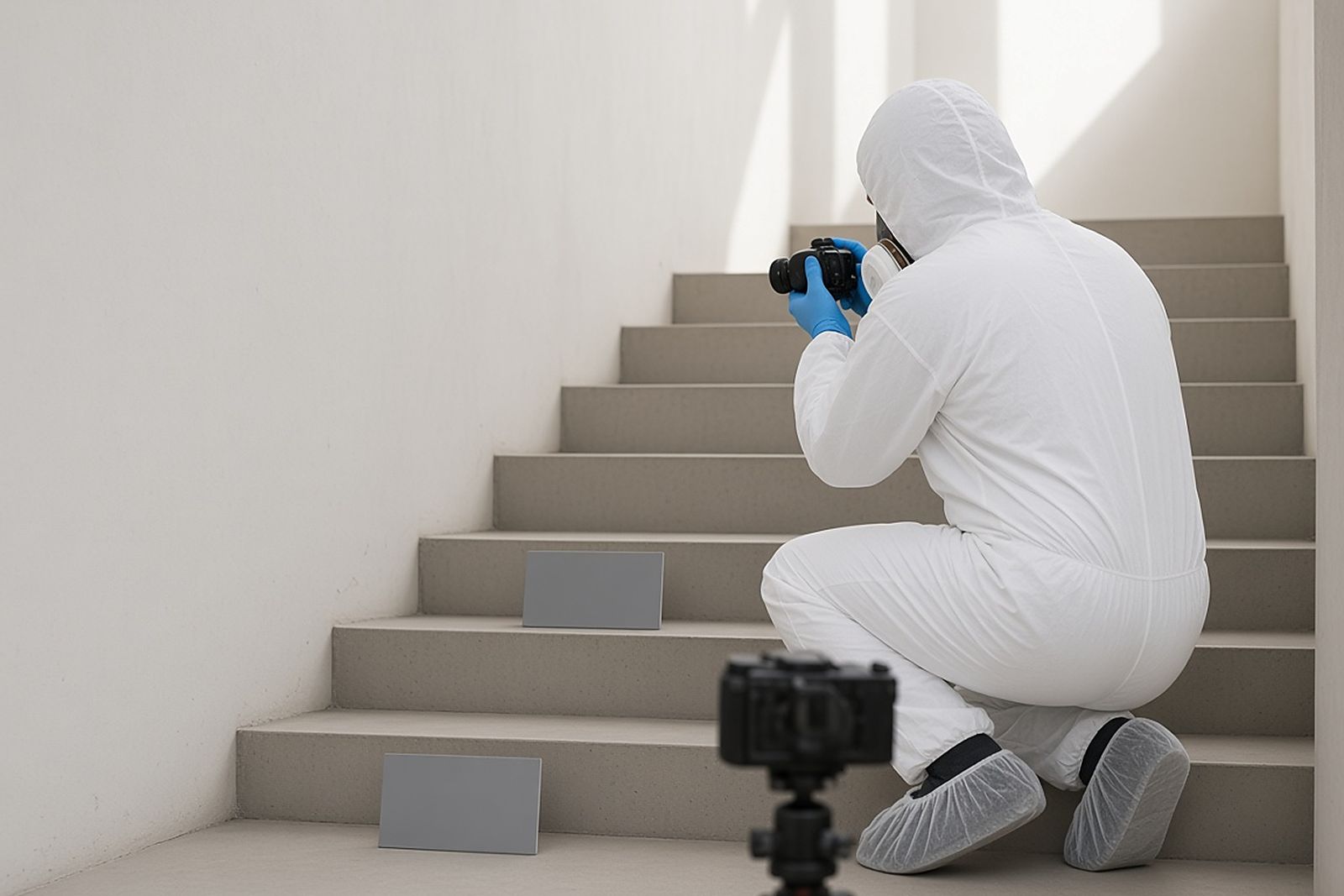
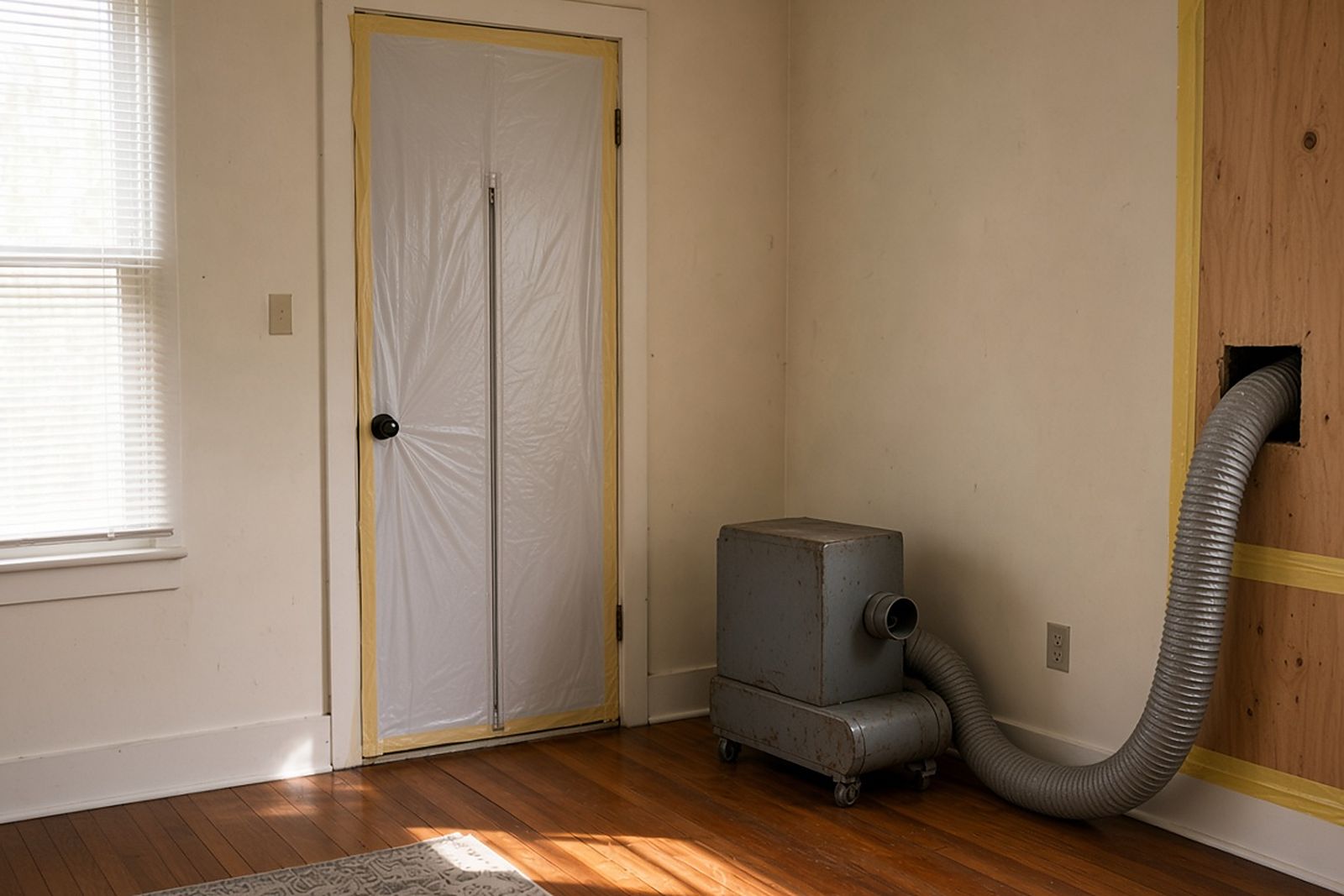
Cleanup begins only after the police agency formally releases the property. A crew then walks the whole path people moved along, not just the area that stands out most. Violent incidents often leave blood tracked through hallways, stairs, doorways, and vehicles. The crew seals off the area with plastic walls and air filters. They check for needles, sharp objects, and debris. They record conditions room by room before touching anything.
The estimate usually covers labor for a crew in full protective gear and supplies to seal off the area. It covers removing soaked flooring or wall sections. It covers enzyme cleaning and then disinfecting. It covers cleaning up fingerprint powder and police chemicals. It also covers packing and disposing of regulated waste and checking results with photos and surface readings. More than one party often needs records, so the paperwork can be more detailed than for other jobs. Rebuild is usually a separate contract after cleanup is done.
- Crew labor with protection against blood-borne germs
- Air filters and plastic walls that keep dust inside a larger work area
- Search for sharp objects and debris along the whole path people moved
- Removing soaked flooring, drywall, trim, or insulation
- Cleaning police residue, including powders and chemicals
- Packing and hauling regulated waste, with the waste shipping records
- Room-by-room photos and test readings
Why do homicide scenes often cost more than other trauma scenes?
Violent incidents often involve more than one place in a building. Blood may be spread across several rooms. It may be splashed on walls and ceilings or carried on shoes from one area to another. Each affected surface needs to be checked and treated. Every extra room adds sealing off, labor, and waste. Fluids often soak into the subfloor, the spaces inside walls, and ceilings. Then parts of the structure must be removed, not just cleaned on the surface.
Police work adds its own layer. Processing a homicide scene can leave fingerprint powder on many surfaces. Chemicals used to find blood can leave films behind. If officers used tear gas or pepper spray, those agents may have settled into fabrics and air vents. Crews must also be ready to stop work and call the police agency if they find something that could be evidence. That can pause a job and make it take longer.
How does a homicide estimate compare with national averages?
National cost guides can give context, but they are not about violent crime in particular. Fixr's January 2025 guide reports a national average of about $4,000 for biohazard cleanup. That figure blends many kinds of jobs, including small, contained spills. Homicide scenes often cost more than that average. They may have contamination in several rooms, removal of parts of the structure, and police residue. A smaller incident may land closer to it.
Instead of focusing on how your estimate compares with an average, ask the company what is driving its number. How many rooms are included? Which materials will be removed, and what proof supports that choice? How long will the crew be on site, and how many workers are needed? Clear answers show the company inspected carefully. They show it is not just guessing at the job.
How should you read and compare an itemized homicide cleanup quote?
A useful quote breaks the work into rooms or zones. It lists what will happen in each. It separates labor, sealing off, tear-out, police residue cleanup, disinfecting, waste disposal, and records. It should say what is left out, like rebuild, restoring belongings, or cleaning the heating and cooling system. It should explain how change orders will work if hidden contamination is found. Vague totals make comparing almost impossible.
When you compare quotes, line up the work before you compare totals. One company may include fingerprint powder cleanup through the whole home. Another may cover only the main room. One may plan to remove subfloor based on moisture readings. Another may assume the floor can be cleaned. Ask each company to explain the difference. Also confirm the closing package includes photos, product details, test readings, and the waste shipping records. Insurers, landlords, and compensation programs often ask for them.
Which hidden costs tend to appear during or after homicide cleanup?
Hidden spread is the most common reason the job grows. Once flooring, baseboards, or drywall are opened, crews may find that fluids went farther than the surface showed. A good company will stop, record what they found, and talk about the added work before going on. If something that could be evidence turns up during the job, work may pause while the police agency is called. That can add time.
Other costs sit outside the cleanup contract. Rebuild trades handle flooring, drywall, paint, and sometimes ceilings. Belongings like furniture, clothing, and electronics may need cleaning or replacing. Heating and cooling filters or ducts may need work if powder or mist reached them. New locks, security repairs, and a place to stay are common too. Businesses may also lose income while a location stays closed.
- More tear-out after surfaces are opened
- Pauses in the work if possible evidence is found
- Rebuilding floors, walls, ceilings, and finishes
- Cleaning or replacing belongings
- Heating and cooling filter or duct work
- Security repairs, new locks, and a temporary place to stay
Who usually pays for homicide cleanup?
Who pays usually follows who owns and controls the property. A homeowner usually arranges the work. If the homeowner was the victim, the estate usually does. They may seek repayment from a homeowners policy. In rentals, landlords usually handle the building. The victim's family or estate may be responsible for belongings. Businesses, property managers, and homeowners associations may each be involved when a homicide happens on business property or in shared areas.
Families of homicide victims may qualify for help from their state's crime victim compensation program. In many states, these programs treat crime scene cleanup as a cost they cover. They usually pay only what insurance and other sources do not. Courts may also order a convicted offender to pay the family back. That is called restitution, and collecting it can take a long time. Rules vary by state and county. Check with the local authority or a victim advocate before you count on repayment.
What might a homicide cleanup project look like in practice?
Think about a duplex where a violent incident happened in one unit. After the release, the landlord calls two cleanup firms. Both walk through the unit and the shared entry. One quotes the living room only. The other finds tracked blood on the stairs and in the shared entry. It also finds fingerprint powder on several doors. Based on moisture readings, it suggests removing a section of subfloor.
The landlord picks the broader plan because it explains each finding with photos. During tear-out, the crew finds an object under the flooring that may matter to the investigation. They stop work and call the police agency. They start again only after they are cleared to continue. At the end, the landlord gets a room-by-room report, photos, test readings, and the waste shipping records. The landlord shares them with the insurer, the victim's family, and a victim compensation program.
How can you protect yourself when choosing a company?
Homicide scenes sometimes draw attention from the media and curious neighbors. Some families are approached by companies before they have had time to think. It is fine to take a moment. Get more than one estimate when you can, and ask direct questions. Ask for proof of training, insurance, and how the company disposes of waste. Ask how it protects your privacy, such as by using unmarked vehicles.
Be careful with anyone who promises an insurance payout is certain. Be careful with anyone who pushes you to sign an assignment of benefits right away, or who will not put the plan in writing. A good company will explain its plan and respect your pace. It will talk with one family contact or representative you choose. Choosing with care now helps prevent disputes later, when you may have even less energy to deal with them.
Facts worth knowing
One January 2025 cost guide puts the average U.S. biohazard cleanup at about $4,000, usually $3,000 to $5,000, with extremes from $1,500 to $25,000.
Why it matters: Use this range to sanity-check a quote, but expect your price to depend on the size of the job and local rates.
In 2024, OSHA's top fines were $16,550 for each serious violation and $165,514 for each willful or repeated one.
Why it matters: If you have your own staff clean up blood or chemicals without required training and gear, you may face fines like these.
Employers must offer the hepatitis B vaccine within 10 working days of putting an employee in a job with exposure to blood.
Why it matters: Before asking your own employees to clean up blood, check whether this duty and other OSHA rules apply to you.
Costs questions about homicide cleanup
When can homicide cleanup start?
Cleanup can start only after the police agency has released the property. Until then, the area should be left alone. Once it is released, you can set up inspections and estimates. Ask the agency to confirm the release clearly. Share that confirmation with the company. If you are not sure whether the scene has been released, contact the case detective or agency before letting anyone start work.
Why does homicide cleanup often involve removing walls or floors?
Blood and other fluids can soak into porous materials. They can travel into the subfloor, the spaces inside walls, or ceilings below. Surface cleaning cannot reach what has soaked in. Leaving it can cause odor and health concerns. Companies use moisture readings and inspection to decide what must come out. A good company will explain these choices with photos and measurements, not just recommend tearing things out.
What happens if the crew finds possible evidence during cleanup?
A good company will stop work in that area and not handle the item further. They will contact the police agency. Work usually starts again only after the agency gives direction. This pause can add time to the job, and sometimes cost. But it protects the investigation. Ask companies ahead of time how they handle this, so you know what to expect.
Can the family avoid seeing the scene during the process?
Yes. A professional company can inspect, estimate, and do the work without family members going into the affected area. Papers can be signed somewhere else. A trusted representative can be the main contact. If you want photos for insurance or personal reasons, ask the company to share them in a way you are comfortable with. Or ask them to send the photos to your representative instead.
Does the cleanup price include rebuilding damaged areas?
Usually not. Cleanup companies remove contaminated materials and make the space safe. Rebuilding floors, walls, and finishes is usually done by a separate contractor. Some firms work with rebuild partners, but those costs usually come on a different estimate. Ask each company to say clearly what shape they will leave the space in. Then you can plan for any other work.
Can victim compensation help pay for homicide cleanup?
In many states, crime victim compensation programs list crime scene cleanup as a cost they cover. Families of homicide victims may qualify. These programs usually need a police report, an application, and proof of costs. They usually pay only what insurance does not. A victim advocate can help with the process. Rules vary by state and county. Check with the local authority or the program directly.
What documentation should we keep from the cleanup?
Keep the written estimate, any change orders, and the final bill. Keep before and after photos, test readings, the list of removed materials, and the waste shipping records. Also keep the police report number and the release confirmation. These records support insurance claims, victim compensation applications, and landlord files. They also help with any civil case or restitution that follows. Keeping everything in one place saves time and stress later.
What other people in your situation chose
Vote to see how other people answered. You can change your answer at any time.
What was hardest to arrange after the scene was released?
When did you first learn that a victim compensation program might help?
More on homicide cleanup
Homicide Cleanup services
Learn what homicide cleanup involves for families, estates, and landlords. Topics range from sealing off several rooms to lists of belongings and final records.
Insurance and payment
Which policies may respond, how to document a claim, and what to do if coverage is denied.
Planning tools
Planners, checklists, and organizers for the weeks after a homicide. They cover police holds, estate authority, landlord duties, and victim compensation.
Community polls
Shared experience from families, advocates, and landlords on what was hardest after a homicide and what help mattered.
Knowledge quiz
A calm review of police holds, authority, sealing off work areas, disinfecting, waste, and records. The study guide is written for grieving families and the people helping them.
Articles and resources
Articles on the family and landlord side of a homicide. Topics include release timing, belongings, privacy, compensation programs, disclosure, and renting a unit again.