Short answer
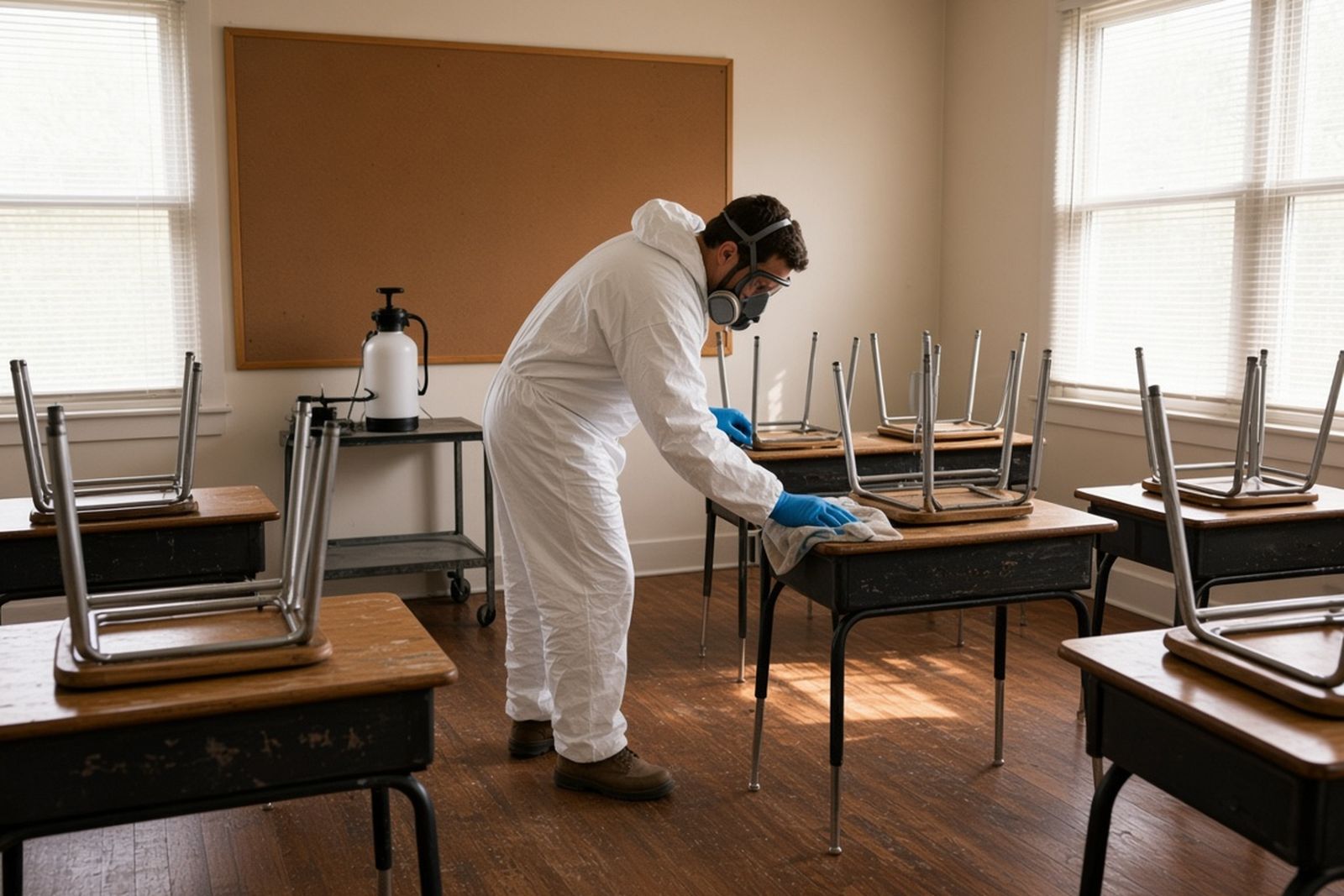
Call your health department or infection control lead. Close or limit the affected rooms, and send sick people home or to care. Have trained staff clean up any vomit or diarrhea right away, with gloves and a registered disinfectant left wet for its full contact time. Pause shared food and toys, write down what you know, and book professional disinfection.
The first hour after you spot a cluster
Several people in your building are sick with the same symptoms. From that moment, your job is to contain the illness and keep people informed. It is not to clean the whole building yourself. Start by making sure sick people are kept apart from others. Send them home or to medical care, as fits the case.
Next, find out where those people spent time. The center of the problem may be a classroom, a treatment area, a locker room, a shared kitchen, or a residential wing. Close or limit those areas if you can do so without disrupting care for people who depend on you.
Then call whoever guides your response. That may be your health department, your infection control lead, your school nurse, or your medical director. Many facilities are expected to report certain illnesses or clusters, above all schools, childcare centers, and care homes. Your county health department's communicable disease line can tell you which ones you must report, and how quickly.
Why speed matters with vomiting and diarrhea
Stomach outbreaks move fast in shared buildings, because it takes very little to make someone sick. CDC stated in 2011 that as few as 18 norovirus particles are thought to be sufficient to cause infection. One person vomiting in a classroom or dining room can spread droplets well beyond the spot you can see.
Care settings are at special risk. CDC reported in 2024 that about 2,500 norovirus outbreaks are reported in the United States each year, and over half occur in long-term care facilities. If you run a group home, assisted living residence, or skilled nursing facility, assume that an early, organized response is the difference between a few cases and many.
That is why the first cleanup of any vomit or diarrhea should happen right away. It should be done by someone trained and protected. Do not wait for a professional crew to arrive the next day.
How should your staff clean up vomit or diarrhea before professionals arrive?
Assign one or two staff members who have been trained and have the right supplies. Keep everyone else away from the area until the cleanup is done, above all children and residents.
If you use household bleach and not a commercial product, follow the label and current public health guidance on how to mix it and how long to leave it wet. Mix a fresh batch. Do not reuse an old one. Norovirus generally calls for a stronger mix and a longer wet time than routine disinfection. So check the guidance for your germ.
- Put on disposable gloves, a gown or apron, and a mask or face shield if splashing is possible
- Cover the mess with disposable absorbent towels and lift it into a plastic bag
- Clean the area with soap and water to remove residue
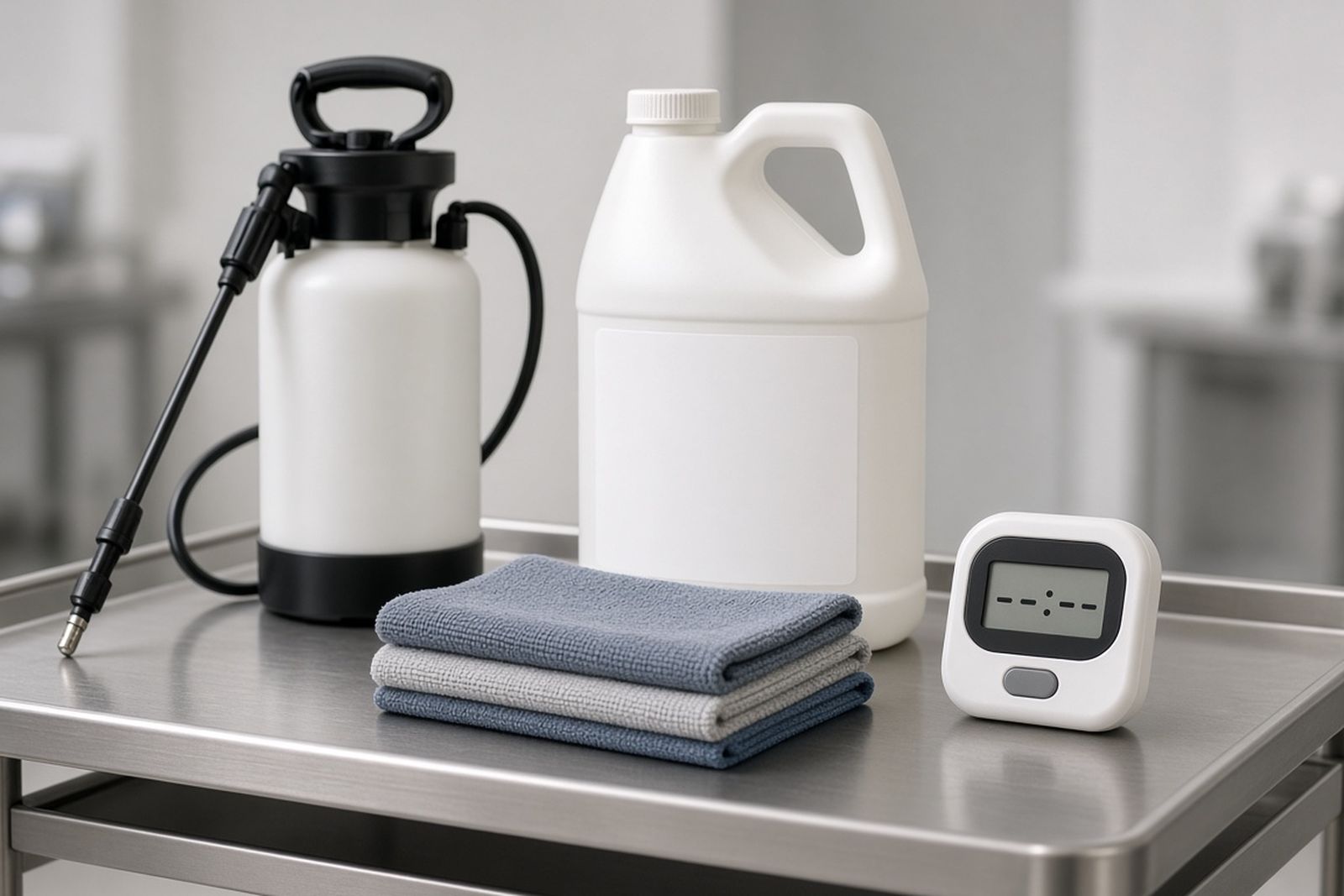
- Apply a registered disinfectant whose label lists the likely germ, and keep it wet for the contact time on the label
- Disinfect nearby high-touch surfaces within splashing distance, such as chairs, tables, and door handles
- Bag all waste and used protective gear, tie the bag closed, and wash your hands well with soap and water
Shared items to pull from use right away
Shared items keep an outbreak going. Until your building has been disinfected, think about pausing anything that many people touch one after another.
In schools and childcare centers, that often means bagging soft toys and pausing sensory tables and play dough. It means serving food one portion at a time, not family style. In gyms, it may mean closing mats, saunas, or certain equipment zones. In clinics and care homes, it may mean giving each patient or resident their own equipment, such as blood pressure cuffs and thermometers.
Label what you remove, so it can be cleaned or thrown out properly later. A sealed bag with a note about where it came from will save time when the disinfection crew arrives.
How do you protect staff who have to keep working?
Staff in care settings often cannot simply leave. Make sure they have gloves, gowns, and masks that fit the situation, and that they know when to use them. Remind everyone to wash their hands with soap and water after contact with sick people or soiled surfaces. Alcohol-based hand sanitizer does not work reliably on some germs.
Urge staff who get symptoms to stay home and not push through a shift. It is one of the best outbreak controls you have. It only works if people feel supported in using it.
If a staff member is exposed to blood or body fluids during the response, follow your exposure control procedure. Send them to occupational health or medical care.
Common reactions that make an outbreak worse
Under pressure, well-meaning staff sometimes take steps that feel protective but spread germs or create new dangers. Naming these ahead of time helps your team avoid them.
The most common is vacuuming or dry-sweeping an area where someone was sick. That can lift particles into the air and onto nearby surfaces. Another is spraying disinfectant and wiping it off right away. The surface looks clean, but the product had no time to work. Mixing products in search of something stronger is also risky. Certain combinations, such as bleach with ammonia-based or acidic cleaners, can release harmful gases.
Moves that carry illness into new areas
Moving sick residents, patients, or children between rooms or programs to free up space can carry the illness into new areas. So can asking a staff member with symptoms to cover one more shift because the schedule is tight.
Last, do not overcorrect with heavy fogging of spaces people are using, or with products not labeled for the surfaces involved. More chemical is not the same as better disinfection, and people with asthma or sensitivities can be harmed. If you are not sure a step helps, pause. Ask your health department, infection control lead, or disinfection company before you act.
What should you tell families, members, or employees?
Clear, calm messages prevent rumors and help people make good choices. Share what you know, what you are doing, and what you are asking of them. Do not name anyone who is sick.
A short message might say that several people in the building have had a stomach illness. It might say the affected areas have been closed and cleaned and that professional disinfection is scheduled. It should ask anyone with symptoms to stay home. Include a contact person for questions.
If your health department is involved, work with them on your message. They may have specific wording, or rules on who must stay home, that they want you to share.
Keep a record of every message
Keep a copy of every message you send, along with the date and who received it. If the outbreak grows or a family raises a concern later, that record shows what people were told and when. It also helps with your follow-up message, the one that says disinfection is complete and normal activities are starting again. That message is easier to write and will match what came before.
A sample first evening at a care home
Here is an example. An administrator at a 30-bed residential care home learns at dinner that three residents on the same hallway have had vomiting and diarrhea since the afternoon. One aide feels unwell too.
In this example, the administrator sends the aide home and asks residents on that hallway to eat in their rooms. She assigns two trained staff members to clean each mess promptly, using gloves, gowns, and a product whose label lists norovirus. Shared snacks and the hallway's common room are closed. The administrator calls the health department's after-hours line and the home's medical director.
By mid-evening, the administrator has written down the timeline, the names of affected residents for the health department, and which rooms were involved. A disinfection company is booked for the next morning. A note to families is drafted for review.
None of those steps needs professional equipment. They are what buys you time until the professional visit.
What should you have ready when the disinfection crew arrives?
If you are prepared, the visit is faster and better targeted. Before the crew arrives, gather the information and access they will need.
With these ready, the crew can spend their time disinfecting and not searching for answers.
- The suspected or confirmed germ, and who confirmed it
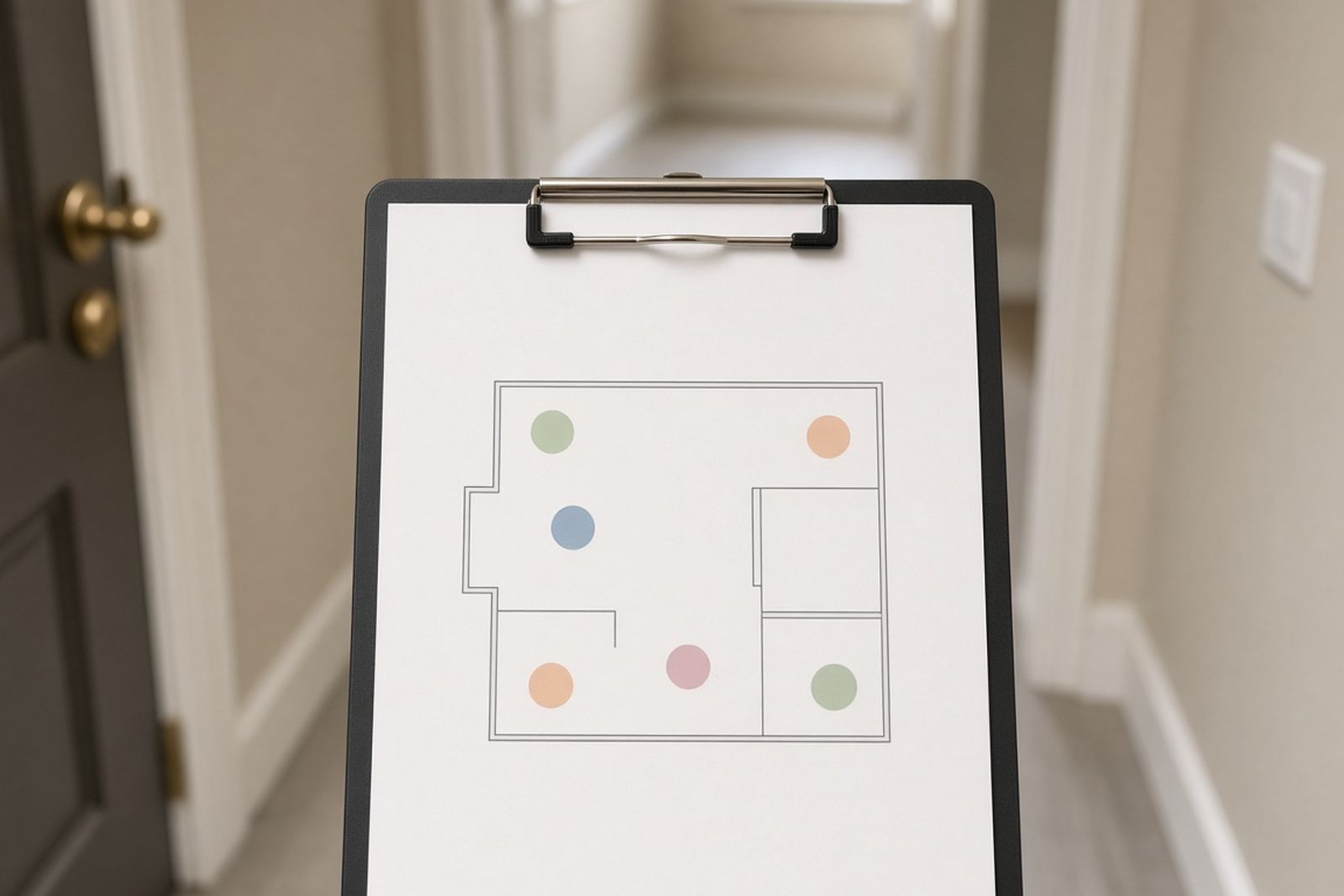
- A floor plan marked with the rooms and areas involved
- The products your staff have already used, and where
- Bagged items set aside for cleaning or disposal
- A list of electronics, equipment, or finishes that chemicals could damage
- Areas in use that cannot close, and the times they must be ready
- The name of a staff contact with keys who can stay during the visit