Short answer
If you find heavy rodent droppings or nests, leave the area and close it off. Do not sweep, vacuum, or pick anything up dry. Air the space out if you can do it from outside. Keep children and pets away, and store your food safely. Watch for fever, aches, or trouble breathing in the weeks after, and call a doctor if they appear. Then call a rodent cleanup company.
The first few minutes
Stop and back out. You may have found an attic floor covered in droppings, a nest of shredded insulation in a closet, or a dead rat behind the washing machine. In the first minutes, the most important thing is not to disturb it. Dried droppings, urine, and nesting material can release particles into the air when they are brushed, swept, or stepped on.
Leave the space and close the door, hatch, or cabinet behind you. If you were in a closed-in area like an attic or crawlspace for a while, step outside for some fresh air. Wash your hands and face with soap and water. Change your clothes if they brushed against droppings or nesting material.
Take a moment to think before you go back. A careful plan made at your kitchen table is much safer than a quick cleanup attempt made in the attic.
You may smell a strong, sweet, rotten odor, not just the sharp smell of urine. That can mean a dead rodent somewhere in a wall, ceiling, or appliance. Do not start cutting into drywall or pulling out appliances to find it. Note where the smell is strongest and tell the cleanup company.
Why should you avoid sweeping or vacuuming right now?
It feels natural to grab a broom or shop vacuum and get rid of the mess. But dry cleaning is exactly what can turn droppings into dust in the air. Some viruses carried by rodents, including hantavirus, can spread when people breathe in particles from disturbed droppings, urine, or nests.
Those particles do not become harmless the moment the rodents leave. The Center for Food Security and Public Health at Iowa State University notes that how long hantaviruses stay infectious outside a host depends on humidity, organic matter, and sunlight. A dark, still attic offers little of the sunlight that breaks them down. That is why even old droppings deserve careful handling.
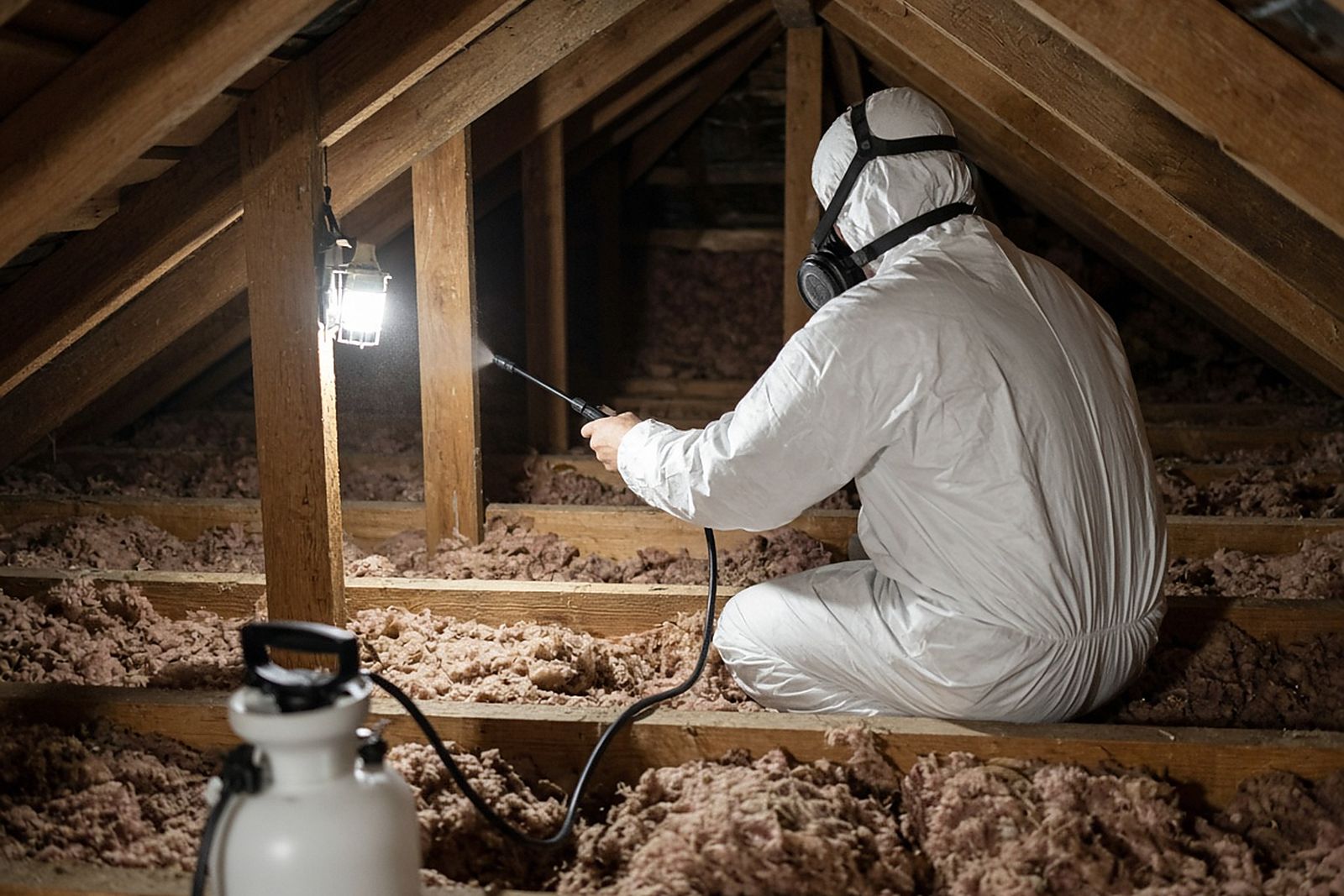
Ordinary household vacuums can also blow fine dust out through their exhaust. Unless you have the right equipment and training, leave the heavy cleanup to professionals who use wet methods.
Leaf blowers, compressed air, and pressure washers cause the same problem on a bigger scale. In a garage, shed, or barn, you may be tempted to blast everything out the door. That sends dirty dust into the air you are breathing and across your yard. It is best to avoid it entirely.
Safe steps while you wait, including pets
You can take a few helpful steps without touching the droppings themselves. They cut exposure for your household and make the cleanup go more smoothly when it comes.
Your pets can come into contact with droppings, nests, and dead rodents. Some rodent control products are dangerous to them. Keep dogs and cats away from affected areas. Do not let them eat or play with dead rodents. If you use traps, place them where pets cannot reach.
If your pet may have eaten a rodent or rodent bait, call your veterinarian or an animal poison control service right away. Bring the bait packaging if you have it. Move pet food and water bowls away from affected areas and wash them well.
- Open windows or outside doors to the affected area from outdoors, if you can reach them without walking through the mess.
- Close inside doors and cover the gaps under them with a towel to keep dust from spreading.
- Turn off fans or heating and cooling vents that pull air from the affected space, if you can.
- Move food, pet food, and dishes out of cabinets that show droppings and store them in sealed containers.
- Keep children and pets out of the area entirely.
- Take photos from a doorway or hatch without climbing in.
What if droppings are in the kitchen or a child's room?
Droppings in your living spaces feel more urgent, and that makes sense. Kitchens, bedrooms, and play areas are where your family spends time, eats, and sleeps. If you find droppings there, the same rules apply. Do not sweep or vacuum, keep people out, and plan a wet cleanup.
For a very small number of droppings in one cabinet or drawer, many households clean it themselves with gloves, a disinfectant soak, and paper towels. For anything larger, it is reasonable to call a professional. The same is true if you see nests, urine stains, or droppings in several rooms.
In the meantime, throw away any unsealed food that rodents may have reached. Move your children's toys and bedding out of affected rooms. Set up a temporary place to sleep elsewhere if you need to. Once the source of the droppings has been dealt with, wash any soft items that were exposed in hot water.
If you decide to handle a small spot yourself, keep it simple. Put on disposable gloves. Spray the droppings with a disinfectant until they are soaked. Wait for the time listed on the product label. Wipe them up with paper towels and seal everything in a plastic bag. Disinfect the surface again. Then take off the gloves and wash your hands well.
Symptoms to watch for after exposure
Most people who come across rodent droppings do not get sick. Still, it helps to know what to watch for. CDC noted in 2024 that symptoms of hantavirus pulmonary syndrome can appear 1 to 8 weeks after contact with an infected rodent. Early symptoms can look like the flu: fever, tiredness, muscle aches, and sometimes headache, dizziness, or stomach upset.
If you or someone in your household gets these symptoms in the weeks after exposure, call a doctor and tell them about the rodent contact. If anyone has shortness of breath or trouble breathing, get emergency care right away.
People with asthma or allergies may also react to rodent allergens. If breathing symptoms flare up after exposure, call your doctor.
Who should you call, and what should you tell them?
A rodent cleanup company is usually the right call for heavy droppings, nests in insulation, or dead rodents in walls. If you rent, notify your landlord in writing right away. Many places treat rodent-free conditions as part of a basic livable home. If the droppings are in a business, food establishment, or childcare facility, the health department may have specific requirements.
When you call, describe where the droppings are and how widespread they seem. Say if you have seen live rodents and if anyone has symptoms. Share photos if you can. Ask if the company handles trapping and sealing entry points or only cleanup. Ask when a crew can realistically come. Be wary of any company that promises an exact arrival time before hearing the details.
If the droppings are in a rental, restaurant, school, or childcare facility, call the local health department. Ask if the activity has to be reported and by when.
While you wait for the appointment, resist the urge to set out poison bait inside your house. Rodents that eat bait can die inside walls, where they cause odor and draw insects. Bait can also be dangerous to children and pets. If you want to do something right away, snap traps are a safer short-term step. Place them along walls, away from kids and animals.
Short-term rentals with guests on the way
Vacation and short-term rentals create their own kind of emergency. The mess is often found by a cleaner the day before a check-in. If you own the rental, first tell the cleaner not to sweep or vacuum and to leave the house. Some kitchen or bedroom windows may open from a porch or deck. If the cleaner can reach them without walking back through the mess, opening them helps air out the space.
Then call a cleanup company and describe what was found and where. Contact your arriving guests, explain that the property is not available, and offer other options. Do not let guests into a house with droppings in the drawers, a nest in the linen closet, or a urine smell in a bedroom. That creates a health risk and a much bigger problem later.
A crew will typically air out the house and soak and remove droppings and nesting material. They bag exposed linens to be washed or thrown out. They clean and disinfect the affected rooms and check the outside of the house for entry points. Rebook guests only once the cleanup is complete and the entry points are sealed.
Preventing the next emergency
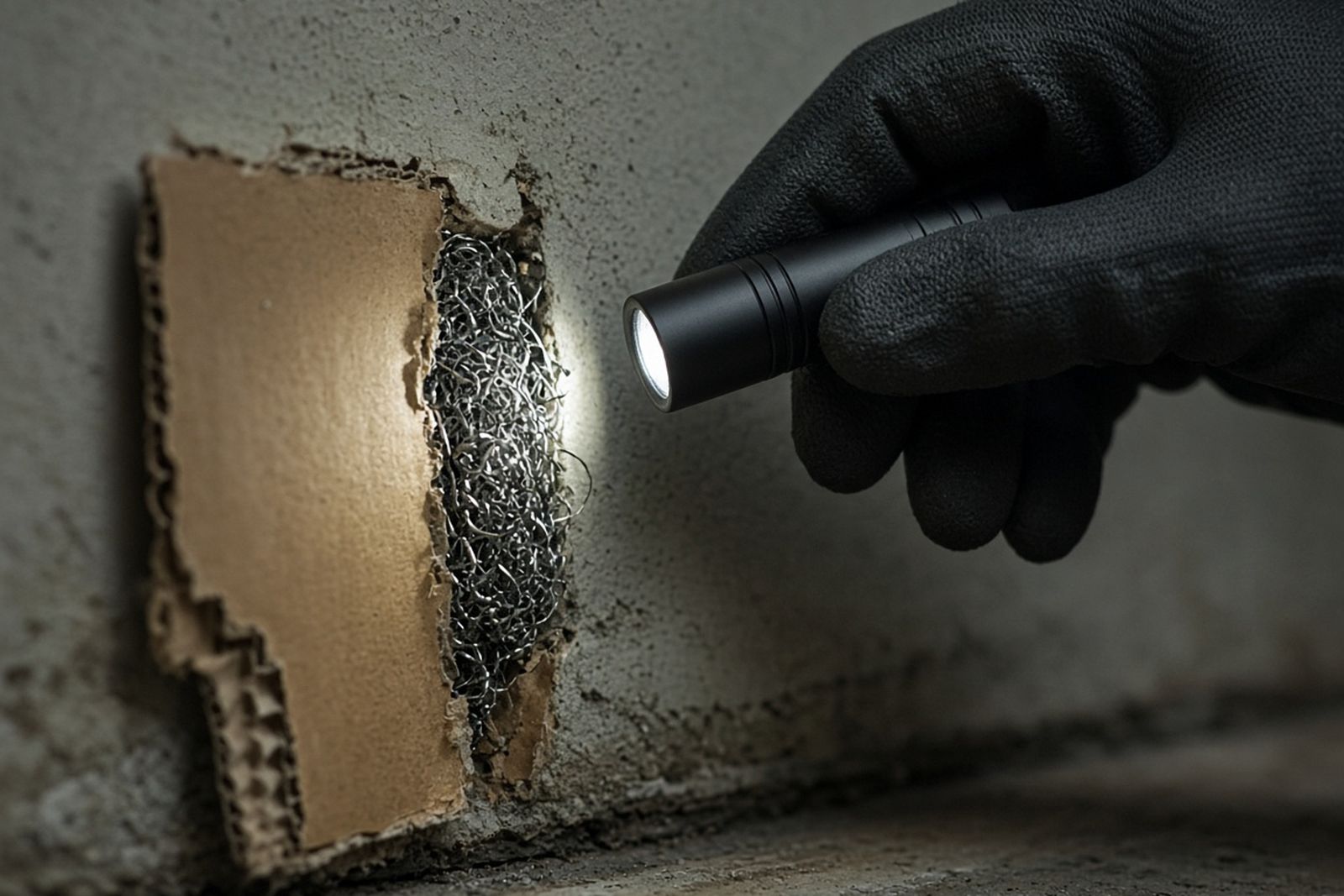
Once the urgent cleanup is handled, prevention is your best protection. Seal entry points with materials rodents cannot chew through. Store food and pet food in sealed containers. Keep firewood and clutter away from your house. Trim plants that touch the roof or walls.
Check quiet spaces like your attic, garage, shed, and closets once a season. Early signs, such as a few droppings or chewed packaging, are far easier to deal with than a full infestation. A few minutes of looking now can save you a lot of disruption later.
If the problem keeps coming back despite sealing and cleanup, ask your company for a follow-up inspection. Repeat activity usually means an entry point was missed or a new one has opened. Catching it early keeps the next round small.