Free rodent & pest droppings remediation tool
Rodent & Pest Droppings Remediation First 24 Hours Planner
Tell the planner a few facts about the situation and get an ordered list of who to call, what not to touch, and what to photograph.
The first day after you find droppings is when the worst choices get made. The mess looks easy to handle, and the danger is invisible. Someone opens the attic hatch and sees pellets in the insulation. They grab the shop vacuum and spend an hour breathing what it kicks up, with the bedroom doors open below. This planner asks a few short questions about your situation. Is the space closed in, like an attic, crawlspace, or car cabin? Are people living in the building? Is there a strong urine smell? Are there children, older adults, or people with lung problems? Can pets get in? Is it a rental or shared building? Has anyone already stirred up the mess?
From those facts, it builds a list of steps in order. It tells you who to contact, what not to touch, what to photograph, and when to call a cleanup company or pest pro. Say someone already cleaned without precautions and now feels sick. Then the top item is to see a doctor right away. If the attic connects to the heating and cooling system, the plan tells you to shut it off and cover the air returns. If the home is rented, it includes a written notice to the landlord or tenant and a reminder to keep the reply. The planner cannot see your space and does not replace a site visit. But it keeps you from making it up as you go, during the hours when that does the most harm.
How to use it
- 1Answer each question from what you can see and smell. Include whether anyone has already swept or vacuumed the area.
- 2Read the list from the top. The first items deal with exposure, keeping people and pets out, and stopping air from moving out of the space.
- 3Take the photos the plan describes before anything is moved. Note the date and time in the summary field.
- 4Print or copy the list for the landlord, manager, pest pro, or cleanup company who will plan the next steps.
Prefer to ask a person?
Your request is sent to the follow-up inbox. A coordinator can reply by email. Not for emergencies; call 911 first if anyone is in danger.
Plan the first 24 hours
Rodent & Pest Droppings Remediation: first 24 hours planner
Answer a few questions and the planner orders the next steps. It does not dispatch help and cannot replace emergency services.
Your ordered plan (6 steps)
- 1
Keep people and pets out of the affected area
Close the door and keep the area sealed until a qualified provider assesses it.
- 2
Photograph from the doorway before anything moves
Take wide shots first, then closer shots of stains, damage and belongings. Do not step into the area to do it. These photos support insurance and estate records.
- 3
Report the loss to your insurer and get a claim number
Ask the adjuster whether they need to inspect before materials are removed, and whether they have a list of approved remediation providers. Coverage depends on the policy and the cause of loss.
- 4
Call a qualified remediation provider for an assessment
Describe what happened, the rooms involved, and any odor, fluids or sharps. Ask which OSHA standards apply to rodent & pest droppings remediation and for proof of training and insurance before work starts.
- 5
Start a written log
Record who you spoke to, when, and what they said. Keep receipts for lodging, boarding, locks and any emergency purchases.
- 6
Look after the people involved
If a death or violent event is involved, victim assistance programs, hospice bereavement teams and the 988 Suicide & Crisis Lifeline can help. You do not need to manage this alone.
A worked example
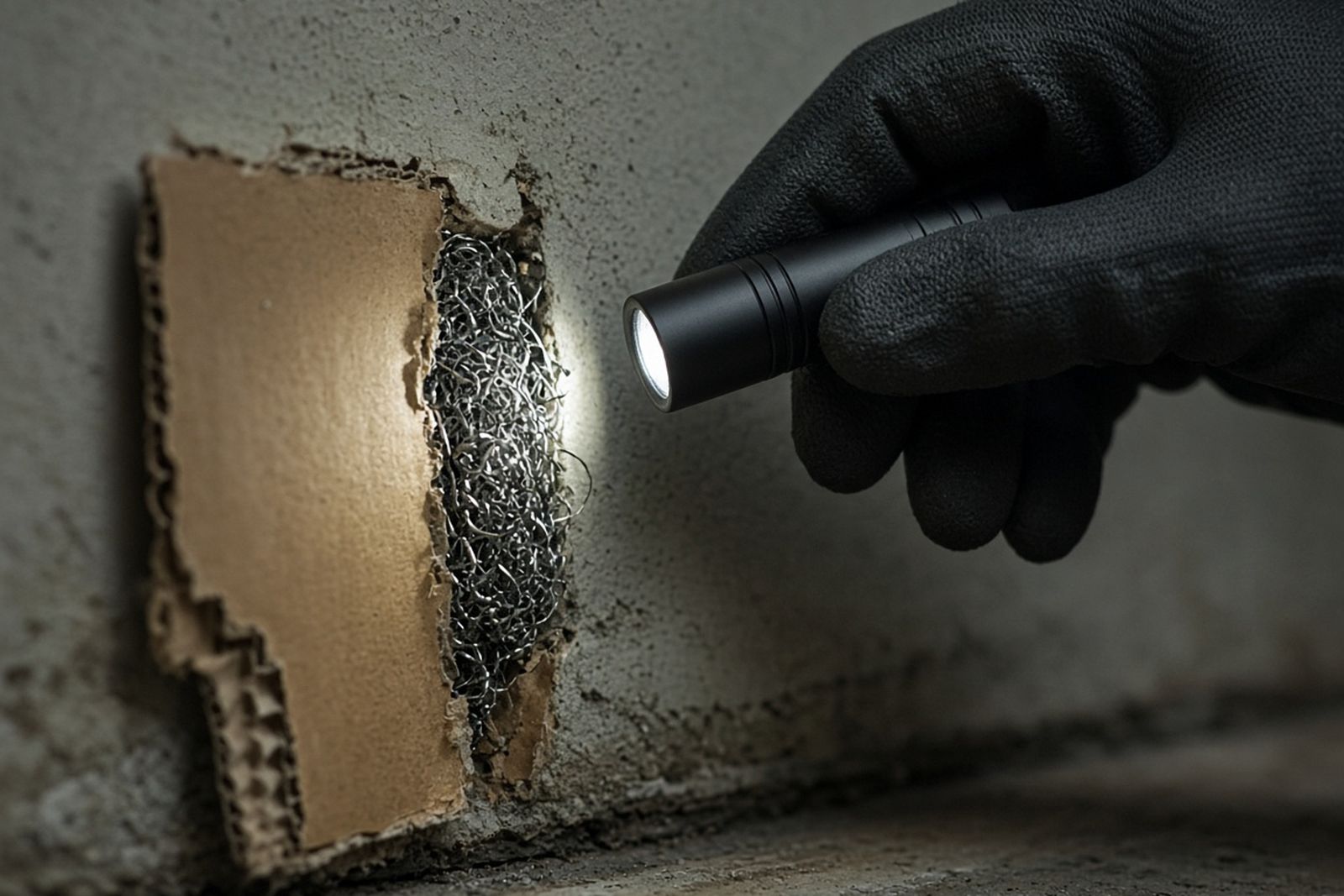
Picture a made-up couple who buy a house that sat empty for a year. On move-in day, they open the crawlspace door in a closet. They see droppings across the plastic ground cover, chewed duct wrap, and a strong ammonia smell. In the planner, they mark a closed-in space, people moving in, and a strong smell. They also mark a toddler in the home, no pets yet, not a rental, and nothing touched so far. The list starts by telling them to close the door and keep the toddler out of that closet. It says not to run the furnace until someone checks the ducts. The chewed duct wrap suggests rodents may have gotten into the air system. It tells them to photograph the crawlspace from the opening with a flashlight, without climbing in. The photos should show the ground cover, the ducts, and any nests. Then it lists calls in order. First comes a pest pro to check for rodents and gaps. Next is a cleanup company for the waste and the ducts. Last is a heating and cooling contractor if duct damage is confirmed. Because they just bought the house, the plan reminds them to check the inspection report and disclosure papers. It ends with two ideas. They could hold off on unpacking into that closet. They could also think about staying elsewhere with the toddler if duct work starts while they live there.
Facts worth knowing
About 35 percent of hantavirus infections reported to the CDC in the United States since 1993 ended in death.
Why it matters: The illness is rare but serious, so protect yourself during rodent cleanup and tell your doctor about any exposure if you get sick.
The CDC says symptoms of hantavirus lung disease can show up 1 to 8 weeks after contact with an infected rodent.
Why it matters: If you feel sick within two months of contact with rodents or droppings, tell your doctor about the exposure.
Hantaviruses can stay infectious for a few days to several weeks at room temperature, depending on humidity, sunlight and the material they are in.
Why it matters: Do not assume old droppings are safe; you should treat them with the same care as fresh ones.
Source: Center for Food Security and Public Health, Iowa State University, 2018
First 24 Hours Planner questions for rodent & pest droppings remediation
Someone already vacuumed the droppings before reading this. What now?
Stop stirring things up and keep everyone out. Air out the space if you can do it without pushing air into living areas. Anyone who did the cleaning should watch for fever or breathing problems over the next few weeks. If those show up, see a doctor right away and mention the rodent contact. The planner then moves on to walling off the area and getting a pro to assess it, as if the mess were still in place.
Why does the planner tell me to turn off the HVAC system?
The attic or crawlspace may hold air ducts or the main air unit itself. If so, running the system can pull dirty dust into every room. Shutting it off and covering the vents near the space limits that spread until a company checks the ducts. If the weather makes this hard, ask the company about short-term options. Do not just turn the system back on.
I am a tenant. Whom do I contact first?
Tell the landlord or property manager in writing that same day. Describe where the droppings are and any smell. Ask what will be done about both the rodents and the waste. Keep your message and the reply. If the building is a condo or the attic is shared, the owners' association may also need to be told. Local housing codes and lease terms vary by state and county, so check duties with the local office.
What should the photographs show?
Start with a wide shot from the door that shows the whole space. Add medium shots of the mess on insulation, ground cover, or floor. Take close-ups of nests and chewed items. Capture any sign of how the animals got in, like gaps or daylight at the roof edge. If it is safe to set an object down from the opening, include one to show size. Never climb in or move anything to get a better photo.
Does the planner handle bat guano and bird droppings?
Yes. When you mark bats or birds, the plan steps up breathing precautions. It stresses not to disturb dry material. It also adds a step to check with the local wildlife office before anyone seals the animals out. Rules for bats and migrating birds can limit timing, and they vary by state and county. The plan also notes that large piles may need a company with real experience in attic colonies or roosts.
Does the planner work for a business that found droppings before opening?
The first safety steps are the same. Keep people away from the area, do not sweep or vacuum, and protect food and supplies. A business may also need to think about what to tell staff and whether to keep a section closed. It should also ask whether its health inspector or landlord expects to be told. Use the planner for the first steps. Then check with your local health department about any added rules for your type of business.
What if I find droppings late at night and cannot reach a company?
Close off the area, keep children and pets out, put away any food that is out, and wait until morning. There is rarely a reason to start cleaning at night. Working tired in poor light makes it more likely you will stir up dust. Write down what you saw, and take photos from a distance if you can. If anyone has symptoms that worry you, call a doctor or go to urgent care.
Related community polls
Vote to see how other people answered. You can change your answer at any time.
If you found droppings across your attic insulation, what would you most likely do?
How well do you understand the hantavirus risk from rodent droppings?
Other rodent & pest droppings remediation tools
Cost Range Estimator
Set the affected area, surface types, severity and extras to see a rough cost range and what pushes it up or down.
OpenCompany Vetting Checklist
Fifteen questions to ask any cleanup company, a score that shows how ready you are to hire, and a list of what is still unanswered.
OpenInsurance Claim Organizer
A guided checklist from finding the policy to tracking the insurer’s decision, with a printable summary of where the claim stands.
OpenWaste & Disposal Classifier
Five questions about the material point to the likely waste category and which authority to confirm the rules with.
OpenDIY or Call a Pro? Risk Check
Eight yes-or-no questions that produce a risk level and explain when professional help is the safer choice.
OpenMore on rodent & pest droppings remediation
Rodent & Pest Droppings Remediation services
See how wet cleanup, attic and crawlspace work, bat droppings, sealing gaps, and insulation choices fit together after rodents move in.
Costs explained
What drives the price, published cost ranges, and how to read a written quote line by line.
Insurance and payment
Which policies may respond, how to document a claim, and what to do if coverage is denied.
Community polls
See how other homeowners and landlords handle attic droppings, new insulation, and the choice between cleaning up themselves or hiring help.
Knowledge quiz
Check whether you know why dry sweeping is dangerous, when insulation must go, and why sealing the gaps comes first.
Articles and resources
Longer reads on nests in cars, rodents in empty homes, bat colonies in attics, and what a good cleanup plan should look like.