Short answer
Before the crew arrives, move people away from the affected area and deal with any medical needs first. Do not mix products or spray disinfectant everywhere. Clean up small spills you can see with a labeled product, following its directions, and keep larger areas closed. Let in fresh air if it is safe. Write down what happened and which rooms were involved. Check if you need to tell a health agency.
What counts as an urgent sanitization situation?
Most disinfecting work is planned. Urgent calls tend to come after one clear event. Several people in the same building fall ill with vomiting and diarrhea. A child gets sick in a classroom. A bodily fluid is spilled in a public restroom. Someone in a group setting has a confirmed case of a catching illness. Or sewage backs up into a space people are using.
In these moments, the pressure to act fast is real. Your staff are worried. Families are asking questions. It can feel like the building needs to be treated right now. The steps you take before the crew arrives can make the later work go better, or make it harder.
The goal here is to help you do the right things in the right order, without creating new hazards along the way.
People first, then the space
People come first. If anyone is seriously ill, hurt, or having trouble breathing, call 911. Help anyone who is sick get to a separate, comfortable space away from others. Arrange for them to go home or get care as needed.
Next, move everyone else out of the affected area. Close doors, post a sign, and send foot traffic another way. In a school or childcare setting, move the class to another room. In an office, block off the restroom or desk involved. Keeping people away from the dirty space is one of the most useful things you can do in the first minutes.
Keep a quick written note as you go. Write down the time it happened, who was involved, which rooms they were in, and what they touched. In an outbreak, that list helps the health department trace the spread. It also helps the crew decide which surfaces need the most care. It takes you a few minutes and saves a lot of guesswork later.
Once people are safe, you can start thinking about the space itself.
Never mix cleaning products
In a rush, it is tempting to grab every cleaner in the supply closet and use them together. You may think more is better. It is not. Some common mixes create toxic gases. Bleach mixed with ammonia-based cleaners can release fumes that hurt the lungs. So can bleach mixed with acids like vinegar and some toilet bowl cleaners.
Exposures climb when people clean in a hurry. In 2020, CDC reported that U.S. poison centers logged 45,550 cleaner and disinfectant exposure calls in January through March 2020, and inhalation exposures to disinfectants rose 108.8% over the same period in 2019.
Use one product at a time, exactly as its label says. Never combine products in a bucket, in a spray bottle, or on a surface.
What trained staff can safely clean
Small spills you can see, such as one vomiting incident on a hard floor, can often be handled by your trained staff with the right supplies. The key is to follow a clear order of steps and use a product whose label covers the germs involved.
Choose one staff member to handle the spill. Do not have several people pitch in. Fewer hands means less chance of tracking the mess around the building. The person doing the work can also focus on each step. Afterward, anything that person wore, such as a smock or apron, should be bagged and washed separately on a hot cycle.
- Put on disposable gloves, and a mask and eye protection if splashing is possible.
- Cover the spill with absorbent material, such as paper towels or a spill kit powder.
- Scoop up the material and place it in a sealed plastic bag.
- Clean the area with detergent and water to remove the dirt you can see.
- Apply a labeled disinfectant and leave it wet for the full time on the label.
- Take off your gloves with care, bag them, and wash your hands well with soap and water.
What should you leave for the professionals?
Some jobs are more than your staff should take on. Leave larger areas, soft surfaces, and hard-to-reach spaces for the crew. That includes carpet with a lot of mess, upholstered furniture, air ducts and vents, several rooms hit by an outbreak, and sewage backups.
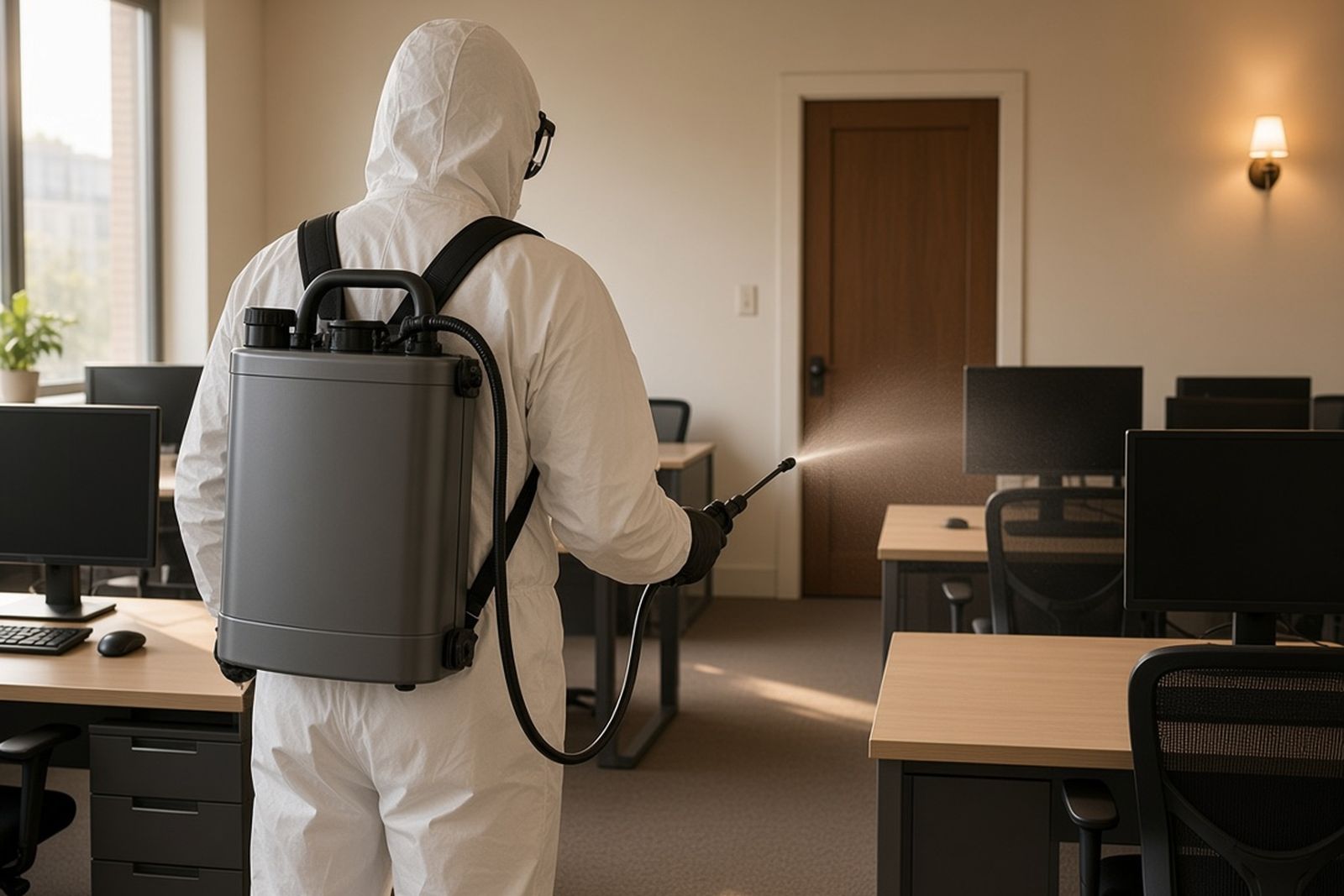
Do not spray disinfectant into the air with household spray bottles or homemade foggers to try to treat a whole room. Spraying the air does not clean surfaces. It can irritate the eyes and lungs of anyone nearby. Fogging and electrostatic spraying should be done by trained workers, with products whose labels allow those methods.
Keep the affected area closed until the crew arrives. Let them decide which method and product fit the situation.
Leave shared electronics alone, too. Keyboards, touchscreens, and phones in the affected area may need products that are safe for those devices. Wiping them with a bleach solution in a hurry can damage them. Set them aside or cover them, and ask the company how they plan to treat them.
Ventilation: when fresh air helps
Fresh air usually helps. If the affected room has windows or outside doors, opening them can cut down on smells and thin out any particles in the air. That is most helpful after a vomiting incident or a sewage event. Do this only if you can reach them without walking through the dirty area.
Think carefully about your heating and cooling system. Your building's air system might carry air from the affected room to other areas. If so, talk with your building staff about closing vents or changing the airflow for a while. When the crew arrives, tell them what you have done so they can plan around it.
Watch for strong chemical smells, sore eyes, or coughing after cleaning products were used. If anyone notices these, get everyone out of the area and into fresh air. It can be a sign that products were mixed or used at too high a strength. The space should stay empty until it has aired out. Call Poison Help at 1-800-222-1222 if anyone has symptoms.
Do you need to notify a health agency?
Some settings have a duty to report when clusters of illness appear. Schools, childcare centers, food businesses, long-term care homes, and healthcare settings are often required to tell the local health department about certain outbreaks. The health department may also give you cleaning advice. It may ask you to hold off on certain steps until it has looked into things.
Rules vary by state and county; verify with the local authority whether your situation must be reported and whether the health department has specific requirements for cleaning and reopening. When in doubt, call and ask. They would rather hear from you early.
Keep the name of the person you spoke with at the health department and any directions they gave. Pass them along to the fogging company, so everyone is working from the same advice.
Illustrative case: a stomach bug at a senior center
Here is an illustrative case, not drawn from a real event. A community senior center has three members and one staff member become ill with vomiting and diarrhea during a lunch program. The director needs to act quickly.
The director first makes sure the sick people are cared for and sent home or to medical care. She closes the dining room and the nearest restroom and moves the other members to the lobby. A trained staff member handles one small vomiting incident on the tile floor. That person uses a spill kit and a disinfectant whose label lists norovirus. The director does not let anyone spray bleach around the dining room or mix products.
She calls the local health department. It asks for a list of who attended and advises a deep cleaning before reopening. She then calls a fogging company and explains which rooms were involved. She asks about products labeled for norovirus. She also asks if cleaning first and electrostatic spraying make sense for the dining chairs and tables. The center stays closed until the work is done and the health department agrees it can reopen.
What should you tell the company when you call?
Share clear details so the crew can bring the right products and equipment. Describe what happened, which rooms were affected, and how many people were involved. Say what has already been cleaned and if a health department has given directions. Ask which product they plan to use and if its label allows their method. Ask how long surfaces must stay wet and when you can go back in.
Be careful with any company that promises an exact arrival time before it hears the details. Be careful, too, with one that suggests fogging the whole building without asking what happened. A thoughtful company will focus on the affected areas and explain what it will do and why.
After the work is done, ask for a written record. It should list the areas treated, the product and its registration number, and the re-entry time. Share a short summary with your staff and families so they know what was done. That usually eases worry far more than a general promise that the building was cleaned.