Free sanitization & fogging tool
Sanitization & Fogging Company Vetting Checklist
Fifteen questions to ask any cleanup company, a score that shows how ready you are to hire, and a list of what is still unanswered.
Almost anyone can buy a fogger or an electrostatic sprayer. Many cleaning companies added disinfecting services without adding training. The Company Vetting Checklist gives you fifteen questions written for this field. Is the product EPA-registered, and does its label allow the method the company plans to use? How is dilution controlled, and how is cleaning first handled? How do they confirm surfaces stay wet long enough? Who shuts off the air system and turns it back on? How are electronics and food surfaces protected? What re-entry time will they state in writing? Are people ever allowed in during spraying? What is the company's view on ozone? And what will the service record include? As you confirm answers, the tool tracks them and gives a readiness score.
The score shows how much you have checked, not how good the company is. So treat a low score as a to-do list, not a verdict. The list of open questions you can copy is the most practical part. Send it to the company and ask for written replies. Some companies attach the label, describe how they clean first, and explain why they chose electrostatic spray over fogging for your gym. They are showing the habits you want. Others say the product is safe enough to fog around people. Or they cannot say how long the label says surfaces must stay wet. They are telling you to look elsewhere. Use the same list on every company so the comparison is fair.
How to use it
- 1Read all fifteen questions before you contact a company, so you know what a full answer sounds like.
- 2Ask each company the questions. Tick only what they confirmed with a clear answer or a document, like a label or sample ticket.
- 3Review the readiness score. Copy the open questions to send in writing.
- 4Compare companies on what they confirmed and on the written work plan, not on how impressive the equipment sounds.
Prefer to ask a person?
Your request is sent to the follow-up inbox. A coordinator can reply by email. Not for emergencies; call 911 first if anyone is in danger.
Check a company before you sign
Sanitization & Fogging provider vetting checklist
Start with the questions specific to this kind of job. Tick each one once the provider has answered it in writing or shown you the document. Your progress stays on this device only.
Readiness: 0 of 21 confirmed (0%)
21 questions still need a written answer. Copy the list and send it to the provider before you sign anything.
A worked example
Picture a made-up facilities manager at an elementary school. After a stomach bug outbreak in two classrooms, the principal asks him to arrange disinfecting. He calls three companies. The first says they fog everything with a hospital-grade product. They say they can do it at lunch while students are outside. He asks whether the label allows fogging and what the re-entry time is. The answer is vague, and he ticks three items. The second company says they clean desks and hardware by hand first. Then they use electrostatic spray with a product they name. They email the label. It shows electrostatic use, how long surfaces must stay wet, and that the room must be empty. They also plan to seal the classroom vents and work with him to restart the air unit. He ticks twelve items. His open questions are about covering the classroom laptops, whether the restroom is included, and what the service ticket will look like. The third company answers well but insists on adding an ozone treatment overnight. He notes the ozone concern as an open question. He copies the open lists and emails the second and third companies. The second sends a sample ticket and a plan to bag the laptops. The third defends ozone but says nothing about testing the air before re-entry. He asks the second company for a written work plan.

Facts worth knowing
The EPA says ozone at levels within public health limits does not effectively remove viruses, bacteria, mold or other biological pollutants from indoor air.
Why it matters: Be wary if a company offers ozone to treat germs or mold in your space; ask what evidence supports it.
In a 2020 Brazilian hospital test, a portable UV-C light held 1 cm from the surface for 20 seconds killed five types of bacteria.
Why it matters: UV light may only work very close up and in direct line of sight, so ask how your shadowed areas are treated.
In 2021 EPA lab tests of nine spray and fog devices, most put very little disinfectant on the back side of an 8-inch cylinder.
Why it matters: Do not assume a fog or spray reaches hidden sides of objects; ask how the company makes sure your surfaces are all covered.
Company Vetting Checklist questions for sanitization & fogging
Why does the checklist ask whether occupants can stay during application?
Because the answer shows whether the company respects the label. Almost every fogging product requires an empty space. Electrostatic products usually do too, at least until surfaces dry. A company that says people can stay in the room has a problem. Either it is using a product in a way the label does not allow, or it does not understand the risk of breathing it in. Either way, that answer settles it.
What documents should a company be able to produce?
The company should be able to show you the product label. It should show the EPA registration number and the approved ways to apply it. It should also give you the safety data sheet and proof of liability insurance. Ask for a sample service ticket with the product, times, rooms, and re-entry time. Ask for a written method plan too. Schools, childcare, and food settings may need extra approvals in some places, so check with the local office.
Should I ask about ozone even if the company did not propose it?
Yes. Some companies add ozone as an upsell for odor or as a chemical-free option. Asking how they view ozone tells you what they understand. Do they know it harms the lungs and needs a fully empty space and air testing? Do they know it damages rubber, fabric, and electronics? Do they know it does not replace cleaning or registered disinfectants? A careful answer is a good sign.
Does a low readiness score mean the company is unqualified?
It means you have not confirmed enough yet. Send the list of open questions and see what comes back. Say a company will not supply the label, or cannot explain how long surfaces must stay wet after you ask directly. That response matters more than the score. If they answer fully, the score goes up and your choice gets easier.
How do I vet a company for buses or fleet vehicles?
Ask whether they have worked in vehicle cabins. Ask how they handle dashboard electronics, seat fabric, and the short time between runs. Ask how they confirm handrails and seat backs stay wet long enough, since those surfaces matter most. Ask whether they suggest a daily wiping routine along with any electrostatic spraying now and then. Companies with real fleet experience answer these without pausing.
Can I work through the checklist during a phone call with a company?
You can, and it helps keep the call on track. Mark answers as you go. Afterward, send the open questions to the company and ask for written replies. Phone answers are a good start. But written ones let you compare companies side by side and hold the one you choose to what it said. If a company is slow to confirm in writing, note that on the checklist too.
What should I do when a company says a checklist question does not apply to my building?
Ask the company to explain why in a sentence or two. Sometimes the answer is fair. One example is air system questions for a vehicle with no shared air system. Other times it points to a gap. An example is saying wet time does not matter for its product. Write down the explanation. Mark the item as confirmed only if the reasoning holds up when you compare it with the product label.
Related community polls
Vote to see how other people answered. You can change your answer at any time.
A vendor offers to fog your classrooms at lunch while students are outside. What do you say?
How do you see repeat fogging contracts today?
Other sanitization & fogging tools
Cost Range Estimator
Set the affected area, surface types, severity and extras to see a rough cost range and what pushes it up or down.
OpenInsurance Claim Organizer
A guided checklist from finding the policy to tracking the insurer’s decision, with a printable summary of where the claim stands.
OpenFirst 24 Hours Planner
Tell the planner a few facts about the situation and get an ordered list of who to call, what not to touch, and what to photograph.
OpenWaste & Disposal Classifier
Five questions about the material point to the likely waste category and which authority to confirm the rules with.
OpenDIY or Call a Pro? Risk Check
Eight yes-or-no questions that produce a risk level and explain when professional help is the safer choice.
OpenMore on sanitization & fogging
Sanitization & Fogging services
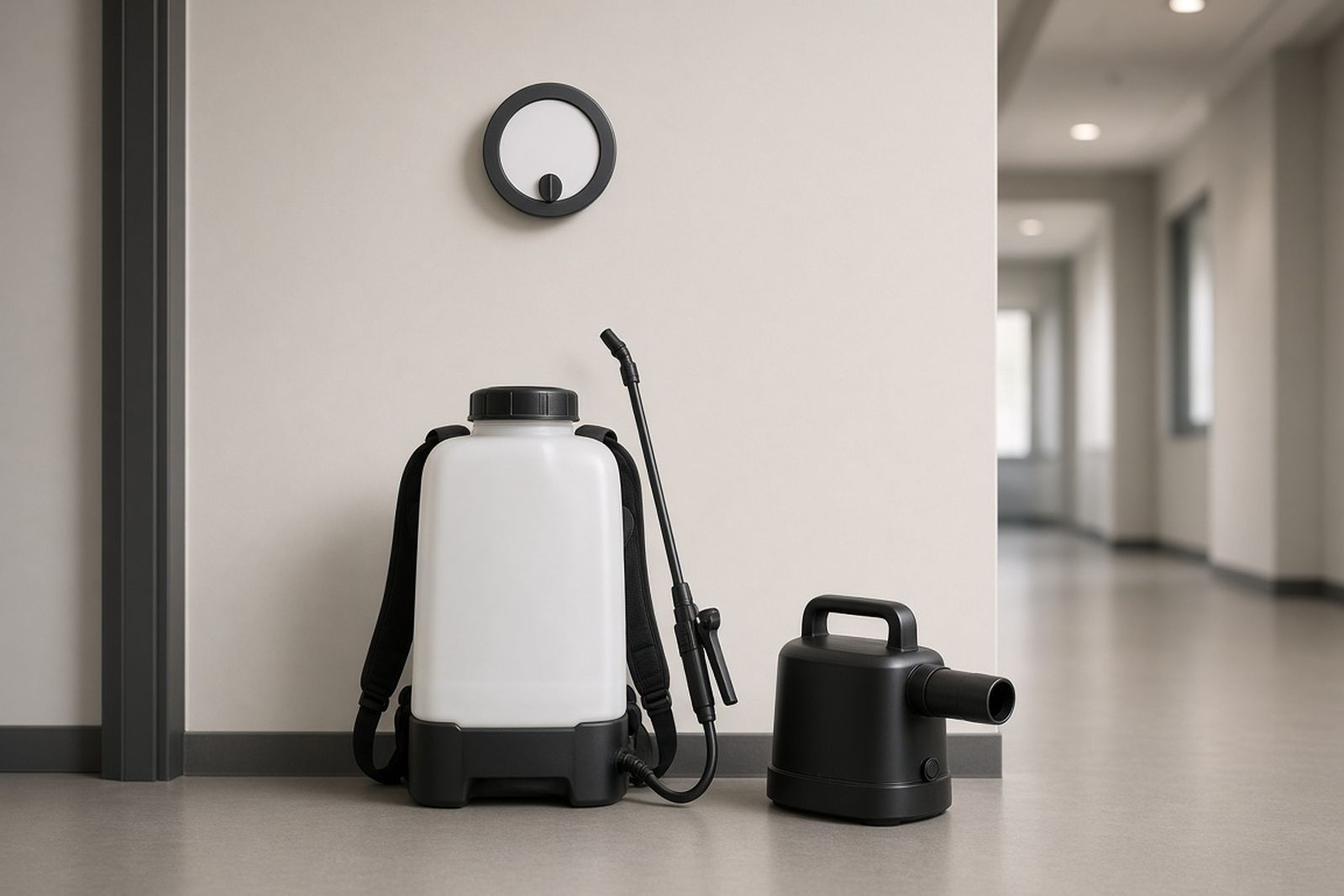
See how electrostatic spray, heat fogging, UV-C, and scheduled programs fit into a clean-first, then-disinfect plan for your building or fleet.
Costs explained
What drives the price, published cost ranges, and how to read a written quote line by line.

Insurance and payment
Which policies may respond, how to document a claim, and what to do if coverage is denied.
Community polls
See how other facility managers weigh fogging contracts, air system control, label checks, and re-entry timing against cost and daily disruption.
Knowledge quiz
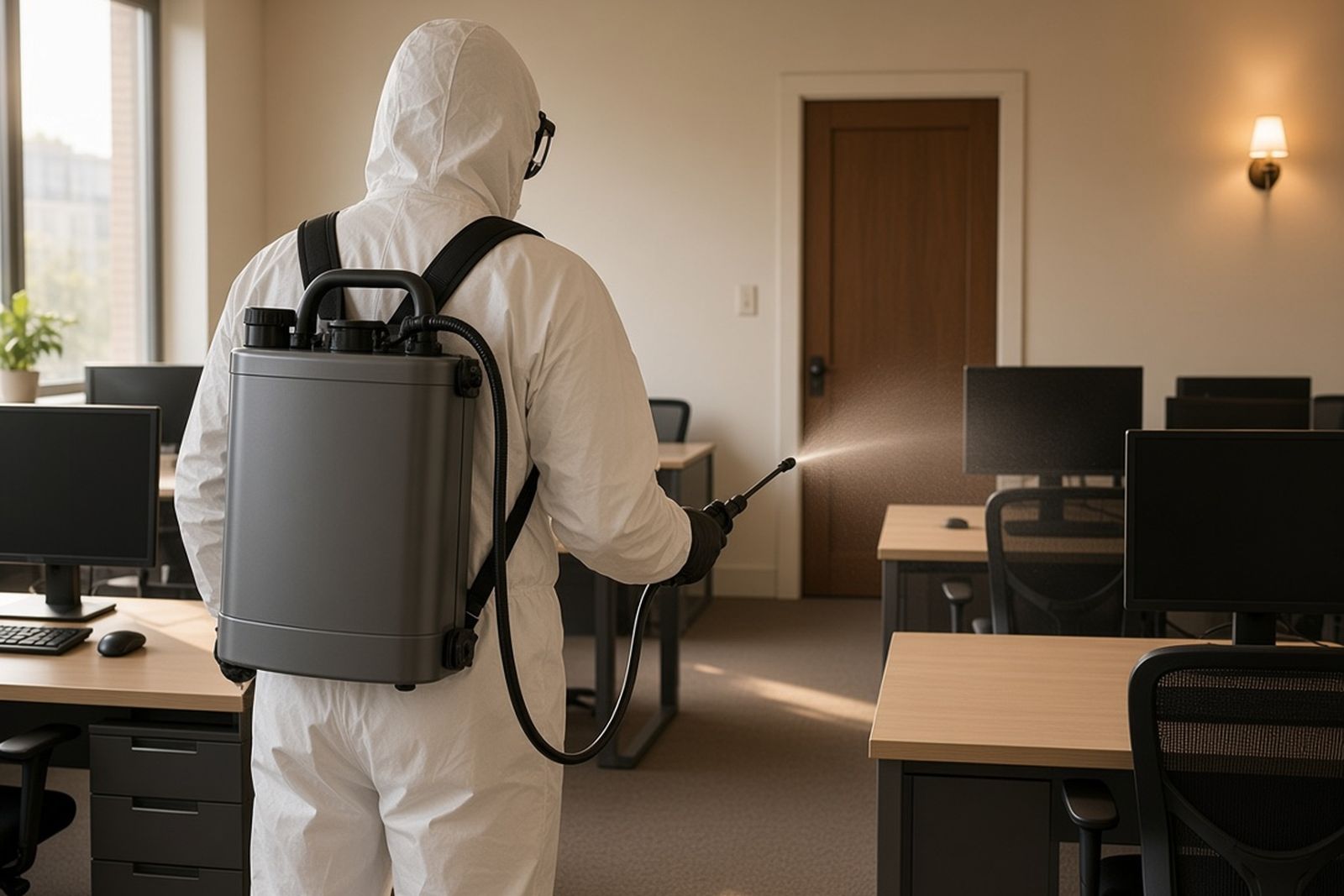
Check whether you can spot a label mismatch, fogging with people present, or a skipped cleaning step. Then review the study guide.
Articles and resources
Read explainers on spray methods, product labels, re-entry timing, ozone risks, and why routine wiping still matters in every building.