Unattended Death Cleanup Cost: What Shapes the Bill
Why a late discovery changes the job, and how to read the estimate.
When someone dies alone and isn't found for some time, the home often needs far more than surface cleaning. Families, executors, and landlords must then approve an estimate in the middle of grief. This page explains what goes into the price and why the time before discovery matters so much. It covers which charges tend to show up later and who usually pays.
Get an email reply about unattended death cleanup
Send a short message to the follow-up inbox. A coordinator can reply by email. This form does not send emergency help; call 911 first if anyone is in danger.
Estimate your range
Unattended Death Cleanup cost range estimator
Educational only. Real pricing needs an on-site assessment and a written scope. Insurance coverage is decided by your carrier, not by this tool.
Educational range: $3,000 – $5,000
Scaled from a published reference range (typical biohazard cleanup project, national) reported by Fixr (2025). Your region, provider and the actual findings on site can move the real number outside this range.
Cost level: Mid range.
None of the big cost multipliers are selected. Minimum service charges, travel and waste fees still apply.
Ask every quote to itemize labor, containment, product, waste disposal, verification sampling, and any rebuild, and to state what is excluded.
Open the full tool page for a worked example and more answers.
What does an unattended death cleanup price usually include?
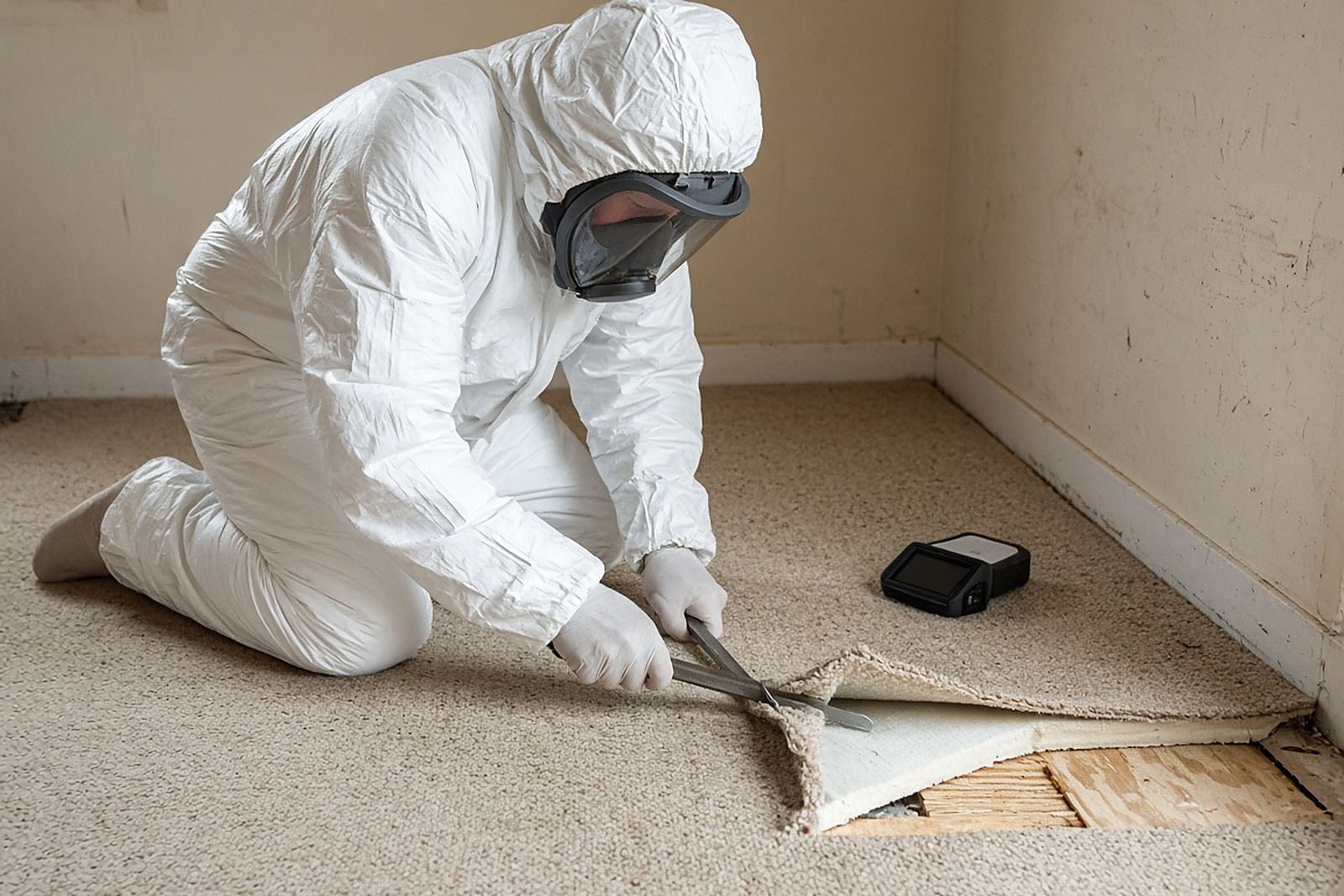
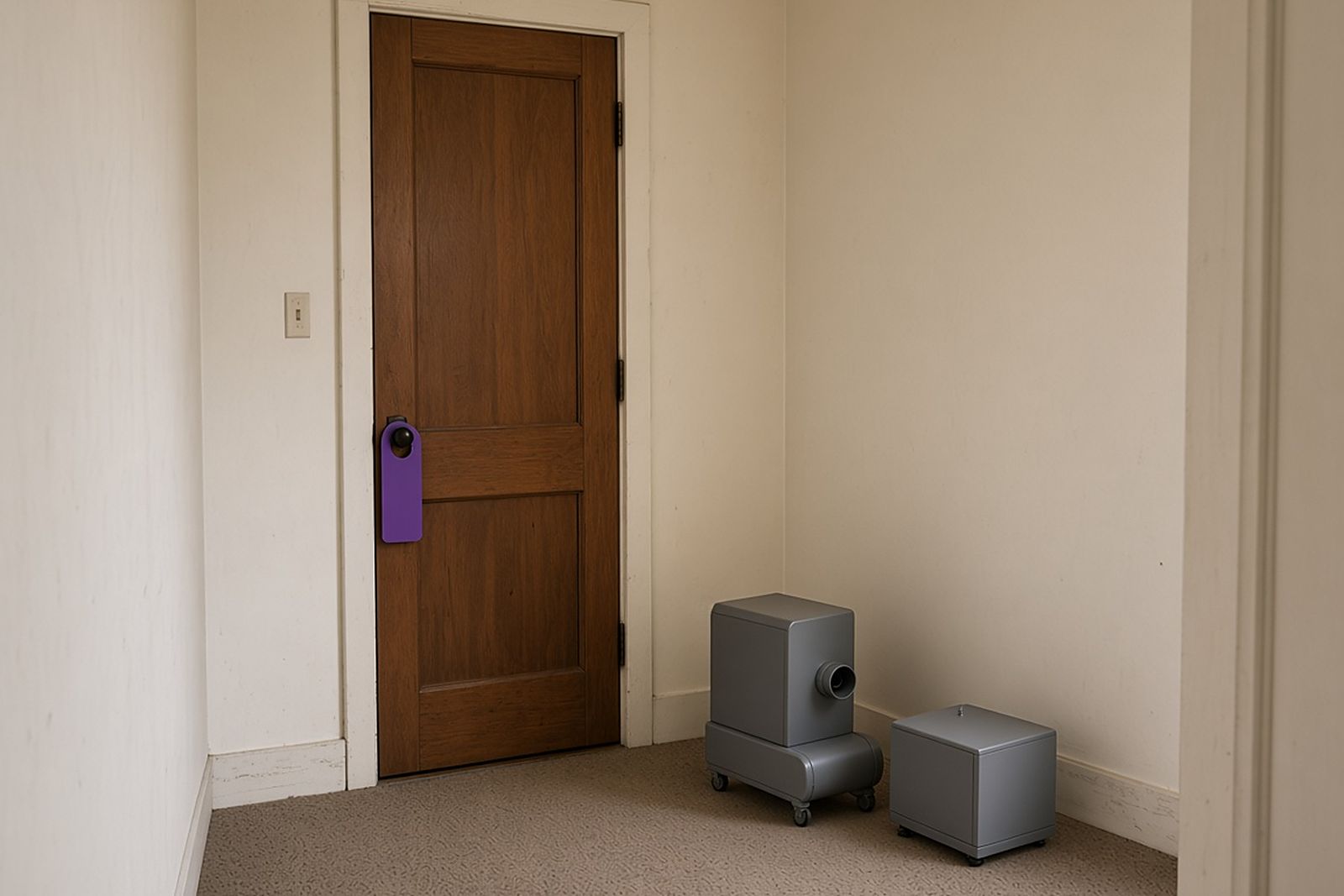
The work starts once the body has been removed. Any needed release from the medical examiner, coroner, or property manager must be in place. A crew records the room and maps how far body fluids spread. They put up plastic walls with filtered air so odor and particles don't drift into other rooms. From there, the estimate usually covers removing soaked materials and cleaning and disinfecting what can stay. It also covers odor treatment once the source is gone, and packing and disposing of the waste.
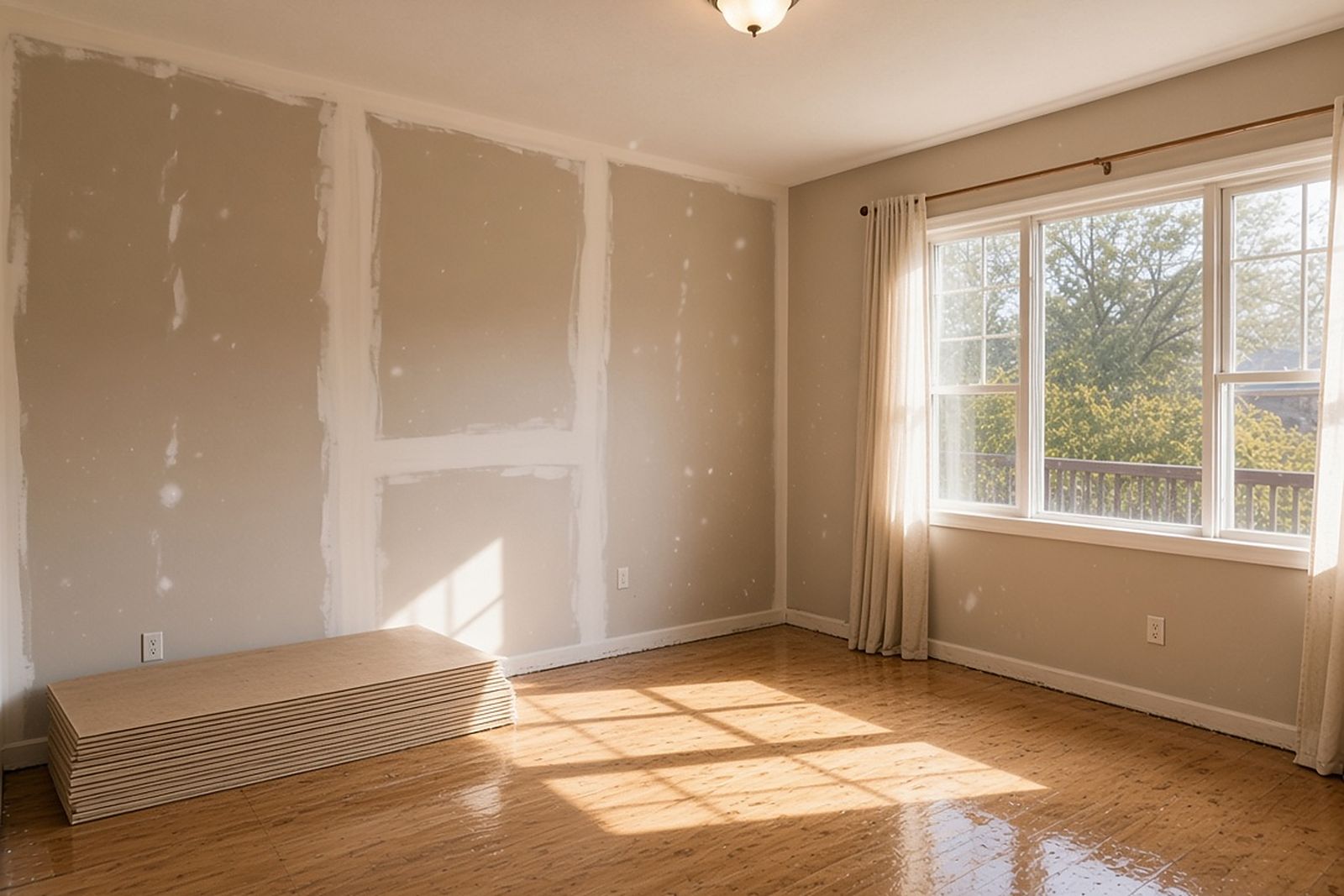
Fluids from a body that lay for a while act differently from a fresh spill. They soak through carpet into the pad, then into plywood or concrete. Sometimes they reach inside walls or the ceiling below. Because of this, a large share of many estimates goes to careful tear-out. It also goes to sealing or treating the bare structure underneath. Rebuilding, like new subfloor, flooring, or drywall, is usually priced separately by a repair contractor after cleanup is done.
- Crew labor in protective gear and respirators
- Air filters and plastic walls that keep dust and odor inside the work area
- Removing carpet, pad, underlayment, mattresses, or cloth-covered furniture
- Enzyme cleaning and EPA-registered disinfectant, left wet as long as the label says
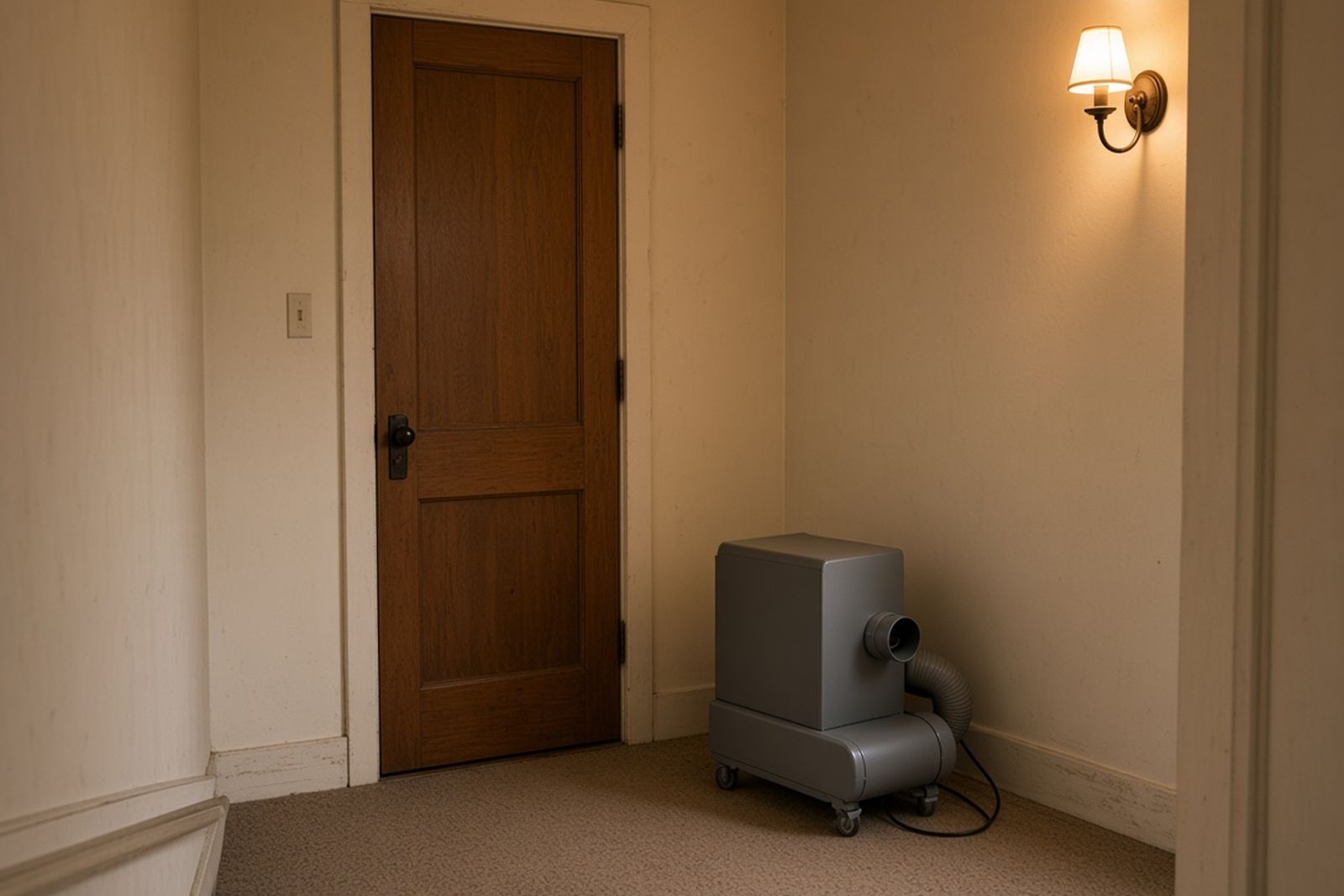
- Odor treatment after soiled materials are gone
- Packing, hauling, and disposal records for the waste
- Photo records for the estate, landlord, or insurer
Why does the time before discovery affect the cost so much?
The longer a body goes unfound, the farther fluids travel. Odor also binds more deeply to building materials. A person found quickly may leave a small mark on one surface. Someone found after a long time may leave contamination that reaches the subfloor, the floor beams, or a unit downstairs. Warm rooms, closed windows, and running heat tend to speed up these changes. Cooler conditions may slow them down.
Insects are another factor that often surprises families. Flies and other insects can spread beyond the room, and dealing with them adds time and treatment steps. Odor also grows with time. It can soak into curtains, bedding, clothing, and the heating and cooling system. All of these make the job bigger than the stain you can see. That's why two scenes that look alike in a photo can lead to very different estimates.
How do hourly rates compare with national averages for this work?
Some companies charge by the hour plus materials and disposal. Others quote a project price after they inspect. Fixr's 2025 cost guide lists unattended death cleanup at $200-$300 per hour. That helps explain why longer jobs with a lot of tear-out add up fast. Hourly rates vary by region and crew size. Use them only as rough context when you compare written estimates.
For a broader reference point, Fixr's January 2025 guide reports that biohazard cleanup nationally averages about $4,000. That average mixes many kinds of jobs, including small spills that take a few hours. An unattended death may cost well above that if it needs subfloor removal, long odor treatment, or work in more than one room. A scene found quickly may cost less. The reasons behind a quote matter more than how it compares to any average.
How can you read and compare an itemized unattended death estimate?
First, check whether the estimate comes from a real inspection. It should describe the rooms involved and the materials to be removed. It should say how the company judged how far fluid soaked in, such as with moisture readings or probing under the flooring. Separate lines for labor, barriers, tear-out, disinfecting, odor control, and disposal show where the effort goes. A single lump sum with no details makes comparing quotes and insurance review much harder.
When you compare two quotes, focus on what each includes, not just the total. One may assume the subfloor can be cleaned and sealed. Another may plan to replace a section. Ask each company to explain its reasons. Ask what happens if the contamination turns out to be deeper than expected, and how changes will be approved. Make sure the final package includes photos, product details, and disposal records. Executors and landlords often need them.
Which hidden costs often follow an unattended death?
Odor is the most common source of added cost. If soiled material is left anywhere, like under a doorway threshold or inside a wall, odor can come back after the equipment is gone. Then more work may be needed. Heating and cooling systems that ran during the delay can carry odor through the ducts. So new filters or duct cleaning may follow. In buildings with several units, a neighbor's apartment or the ceiling below may also need to be checked.
Beyond cleanup, there are personal and practical costs. Belongings near the affected area may need cleaning, deodorizing, or disposal. Families sometimes need storage for things they want to keep while the home is worked on. Repair trades will bid on new floors, drywall, and paint separately. Utility bills, lock changes, and property taxes keep coming while the estate is settled. None of these is certain. But naming them early helps an executor plan the estate budget.
- More tear-out once flooring or trim is opened
- New air filters or duct cleaning
- Checking nearby units or rooms below
- Cleaning, deodorizing, or storing belongings
- Repair trades for flooring, subfloor, drywall, and paint
Who usually pays for unattended death cleanup?
In many cases, the estate of the person who died must pay to clean a home they owned. The executor or personal representative approves the work and pays for it from estate funds. If the estate isn't open yet, a family member may sign a work order and seek to be paid back later. It helps to understand the risks before doing so. Owners may also file a claim on the homeowners policy.
When the person rented, the landlord usually arranges cleanup of the unit. The landlord may look to a landlord policy. Depending on the lease and local rules, they may also look to the tenant's estate. Personal belongings usually fall to the estate. In some settings, assisted living homes, employers, or property managers may be involved. Rules vary by state and county; verify with the local authority or an estate attorney before you assume who must legally pay a certain cost.
What might a typical unattended death project look like?
Picture an adult child who learns that a parent died at home and wasn't found for some time. The coroner's office releases the home, and the executor calls two cleanup companies. Both look at the bedroom. One quotes removing the carpet and pad and cleaning the surface. The other shows moisture readings that point to fluid reaching the plywood subfloor. It plans to remove a section, then clean and seal the floor beams underneath.
The executor picks the second plan because it is clearly explained and backed by readings. During the work, the crew finds that odor got into the return air duct. They replace the filter and suggest a duct cleaning contractor. At the end, the executor gets photos, a list of removed items, product details, and disposal records. A flooring contractor then bids on the rebuild. The executor sends all the paperwork to the homeowners insurer.
How can you keep costs reasonable without cutting corners?
Get at least two written estimates when you can. Ask each company to explain what drives its price. Decide ahead of time which belongings you want to keep. Then the crew won't spend time sorting items that will be thrown out. It also keeps them from throwing out something that matters to you. Ask whether any items can be safely moved out of the affected area before the plastic walls go up.
Avoid shortcuts that can raise costs later. Covering odor with sprays or painting over stains usually fails. The problem comes back when the air gets humid. Hiring a general cleaner without the tools to handle subfloor contamination can mean paying twice. A careful cleanup with clear records may cost more up front. But it often protects the property's value and makes insurance or estate accounting simpler.
Facts worth knowing
Fixr's 2025 guide lists unattended death cleanup at $200 to $300 per hour, and hoarding cleanup at $25 to $150 per hour or about $1,000 per day.
Why it matters: These are rough estimates and local prices vary, so get a written quote that shows your hourly rate and expected hours.
Employers must offer the hepatitis B vaccine within 10 working days of putting an employee in a job with exposure to blood.
Why it matters: Before asking your own employees to clean up blood, check whether this duty and other OSHA rules apply to you.
In 2024, OSHA's top fines were $16,550 for each serious violation and $165,514 for each willful or repeated one.
Why it matters: If you have your own staff clean up blood or chemicals without required training and gear, you may face fines like these.
Costs questions about unattended death cleanup
Why can't the carpet just be cleaned instead of removed?
Fluids from a body usually pass through carpet into the pad and the surface under it. Cleaning the top layer can't reach what soaked in lower, and the source of the odor stays. In most unattended death scenes, affected carpet and pad are removed. Then the crew checks the subfloor. A company should explain this choice based on what they see and measure. They shouldn't assume either extreme without inspecting.
Should I get a quote before the medical examiner releases the home?
You can contact companies and ask general questions at any time. But a proper estimate usually needs an inspection after the body has been removed and any needed release is in place. Until then, keep the area closed and don't go in yourself. Some families ask a company to be ready to inspect as soon as the release happens. Then the work can start without needless delay.
Is odor removal included in the cleanup price?
It depends on the company and how the estimate is written. Some include odor treatment as part of the cleanup. Others list it separately. Odor control works after soiled materials are removed. It is not a substitute for removal. Ask whether the price includes air scrubbers, odor-breaking machines, new air filters, and a follow-up odor check. Ask how more treatment would be billed if odor comes back.
Can the estate pay for cleanup before probate is finished?
Sometimes. It depends on the executor's authority and local rules. An executor who has been named by the court can often pay needed costs to protect estate property. If no one has been named yet, a family member may pay and later ask to be paid back. But that carries some risk. Rules vary by state and county; verify with the local authority or an estate attorney. Keep every invoice and receipt for the estate records.
Will personal belongings in the room be thrown away?
Not automatically. Items that soaked up fluids, like mattresses and cloth-covered furniture, usually can't be saved. Hard items like jewelry, framed photos, and papers can sometimes be cleaned. A careful company will ask what you want to keep. They will list items before throwing them out and ask for your written approval. If an object matters to you, mention it early so the crew can try to save it.
What if the apartment below was also affected?
In buildings with more than one floor, fluids can sometimes travel through the floor into a ceiling or wall below. If this happens, the building owner usually arranges checking and cleaning the neighbor's unit. Costs may be covered by the landlord's policy, the estate, or someone else, depending on the facts. Ask the company to clearly record any spread so everyone knows where the contamination reached.
Does a higher quote always mean better work?
No. A higher quote may reflect a more complete plan, better records, or just higher overhead. A lower quote may leave out subfloor treatment or disposal records. The useful comparison is what each plan covers and how well it's explained. Ask each company to walk you through its plan, what it will remove, and how it will check the result. Ask what paperwork you'll get. Pick the company whose plan makes sense for your situation.
What other people in your situation chose
Vote to see how other people answered. You can change your answer at any time.
As a landlord, how long would you wait for the tenant's family before arranging cleanup yourself?
Which part of an unattended death project would you find hardest to manage?
More on unattended death cleanup
Unattended Death Cleanup services
Learn what cleanup after a late discovery involves. It covers tracing how far fluid soaked into the subfloor, odor treatment, listing belongings, and move-back-in records.
Insurance and payment
Which policies may respond, how to document a claim, and what to do if coverage is denied.
Planning tools
Six tools for landlords, executors, and families caring for a property after an unattended death. They help from the first day through waste records and claims.
Community polls
See how other landlords, executors, and relatives handled belongings, talking with tenants, telling buyers, and subfloor choices. Share your own view without giving your name.
Knowledge quiz
Test what you know about odor signs, who is in charge, closing off rooms in shared buildings, taking out soaked materials, waste records, and final sign-off papers.
Articles and resources
Longer reads on handling an estate from far away, working with tenants after a death in the building, and what honest cleanup after a death looks like.
Field guides
Guides for landlords and executors. They cover access, who is in charge, telling the insurer, how long to hold belongings, and when people can safely move back in.
City guides
Find cleanup companies by city and state. Then check their licenses, waste handling, and how they inspect the subfloor yourself before you approve any work.