Free unattended death cleanup tool
Unattended Death Cleanup DIY or Call a Pro? Risk Check
Eight yes-or-no questions that produce a risk level and explain when professional help is the safer choice.
Landlords, property managers, and relatives with a key often think about doing this cleanup themselves. That is most common when the stain looks small or the estate has no money. This risk check asks a set of yes-or-no questions. Are there body fluids or stains? Was the death found more than a day or two later? Does odor stay after the room is closed? Is the floor soft or stained? Were there insects? Is the space in a building with many units? Do you have protective gear and a legal way to get rid of regulated waste? Did the person doing the work know the person who died? Then it gives you a risk level and explains why.
For almost every unattended death, the honest answer is that trained help is the safer choice. The tool says so plainly. A late discovery means fluids have soaked into layers a homeowner cannot reach or disinfect. It means a large amount of material is present that federal rules treat as infectious under 29 CFR 1910.1030. And any attempt to clean the surface will leave the source of the smell in place. There are also practical risks. A landlord who tries and fails may face complaints that the unit is not livable. An executor who throws out estate property while cleaning may face disputes with the heirs. The risk check puts the reasons in writing. That is often what it takes to convince a cost-minded owner or a well-meaning relative to make the call.
How to use it
- 1Answer each question from what the officer, neighbor, or property manager told you, or from what you saw from the doorway without going in.
- 2Pay close attention to the questions about late discovery and odor. Those are the strongest signs that fluids have reached the subfloor.
- 3Read the risk level and the reason for it. Share the reason with the owner, the estate, or whoever is weighing the cost.
- 4If the result points to trained help, go to the Company Vetting Checklist. If it does not, reread your answers before you go ahead.
Prefer to ask a person?
Your request is sent to the follow-up inbox. A coordinator can reply by email. Not for emergencies; call 911 first if anyone is in danger.
Check whether DIY is safe
Unattended Death Cleanup: DIY or call a pro?
Eight yes-or-no questions. The result is an educational risk level, not a safety clearance.
1. Is there blood, body fluid, or anything that could carry a bloodborne pathogen?
2. Has the material soaked into carpet, padding, a mattress, drywall or a subfloor?
3. Is there a strong or lingering odor?
4. Could needles, broken glass, drug residue or unknown chemicals be present?
5. Does the affected area cover more than a small spot, or more than one room?
6. Will children, older adults, pregnant people or anyone immunocompromised use the space afterward?
7. Do you need documentation for insurance, a landlord, a sale, or an estate?
8. Would you be doing this while grieving, exhausted or under time pressure?
8 questions left to answer.
A worked example
Here is a made-up case. A property manager is being pushed by an owner to skip the cost of a cleanup crew. The unit is a studio apartment where a tenant was found after a few days. The owner suggests that maintenance staff pull the carpet, mop the slab with bleach, and repaint. The manager opens the risk check. He answers that there are stains and that the death was found more than a day or two later. Odor stays with the door closed. The carpet is stained all the way through to the backing. Flies were seen on the window. The unit is in a building with shared hallways. Staff have no protective gear and no regulated waste hauler. And the workers did not know the tenant. The result comes back at the highest risk level. The reason covers several points. Untrained staff could be exposed to infection. Fluids almost surely reached the pad and slab and spread under the baseboards. Insects carried material to other spots. Bleach likely will not remove the source of the smell, and it may create fumes. There is no legal way to get rid of soaked carpet. And the owner could be liable if neighbors complain about odor after the unit is rented again. He sends the reason to the owner with the estimator range attached. The owner agrees to a professional inspection.
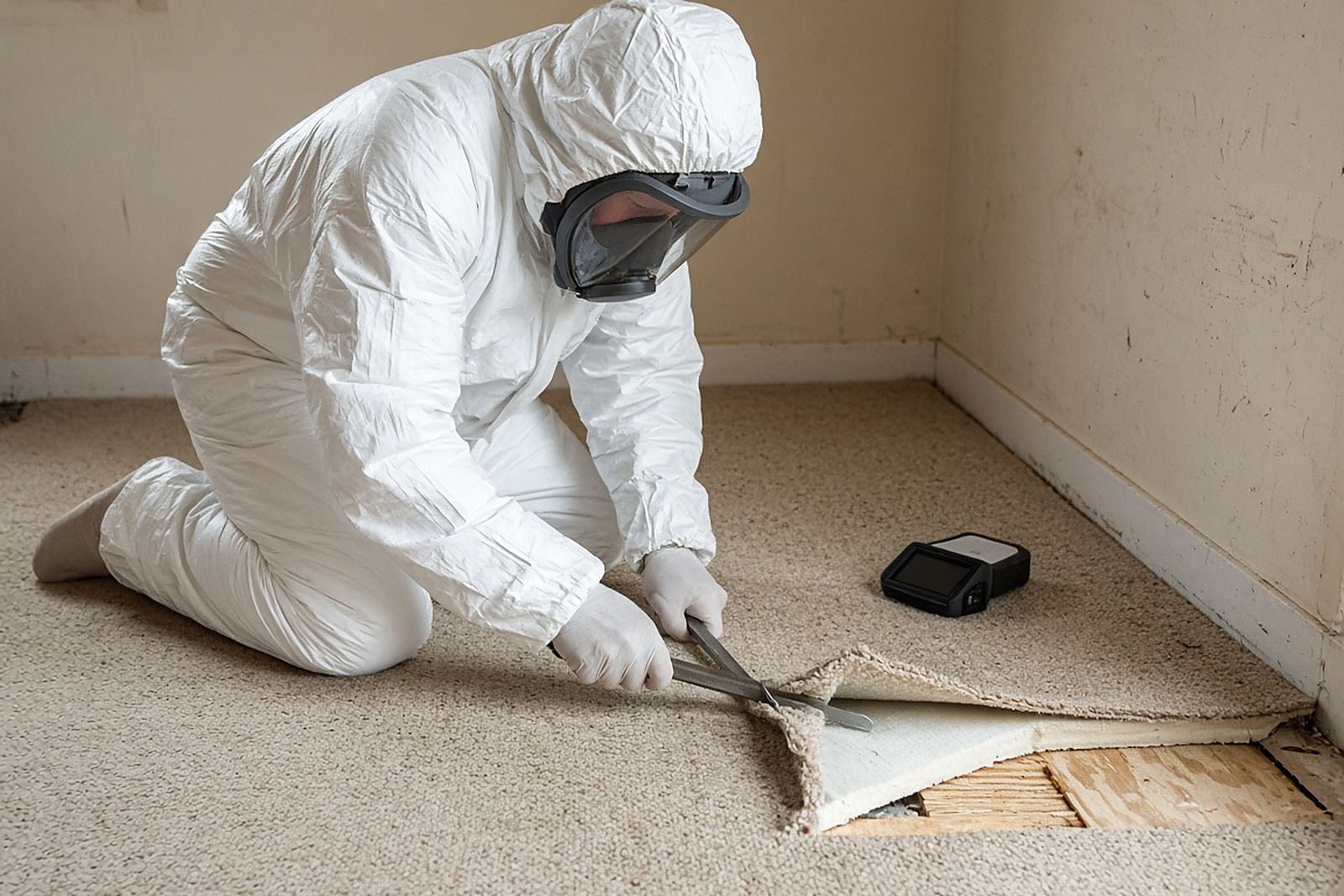
Facts worth knowing
The CDC says washing hands with soap cuts the number of people who get sick with diarrhea by 23% to 40%.
Why it matters: Wash your hands with soap after any cleanup or contact with a contaminated area.
In a UK interview study, 35 of the 49 bereaved people who chose to view or identify the body said it was the right decision; nine had mixed feelings.
Why it matters: If you are unsure about viewing, it may help to know most people in this small study felt they chose right.
In a Swedish survey of 666 suicide-bereaved parents, those who viewed their child's body reported nightmares about the death more often than those who did not; cause is unproven.
Why it matters: Viewing can leave hard images for some people, so you may want support in place before and after you go.
DIY or Call a Pro? Risk Check questions for unattended death cleanup
The visible stain is small. Does that change the risk level?
Not as much as people think. After a late discovery, the stain you see is only the top of the damage. It spreads down and out through the pad, the layer under it, and sometimes the framing. That is exactly why the risk check gives more weight to the time that passed, the odor, and the floor's condition than to the stain's size. A small stain with odor that stays after a delay is a classic sign of hidden spread.
Can maintenance staff at least remove the carpet so the crew has less to do?
No. Pulling soaked carpet without containment, protective gear, or a legal way to get rid of regulated waste puts staff at risk. It spreads germs through the building and causes disposal problems. It can also destroy the proof an insurer needs. Companies price the removal as part of their work, and they do it with the area sealed off. Leaving the room closed and untouched is the most helpful thing staff can do.
What if the person who died was a close relative and I want to do it myself?
The risk check asks about this because a personal bond is a real risk factor, not a small detail. Beyond the physical dangers, cleaning a parent's or sibling's room after a late discovery can leave deep and lasting pain. Let a trained crew do the physical work. Save your energy for choices about belongings and for your family. That is the part only you can do.
Is there any case after an unattended death where doing it yourself makes sense?
Only in a narrow case. The death was found almost right away, and no fluids came out. The surfaces are hard and do not soak things up. And there is no odor after the room is closed. Even then, the tool will list the guesses it made. A professional check costs little compared with a mistake. Once several days have passed, the risk check will almost always suggest trained help, and it will tell you why.
The owner still wants to do it cheaply. What can I show them?
Give them the risk check's reasons, the estimator range, and the study guide section on source removal. Point out that a failed try usually costs more than doing it right once. The crew must undo the amateur work before they start. Also, odor complaints from a unit that is rented again can lead to claims that it is not livable. Rules on livable housing vary by state and county. Check with the housing authority, so the owner also hears it from an official source.
Does the risk check apply to a vehicle where someone was found?
The same ideas apply, though vehicles bring their own problems. Seats, carpet, and the fabric ceiling soak up fluids and odor. The car's air system can spread germs. Many vehicles end up needing professional treatment, or the insurer declares them a loss. The risk check's questions about time, odor, and soft materials still help you see why this is not a do-it-yourself job.
Can I use the risk check result to explain my decision to a landlord or insurer?
You can share it as background. But it is a learning tool, not a professional assessment. It shows the reasons for choosing trained help, such as a late discovery, soft flooring, and odor. Landlords and insurers will usually rely on the company's inspection and written work plan to make decisions. Keep the result in your file as part of the record of how you handled things.
Related community polls
Vote to see how other people answered. You can change your answer at any time.
As a landlord, how long would you wait for the tenant's family before arranging cleanup yourself?
Which part of an unattended death project would you find hardest to manage?
Other unattended death cleanup tools
Cost Range Estimator
Set the affected area, surface types, severity and extras to see a rough cost range and what pushes it up or down.
OpenCompany Vetting Checklist
Fifteen questions to ask any cleanup company, a score that shows how ready you are to hire, and a list of what is still unanswered.
OpenInsurance Claim Organizer
A guided checklist from finding the policy to tracking the insurer’s decision, with a printable summary of where the claim stands.
OpenFirst 24 Hours Planner
Tell the planner a few facts about the situation and get an ordered list of who to call, what not to touch, and what to photograph.
OpenWaste & Disposal Classifier
Five questions about the material point to the likely waste category and which authority to confirm the rules with.
OpenMore on unattended death cleanup
Unattended Death Cleanup services
Learn what cleanup after a late discovery involves. It covers tracing how far fluid soaked into the subfloor, odor treatment, listing belongings, and move-back-in records.
Costs explained
What drives the price, published cost ranges, and how to read a written quote line by line.
Insurance and payment
Which policies may respond, how to document a claim, and what to do if coverage is denied.
Community polls
See how other landlords, executors, and relatives handled belongings, talking with tenants, telling buyers, and subfloor choices. Share your own view without giving your name.
Knowledge quiz
Test what you know about odor signs, who is in charge, closing off rooms in shared buildings, taking out soaked materials, waste records, and final sign-off papers.
Articles and resources
Longer reads on handling an estate from far away, working with tenants after a death in the building, and what honest cleanup after a death looks like.
Field guides
Guides for landlords and executors. They cover access, who is in charge, telling the insurer, how long to hold belongings, and when people can safely move back in.
City guides
Find cleanup companies by city and state. Then check their licenses, waste handling, and how they inspect the subfloor yourself before you approve any work.