Short answer
Enzyme and microbial products play a small, supporting role around medical waste. They can loosen organic soil during cleaning and control odors in wash areas or drains. They can help cleanup crews before waste is packed. But they are not disinfectants, and they are not treatment. Do not put them in your sealed containers unless your state has approved that use.
What these products are, and what they cannot do
Enzyme products contain proteins that speed up the breakdown of certain organic materials, such as proteins, fats, or starches. Enzyme detergents are common in health care. They are used to pre-clean surgical tools, because they loosen dried blood and tissue that plain soap has trouble with.
Microbial products hold live bacteria that do not cause disease. You may also see them sold as bioremediation or bio-augmentation products. The bacteria eat organic matter over time. They are used in grease traps, drain lines, septic systems, and odor control. In those places, slow and steady digestion of residue helps.
Both types are useful tools in the right place. Neither is made to kill germs that cause disease. Neither turns infectious waste into safe waste.
Treating regulated medical waste is a defined process. It is usually autoclaving (steam under pressure), burning, or another method your state approves. Those methods are proven to kill germs under set conditions, with records for each cycle. If you pour an enzyme or microbial product into a red bag, you do not meet that standard.
This matters because medical waste is regulated mainly by state environmental and health departments. Each state decides which treatment methods are allowed. A product label does not override those decisions.
Does a seller claim its product treats or neutralizes medical waste? Ask for written proof that your state has approved it for that purpose. Without that approval, your waste is still untreated regulated waste.
Should I ever add anything to a sealed waste container?
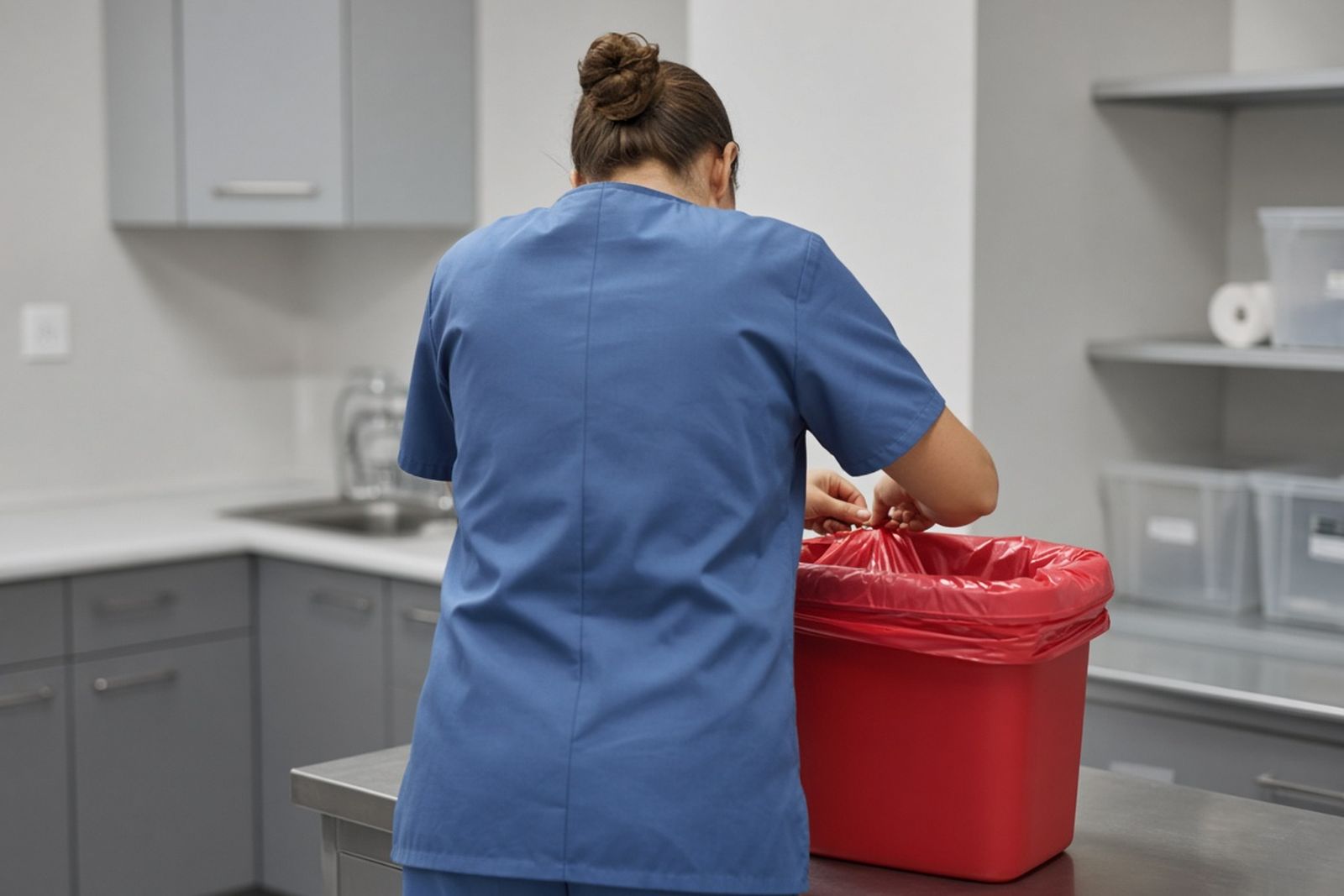
In general, no. Once your waste is packed in an approved container and closed, it should travel as it is. Adding products can cause reactions or make gas. It can change the weight or contents of a container. It can create liquid where there was none.
Liquids deserve a special note. Federal transport rules limit how much liquid an inner container may hold. Some sites use a solidifier, a powder that turns small amounts of liquid into a gel, before packing. Some solidifiers also claim to disinfect. Whether a solidifier changes how your waste is regulated depends on your state. Confirm before you assume.
The safest rule is simple. Pack your waste the way your hauler and state tell you, and leave sealed containers alone.
Cleaning: where enzymes earn their place
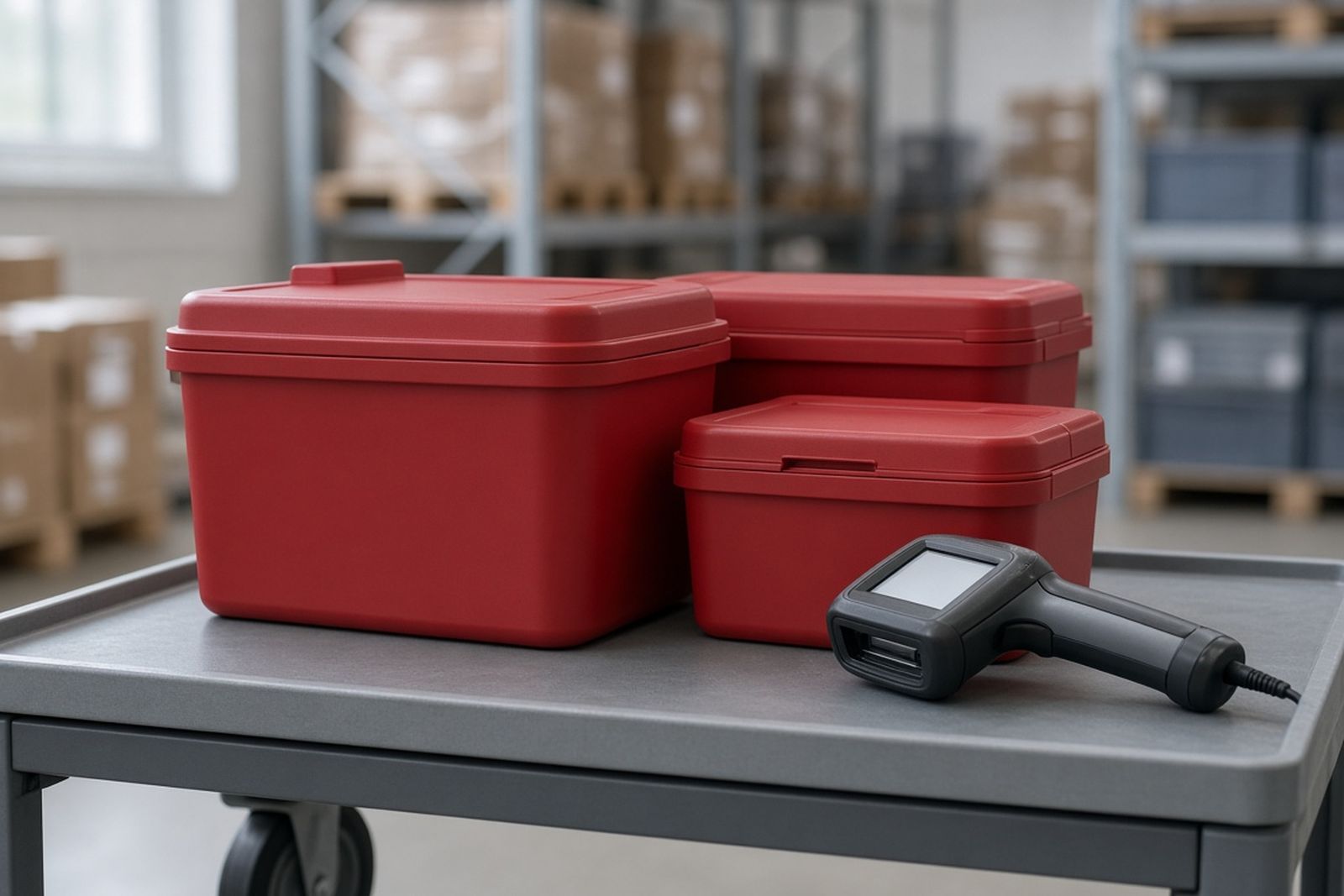
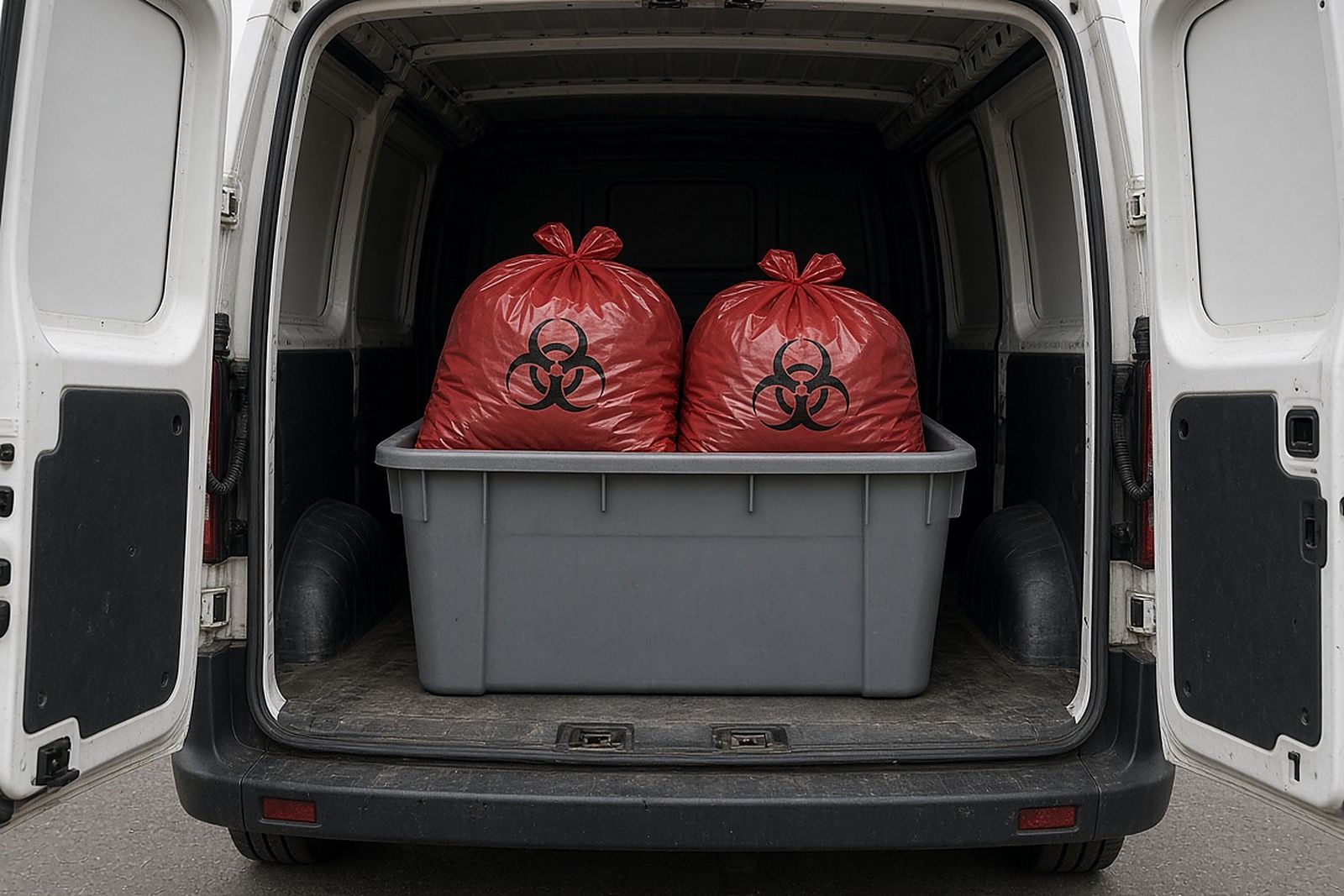
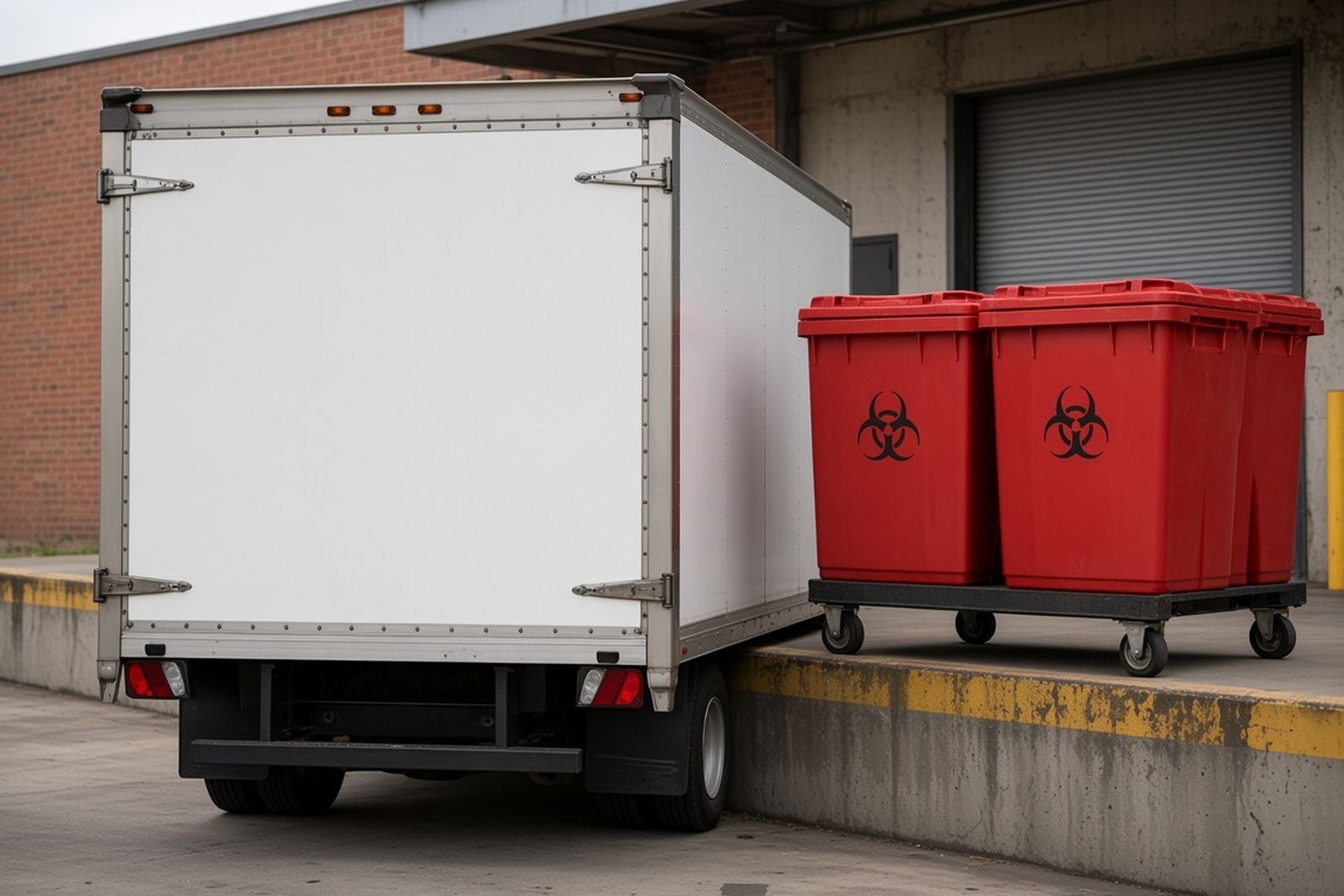
Cleaning is where enzymes earn their place. Reusable carts, tubs, and truck cargo areas can collect dried organic residue after a leak. An enzyme cleaner can loosen that residue so it rinses away. That makes the disinfecting step that follows work better. Disinfectants work best on clean surfaces. Organic soil can shield germs and use up the active ingredients.
Biohazard cleanup crews also use enzyme products on scenes before they pack soiled materials. They use them mostly on hard surfaces with dried biological residue. That work happens before the hauler arrives. But it affects how much material ends up as regulated waste.
In every case, the enzyme step is cleaning, not disinfecting. A registered disinfectant should follow it. The disinfectant must stay wet for the full time its label says.
- Pre-cleaning reusable carts and tubs before they are disinfected
- Loosening dried residue on truck cargo floors after a leak
- Pre-cleaning hard surfaces at a scene before waste is packed
- Keeping drains clear at cart wash stations
Microbial products: drains and maintenance
Microbial products work slowly and steadily. That suits them to upkeep, not to emergencies. At a hauler's transfer site or wash plant, they might be used in floor drains, sumps, or grease traps to cut buildup and odor. Local wastewater rules apply.
They do not suit spill response in a truck or at your site. There, the goal is to remove and disinfect right away. Adding live bacteria to a surface you have just disinfected would also work against the disinfectant.
Before you use microbial products in drains that connect to a public sewer, check with the local wastewater utility. Some utilities restrict what sites that handle medical waste can send down the drain.
What should a cleanup company tell its hauler about products used on scene?
Trauma and biohazard cleanup companies often use several products on a job. These include enzyme cleaners, disinfectants, odor products, and sometimes solidifiers for small amounts of liquid. Some residue from those products ends up on the materials that get packed as regulated waste.
Most of the time, this causes no problem. But the hauler and the treatment plant should not be surprised by what is inside a container. Maybe a crew used an unusual product or packed items still damp with a chemical. Maybe it added a solidifier to liquid waste. If so, tell the hauler ahead of time and ask whether any special handling is needed.
Mixing products inside a container is the main risk. Say an enzyme cleaner and then a strong oxidizing disinfectant both soak into the same piece of carpet. They can react in a sealed box. You avoid that by letting materials drain and dry where possible, and by keeping chemical containers out of waste boxes.
A simple habit helps. Note on the job record which products were used and where. If a question comes up later, your answer is already written down.
Three questions for any product pitch
Sales calls for these products tend to follow a pattern. A typical pitch offers a microbial spray. It will remove odors in truck cargo areas, the seller says, and reduce the need to disinfect between routes. Three questions tell you whether a product like that belongs in your program.
First, is it a registered disinfectant? If not, it is a cleaning or odor product and cannot replace disinfecting. Second, what does it do to organic residue, and how fast? Live bacteria that digest residue over several hours are an upkeep tool, not a response tool. Third, how does it interact with the disinfectant you already use? A seller who is not sure has not thought about your process.
Answers like those usually point to the same choice. Keep live bacteria out of cargo areas where your written steps require disinfecting after any leak. Think about an enzyme pre-cleaner at the cart wash station, where getting residue off before disinfecting is a known problem. Set up before-and-after checks so you can see whether it helps.
That approach is not against products. It simply puts each product where it supports the required steps and does not replace them.
Ads for enzyme and microbial products sometimes claim more than the products can do. Be careful when a product claims to disinfect or sanitize without being registered for that. Be careful when it claims to treat medical waste, to end the need for packing or tracking, or to make waste non-regulated.
Also be careful with products that promise to end odors by covering them and not by removing their source. In a truck or storage area, an odor that will not go away is often a sign of a leak or residue. You need to find it and clean it.
Ask for safety data sheets, product registrations where they apply, and written instructions for use. Compare those papers to the seller's sales claims.
Documentation, and the bottom line
Good records turn a product choice into a practice you can stand behind. If you are a hauler, that means written steps that say which products you use at each stage, in what order, and for how long. Keep the safety data sheets and any registrations with them.
If you run a cleanup company, record the products on each job and how long each stayed wet on the surface. This matters most where enzyme pre-cleaning comes before disinfecting. If you run a wash plant, keep logs that show your dilution checks and any changes to the process.
These records protect everyone. A worker may react to a product. A treatment plant may question a container. A customer may ask how you clean your carts. In each case, your answer is on file. Records also make it easier to judge whether a new product is really improving results.
Enzyme and microbial products are cleaning and upkeep tools. They can make surfaces easier to disinfect. They can help control odors at their source and keep drains flowing. They cannot treat regulated medical waste, replace disinfecting, or change how a container is regulated.
If you are a generator, meaning your clinic or studio makes the waste, you usually do not need these products at all. Pack your waste as you are told and let the hauler handle the rest. If you are a hauler or cleanup company, use them where they support your required steps. Record their use. Confirm any unusual use with your state agency first.
When in doubt, ask one question of any product: which required step does it support? The answer may be cleaning before disinfecting, drain upkeep, or removing the source of an odor. Then it may belong in your program. If the answer is that it replaces packing, disinfecting, tracking, or treatment, it does not.