15 questions, each with an explanation

Biohazard Waste Transport quiz and study guide

Find out what you already understand, then read the parts you missed.

This quiz tests whether you understand the basics of medical waste pickup well enough to run a program or judge a contractor's work. It is aimed at office managers, infection control leads, studio owners, vet staff, and funeral directors. It is also for property managers who suddenly became responsible for waste after a cleanup. The questions cover who is responsible, what goes in which container, how waste shipping records track a load, and what proof you should get when treatment is done. Nothing here replaces the training your employer or state requires. But a strong score suggests you can talk with a hauler on equal footing and spot a proposal that skips required steps.

Get an email reply about biohazard waste transport

Send a short message to the follow-up inbox. A coordinator can reply by email. This form does not send emergency help; call 911 first if anyone is in danger.

Tell us what you need help with. Share a short description; please leave out medical details, access codes, and other sensitive information.

A request does not confirm a booking. For immediate danger, contact local emergency services.

Or email info@regulatedwasteguide.com

If the topic is new to you, read the study guide below before you try the questions. Each section explains a key idea in plain words. It also points out where local rules take over from general ideas. The quiz does not track who you are, and you can retake it as often as you like. If you miss a question, use the explanation to find the idea you need to review. Do not just memorize the answer. The goal is to leave with a clear picture of how waste travels from your treatment room or cleanup site to a permitted site. It is not to earn a certificate.

Biohazard Waste Transport knowledge check

15 questions about real biohazard waste transport situations: staying safe, what happens, cost, choosing help and the rules. Every answer comes with a short explanation.

Why this quiz matters

Knowing these basics makes it easier to spot bad advice and ask a company the right questions. This quiz is educational — it does not certify anyone. After the quiz, review the explanations for questions you missed. For professional guidance on your specific situation, use the contact form at the top of the page for an email reply.

Progress1 / 15
RulesQ1

Once the driver signs for your medical waste boxes, who is still responsible for how they were packed and labeled?

Study guide: the six ideas behind the questions

Read these before or after the quiz. They cover the concepts every question draws on, written for biohazard waste transport specifically.

1Recognizing regulated material in a working business

Regulated medical waste is sometimes called biohazard or infectious waste. It includes items soaked with blood or other body fluids that can carry disease. It also includes used sharps, such as needles, and cultures and stocks from labs. Body tissue and some animal waste from vet care count too. It does not include every item that touched a patient. A dry glove, an empty wrapper, or a paper towel with a small dried spot is often normal trash under most state rules. Rules vary by state and county, though. Learn what belongs in the red bag or sharps container and what does not. That keeps costs sensible. It also prevents two mistakes. Putting regulated waste in the trash breaks the rules. Treating normal trash as regulated wastes money.

2Generator duty and who has authority over the rules

The business that makes the waste is called the generator. The generator is legally responsible for sorting, packing, labeling, storing, and tracking it correctly. That duty does not pass to the driver, the hauler's office, or the treatment plant. Several layers of government set the rules. The U.S. Department of Transportation (DOT) controls how the waste is packed and shipped on public roads under 49 CFR. OSHA's blood safety rule at 29 CFR 1910.1030 controls how workers are protected while handling it. State environmental or health agencies, and sometimes counties, set storage limits, hauler registration, and treatment permits. When you are unsure about a specific rule, ask the state or local authority.

3Containment from the point of generation to the dock

In this field, keeping waste contained is about packing, not plastic sheets and barriers. Sharps go into hard, closable containers that needles cannot poke through. Never fill them past the marked line. Soft regulated waste goes into red or biohazard-labeled bags. Those bags then go into hard outer containers or boxes approved for shipping. Body tissue often needs its own stream. It may need to be kept cold if it will wait for pickup. Containers must be closed when not in use and marked with the biohazard symbol. Store them where the public, pests, and weather cannot reach them. Most states limit how long waste can be stored, and the limits vary. So a business must know its own clock and schedule pickups to stay inside it.

4Cleaning versus decontamination in waste-handling areas

Cleaning removes visible dirt and debris from a surface with detergent and water. Decontamination goes further. It uses a disinfectant meant to bring germs down to a safe level. In a waste storage room or a loading area, both matter. Say a bag leaks. The floor and any containers it touched need cleaning to remove the material. Then they need a disinfectant made for bloodborne germs. Use it as the label says, and keep it wet for the time listed. Reusable carts and tubs returned by the hauler should be checked too. If they are soiled, treat them the same way. Wiping a spill with a dry towel and moving on leaves a hazard for the next person.

5The waste path from pickup to permitted treatment

Once packed, regulated waste is picked up by a hauler that is registered or licensed to carry it in your state. The driver checks labels and container condition and loads the waste. The driver also fills out shipping papers or a waste shipping record. It lists who made the waste, who is hauling it, what it is, how much there is, and where it is going. The load goes to a permitted treatment site. There it is steamed under pressure, burned, or handled by another approved method until it is no longer infectious. After that, what is left usually goes to a landfill. Mail-back programs work the same way. They use a mail carrier and approved packaging instead of a route truck. At every step, someone signs. Those signatures form the chain of custody that comes back to you.

6Documentation, verification, and closing the loop

Your file for each pickup should hold three things. First, the waste shipping record or tracking form signed at pickup. Second, the copy returned after the treatment site accepts the load. Third, any certificate of treatment or destruction the site issues. Checking means making those papers match. The number and type of containers that left your site should match what the site received. Watch for missing return copies, counts that do not match, or a site you have never heard of. Any of those is a reason to call the hauler. Keep records for at least as long as your state requires. Keep them longer if your insurer or lawyer advises it. During an inspection, a neat, complete file is the fastest way to show your waste went where it should.
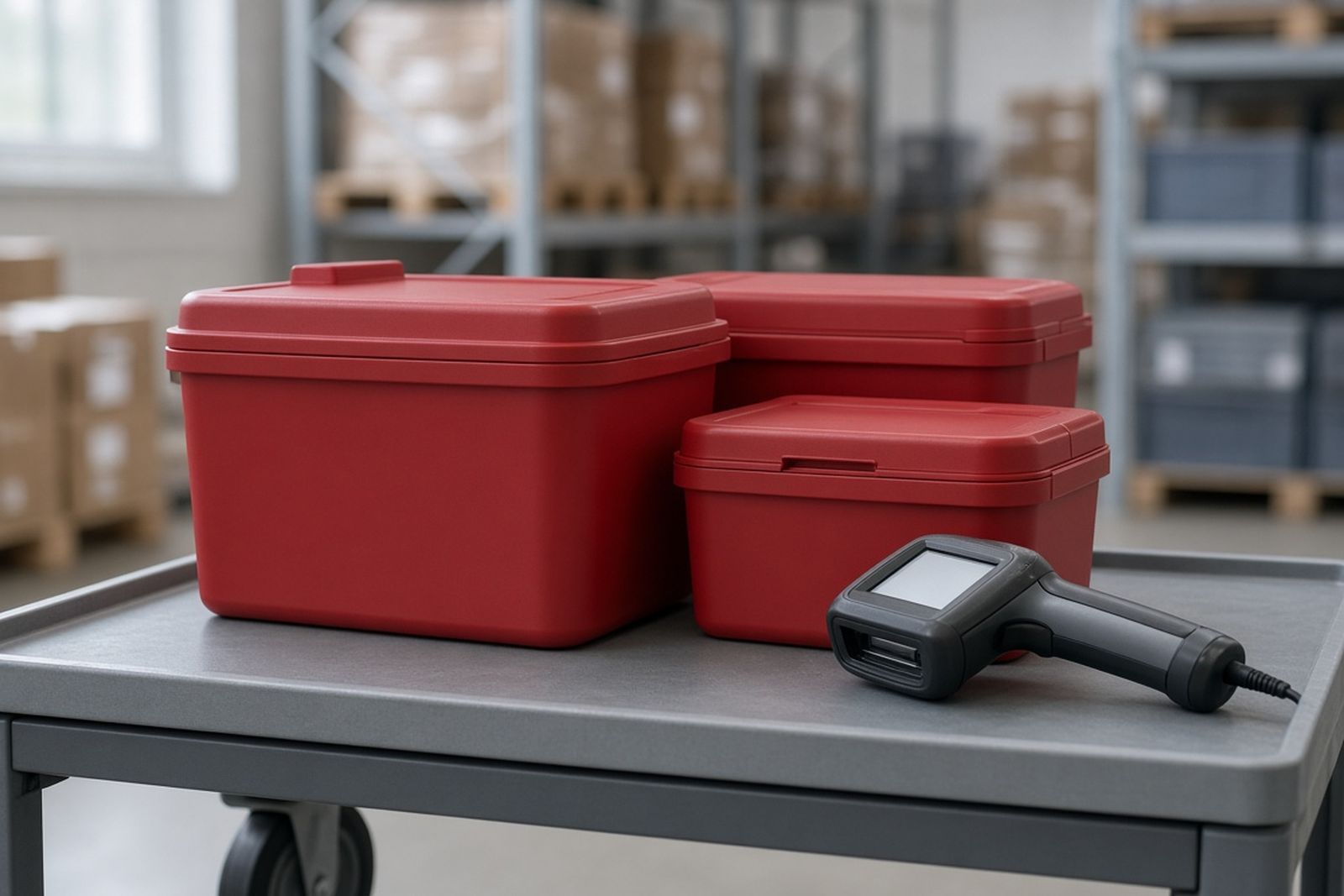
Red reusable waste containers and a handheld scanner on a cart in a warehouse

Facts worth knowing

  • In a 2006–2007 study of home-care workers, throwing away sharps and touching waste were among the causes of reported injuries.

    Why it matters: Never reach into trash that may hold needles or pick them up by hand; you can use tongs and a hard container.

    Source: Quinn et al., 2009

  • The WHO estimates about 85 percent of hospital waste worldwide is ordinary non-hazardous material, leaving roughly 15 percent as regulated medical waste.

    Why it matters: Sorting waste carefully may lower your disposal bill, since only part of it may need medical waste handling.

    Source: Daniels Health (citing WHO), 2021

  • In a survey answered by 18 commercial airports, 11 said they offered some way to dispose of used needles.

    Why it matters: Do not count on an airport having a sharps bin; carry your own small travel container when you fly with needles.

    Source: Zhang et al., 2022

Questions about the biohazard waste transport quiz

Does passing this quiz satisfy OSHA or state training requirements?

No. Training under the OSHA blood safety rule, and any state waste handling training, must be given and recorded by your employer or an approved trainer. This quiz is a self-check. It shows whether you understand the ideas well enough to run a program or talk with a hauler, and nothing more. Keep your formal training records separate.

Why does the quiz ask about ordinary trash at all?

Knowing what is not regulated matters as much as knowing what is. Treating every glove and wrapper as biohazard drives up container counts and pickup costs. Putting soaked items in the trash breaks the rules. The quiz checks whether you can sort correctly both ways. That is the daily skill a waste-producing business needs.

Are the quiz answers based on a specific state's rules?

The questions rely on general federal ideas from DOT and OSHA, and on practices common across most states. Where states differ, such as storage time limits or who may use mail-back, the quiz avoids naming values. In those cases the right answer is the one that says to check locally. Always confirm details with your state or county authority.

Should remediation customers take this quiz too?

Yes, especially the sections on generator duty and records. A property owner who paid for a cleanup often learns later that the waste shipping records carry their name. Knowing what those papers mean and which copies to keep protects you if a question about the waste comes up later. The tool sections on shipping records teach the same lesson.

What if I disagree with an answer?

First read the explanation attached to the question. It describes the reasoning and the idea behind it. If you still think your state's rule differs, you may well be right. Local rules override general guidance. Use the disagreement as a prompt to check with your authority. Do not assume either the quiz or your memory is correct.

Can I use the study guide to train new staff?

You can use it as background reading, but it should not replace formal training. Pair it with your written exposure plan, your hauler's packing instructions, and a hands-on demo of how to use the containers. The guide is written to build understanding. It is not a formal training record. Record formal sessions separately in your training log.

How does the quiz treat pharmaceutical and chemical waste?

It treats them as separate streams that do not belong in biohazard containers. Two questions test whether you know that expired drugs, mercury fillings, and similar items need a different path. That path is often under RCRA, the federal hazardous waste law. Mixing those items into red bags is a common reason loads get rejected. Keep separate, labeled containers for each stream.

What other people chose

Poll results

Vote to see how other people answered. You can change your answer at any time.

Process

How does your business get medical waste off site now?

Be the first to vote
General

Which part of your waste program is most frustrating?

Be the first to vote