Short answer
Compare what each bid actually does, not just the price per square foot. Look for cleaning of soiled surfaces first, a registered product whose label lists your germ, and the wet time on the label. Check the list of high-touch spots, the method, when people can return, and the written record. A low bid often skips the cleaning step or relies on spraying alone. Ask a high bidder to explain every extra.
Why do disinfection quotes for the same building differ so much?
When norovirus spreads through a school, or a breathing illness moves through an assisted living home, your leaders want a fast, visible response. You may collect several quotes in one afternoon and find the prices are far apart.
The gap usually comes from what each company plans to do. One may plan to walk through with an electrostatic sprayer, a sprayer that charges the droplets so they cling to surfaces, and finish in a few hours. Another may plan to clean soiled surfaces first. Then they wipe every high-touch spot with a product whose label lists your germ, allow the full wet time, treat larger areas, and record every room. Both may call it outbreak disinfection.
To compare bids fairly, break each one into steps. Then check whether those steps fit the germ and your building.
Pressure from leaders, parents, or families can push you toward the company that promises the most visible action. A fogger moving through the halls looks decisive. But does it reduce the germ behind your outbreak? That depends on the product, the prep work, and the details that a bid either spells out or leaves vague.
What published pricing guides say
Industry pricing guides give you a rough frame of reference. In its 2025 guide to commercial cleaning rates, ISSA lists electrostatic disinfection at $0.10 to $0.30 per square foot, and puts medical facility cleaning at $0.14 to $0.29 per square foot.
Those ranges help you spot a quote that is wildly out of line. They are not a price for your outbreak. Square-foot pricing also has a built-in weakness. It rewards covering floor area, not treating the surfaces people actually touch. A classroom and a storage room of the same size need very different work.
Ask each company how they built their price. Was it by square foot, by room, by high-touch spot, or by labor hours? And what does that price include?
Steps every outbreak bid should include
Send each company the same written description of your situation. Include the suspected or confirmed germ, the areas involved, and how many people use the building. Add the types of surfaces and any limits on your schedule. Ask for a reply that speaks to each step below.
Missing steps are the most common reason one bid is lower than another. Mark each step as included, left out, or unclear. Then follow up on anything unclear.
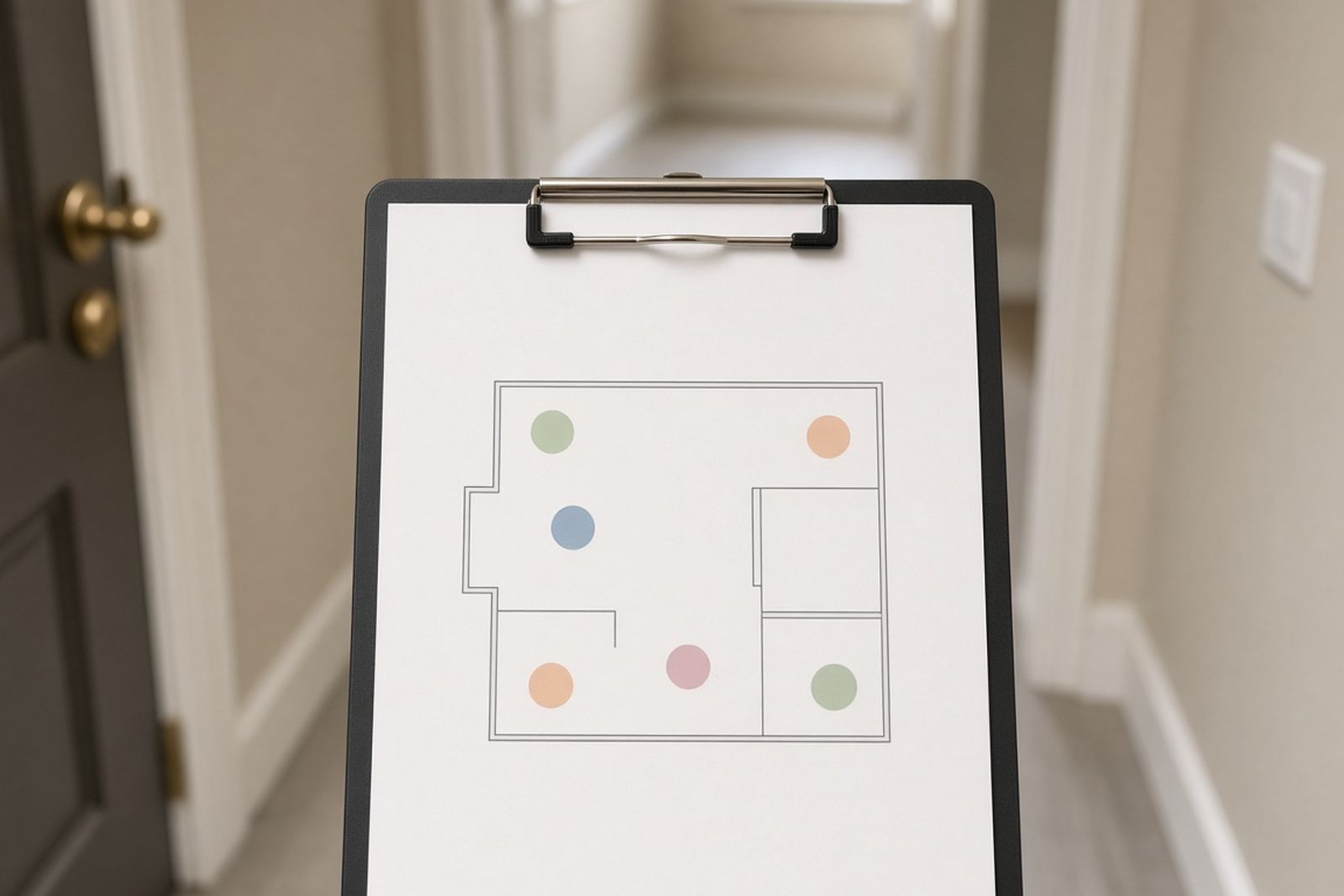
Ask each company to walk one typical room with you, such as a classroom, a resident room, or a restroom. Have them point out what they would treat. How they describe that one room tells you a lot about how they will handle the rest of your building.
- Removing visible dirt and body fluids before disinfecting
- A named EPA-registered product whose label lists the germ involved
- The wet time on the label and how it will be kept on each surface
- A written list of high-touch spots for each type of room
- The method, such as wiping, spraying, or electrostatic spraying, and why it fits
- Whether the product is safe for your surfaces, electronics, and fabrics
- When people can return and how much airing out the label requires
- How staff, visitors, and anyone with breathing sensitivities will be protected
- A written record of areas treated, products, and times
Why does cleaning first matter so much?
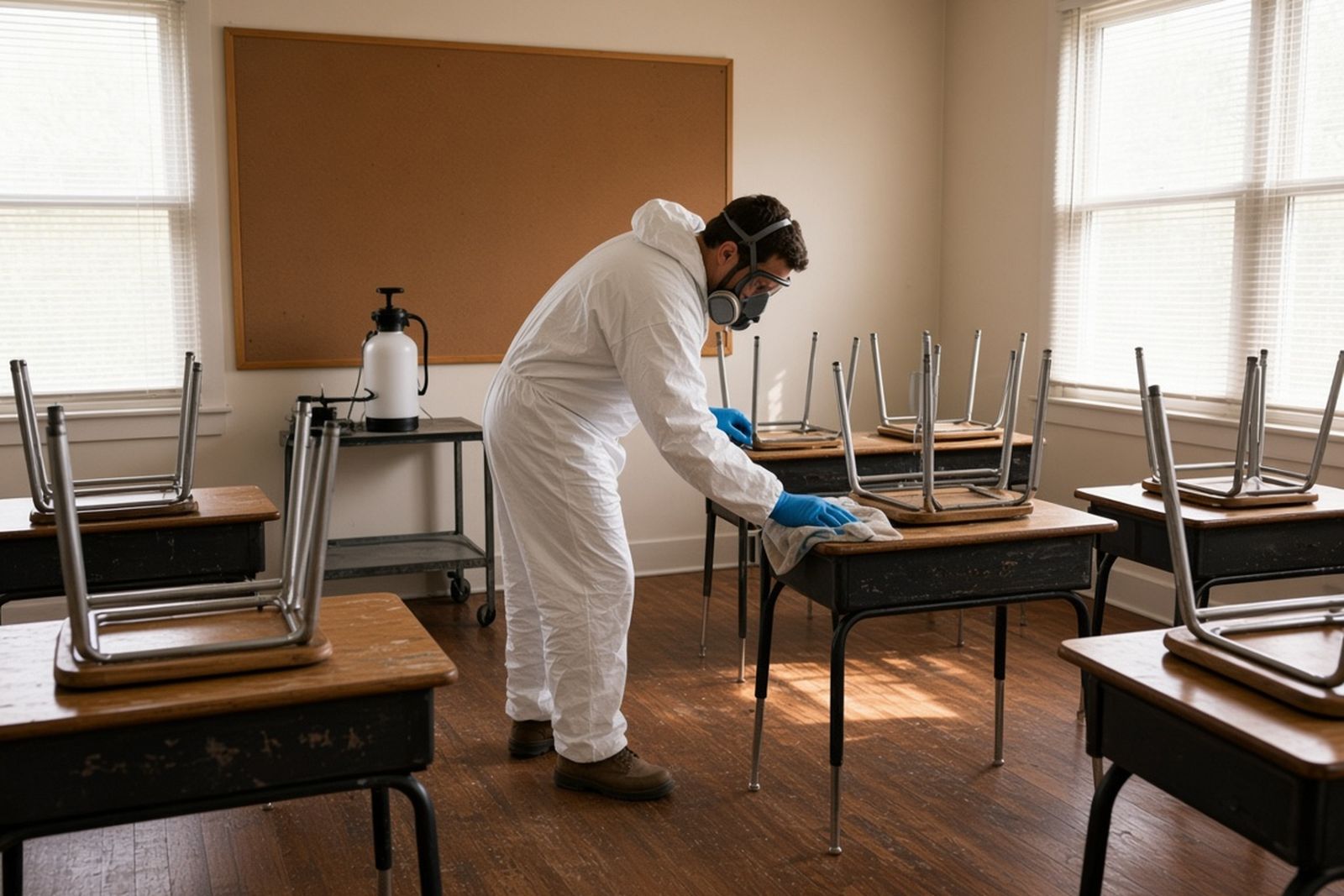
Disinfectants work poorly on surfaces covered with dirt, grease, or dried body fluids. Most product labels call for cleaning visibly soiled surfaces first. If that step is skipped, germs can stay protected under a layer of residue.
The gap between methods can be large. A 2023 study by Knobling and colleagues found that manual wiping met the study's disinfection-success criterion on 98.1% of surfaces versus 75.5% for UV-C when surfaces had not been cleaned beforehand. UV-C is a germ-killing type of ultraviolet light. The study compared specific methods under controlled conditions. Still, it shows how much the physical cleaning adds.
A lower bid may rely on spraying or UV devices with no wiping step. It may look efficient. But it may leave your dirtiest surfaces the least treated. Ask each company directly how they handle visibly soiled surfaces.
Checking product labels and wet times
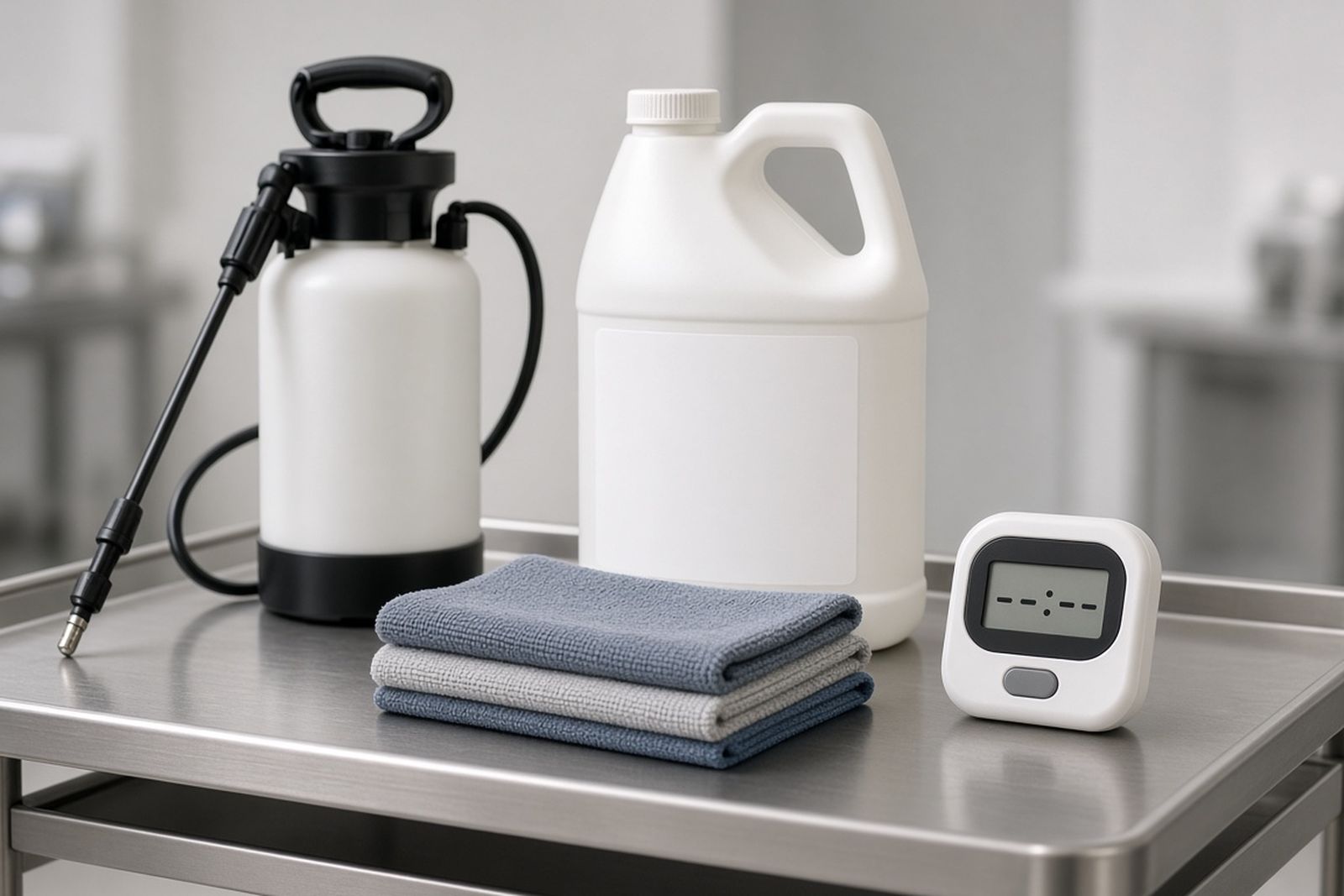
Ask each company for the product name and EPA registration number. Then you can check whether the product is on the matching EPA list. List G is for norovirus. List K is for C. difficile spores. List N is for the virus that causes COVID. You can also confirm the contact time on the label, which is how long the surface must stay wet.
Wet time is often where corners get cut. Say a product needs several minutes of wet contact. If a company plans one light mist on a warm, breezy surface, the product may dry long before that time is up. Ask how they will keep surfaces wet, whether they will reapply, and how they will confirm it.
Also check that the label allows the company's method. Some products are labeled only for wiping or for certain types of sprayers.
Does your facility have an infection control lead, a school nurse, or a consulting doctor? Share the product details with them before you sign. They may know about sensitivities among the people in your building, past outbreaks there, or what your local health department prefers. Any of these can affect which product makes sense.
Speed, disruption, and coming back in
You need to reopen, and a company that can finish overnight is appealing. Speed has real value when classes, visits, or services are waiting.
Weigh that against what is realistic. Wiping every high-touch spot in a large building takes time. Product labels may also require a waiting period or airing out after spraying. If one company promises to disinfect your whole facility far faster than the others, ask how. They should explain how they fit the cleaning step and the wet times into that window.
Ask each company what they need from you to work well. It might be cleared surfaces, access to all rooms, or changes to your heating and cooling system. Sometimes the fastest safe option is a larger crew, not a shortcut.
Think about what happens after the company leaves, too. An outbreak rarely ends with one treatment. Some companies help your own staff keep up daily disinfection with the right product and wet time. That may give you more value than a single dramatic service from a company that then moves on.
Two bids for an assisted living wing
Here is an example. Several residents on one wing of an assisted living home are diagnosed with C. difficile infections over a short period. The local health department recommends extra cleaning with a sporicidal product, meaning one labeled for spores. The administrator asks for two outside bids.
The lower bid offers electrostatic spraying of the affected wing with a quaternary ammonium product, a common type of disinfectant. The administrator checks the registration number. The product is not on EPA's List K. That means its label does not list C. difficile spores.
The higher bid offers to clean soiled surfaces first. Then the crew would wipe resident rooms, bathrooms, handrails, and shared equipment with a List K product at the wet time on its label. They would use the same product for common areas. The bid includes a room-by-room record. It also includes training for the home's housekeeping staff so they can keep the routine going.
The administrator chooses the second bid. The first was cheaper, but its product did not match the germ. That would have made the whole effort unlikely to fix the problem.
What warning signs suggest a bid is low for the wrong reasons?
A lower price is not always a warning sign. Some companies are efficient or better equipped. The worry is a bid that is low because it leaves out the steps that make disinfection work. Another worry is a bid that makes claims no one can back up.
Be extra careful with any company that promises to certify your building as free of a virus or bacteria. Disinfection reduces germs on treated surfaces at one point in time. It does not give you a permanent guarantee.
- No named product or registration number
- A product whose label does not list your germ
- No cleaning step for soiled surfaces
- Spraying or fogging as the only method, with no wiping of high-touch spots
- No mention of wet time or when people can return
- Claims of long-lasting protection that the product label does not support
- Certificates promising a germ-free building
Get it in writing before work begins
Once you choose a company, put the details into a written agreement. List the work plan, the products, the registration numbers, and the wet times. List the methods, the areas covered, the schedule, and the records you expect. Include how the company will protect your staff and the people who use your building, and when they can return.
Keep the bids, your comparison notes, and the company's records together. Health departments, licensing agencies, parents, or residents' families may ask what you did. A clear file answers those questions quickly.
Healthcare and childcare facilities in particular may have licensing rules for outbreak cleaning. Your licensing agency can confirm them. Your local health department can tell you what is expected during an active outbreak.
When the outbreak has passed, go over the records with your team. Did the company cover every area listed? Did the number of cases drop in the weeks that followed? That review will not prove cause and effect. But it will help you choose with more confidence next time.