Palm Beach, FL

Infectious Disease Disinfection Planning in Palm Beach, FL

What to do, who to contact, and what to ask in Palm Beach.

Illness at your Palm Beach home or guest wing? See what staff should clean first, how shutters change timing, and what belongs in your records.

Get an email reply about infectious disease disinfection

Send a short message to the follow-up inbox. A coordinator can reply by email. This form does not send emergency help; call 911 first if anyone is in danger.

Tell us what you need help with. Share a short description; please leave out medical details, access codes, and other sensitive information.

A request does not confirm a booking. For immediate danger, contact local emergency services.

Or email info@facilitydisinfectionguide.com

The short answer for Palm Beach, FL

On a Palm Beach estate, an illness in the guest wing spreads along the service side: dock-gate keypads, the staff pantry, powder rooms and the freight elevator. Start there, and have salt and sunscreen scrubbed off before anything is disinfected. Here is how shutters, dinner plans and bridge delays shape your plan, and what to ask.

What to do, step by step

  1. 1

    Sketch the service paths from the Intracoastal side

    Draw a simple sketch of how staff and guests moved: dock gate, pantry, service hall, guest wing. Note whether guests described vomiting or something more like a cold or flu. Leave names off. Then ask your cleaning company to match its products to that story. Every bottle needs an EPA registration and a label claim that fits what your guests described. A List N listing for COVID-19 does not by default cover a stomach virus in your guest wing. If anyone offers a sterile-estate badge, decline it.

  2. 2

    Have sunscreen and salt scrubbed off first

    CDC's advice for homes is that sunscreen film and bath grime must be gone before any disinfectant goes on. Crust left on your dock fob keeps the product from working the way its label says. A good crew washes first. Then powder-room taps and freight-elevator plates stay wet for the printed time. Ask your house manager to log when that time started and stopped. A citrus scent in a lagoon-side powder room should never count as proof that the job is done.

  3. 3

    Keep the guest wing empty while shutters are down

    The treated wing stays empty until the wet time is over and the return notes on the safety data sheet are met. Set one household schedule and share it with your staff. That works better than wiping fixtures dry for a dinner seating. A backup powder room helps only if it was part of the job or was never used by the sick guest. Afterward, have the shutters opened with care to air the rooms. Clean air is the goal. Nobody can call it sterile.

  4. 4

    Keep a binder for your seasonal household

    Store the registration numbers, your sketch of the service halls, the notes on salt cleaning and the wet-time log in one binder. If a faucet was swabbed, the result only flags leftover grime. Give your staff two things in writing: the reopening hours and where the safety data sheets are kept. Do not pass around recipes for home foggers. For general health questions, the Florida Department of Health in Palm Beach County is the office to ask.

What cleanup is like in Palm Beach

On an island estate, germs move through the service hallways more than through the ocean parlors. Your dock-gate keypad gets crusted with salt from Intracoastal spray. Staff pantry handles are grabbed after beach trips. Powder-room taps and the freight elevator that hauls luggage see hands long before a guest touches the foyer rail. So when you make your list, begin with those. If guests come and go midweek, look at who booked the Worth Avenue freight elevator and who carried a dock fob. Those records tell you more than a walk through parlors nobody used.

Afternoon storms and closed storm panels change how your rooms dry, and they change what your staff feel pushed to do. Damp island air slows drying, which helps a product stay wet for the time on its label. The trouble is the smell trapped under the shutters. It tempts staff to buff the fixtures dry so dinner can go ahead. Tell your house manager that the wet time comes first and dinner can move to another room. Cabana towels, terry robes and outdoor cushions go to the laundry or come out of the room for a while. Sprays made for hard surfaces are not labeled for fabric.

The social season fills your guest wing and then empties it midweek. The work you need in between is ordinary home cleaning as CDC describes it: grime off first, then a disinfectant matched to the germ. Words about sterilizing devices belong to clinics, so keep them out of the note that reopens the dock house. Keep diagnosis words out of staff briefings as well. One local point is easy to forget. Bridge delays on the Intracoastal and the island gatehouse log often decide when a crew can use the freight elevator. Ask for those to be written into the plan.

What to expect for your type of home

  • Barrier-island estates: Dock-gate keypads, staff pantry handles and the freight-elevator call plates come before parlor decor. Tell your house manager which of these were used while a guest was ill.
  • Homes with docks and pools: Dock and pool hardware carries sunscreen and salt. Both must be scrubbed off before a disinfectant can work, so ask how the company cleans that crust first.
  • Guest wings: Guest baths and powder rooms stay empty through the full wet time on the label. Offer guests another bath that was not used during the illness, and tell staff the hour.
  • Staff pantries: Counters where staff make food may need a rinse after disinfecting. Ask what the label says, and have the pantry closed to meal prep until that step is done.
  • Homes with storm panels up: Airing has to be planned when panels are closed. Ask that staff return on the timing in the safety data sheet, and not simply before dinner service.
  • Homes with cabanas: Cabana towels and robes go to the laundry before anyone starts on hard surfaces. Ask who bags them, so soiled fabric is not carried past cleaned handles.
  • Estates with a generator yard: The hose bibs there belong on your list if staff used them while someone was sick. Mention it, because outdoor fittings are easy to overlook.
  • Lagoon-side properties: The handrails on the lagoon bulkhead matter if people came back from the beach that way. Tell the company which route your guests and staff really took.

Papers and records to keep

  • A sketch of where dock fobs were used and how staff reached the pantry
  • A short note on the guest-wing illness, written without names
  • For the dock house and guest wing: each registration number and what its label claims
  • A note showing sunscreen and salt were scrubbed off before disinfecting
  • Wet-period start and stop times for each guest bath
  • The household reopening schedule, tied to shutter and dinner plans
  • Whether cabana towels and cushions were washed or bagged
  • The briefing given to staff, with reopening hours and no medical details
  • A note on bridge and gatehouse timing for use of the freight elevator

Local offices and official help

Common questions in Palm Beach

Several guests in our guest wing had a stomach illness. What should staff treat first?

Have them start with the guest bath used during the illness, the staff-pantry fridge pulls and the dock fobs where luggage and coolers land. Sunscreen crust comes off with detergent. The guest bath then gets a registered product. Its label should name stomach germs, and it must stay wet until its time is up. Cabana towels go to the laundry and are not sprayed. List N is the wrong yardstick here unless the bottle's own label supports that use. Handwashing stays in the plan.
The powder room smells like cleaner. Does that mean the ocean parlors are done?

No. A clean smell in one room tells you nothing about another. Ask staff to trace the service halls, the laundry and the staff pantries, and to treat what hands touched there. Each product has to sit wet for its time. Shared laundry needs its own line in the plan. Have someone list what was done and what was skipped. List N is not a master key for every germ a guest mentions.

How should our staff brief a visiting nurse without asking about diagnoses?

Staff can tell the nurse which rooms are closed and when the safety sheet says they may be entered. They should say nothing about a guest's illness unless your family chooses to share it. Cleaning staff are not clinicians, and they should not ask for or pass on a diagnosis. Disinfecting lowers germs on surfaces. It does not protect anyone the way medical care does. If there was blood, trained workers should handle that part.

Why do closed storm panels lead to wet times being cut short before dinner?

Humid air holds the smell under the shutters, so someone wipes the fixtures dry before dinner is served. That ends the disinfecting early. Ask staff to keep the full wet time, even if the room stays empty longer than planned. The shutters can be opened with care afterward. Porous cushions may take longer to dry. Have the schedule that was used written down. Subtropical storms do not widen what List N covers.

What should we give our insurer after work on the dock house and guest wing?

Give a file that lists the product names and registration numbers and the dock-house and guest-wing rooms treated. It should show how sunscreen and salt were cleaned off first, the wet times, and what happened to the cabana towels. Add how rooms were aired with the shutters closed, and the reopening times. Photos of the prep help. A swab only hints at leftover grime. Turn down any badge that promises a germ-free estate.

How should Palm Beach estate staff clean a luggage cart or golf cart after a guest was ill?

Staff should wipe the cart's handles, steering wheel, seat edges and any key or fob with detergent to remove sand and sunscreen. A product made for cart plastics comes next, and the surfaces stay wet for the full time on its label. Working in the shade helps if the sun dries them too fast. Seat covers get washed. The cart goes back to its usual spot once it is dry. The tires and frame can be left alone.

A live-in staff member at our Palm Beach home is sick. What should we do?

Encourage them to rest and see a doctor. Change their duties so they are not cooking or serving others while sick. If you can, give them their own bathroom, with separate towels and dishes. Other staff can clean the touch points in the shared staff kitchen and bathroom each day. Keep the illness private within your household. Once they are well, have the hard surfaces in their room cleaned and disinfected and their bedding washed.

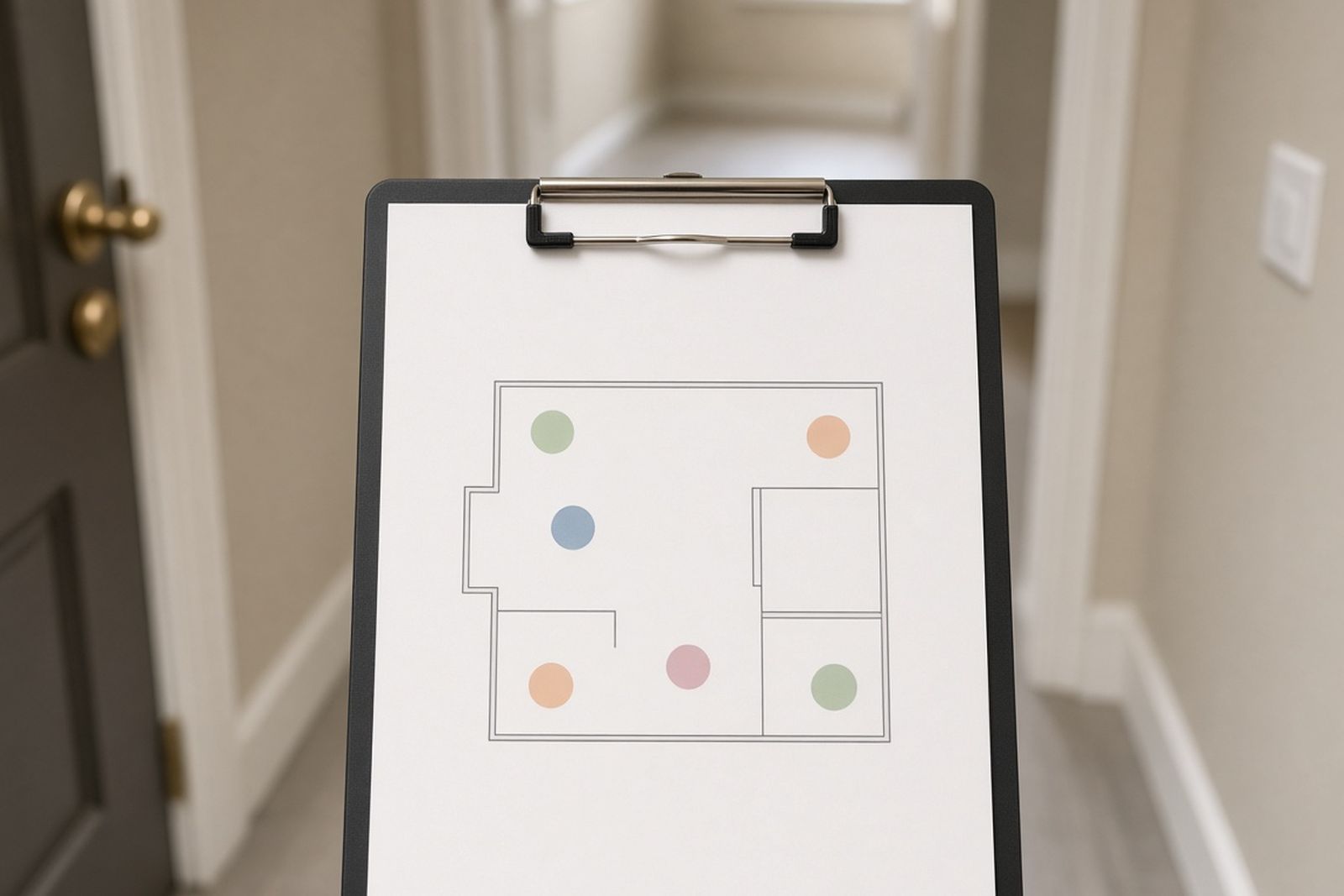
Clipboard showing a room plan with color-coded dots marking high-touch surfaces
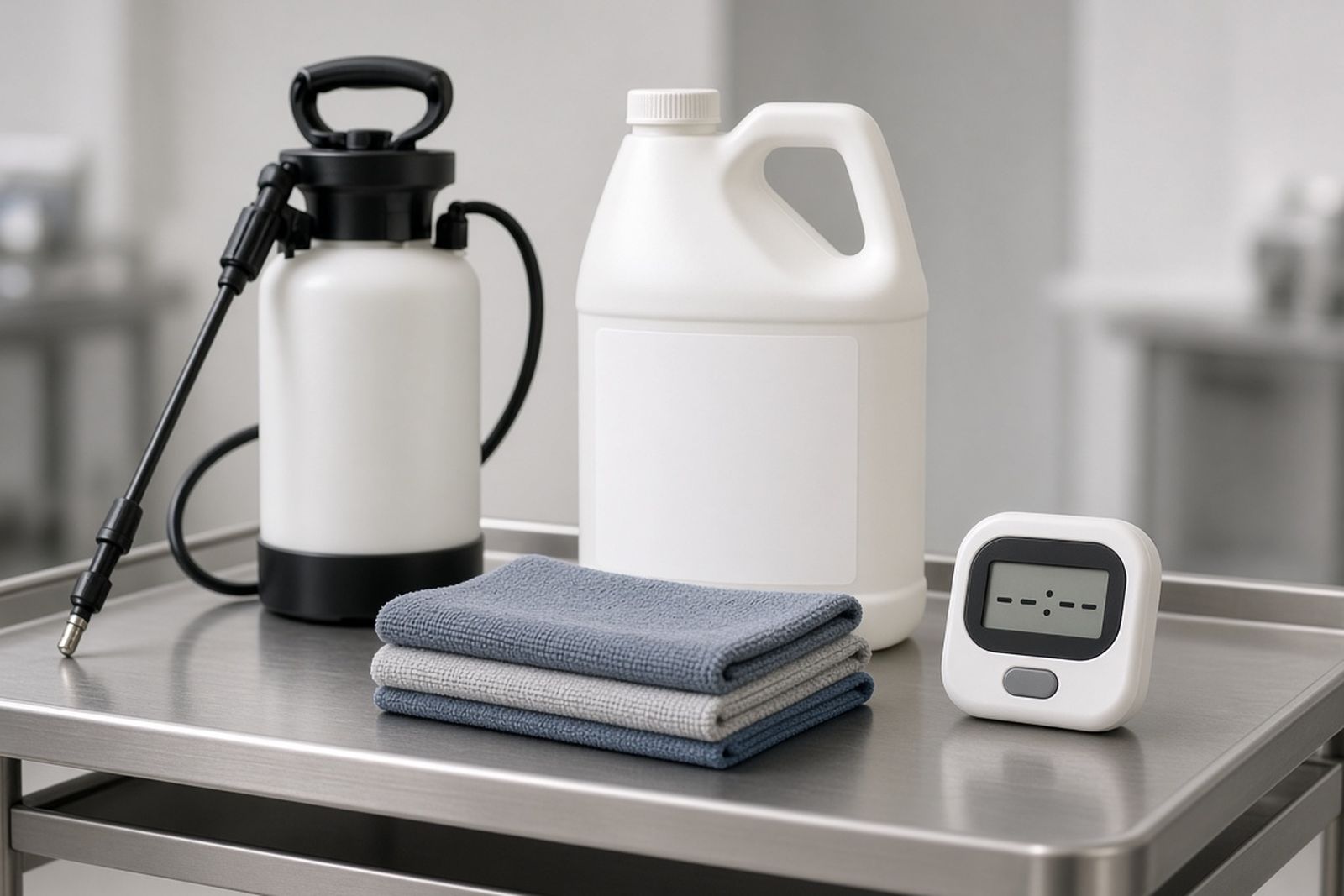
Pump sprayer, disinfectant jug, folded cloths and a contact-time timer on a steel cart

Facts worth knowing

  • HomeAdvisor says disinfecting a home costs from $15 to $400 or more, depending on whether you do it yourself or hire a professional.

    Why it matters: The range is wide, so ask for a written quote, and expect specialized biohazard work to cost you more.

    Source: HomeAdvisor, 2026

  • A cleaning trade group's December 2025 price guide lists electrostatic disinfection at $0.10 to $0.30 per square foot for commercial buildings.

    Why it matters: Use this as a rough range to compare quotes; your price may differ by region, size and how often you need service.

    Source: ISSA, 2025

  • In lab studies, MRSA lasted 7 days to 7 months on dry surfaces, C. difficile spores 5 months, norovirus up to 7 days, and flu 1 to 2 days.

    Why it matters: Waiting may not clear some germs, so you may need to disinfect surfaces a sick person touched.

    Source: BMC Infectious Diseases, 2006

Tools that help right now

What would you do?

Poll results

Vote to see how other people answered. You can change your answer at any time.

Your experience

When your facility had an illness cluster, how did you handle cleaning?

Be the first to vote
Process

How did you decide whether to close all or part of the facility?

Be the first to vote

Need help in Palm Beach?

Send a short message about the property to the follow-up inbox. A coordinator can reply by email with next steps.

Your request is sent to the follow-up inbox. A coordinator can reply by email.

If anyone is hurt or in danger, call 911 first.