Short answer
Enzyme and microbial cleaners have a small role in needle work. After the sharps are picked up, they can help break down urine, vomit and similar residue on concrete or in stairwells. That cuts odor and staining. They do not disinfect, and they do not make needles safe to handle. You still need puncture-resistant containers, a registered disinfectant for blood, and licensed disposal.
What is in an enzyme or bio-based cleaner
Enzyme products rely on special proteins that speed up the breakdown of certain kinds of organic matter, meaning material that comes from living things. Protease enzymes work on proteins. Lipases work on fats. Other enzymes break down starches or urea, a compound in urine. Microbial or bio-based products contain helpful bacteria that eat organic residue over time, sometimes alongside enzymes.
You may have seen these products sold for pet accidents, drain care, grease traps and odor control. In cleanup work, they are used to digest the organic material that ordinary detergents may leave behind in absorbent surfaces like concrete, grout and some fabrics.
They work slowly, so you need some patience. Many need to stay wet on the surface for a period of time. Cold temperatures, harsh chemicals or drying out can slow or stop them.
Can an enzyme product make a discarded needle safe?
No, and this is the most important thing for you to know. Nothing you spray on a syringe changes the fact that it has a sharp point that can break skin. The danger of a discarded needle comes from the puncture, which can carry blood straight into the body. No cleaning product removes that risk.
Discarded syringes can also hold blood inside the barrel and needle, where sprays cannot reach. A 2010 Journal of Infectious Diseases study by Paintsil and colleagues found that hepatitis C virus could stay alive inside some syringes for weeks after contamination. So treat a needle that looks old and weathered as if it could still spread infection.
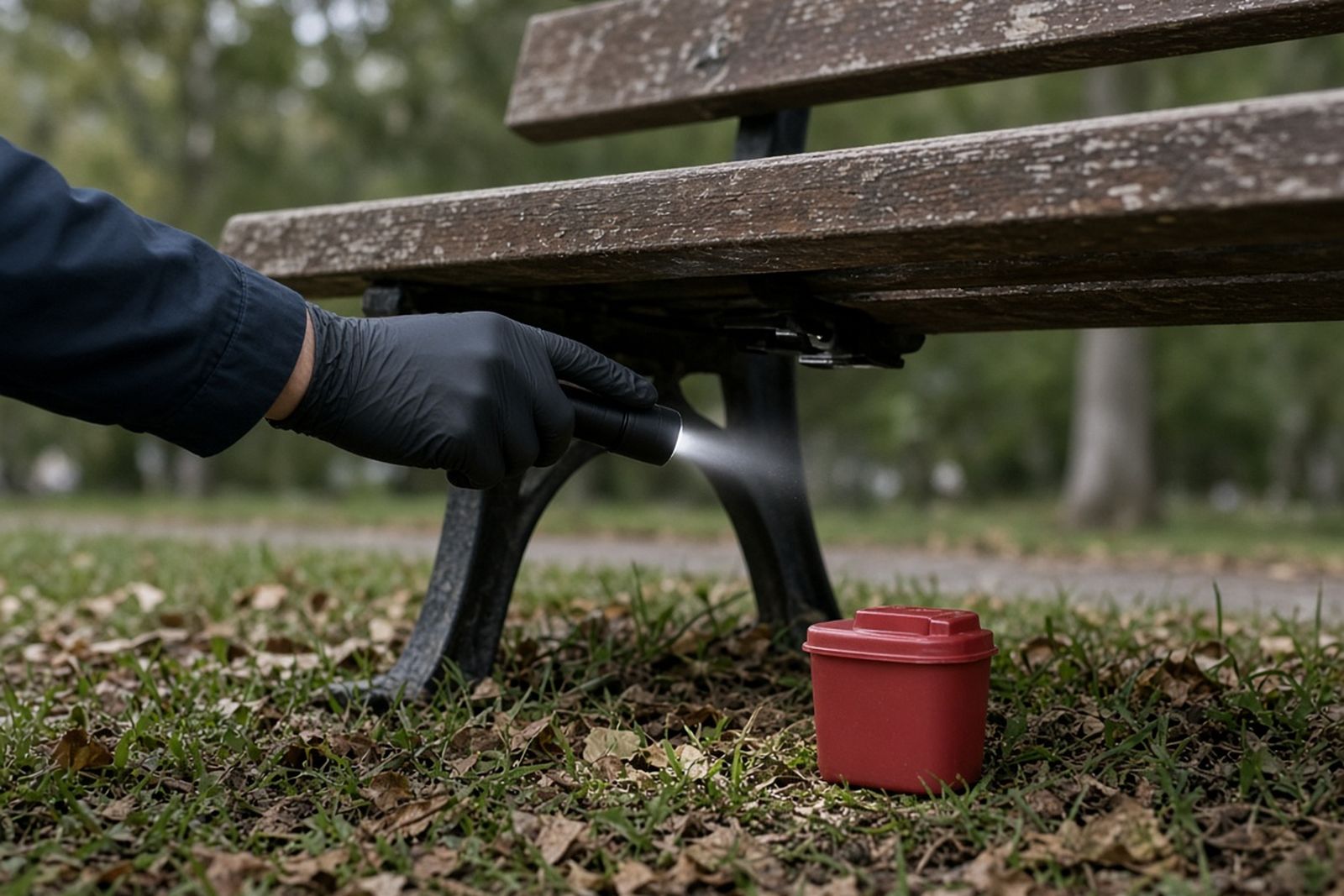
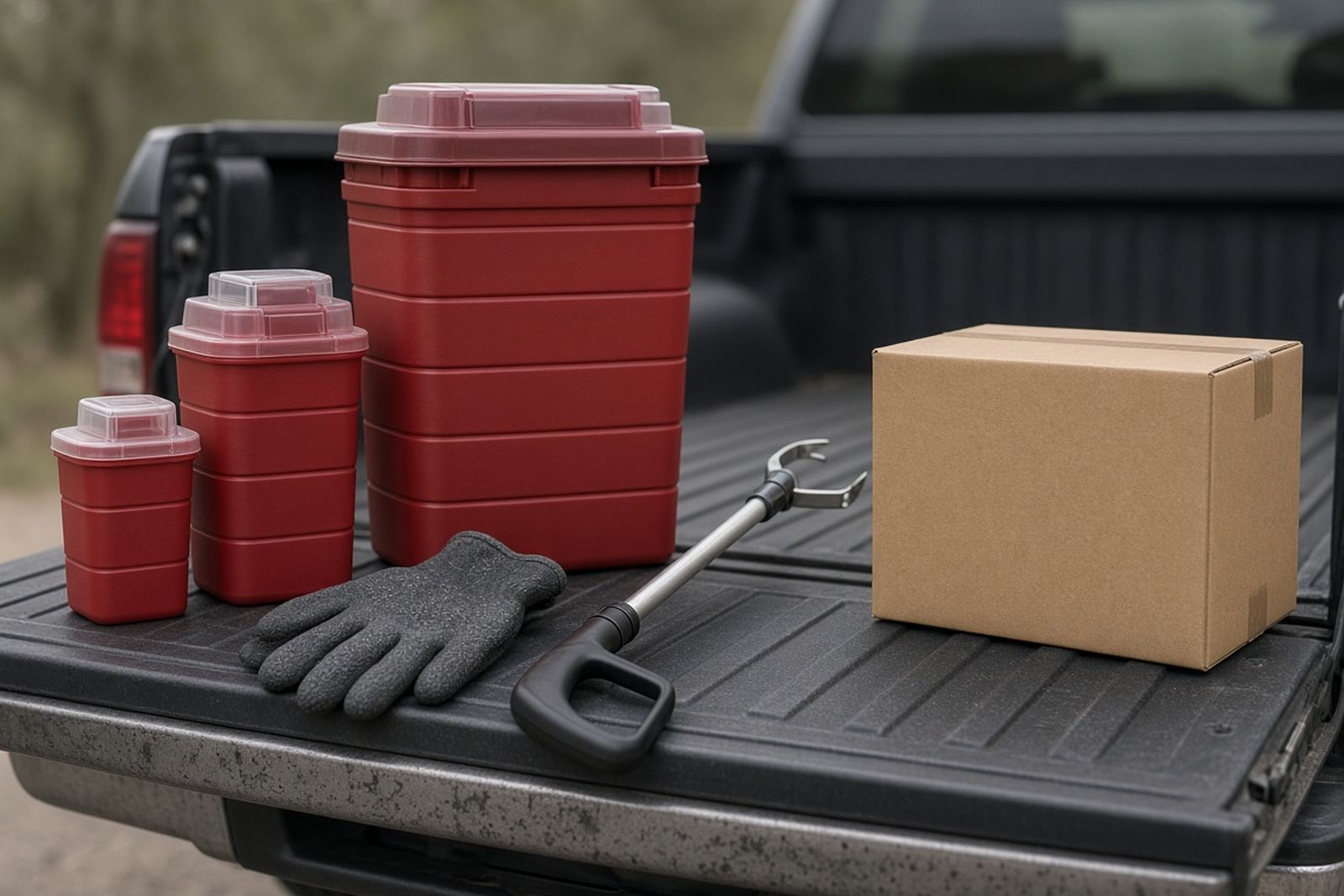
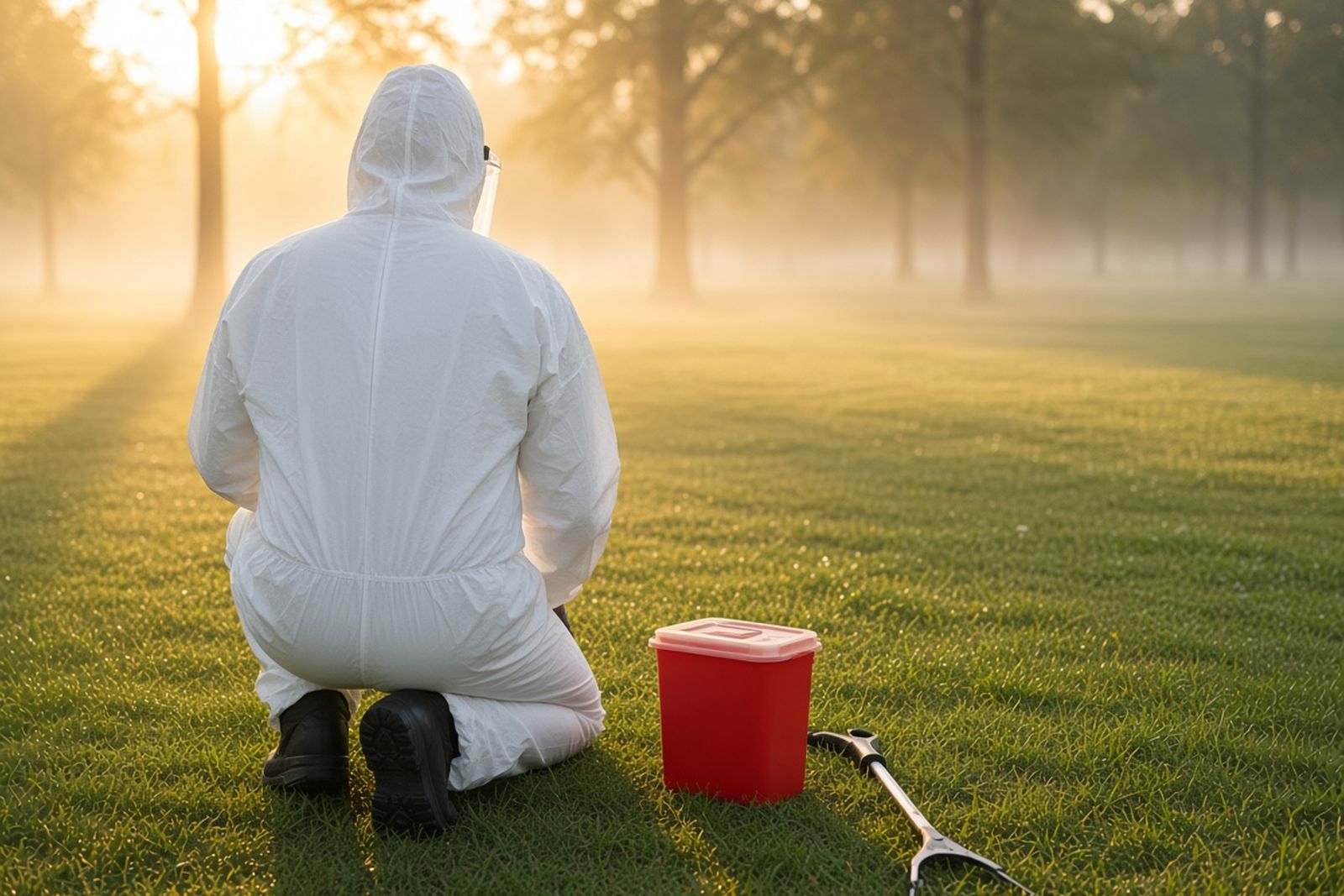
The right approach for any needle is the same. Do not touch it with bare hands. Pick it up with a tool. Place it point-first into a hard, puncture-resistant container. Close the container and send it to an approved disposal site. Spraying, soaking or wiping a needle before pickup adds handling time and risk without making you any safer.
Where enzyme and microbial products fit
Their role begins after all sharps have been picked up and sealed in containers. Sites where people inject drugs, or where people are living without shelter, often also have urine, vomit, food waste or feces on the ground. If that is your property, you know those residues cause odor, attract pests and stain concrete and brick.
In those cases, an enzyme or microbial product can be one step in cleaning the surface. It can help break down organic material that has soaked into concrete in a stairwell, a doorway alcove or a corner of a parking garage. In those spots, scrubbing alone may leave a smell that lingers.
Some companies also use them for odor control in vehicles, storage rooms or vacant units after sharps and visible mess have been removed. For you, the product is part of the finishing work, not the safety work.
- Urine-soaked concrete in stairwells, alcoves and garage corners.
- Leftover odor in vacant units after sharps and debris are removed.
- Organic stains on brick, grout or unsealed paving.
- Drains and grease areas behind food businesses that attract pests to a problem spot.
Not a disinfectant, and other risks
Cleaning and disinfecting are different jobs. Cleaning removes dirt and organic material. Disinfecting kills germs on a surface or makes them harmless. Enzyme and microbial products are cleaners. A product can be trusted to kill viruses carried in blood only if it is registered with the EPA as a disinfectant for those germs. It must also be used the way its label says.
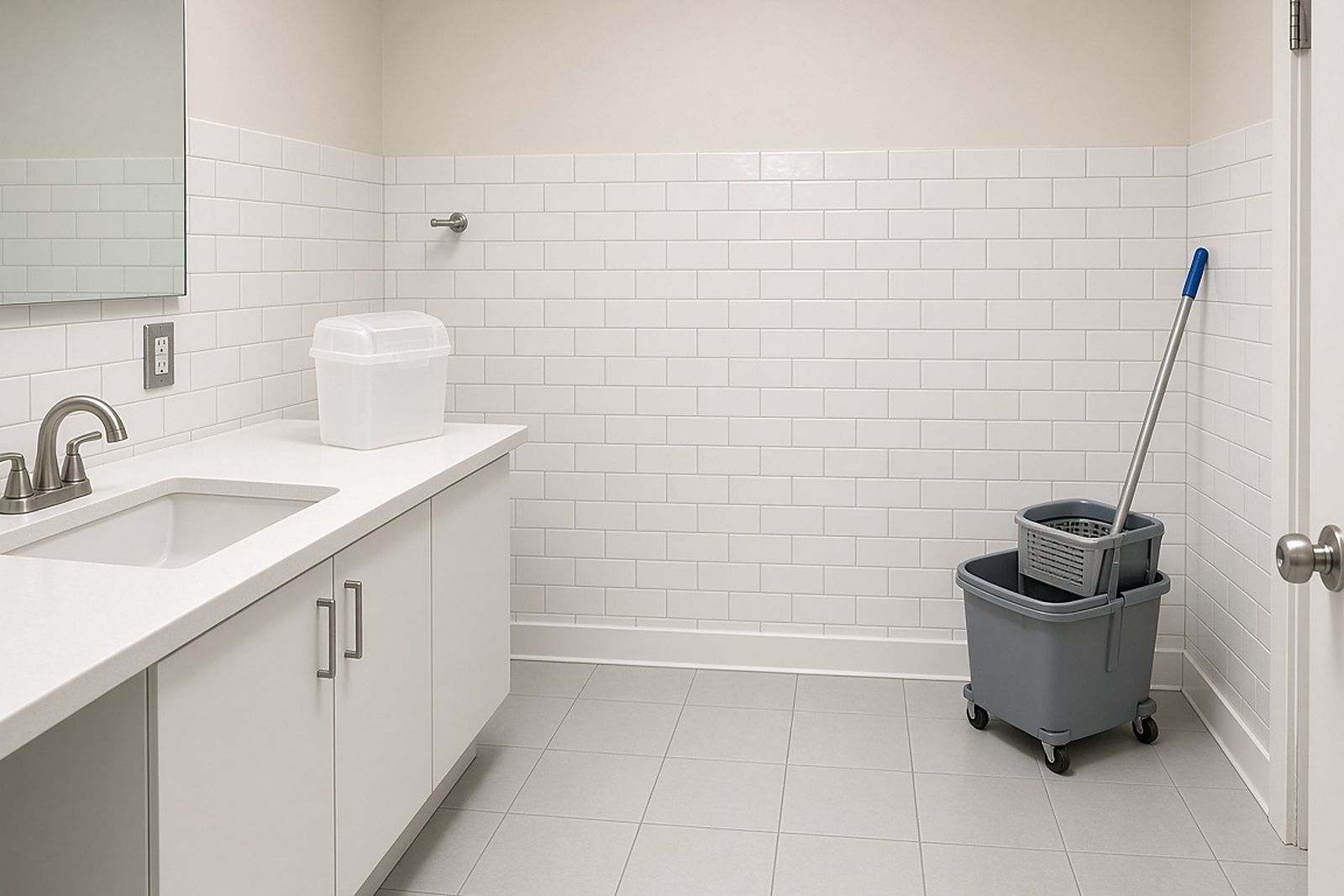
Sometimes there is visible blood where a needle was found, such as on a restroom sink, a toilet seat or a floor. The standard approach is to clean the surface first. Then a registered disinfectant suited to germs carried in blood is applied and kept wet for the full time on its label. Blood on soft or absorbent materials that cannot be reliably disinfected may mean the material has to be removed.
Order matters as well. Some disinfectants can kill the living bacteria in a microbial product or stop enzymes from working. Some enzyme residues may get in the way of disinfectants. A company using both should explain the order and wait times to you so neither product is wasted.
The biggest risk at a sharps site, though, is false confidence. You might see a treated area and assume it is safe, when needles are still hidden under debris or in nearby plants. Surface treatment should never begin until a proper search for sharps is finished.
Spraying or scrubbing can also move needles. A brush or pressure washer can push a hidden syringe into a gap, a drain or a pile of leaves. That makes it harder to find and more dangerous for the next person. A good crew will search and collect first, then clean.
Finally, runoff matters outdoors. Wash water and leftover product should be kept out of storm drains where local rules require it. Your city's stormwater or public works office can tell you what applies.
The right order, step by step
A careful company follows a clear order at any site with sharps and organic mess. Each step makes the next one safer for the crew and for you.
If a quote puts an enzyme treatment before the sharps sweep, or lists it as the main service at a needle site, ask the company to explain why. The order of the steps tells you a lot about what they put first.
- Block off the area and keep people and pets out.
- Search step by step and collect all sharps into hard containers.
- Remove visible debris and heavily soiled items, such as clothing or bedding.
- Clean hard surfaces and apply a registered disinfectant where there is blood or body fluid.
- Use enzyme or microbial products, if needed, on absorbent surfaces with lingering organic residue or odor.
- Check the area again for sharps that cleaning may have uncovered.
- Write down what was found, what was used and where waste was taken.
Enzyme cleaners after a find at home
You might reach for an enzyme spray after a needle turns up in your yard, your car or a spare room, hoping to make the area feel clean again. That is a natural reaction. But the order of steps is the same for you as for a professional.
First, deal with the needle itself. If you feel sure of yourself and have the right tools, use tongs or a grabber and a hard container with a secure lid. Follow your local disposal rules. If you are not sure, or there are several needles, call a local sharps program or a trained company.
Second, check the area around it carefully. Where there is one needle, there may be caps, other syringes or cotton and spoons nearby. Look under furniture, between seat cushions or along the fence line before you start cleaning. Look only. Do not feel around with your hands.
Third, clean only what needs it. If there is blood on a hard surface, clean it and use a household disinfectant labeled for that purpose. Keep it wet for the time on the label and wear disposable gloves. An enzyme product makes sense only if a smell or organic stain is left afterward, such as urine in a carpet or on a garage floor.
An example: a garage stairwell that still smells
This is a made-up example, not a client record. At a downtown parking garage, staff often find syringes and signs of people sheltering in one concrete stairwell. After each pickup, the stairwell still smells strongly of urine, and customers complain.
The garage operator hires a sharps company for a thorough sweep. The crew collects the syringes from the landings, the gap under the lowest flight of stairs and a drain grate. Then they remove soiled cardboard and clothing. They clean and disinfect a patch of floor where there was blood.
The odor stays in the concrete. On the second day, after confirming no sharps are left, the crew applies an enzyme product to the stained floor. They keep it damp for the time the label recommends. They rinse the residue to a sanitary drain, not the street. The smell drops noticeably. The garage operator also adds lighting and a door that closes properly. The company's report lists each step separately, so the operator can see what dealt with safety and what dealt with odor.
Questions to ask when a company suggests enzyme treatment
Enzyme products can be a sensible finishing step. They should be offered for a clear reason and described honestly. These questions will help you judge the suggestion.
A company that answers plainly and keeps sharps safety at the center of the plan is usually one you can trust with the rest of the job.
- What specific residue or odor is this product meant to deal with?
- Will all sharps be collected and sealed in containers before any surface treatment?
- Which registered disinfectant will be used for blood or body fluids, and in what order?
- How long does the product need to stay wet, and how will you handle runoff?
- How will I know whether the odor problem has been solved?