Short answer
Needle disposal falls under several sets of rules at once. OSHA protects workers who handle sharps. Federal transport rules cover how packaged waste moves. States mostly decide how medical waste and home sharps are treated and disposed of. Counties and cities add pickup programs and permits. Start by working out who made the sharps and where they are going. Then check each set of rules.
Why is there no single national rule for used needles?
You might assume a federal agency sets one clear rule for syringes. It does not. The United States once had a short-lived federal program to track medical waste. That program ended decades ago, and the job moved to the states.
The EPA says so plainly. In 2024 it stated that it has had no specific federal authority over medical waste since the Medical Waste Tracking Act of 1988 expired on June 21, 1991. That leaves the rules mainly to state environmental and health departments.
The result is a patchwork. Each state defines medical waste in its own way. Each sets its own rules for the businesses that create the waste, the haulers, and the treatment facilities. Each decides how sharps used at home should be handled. Rules vary by state and county, so check with your local authority. Knowing the general layers helps you ask the right agency the right question.
Four federal layers that still apply
Even without a federal medical waste program, several federal rules touch sharps work. Each deals with one activity, not with the waste as a whole.
Worker protection comes from OSHA's Bloodborne Pathogens Standard. It applies whenever employees can be expected to touch blood or other materials that could spread infection, including used needles. Moving packaged regulated medical waste on public roads falls under the Department of Transportation's hazardous materials rules. Those cover packaging, marking, and shipping papers. The FDA regulates sharps containers as medical devices and publishes advice for the public on home disposal.
None of these federal layers tells you, as a homeowner or business, exactly where a full container must go. That answer usually comes from your state and local government.
- OSHA: protects workers who collect or handle sharps.
- DOT: sets rules for packing and shipping regulated medical waste on the road.
- FDA: clears sharps containers and gives advice on home disposal.
- EPA: offers background, but leaves medical waste to the states.
Home sharps vs business sharps under state law
The most important question in state law is usually who made the sharps. Needles from a clinic, dental office, tattoo studio, or veterinary practice are typically regulated medical waste. The business is the "generator," meaning the source of the waste. It must use approved containers, a licensed hauler, and a permitted treatment facility.
Needles you use at home, such as insulin pens or injected medicines, are treated very differently in many states. Some allow sealed containers of home sharps to go in household trash with specific packaging. Others ban that entirely and require drop-off or mail-back. Massachusetts is one clear example. According to the state Department of Public Health, regulation 105 CMR 480.125 has banned putting home sharps in household or other municipal solid waste since July 1, 2012. The ban includes unopened needle and lancet packages.
Discarded needles found in public places fall into a gray area. The property owner did not create them. But once a business or agency collects them, it often takes on duties much like a generator's. Ask your state health or environmental department how it classifies sharps collected from the community.
Where household hazardous waste programs fit
It is natural to assume your local household hazardous waste event will take sharps along with old paint and batteries. Sometimes that is true, but often it is not. Those programs are built around chemical waste, and many do not take medical waste at all.
Illinois is a good example. The Illinois Environmental Protection Agency stated in 2024 that sharps are not accepted at any Illinois household hazardous waste collection sites or events. It directs residents to drop-off sites or mail-back programs instead.
Before you load a container into your car, check the program's list of accepted items. Pharmacies, hospitals, fire stations, and health departments sometimes run sharps drop-off points, and some counties list them online.
What counties and cities add
Local governments shape what happens day to day more than you might expect. A county health department may run public syringe disposal boxes, sharps kiosks, or a hotline for needle reports. A city may send public works crews to collect syringes from sidewalks and parks, or hire a contractor to do it.
Local rules can also affect private companies. Some places require businesses that transport or store medical waste to hold a permit or registration. Others have specific rules for how long collected sharps may be stored before they are moved. Trash haulers may refuse any container that looks like medical waste, whatever state law allows.
If you manage property, it is worth knowing which local office takes needle reports. Find out whether a city crew sweeps the public land next to your site. That can prevent confusion over who is responsible for a syringe found on a boundary strip.
Schools, parks and transit agencies
Schools, parks departments, and transit agencies often have their own internal steps as well. Does your property border a school, a bus stop, or a public trail? A quick call to the right office can clear up who sweeps which areas and how finds should be reported. Then nobody assumes someone else is handling it.
How a company should prove it follows the rules
A good company does not simply say it follows the rules. It shows you. For business and repeat work, you should be able to see where your collected sharps went and who carried them.
The exact documents depend on your state. Many use waste shipping records, shipping papers, or tracking forms for regulated medical waste. Treatment facilities often issue certificates of destruction or treatment. For a small job at a home, a visit record noting the containers collected and where they went may be all that is expected.
Keep these records with your property files. If a tenant, neighbor, or inspector asks what happened to the needles found on your site, you can answer with paper, not memory.
- Visit record with date, location, and count of sharps or containers.
- Name of the transporter and any permit or registration number.
- Receiving facility and date of treatment or destruction, where that applies.
- Photos of the area before and after, if you asked for them.
An example: a property on a city-county line
The small business park in this example is made up, not a real site. It sits on the line between a city and a county area outside the city limits. Needles have been showing up in a drainage ditch that runs through both. The owner wants to handle it properly but is unsure whose rules apply.
The owner calls the county health department first. Staff explain that the state treats community sharps collected by a business as regulated medical waste once the business arranges pickup. They point her to the state list of registered medical waste transporters. The city public works office adds that it will not enter private property. But it will sweep the public strip on the other side of the fence if residents report finds through its service line.
The owner hires a company from the state's registered list. She asks for a written work plan covering both parts of the ditch and for copies of the transport and treatment records. She also posts the city service line number for tenants who see needles on the public side. The layers of rules turn out to be manageable once each office has explained its piece.
Looking up the rules where you live
You do not need a law degree to get a solid answer. A short, organized search usually does the job. Start with the agency most likely to regulate medical waste in your state, often the health department or the environmental agency. Look for pages on medical waste or home sharps disposal.
Then check local resources. Your county or city website may list disposal kiosks, public syringe boxes, or a number to request needle pickup. Your waste hauler can tell you what it will and will not accept.
When you call an agency, describe your situation plainly: who used the sharps, where they were found, and how many there are. The answer for one insulin user at home is very different from the answer for a business collecting needles from a parking lot. Agency staff can only guide you well if they know which one you are.
Write down what you learn, including the name of the office, the date you called, and the answer you got. Rules change. A short note in your files makes it easy to recheck the details next year or to show a new manager how the decision was made.
Staying safe while you sort out the rules
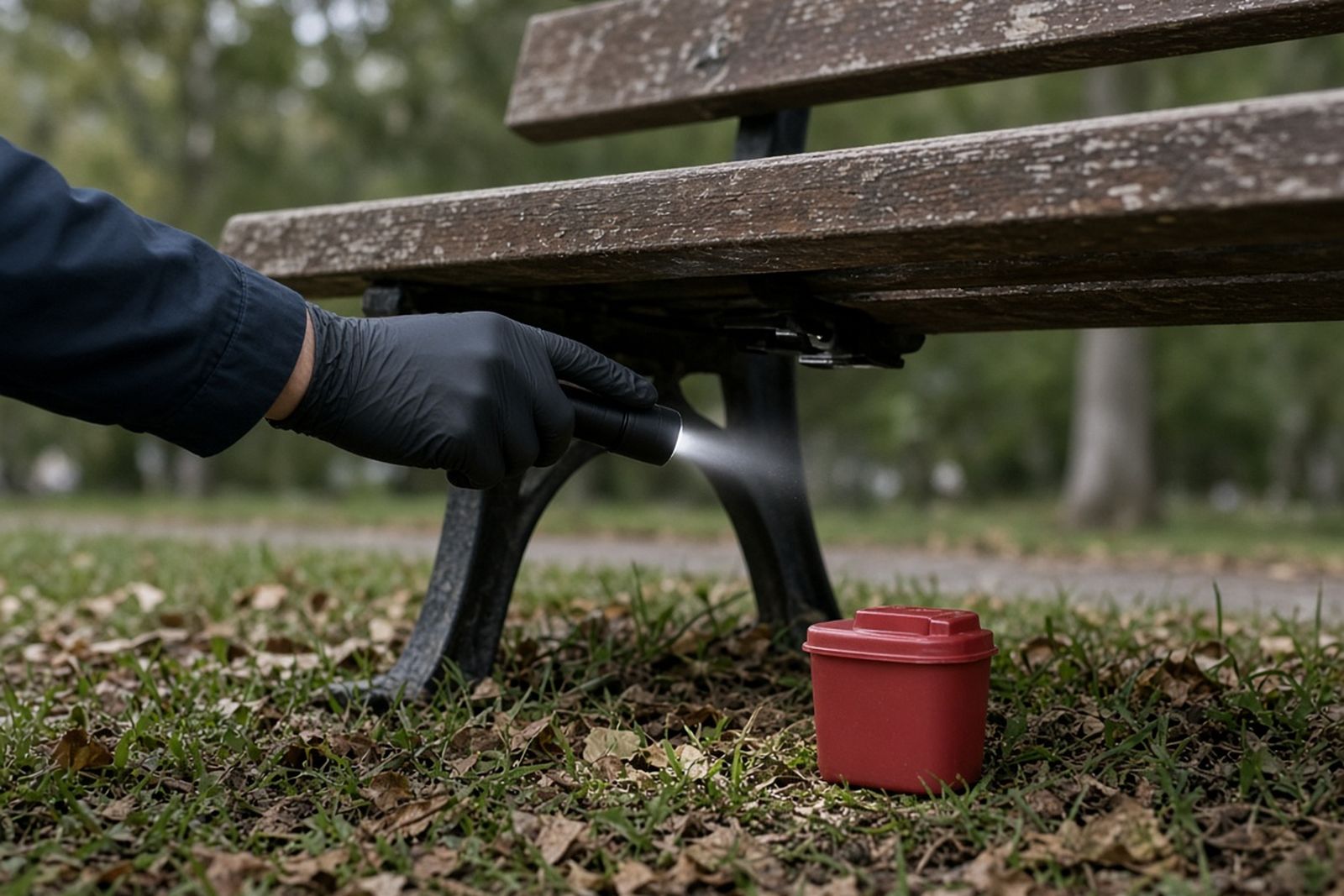
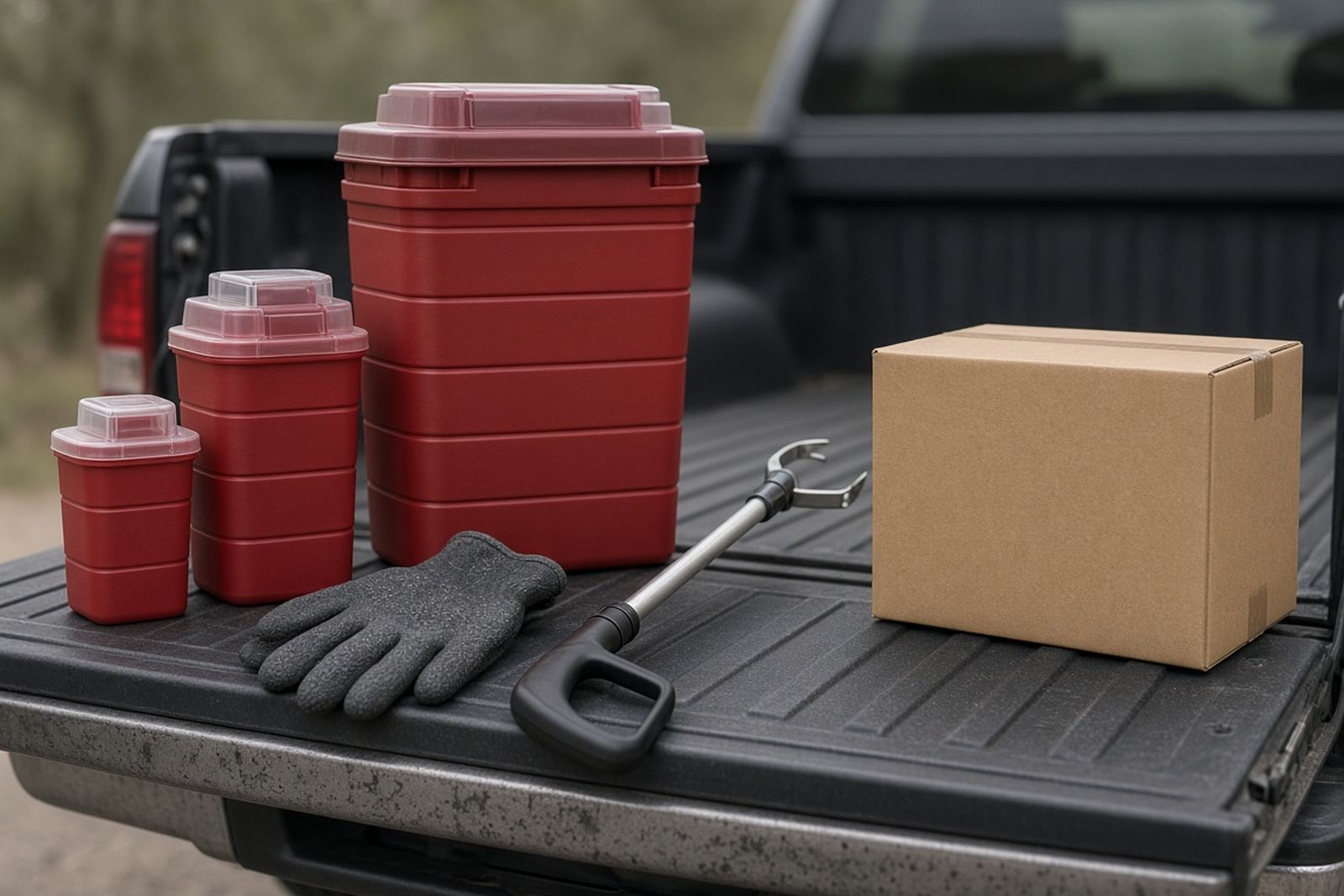
Rules take time to look up. Needles on the ground do not wait. In the meantime, keep people away from the area and do not touch anything with bare hands. If a trained person needs to pick up a needle right away, they should use a hard, puncture-resistant container that closes.
Never put loose needles in recycling, and do not flush them or drop them in a storm drain. Doing so moves the danger onto sanitation workers, sorting-line staff, and waterways.
If you are unsure, a qualified sharps company can handle the pickup now and help you understand the local disposal rules at the same time. That is often the fastest way to protect people while staying within state and local rules.