Short answer
When a strong odor shows up suddenly, treat it as a safety question before a cleaning one. Leave and call for help if you smell gas, feel ill, or suspect a death. If not, air out the space if it is safe and keep people and pets away from the source. Skip sprays that cover the smell. Take photos, and write down when the smell started so a company can trace it fast.
Is this smell an emergency or just unpleasant?
Most odors are a nuisance. Some are warnings. The first thing to decide is which kind you are facing, because the right next step is completely different.
Treat the smell as an emergency in any of these cases. It smells like rotten eggs or sulfur and could be natural gas. Someone has a headache, dizziness, nausea, or trouble breathing. The smell is chemical and you do not know its source. Or you suspect someone has died. In any of those cases, get people out and call for help before you do anything else.
Smells that are strong but not urgent include a sewer smell from a dry drain, a pet accident, a spoiled refrigerator, or leftover smoke from a small cooking fire. These still need attention, but you have time to think.
If you are not sure which group you are in, choose the safer one. Leaving the house for an hour while you make calls costs you very little.
First steps for a gas or chemical smell
Leave. Do not look for the source. Do not flip switches or use a phone inside. Do not start a car in an attached garage. Any spark can set off gas. Once you are outside and a safe distance away, call your gas utility's emergency line or 911.
For chemical odors you cannot identify, the same rule applies. Get everyone out, including pets, and call for help from outside. Tell the dispatcher what you smell and whether anyone has symptoms.
Know that your nose can stop warning you. OSHA lists the hydrogen sulfide odor threshold at 0.01 to 1.5 ppm, while loss of smell (olfactory fatigue) occurs at 100 to 150 ppm. Hydrogen sulfide is one of the gases tied to sewers and to bodies breaking down after death. A smell that seems to fade fast is not always a sign that the danger has passed.
An odor removal company is not your first call in these situations. Emergency services and the utility come first. Odor work begins only after the source is under control and the space is declared safe.
When you suspect someone has died
Say a strong, unfamiliar smell is coming from a neighbor's apartment, a relative's home, or a closed room. You have not been able to reach the person. Call 911 or the police non-emergency line. Explain that you are worried about the person's welfare.
Do not go into the space yourself to look. Police or emergency responders will check. If a death has occurred, they will bring in a medical examiner or coroner. The home may be held as a scene for a time.
This is an extremely hard situation. You do not have to manage the cleanup right away. You do not have to see the space if you would rather not. Once the authorities release the home, a biohazard cleanup company can handle the cleanup and the odor together. If the death was a suicide and you are struggling, the 988 Suicide and Crisis Lifeline is available by call or text at any hour.
Do not try to cover the smell with sprays, candles, or fans blowing into the hallway. Those steps do not help, and they can spread the odor into shared areas.
While you wait: what helps and what to avoid
If the situation is not an emergency, a few simple steps help. They cut your exposure, keep the problem from spreading, and make the company's job faster.
Keep your actions small. The goal is to hold things steady, not to fix the problem yourself.
If the smell is sewage, check whether any drains are backing up. Stop running water, flushing toilets, or using the washing machine until a plumber has looked at the line. More use can push more wastewater into your home and turn an odor problem into a flooding problem.
Well-meant actions can make an odor harder to remove. The most common mistakes involve products that cover the smell, trap it, or push it deeper.
Skip air fresheners, candles, and scented sprays. They make it harder for a technician to find the source by smell, and some leave residue on surfaces. Do not shampoo carpet where a liquid has soaked in. That can drive it into the pad and the wood under it.
Do not mix cleaning products. Bleach combined with ammonia or acids can release dangerous gases. Do not buy or rent an ozone machine for a home people are living in. Ozone must never be run with people or pets present, and it can damage some materials.
Last, do not touch anything that may involve blood, body fluids, or animal remains. Those call for protective gear and regulated disposal.
- Open outside windows in the affected area if it is safe and the weather allows
- Close inside doors so the smell does not spread through the house
- Keep children and pets away from the source
- Turn the heating and cooling fan off if the smell seems to spread through the vents
- Remove spoiled food or trash only if it is safe and does not involve body fluids
- Photograph the area and write down when you first noticed the smell
What to tell the company when you call
A clear description helps the company send the right person with the right equipment. Have these facts ready when you call.
Be honest about anything you have already tried. If you used an enzyme spray or a scented product, say so. It helps the technician make sense of what they find.
Ask the company what it suggests you do in the meantime. A good one will give you practical advice that fits your situation, not just a time slot.
- What the smell is like and where it is strongest
- When you first noticed it and whether it is getting worse
- Whether anyone has symptoms or has left the home
- Whether police, fire, or a utility has already responded
- Any known cause, such as a fire, a leak, a pet, or a death
- Whether people are living in the home and whether pets are present
An urgent call from start to finish
The story below is a made-up example, not a real event. A tenant in a small apartment building notices a strong, unpleasant smell in the stairwell one July evening. It seems to come from the unit below, where an older neighbor lives alone. The tenant knocks and gets no answer.
The tenant calls the police non-emergency line and the building manager. Officers arrive, go in with the manager, and find that the neighbor has died. The medical examiner is called, and the unit is closed while the investigation goes on.
In the meantime, the building manager closes the stairwell windows to keep hot air from pulling the odor upward. The manager puts a note on the door asking residents not to enter and calls an odor and biohazard cleanup company. The company explains that it cannot begin until the unit is released. But it suggests running exhaust fans that blow outside, not into the hallway. It books a technician for the morning after the release.
Once the unit is released, the company handles the biohazard cleanup and odor work inside. It also checks the stairwell and the units next to it for odor that has spread.
How fast should you deal with an odor problem?
Sooner is almost always better. Odor keeps moving into soft, absorbent materials over time, and heat speeds that up. A problem handled in days is usually smaller than one handled in weeks.
That does not mean you should jump at the first offer. Even when time matters, you can ask a few quick questions before you agree to anything. Ask how the company will find and remove the source.
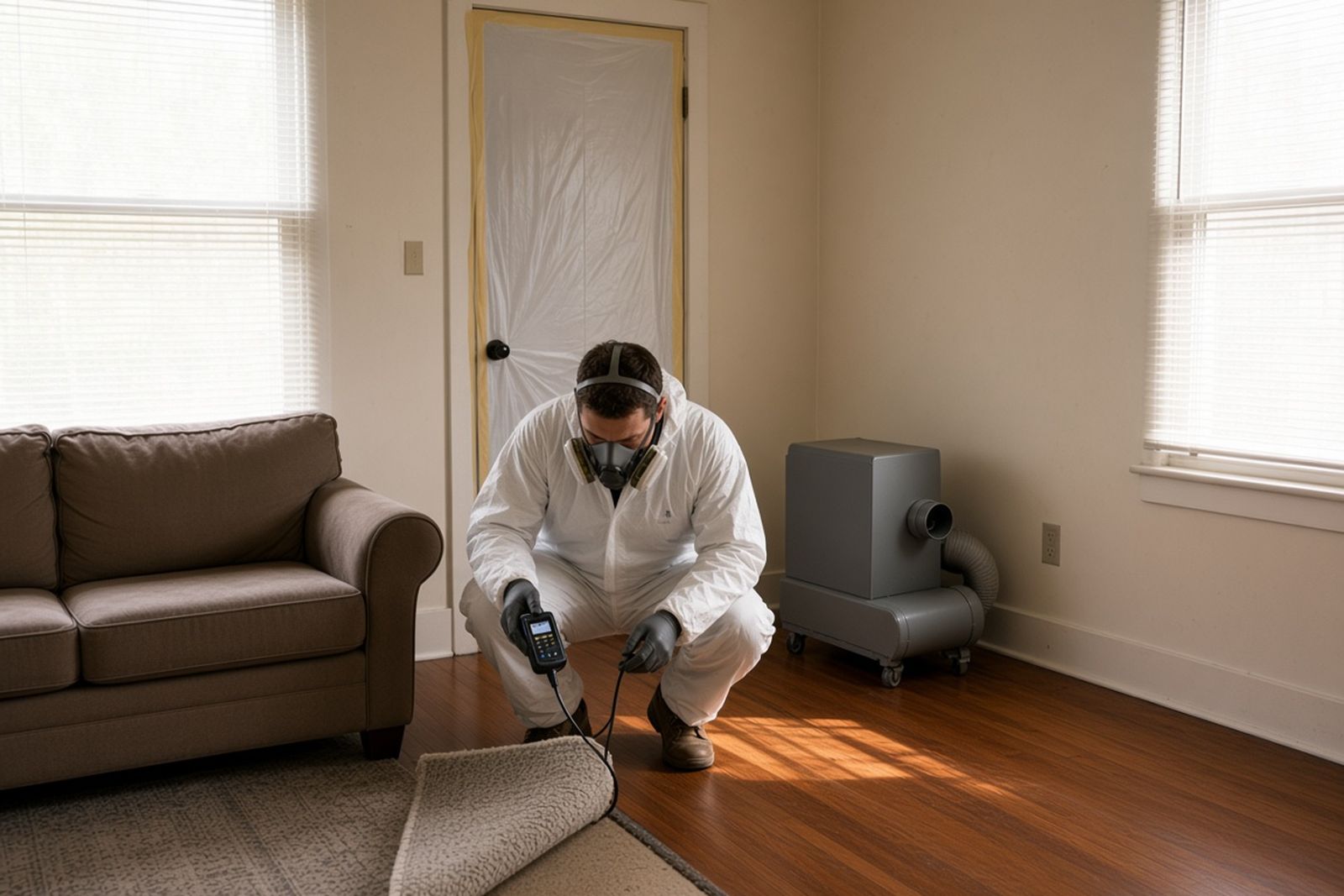
If a company cannot start the job soon, ask whether it can visit briefly to look and advise you on what to do for now. Some companies will offer short-term steps while the full work is scheduled. These include sealing off a room or setting up fans that blow air outside.
Keep in mind that emergency and after-hours visits may be priced differently from scheduled work. Ask about any urgent-service charge when you call, so your first invoice holds no surprises.
Others who may need to know
Depending on your situation, other people may need to know. Tell your landlord or property manager about odor problems in a rental unit. The cause may involve building systems or the units next door.
Tell your insurer soon if the odor followed an event that might be covered, such as a fire or sudden water damage. Take photos before cleanup begins, and keep receipts for any emergency steps.
After a death, the medical examiner or coroner will guide the release of the home, and family members may need to be contacted. That office can tell you when the home is released and who may enter before cleanup begins.