Short answer
To compare a low bid and a high bid, put both on the same written work plan. List the areas treated, the cleaning done first, the exact product, and whether its label allows the method. Add the wet time, the time before you can go back in, and any testing. A low bid can be fine if it covers those steps. A high bid should explain what the extra money buys and why your space needs it.
Why quotes vary, and what each bid should spell out
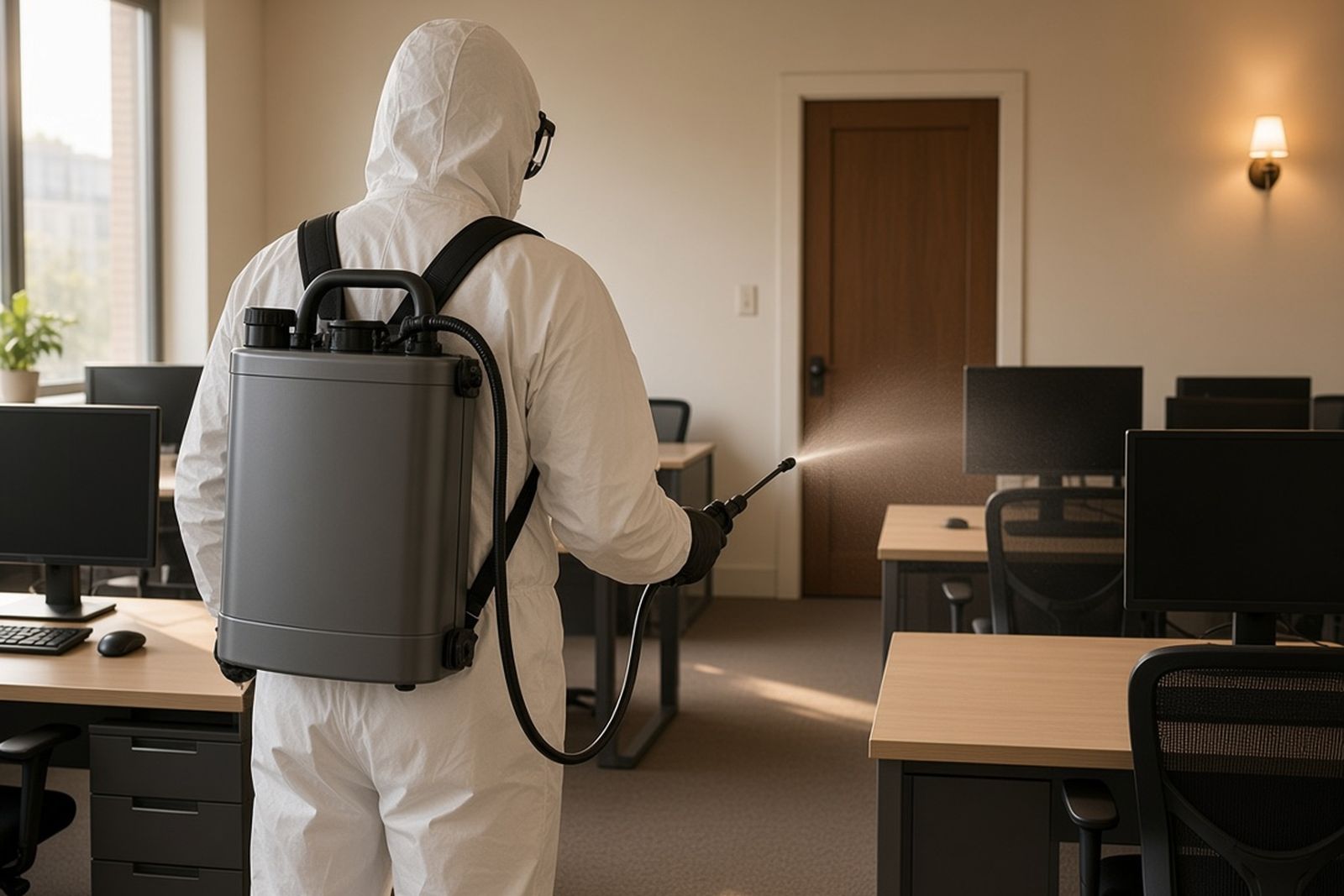
Fogging services range from a quick mist of one room to a job with many steps. The bigger jobs include cleaning, disinfecting key surfaces, and testing. Two companies can quote the same office and give you numbers that seem to have nothing in common. Most of the time, they are describing different work.
One company may price only the fogging pass. It assumes your surfaces are already clean. Another may wipe the surfaces people touch most first. It may pick a product labeled for the exact germ, keep surfaces wet for the full time, and run tests afterward. The second job takes longer, uses more product, and costs more.
Your job is not to find the lowest or the highest bid. It is to make the bids match up. Then you can see what each company is really offering and decide which one fits your need.
How a bid was put together tells you something, too. A price given over the phone from square footage alone is a guess built on assumptions. A bid written after a walk-through, with notes on room types, surfaces, and airflow, is more likely to reflect the real work. It is also less likely to change later.
Ask every company to describe its work in writing. This written work plan is often called the work plan. A clear one is the best tool you have for comparing prices fairly.
Once you have each plan, mark every line as included, left out, or unclear. Follow up on anything unclear before you compare prices.
- The areas to be treated, with square footage or a list of rooms.
- Whether surfaces are cleaned before they are disinfected, and which ones.
- The exact product name and its EPA registration number.
- Whether the product label allows fogging or electrostatic spraying.
- How long the label says surfaces must stay wet, and how the crew will make sure they do.
- How long your space must stay empty afterward.
- Any checks on the results, such as a quick swab test or a visual inspection.
- How often repeat visits happen, and what they cost.
Why does cleaning first change the value of a bid?
A disinfectant works best on a surface that has already been cleaned. Dirt, grease, and body oils can shield germs and weaken the active ingredient. A fog sprayed over grimy desks and door handles may leave them wet without doing much good.
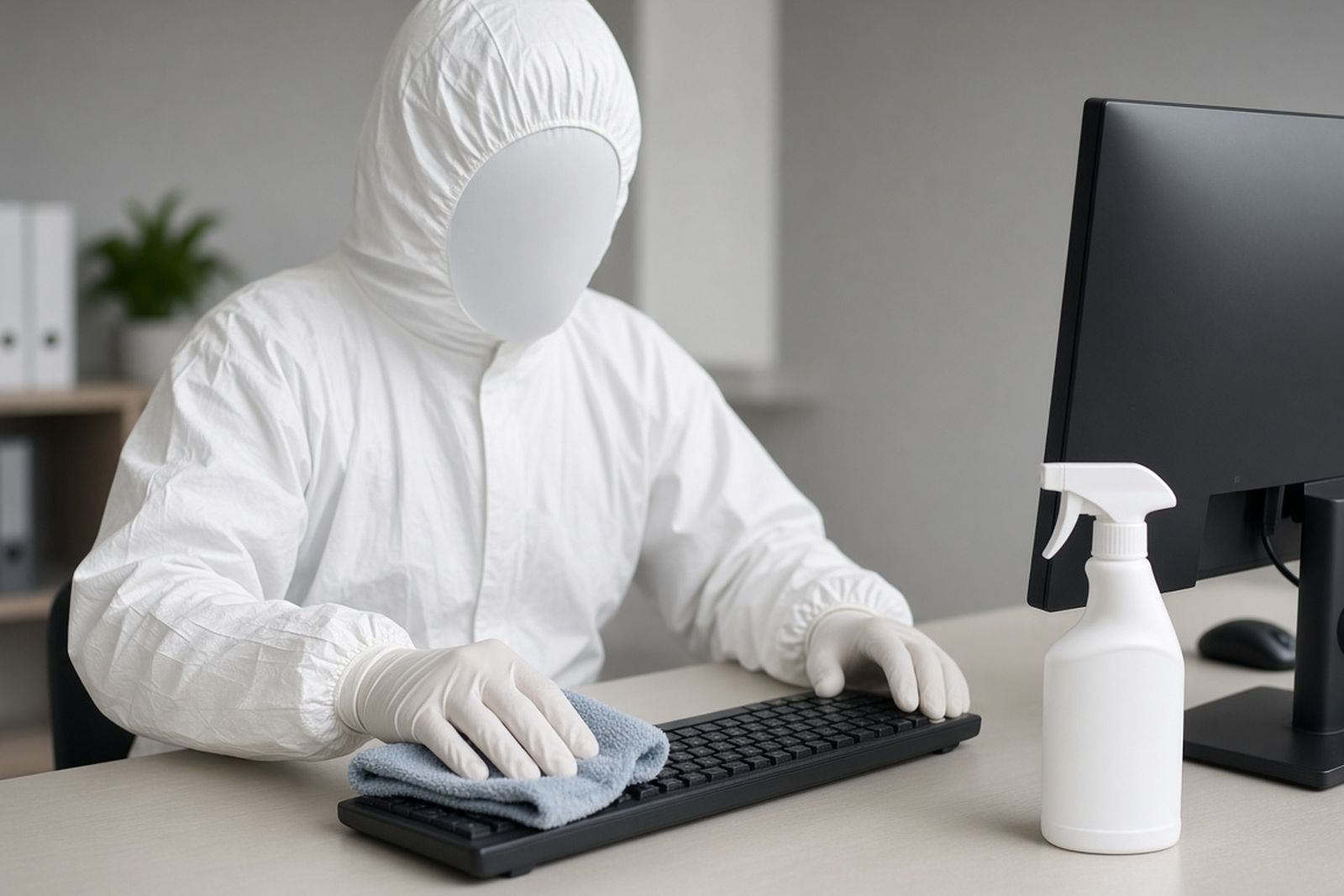
What removes that barrier is touching the surface with a cloth and detergent. No mist does it for you.
A bid that includes cleaning the most-touched surfaces first will cost more than one that only fogs. In many settings, it gives you more for your money.
When you compare bids, look at which surfaces each company plans to clean by hand. Door handles, light switches, faucet handles, shared keyboards, railings, and tabletops get the most use. A bid that names them one by one is easier to hold a company to than one that promises a general wipe-down.
Low bid vs high bid: when each makes sense
A lower price is not a problem by itself. A small space, a company with crews nearby, or a simpler job can all lead to an honest lower bid. If your own cleaning team already cleans the space well each night, a pass to disinfect key surfaces may be all you need.
The test is whether the low bid covers the basics. The product's label must list the germ you are worried about and allow the way it will be applied. The crew must use enough product to keep surfaces wet for the full time. And you must get clear directions for when you can go back in.
A low bid becomes a problem when the savings come from shortcuts. The crew may skip cleaning. It may use a product not labeled for fogging, or rush through without keeping surfaces wet long enough. It may even use a scented product that smells clean but is not registered as a disinfectant. With shortcuts like these, you can end up paying for a service that looks good but does little.
Ask the low bidder how much product it expects to use. Ask how it knows your surfaces will stay wet long enough. Does the company answer in terms of the label and the room, or the look of the fog? The first kind of answer is more likely to mean a real result.
A higher bid should point to exact extra value. That might be cleaning of the most-touched surfaces first. It might be a product chosen for one germ after an outbreak, or testing afterward. It might be detailed records for regulated settings like healthcare or food service.
Some methods take longer by design. For example, some systems seal a room and fill it with vapor. These can be worth it in certain settings, but they carry real costs in time and equipment.
Be a little doubtful of add-ons that are loosely described. Ozone treatments, "antimicrobial coatings," or "hospital-grade" packages with no details call for a direct question. What exact problem does this solve in my space, and what proof backs it up?
Checking the results and repeat visits
Some bids include a quick swab test. It measures leftover organic residue on a surface and gives a fast sign of how clean it is. Other bids include no testing. Testing adds cost, but it gives you numbers and not just a feeling.
The swab results do not measure germs directly, and pass or fail marks vary. Different devices and settings use different cutoffs. So a number from one company's meter cannot be compared straight across with another's.
If a bid includes testing, ask which surfaces will be tested and what device is used. Ask what result the company counts as passing, and what happens if a surface fails. Testing helps you most when it leads to action.
Looking with your own eyes still has a place. A walk-through after treatment checks that surfaces were reached. It also checks that no residue or puddles were left on electronics or on surfaces that touch food. It costs little and catches clear problems. Ask if that is part of each bid.
Many fogging contracts repeat weekly, monthly, or by season. Compare what each visit covers, not just the monthly price. A lower monthly fee that covers fewer areas or skips cleaning first may not be a better deal.
Ask how the company decides how often to come. A careful answer ties the schedule to how your space is used, how many people are in it, the risk of an outbreak, and what your own cleaning team already does. A company that pushes frequent fogging on every customer, no matter the need, may be selling you more than you require.
Check the contract terms, too. Look at how either side can end the deal, whether prices can change partway through, and what happens if a visit is missed.
It is also worth asking if repeat visits will be adjusted over time. Say illness reports drop, or your own cleaning gets better. A good company may then suggest fewer visits, or treating only the high-risk areas. A company willing to scale back cares about your results, not just its sales.
Three bids for a small daycare
As an example, take a daycare director who wants help after a stomach bug moves through two classrooms. She asks three companies for bids to treat the classrooms, restrooms, and kitchen.
Bid A is the lowest. It covers a fog of the whole building with a product the company calls "hospital grade." When she asks, the company cannot say if the label lists norovirus or allows fogging. Bid B is in the middle. It includes cleaning of often-touched surfaces, toys, and tables. Then comes electrostatic spraying of a product whose label lists norovirus and allows that method. The rooms stay closed for the full wet time. In the kitchen, surfaces that touch food are rinsed, as the label requires. Bid C is the highest. It adds ozone treatment and a monthly contract.
With the work plans side by side, the director sees the picture. Bid A cannot confirm it uses the right product. Bid C's ozone treatment raises safety questions for a space with children, and it does not meet the need. Bid B covers the real problem. She picks it for a one-time service and asks for a written summary to share with parents.
Last checks before signing
A few last questions, answered in writing, can settle your choice. They help you confirm you are comparing like with like. They also show whether the company will stand behind its work.
Some states require a license for people who apply disinfectants. You may also run a regulated site, such as a clinic or a food business. In either case, confirm the rules with your state pesticide agency or licensing agency before you sign. A company that answers these questions clearly is usually the one that will do careful work.
- Can I see the label for the product you will use?
- Does the label allow the way you plan to apply it?
- What will you clean before you disinfect?
- How long will my space stay closed, and why?
- If I showed you another company's work plan, what would you charge for exactly that work?