Short answer
Enzyme and microbial products help when your problem is organic dirt, a smell, or slimy buildup that must be broken down before you disinfect. They are not disinfectants. A disinfectant used at the same time can cancel them out. They should be fogged only if the label allows it. Used in the right order, they make your cleaning more thorough. Used as a swap for disinfectant, they leave germs untreated.
Why enzyme and probiotic products show up in fogging quotes
Fogging companies often offer a menu. You may see a disinfectant fog, an odor treatment, and sometimes an enzyme or probiotic spray sold as a natural or long-lasting choice. If you manage a building and want to use less chemical, the probiotic choice can sound good. If you own a home with a smell that will not leave, the enzyme choice can sound like the missing piece.
These products are real and have fair uses. Enzyme cleaners use proteins that break down certain organic materials. Microbial cleaners, also called probiotic cleaners, use live, helpful bacteria that eat organic residue. Their makers say these bacteria also compete with other microbes for space on your surfaces.
The trouble is how they are sometimes sold. You may hear that they can stand in for disinfecting, or that they can simply be added to a fogger. Neither claim holds up unless you check with care.
What these products really solve
Enzyme and microbial products are made to break down organic dirt. That means proteins, fats, starches, and the compounds that make smells as they rot. They work well on stains and smells from body fluids, food waste, and pet accidents. They also work in places where dirt builds up slowly, such as your drains, grout, and floor seams.
They can also help with biofilm, the slimy layer that microbes form on surfaces. Biofilm shields microbes from disinfectants. Breaking it down raises the odds that a disinfectant can reach them. Even professionals do not all know about this. When Centeleghe and colleagues surveyed healthcare professionals in 2024, 87.6% said they had heard of biofilms, yet only 39.1% were aware of dry-surface biofilms, which form on surfaces that look perfectly dry.
Here is what these products do not do. They do not kill the viruses and bacteria behind an outbreak the way a registered disinfectant does. They clean. They do not disinfect.
- Organic stains from body fluids or food.
- Smells from rotting organic residue.
- Buildup in your drains, grout, and seams.
- Biofilm that shields microbes from disinfectants.
Can you fog an enzyme or microbial product?
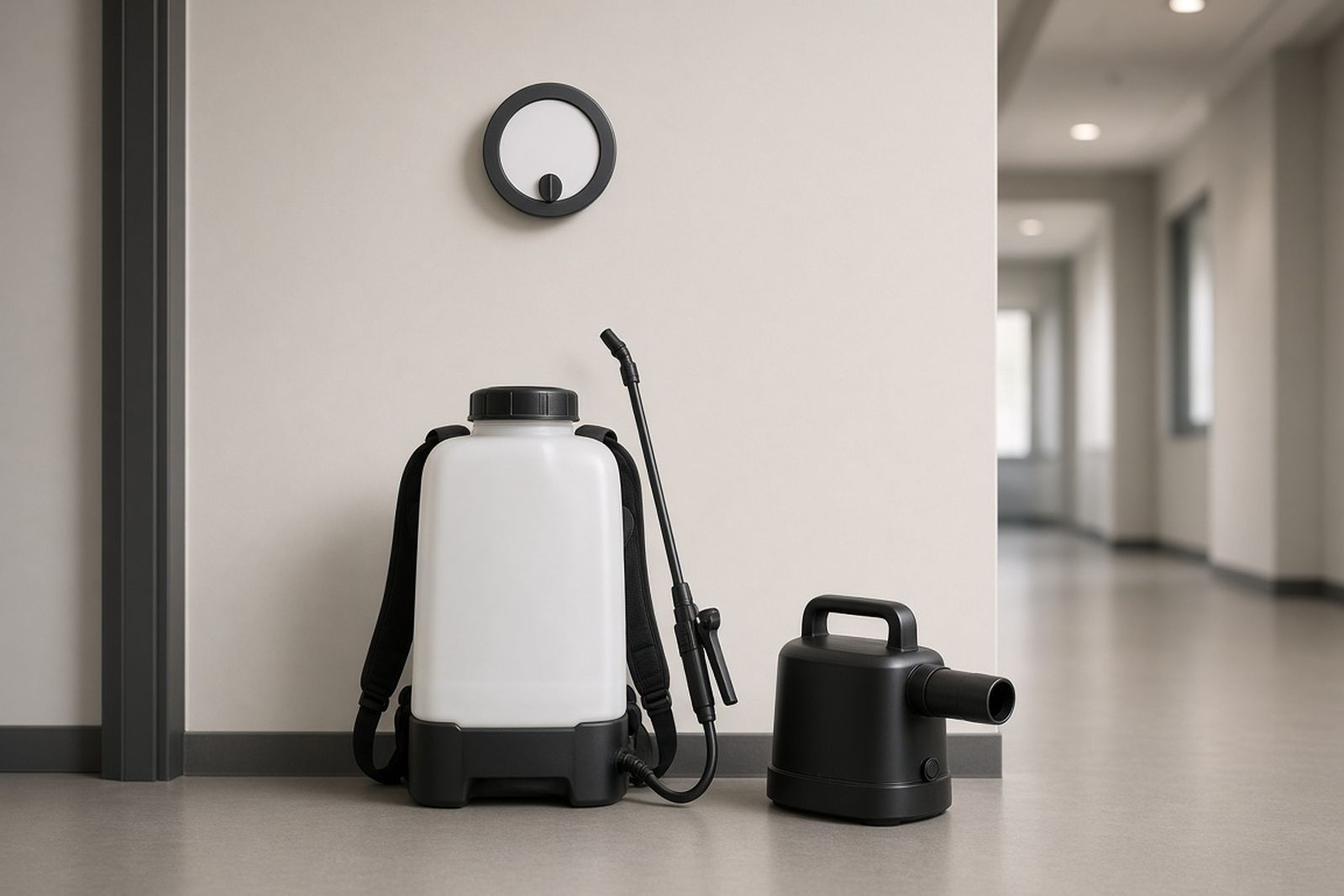
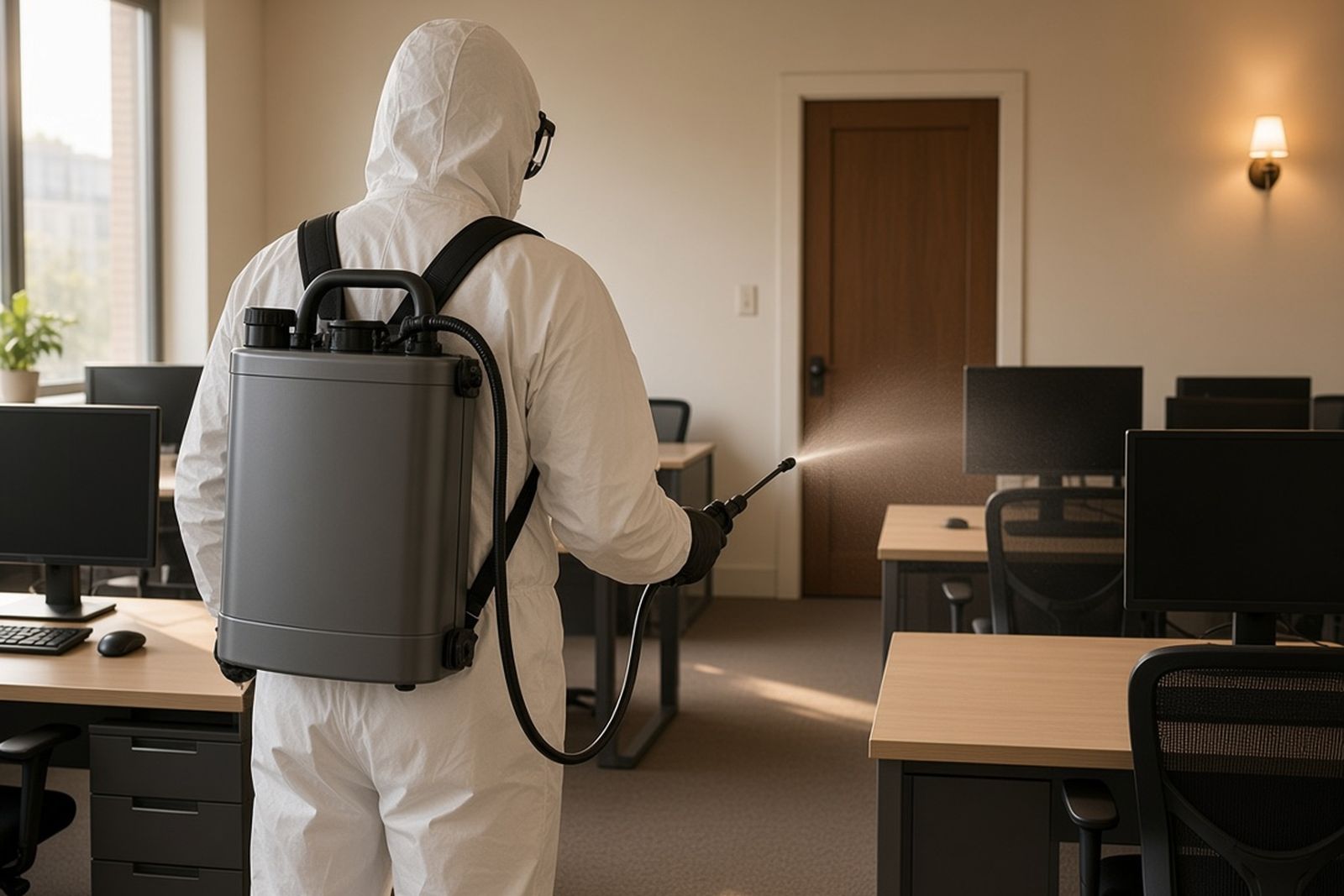
Only if its label says so. The same rule that applies to disinfectants applies here. The way a product is applied should match its directions. People mostly talk about this label-first rule for disinfectants. But the same logic holds for any product you put into indoor air. Ask what the label allows and what warnings it gives about breathing the product in.
Many enzyme and microbial products are made to go straight onto a dirty surface. They need enough liquid to keep the dirt wet while the enzymes or bacteria work. A fine mist that dries fast may not stay wet long enough to do much. Fogging also puts the product on every surface in your room, even those with no organic dirt at all.
Some odor-control products are labeled for fogging or misting. If a company offers this, ask what the product is meant to do. Does it break down the source of the smell, or just treat the air? And how will they deal with the source itself?
Why disinfectants and microbial products can work against each other
A microbial cleaner works because its bacteria are alive. A disinfectant works by killing microbes. Say you use them together, or one right after the other with no plan. The disinfectant may kill the helpful bacteria before they do anything useful. Some chemicals can also switch off enzymes.
This does not mean the two can never be part of the same plan. It means they need to be put in order on purpose. For example, an enzyme product might go on a drain or a dirty carpet first. It is then rinsed or left to finish its work. After that, the hard surfaces nearby are disinfected. Or a microbial product might handle everyday smells in areas that do not need disinfecting. Disinfecting is then saved for often-touched surfaces or times of illness.
Combining methods on purpose
Combining methods is common among professionals. The same 2024 Centeleghe survey found that 70.8% of respondents favored combining methods for cleaning and disinfection. The key is that each method is chosen for a reason and used in an order that lets it work.
Timing also affects what you pay. Say a company applies a microbial product and a disinfectant on the same visit with no plan for the order. You may be paying for two products and getting the benefit of only one. Ask to see the order of steps written into the service description. Then you can confirm it is being followed.
A sensible order of steps
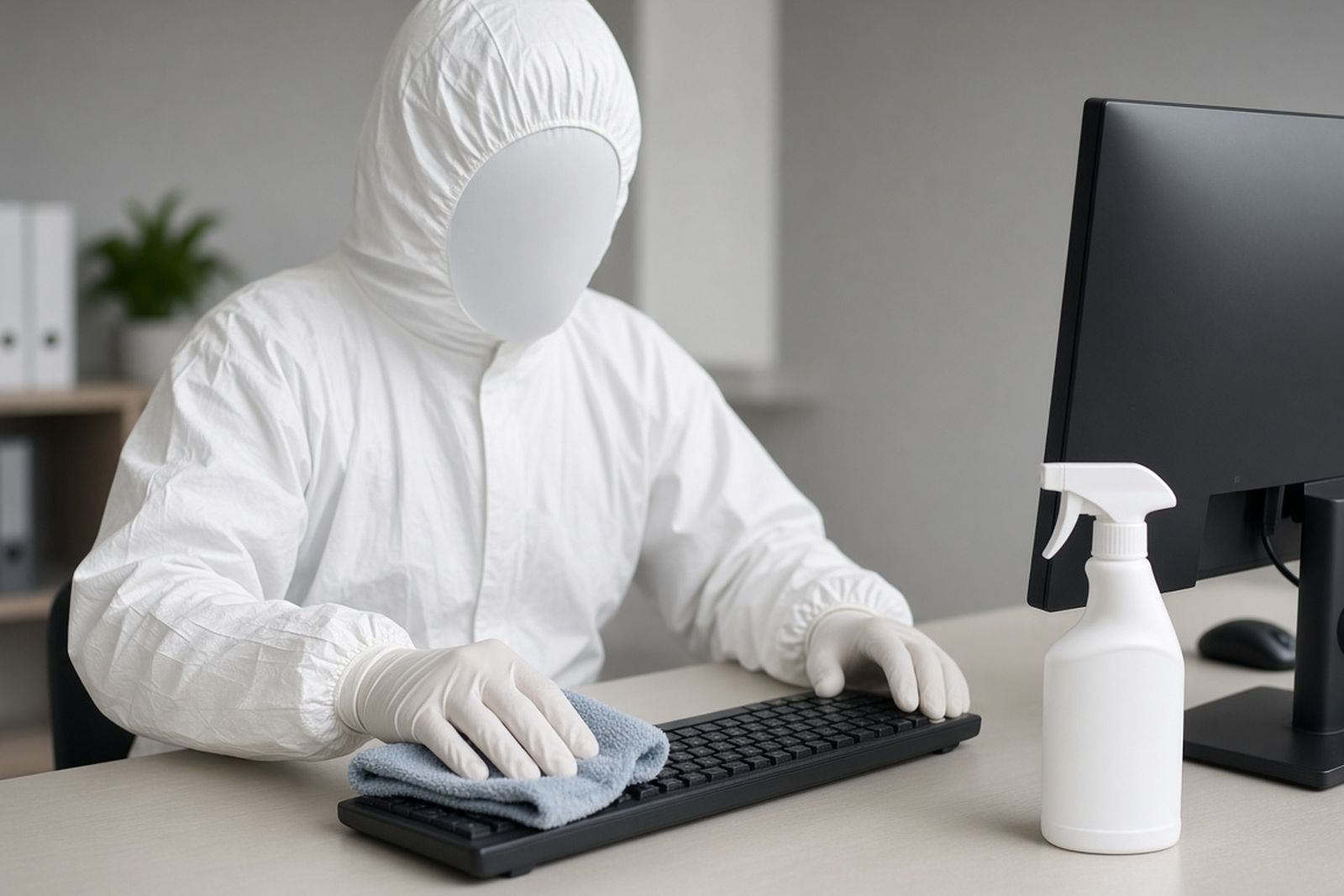
In most settings, the order follows one idea: remove dirt before you kill germs. First, remove any debris you can see and clean surfaces with detergent. Second, use an enzyme or microbial product where organic dirt, smell, or biofilm remains. Leave it on for as long as its label says. Third, rinse, or let the product finish its work as directed. Fourth, apply a registered disinfectant to the surfaces that need it. That can be by wiping, by spraying, or by fogging or electrostatic spraying if the label allows it.
Some companies flip the order for odor work in spaces that do not need disinfecting at all. That can be fine. But they should be able to explain why you do not need to disinfect.
All the way through, the product labels are your guide. If two labels give clashing directions about mixing or timing, ask the company how they will sort it out.
- Remove debris and clean with detergent.
- Apply an enzyme or microbial product where dirt or smell remains.
- Leave it on for the time on its label, then rinse if directed.
- Disinfect the surfaces that need it, by a method the label allows.
Can probiotic cleaning replace disinfecting?
Some sites have tried probiotic cleaning plans. The aim is to keep surfaces covered in harmless bacteria and not disinfect them over and over. Research on this idea is still going on. The proof varies by setting and by product.
For a normal business or home, the advice is simple. You can use probiotic products as part of routine cleaning where you have no certain infection worry. When someone has been ill, or the health department advises it, use a registered disinfectant. Its label should list the germ you are worried about. Apply it as directed.
Be careful with claims that a probiotic spray gives lasting protection against named diseases. Ask for the proof and the product's registration status. If your site has set disinfecting rules, check with your licensing agency or local health department before you change anything.
If you try a probiotic plan, set it up as a trial. Pick one area and a set length of time. Choose something you can observe and compare, such as smell complaints or dirt you can see. You could also use quick swab test readings on chosen surfaces, taken the same way each time. Keep disinfecting on hand for illness during the trial. Review the results honestly before you expand it.
When a smell keeps coming back
Restrooms are the classic case. Your staff clean several times a day. A service fogs with a disinfectant each week. A sour smell still comes back. When that happens, the fog is likely disinfecting the surfaces it reaches. It is not touching the organic buildup where the smell starts.
An inspection usually finds the source in a few likely places. Check the floor drain, the grout lines around the base of the toilet, and residue under the edge of a baseboard. Other common causes are seams, hidden spills, and plumbing problems.
The order of steps from earlier applies. Clean the grout and baseboard edge with detergent. Treat the drain and grout with an enzyme product as its label says. Repeat the drain treatment on a set schedule. Keep wiping the often-touched fixtures with disinfectant as usual. In many cases you can drop the weekly fog, which lowers your chemical use as well.
The wider lesson is this. When a problem keeps coming back despite regular fogging, finding the source does more than adding another treatment.
Questions to ask before you add these products
Start with the purpose. What dirt, smell, or biofilm is the product meant to deal with, and exactly where? If the answer is general, such as "overall freshness," you may not need it.
Then ask about mixing and order. Which disinfectant, if any, will also be used? How long will the company wait between products? Does the label for either product warn against using them together?
Last, ask about the method. Is the product labeled for fogging or misting, or only for direct use on a surface? If it will be fogged, what breathing warnings and re-entry directions apply? A company that answers these clearly is treating these products as tools. It is not just selling you an add-on.
The takeaway
Enzyme and microbial products can make your fogging plan smarter. They deal with the organic dirt, smell, and biofilm that disinfectants alone handle poorly. They cannot stand in for disinfecting when you need it. And they should not be fogged unless their labels allow it.
Think of them as specialists. Call on them for the exact problems they solve, in the right order. Let registered disinfectants handle the germs.