Short answer
Many homeowners policies can cover part of the cleanup and repair after a suicide at home, but it is not guaranteed. It depends on your policy's wording, whether the damage fits a covered cause of loss, and how the insurer applies its exclusions. Call your insurer early and ask what records it needs. Life insurance is a separate policy with separate rules.
Can insurance pay for cleanup after a suicide at home?
It can, and many families are surprised to learn that. A homeowners or renters policy may help with the physical damage left in a room. That can mean flooring, wall materials or furniture that cannot be safely cleaned. Whether it helps in your case depends on how your policy describes covered losses and exclusions. It also depends on how your insurer reads them.
You may not want to call the insurance company at all. That is understandable. Talking about the death of someone you love in the language of claims and deductibles can feel cold. It may help to know that adjusters, the people who review claims, handle sensitive losses. You can keep the first call short and stick to the facts.
Insurance practices and state rules differ from place to place. Confirm the details with your insurer and, if needed, your state insurance department.
Why an insurer may treat this differently
Homeowners policies usually exclude damage that an insured person causes on purpose. Some families worry that this clause will block a claim after a suicide every time. In practice, insurers and courts have handled the question in different ways. The answer can depend on the exact policy wording and on who is making the claim.
A surviving spouse, parent or co-owner may also be insured under the policy. The insurer may treat that person differently from the person who died. This is a question of how the law reads the policy. So ask the adjuster to explain in writing how the insurer is applying any exclusion. If you disagree, your state insurance department and an attorney can help you understand your options.
Other parts of the policy may be judged on their own terms. These include coverage for personal property or for additional living expenses, meaning the cost of staying elsewhere. One exclusion does not always decide every part of the claim.
These questions come up often for families after a suicide loss at home.
Knowing this will not ease your grief. It may ease the sense that you are the first person to ask. Insurers, cleanup companies and victim advocates have guided many families through the same decisions.
Which parts of the room might be included in a claim?
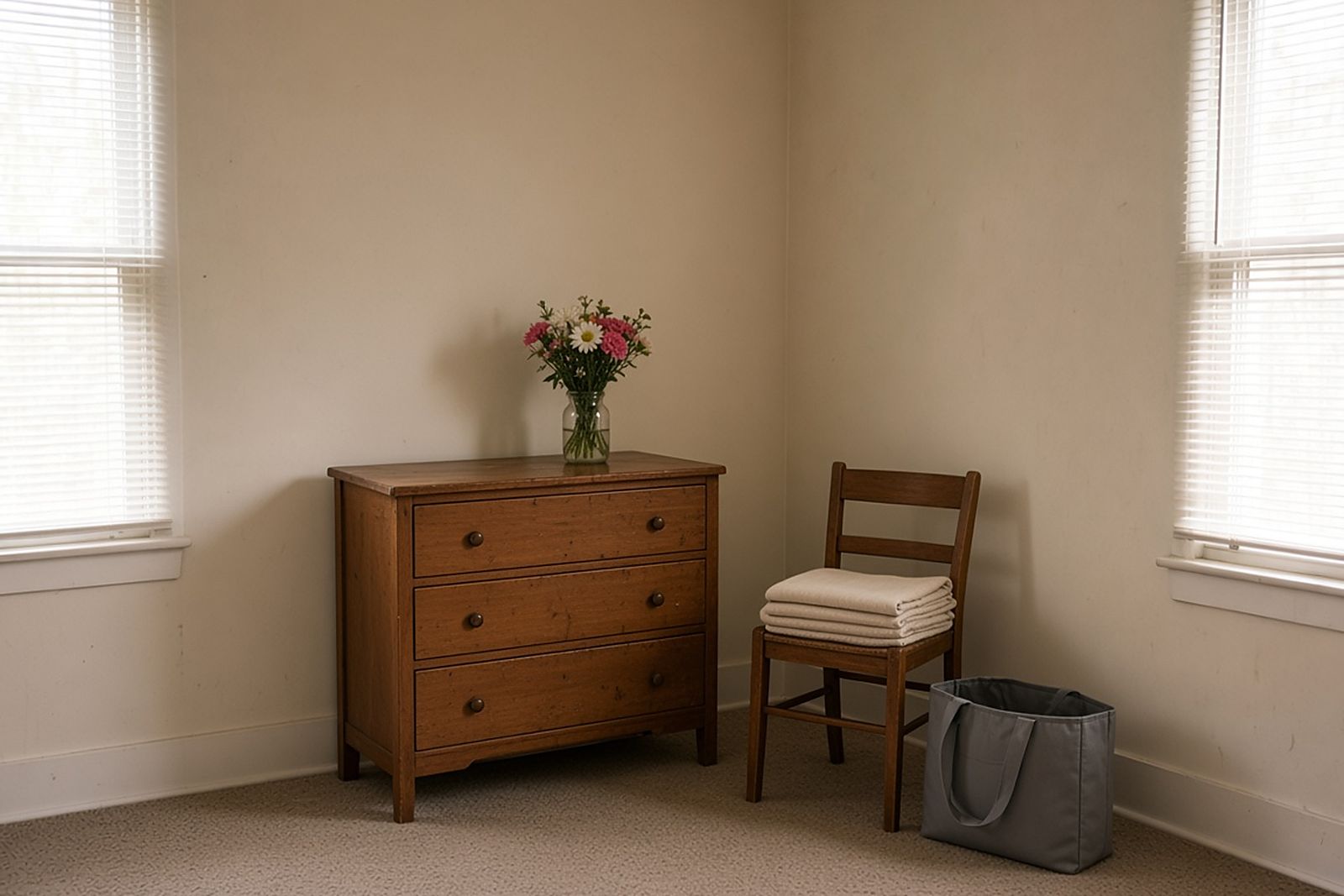
Adjusters usually look at a loss in two groups: the building and the belongings inside it. After a death at home, the building side can include carpet and pad, and hardwood or subfloor that soaked up fluids. It can include drywall, trim and sometimes ceiling materials in a room below. The belongings side can include a bed, a chair, bedding, rugs and clothing that cannot be safely restored.
A professional cleanup company will explain which materials can be cleaned and which have to be removed. Soft or absorbent materials that soaked up body fluids are often removed, not cleaned. Sealed hard surfaces may be restored. That difference often drives the size of the claim. Ask the company to note the reason for each removal in its written work plan.
You may also want certain personal items set aside and cleaned if possible, such as a photograph, a watch or a book. Tell the company about these items early. Even when the insurer treats something as a total loss, you may be able to keep it if it can be safely restored. A caring crew will ask before discarding anything personal.
If you had to stay somewhere else while your home was being restored, ask whether your policy includes additional living expenses. Keep hotel and meal receipts in case it does.
Homeowners insurance vs life insurance
These are two separate policies with different purposes. Homeowners or renters insurance deals with damage to a building and to belongings. Life insurance pays a benefit to the people named in the policy after a death. A claim under one does not start or replace a claim under the other.
Life insurance policies often contain a clause about suicide within a set period after the policy is issued. The length and effect of that clause are set by the specific policy and by state law. Read the policy or ask the life insurer directly. Do not rely on general statements.
When you speak with your homeowners insurer, you do not need to discuss life insurance at all. Keep the call about the property. Say which rooms were affected, what materials were damaged and what the cleanup company recommends.
What the adjuster will ask for
Adjusters need enough information to understand the loss and the planned repair. You can ask a family member or friend to gather these items, so you do not have to handle every piece yourself. With your permission, many insurers will speak with a helper you name.
- The police or medical examiner case number, if one was assigned
- The date the home was released back to the family
- A written work plan from the cleanup company that lists each charge by room and material
- Photos taken by the company during its assessment, so you do not need to take them yourself
- Waste disposal records for regulated materials removed from the home
- A list of belongings that could not be kept, with rough replacement values
An illustrative claim
What follows is an example, not a real claim. A woman learns that her adult brother, who rented a small house, died by suicide in his bedroom. His will names her as executor. After the medical examiner releases the home, the landlord asks her to arrange cleanup.
She learns that her brother had a renters policy. She calls the insurer as the person acting for the estate. She explains the loss in a few sentences and asks what is covered. The adjuster explains that the landlord's insurance would usually deal with the building. Her brother's renters policy may help with his personal belongings, under its terms and exclusions.
The cleanup company's work plan lists the bedroom carpet and pad and a mattress for removal, with cleaning of the hallway next to it. The landlord's insurer reviews the flooring. The renters insurer reviews the mattress and other belongings. The sister keeps copies of everything in one folder and asks both insurers for written decisions.
This example is only an illustration. How any real claim is handled depends on the policies, the insurers and the state involved.
Should I let the cleanup company deal with the insurer?
Many cleanup companies offer to talk with your insurance company, and that can spare you hard calls. Before you sign anything, ask what you are agreeing to. Some forms hand your rights under the claim to the contractor. Others simply let the insurer pay the contractor directly. The difference matters if the insurer pays less than you expected.
A trustworthy company will explain its paperwork patiently. It will not rush you to sign while you are in shock, and it will not promise that insurance will pay. It will give you copies of its work plan, photos and disposal records, so you have your own record of what was done.
- Will I owe the balance if the insurer pays less than the estimate?
- Can I review every document you send to the insurer?
- Do you wait for the adjuster's approval on work that is not urgent?
If you cannot afford the gap
If the claim is denied or only partly paid, ask for the decision in writing, with the policy wording it relies on. You can ask for a review. Your state insurance department can explain how to complain or appeal. Some cleanup companies offer payment plans. Some community organizations and faith groups quietly help families with urgent costs.
Victim compensation programs are designed for crime victims, and the rules for help after a suicide are generally narrower. It is still worth asking a local victim advocate or the county social services office whether any help applies to you.
Taking care of yourself while this is sorted out
Suicide loss can bring waves of shock, guilt and exhaustion. Paperwork can wait a day if you need it to. Ask people close to you to carry specific tasks, such as calling the insurer or meeting the cleanup crew, so that you can rest.
If you or someone in your family is struggling, you can call or text 988 to reach the 988 Suicide and Crisis Lifeline at any hour. Support groups for survivors of suicide loss are often run by local nonprofits or hospitals. They can connect you with people who understand this kind of grief. Reaching out is a strong and sensible step.