Short answer
Enzyme and microbial cleaners break down residue and smell on surfaces that stay in your home, such as concrete, sealed wood, grout and framing. They come after soaked materials are removed. They are not disinfectants unless registered as such. They need time and moisture to work, and must be done and dry before sealing. They never replace removing soaked flooring, furniture or bedding.
Why biological cleaners come up so often
The residue left when a body breaks down is not like fresh blood. Over days or weeks, fluids move into the flooring and the frame of the home. They hold proteins, fats and other organic matter. They cause some of the most stubborn smells a home can hold. The soaps you have at home struggle with that mix, and fragrances only mask it for a while.
Enzyme cleaners and microbial products go after the residue itself. Enzymes break large organic molecules into smaller pieces that can be rinsed away. Microbial products add helpful bacteria that eat organic residue over time. Both can reach into textures and seams in your home where scrubbing alone falls short.
That is why many companies in this field use them. The question for you is not whether they work in general. It is where they fit in your home's work plan and where they do not.
Enzyme blends and the surfaces they suit
The fluids hold a mix of materials. So your company will often use a blend and not a single enzyme. Proteases break down proteins. Lipases go after fats and oils, which can be a large part of the residue in these cases. Other enzymes handle starches and more complex matter.
The label says what the blend is made for and how long it must stay wet on a surface. Temperature matters. Many enzymes work poorly in very cold spaces. A home without heat in winter may need to be warmed before the treatment works well.
Ask the company which product it plans to use and why that blend suits your home. A clear answer shows they understand the chemistry and are not just reaching for whatever is on the truck.
Humidity plays a part too. Enzymes need moisture to work. So a worker may lightly mist a treated area, or cover it with plastic to slow drying while the product sits. That added moisture is then pulled out with suction and drying equipment before the next step.
Biological products do their best work on materials that can be cleaned but are rough or slightly absorbent. Residue lodges in their pores and seams, where you cannot scrub it out. After a death found late, these often include concrete slabs under carpet, and floor beams and subfloor edges that are sound but stained. They also include grout and tile, sealed hardwood seams, brick, and the bases of fixtures such as toilets and cabinets.
They can also help you with smell in areas next to the main affected spot. There, fluids did not pool, but vapor and light residue settled.
The heating and cooling system is a special case. Biological products are sometimes used inside a return air box or a floor vent near the affected room. But ducts have their own cleaning methods, and some duct materials should not be made wet. Your company should explain how it plans to treat the air system apart from floors and framing.
- Often helpful: concrete slabs, stained but sound framing, grout, tile, sealed wood seams, fixture bases
- Sometimes helpful: lightly affected padded furniture or rugs you want cleaned for sentimental reasons
- Not right for: soaked carpet and pad, mattresses, padded furniture that absorbed fluid, soaked drywall
Two limits: soaked materials and disinfection
When a person lies unfound for days, fluids can soak everything beneath them. Carpet pad, mattress foam, cushions and drywall act like sponges. The residue sits deep inside, in amounts no surface treatment can reach.
Trying to treat those materials in place usually gives you a smell that fades for a short time and then returns. It comes back most on warm days or when the heating starts. It can also leave germs behind. Soaked absorbent items should be removed and thrown away under local rules. Then the surfaces beneath them should be checked.
Enzymes and microbes are for what is left after that removal. They are not a way to avoid it. If a company suggests spraying a biological product on a soaked carpet or mattress and leaving it in place, ask them to explain why, in detail.
Biological products cannot rescue soaked materials or take the place of disinfecting. Most of these cleaners are made to break down soil and odor sources, not to kill germs. The EPA reports that more than 4,000 antimicrobial products are currently registered with it and sold in the marketplace. A product must hold that registration before it can be marketed with disinfecting claims.
So a careful work plan for your home includes a separate disinfecting step. The crew uses a registered product suited to your surfaces and the germs of concern, and follows its label. The biological step comes first. It clears the organic matter that would otherwise get in the disinfectant's way.
Keep the two apart in time. Disinfectants can kill the helpful microbes in a live-culture product and may shut down enzymes. Using them together wastes both, and you pay for each.
Some companies carry products that combine cleaners with a registered disinfectant. Those can be fine if their labels cover the surfaces and conditions in your home. But heavy residue usually still needs its own cleaning step first.
How do biological cleaners fit with sealing and odor treatment?
They fit in a set order, and the order is where many jobs succeed or fail. A typical order starts with removing soaked materials. Next comes biological treatment of the cleanable surfaces left behind, then rinsing or suction. Then come disinfecting, drying, and sealing where needed. Air filtering or other odor treatments usually run alongside or after these steps.
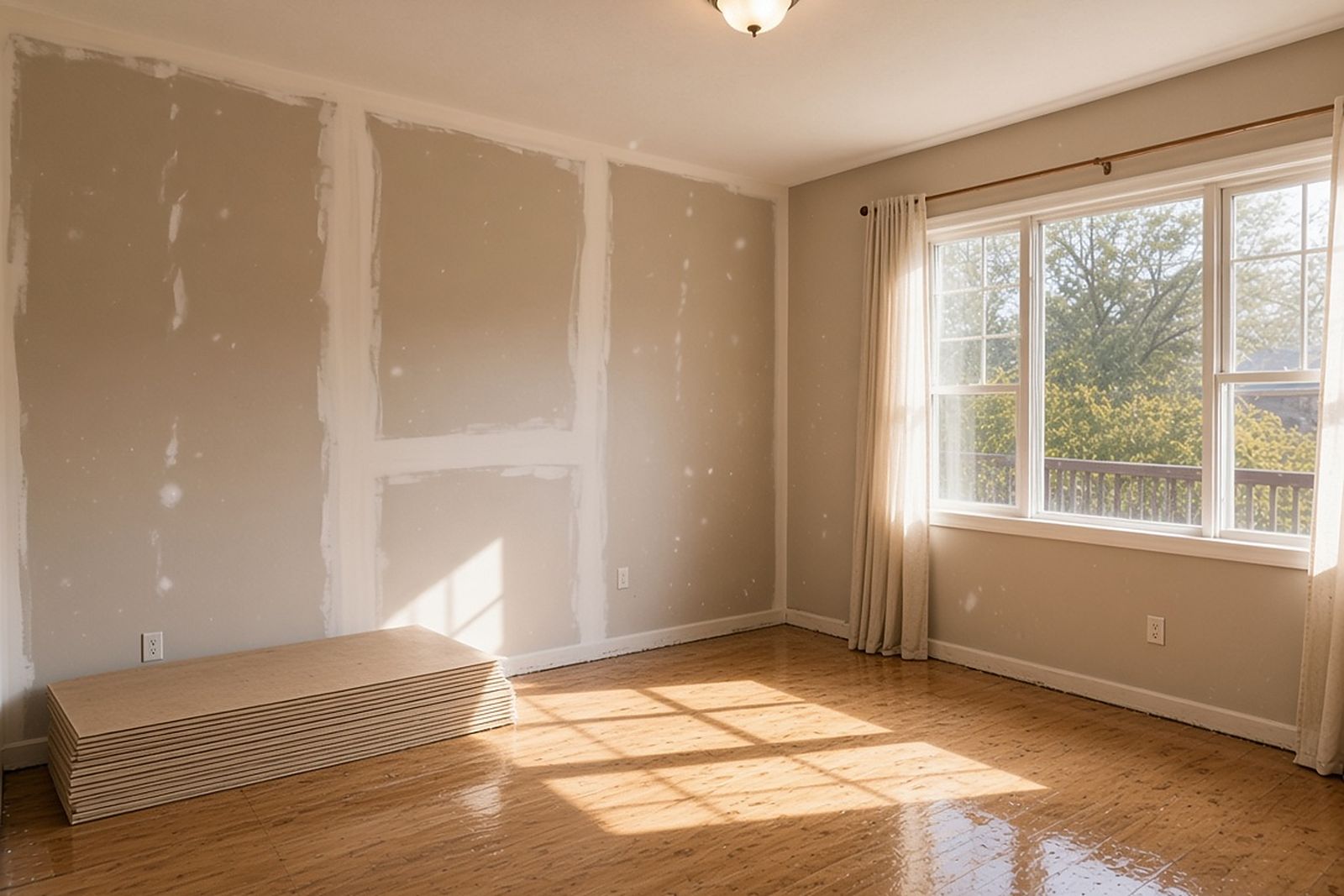
Drying deserves special care. Sealers put on over your damp wood or concrete may not bond well and can trap moisture. After enzyme or microbial treatment, surfaces need time and airflow to dry before a coating goes on.
Microbial products that work over several days may need to finish before sealing begins. That can stretch your schedule. Ask the company to explain the timeline and why each step comes where it does.
If the home sits over a crawlspace, the underside of the subfloor and the floor beams can also hold residue. Your crew may treat those areas from below. That adds questions of access and drying, above all where the crawlspace is damp.
Belongings the family wants to keep
You may ask whether a certain rug, a quilt, a leather chair or a box of books can be saved. The answer depends on one thing. Did the item touch fluids directly, or did it only pick up smell from the air?
Items that soaked up fluids can rarely be saved. Your company should tell you so honestly, even when it is hard to hear. Items that only picked up smell from the air are a different story. Hard goods can be cleaned in the usual way. Some fabrics and padded furniture can be treated with enzyme or odor-neutralizing products. Then they are aired out or placed in an odor treatment chamber. Results vary, and some smell may linger.
Paper items such as letters and photos are delicate. Biological cleaners are generally not used on them. Your crew may seal them in bags with odor absorbers, or send you to a document restoration specialist. Photographing or scanning important papers can save what they say, even if the originals cannot be fully restored.
Before anything is treated or thrown away, you or the executor should decide what matters most. That list helps the crew put its effort where it counts.
A slab-floor sequence, and questions to ask
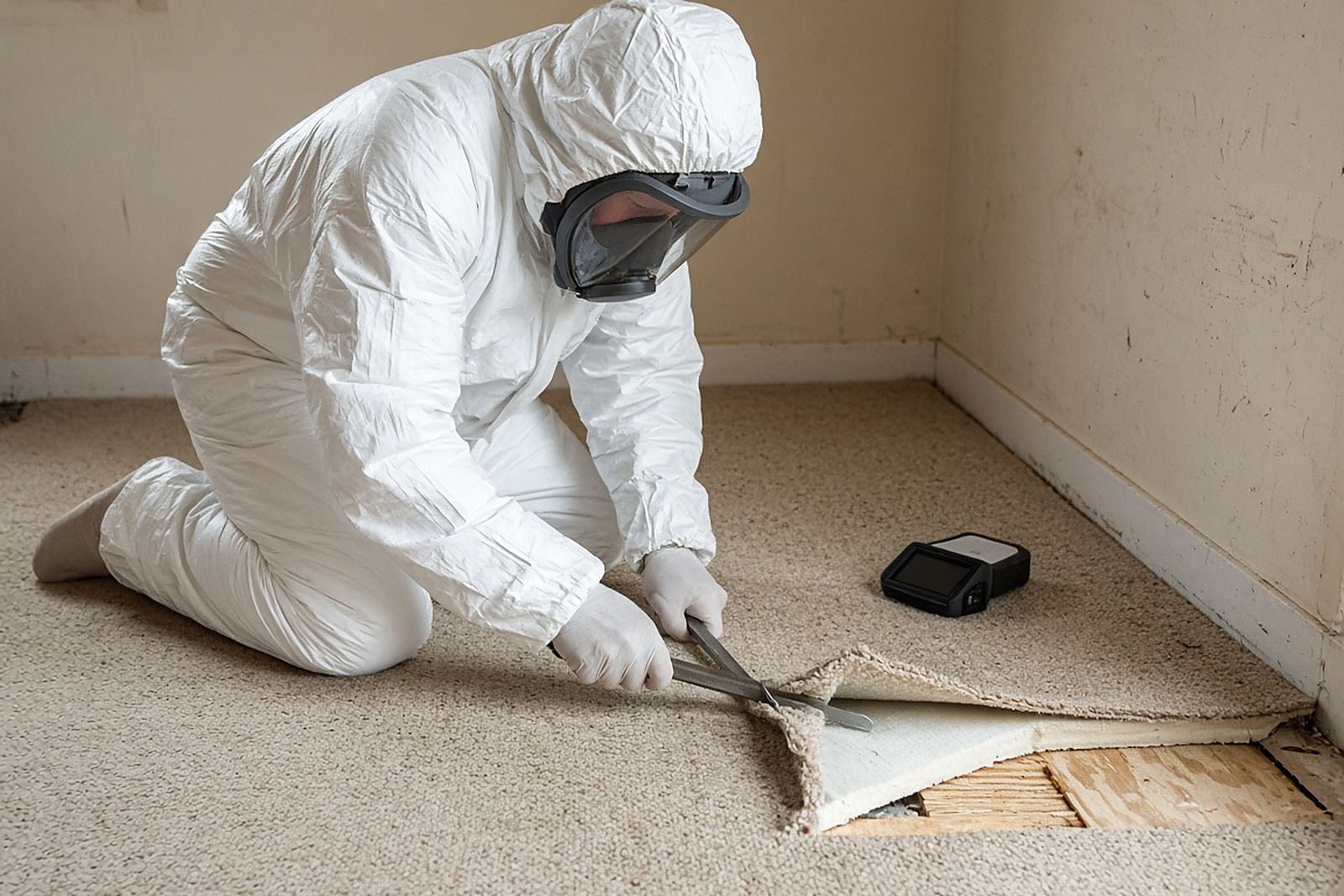
On a concrete slab, the steps tend to go like this. First the carpet, pad, any padded furniture and the affected lower drywall are removed. The bare slab often shows an uneven stain. Sometimes fluid has traveled along the carpet tack strip toward a wall.
The crew puts an enzyme blend with protease and lipase on the slab and the base of the wall framing. It keeps the blend damp for the time on the label, then scrubs and suctions it up. A second round may follow the next day. Once the stain is reduced and the surface is suctioned, a registered disinfectant goes on and stays wet for its full label time. Dehumidifiers then dry the slab before a sealer is applied to the slab and framing.
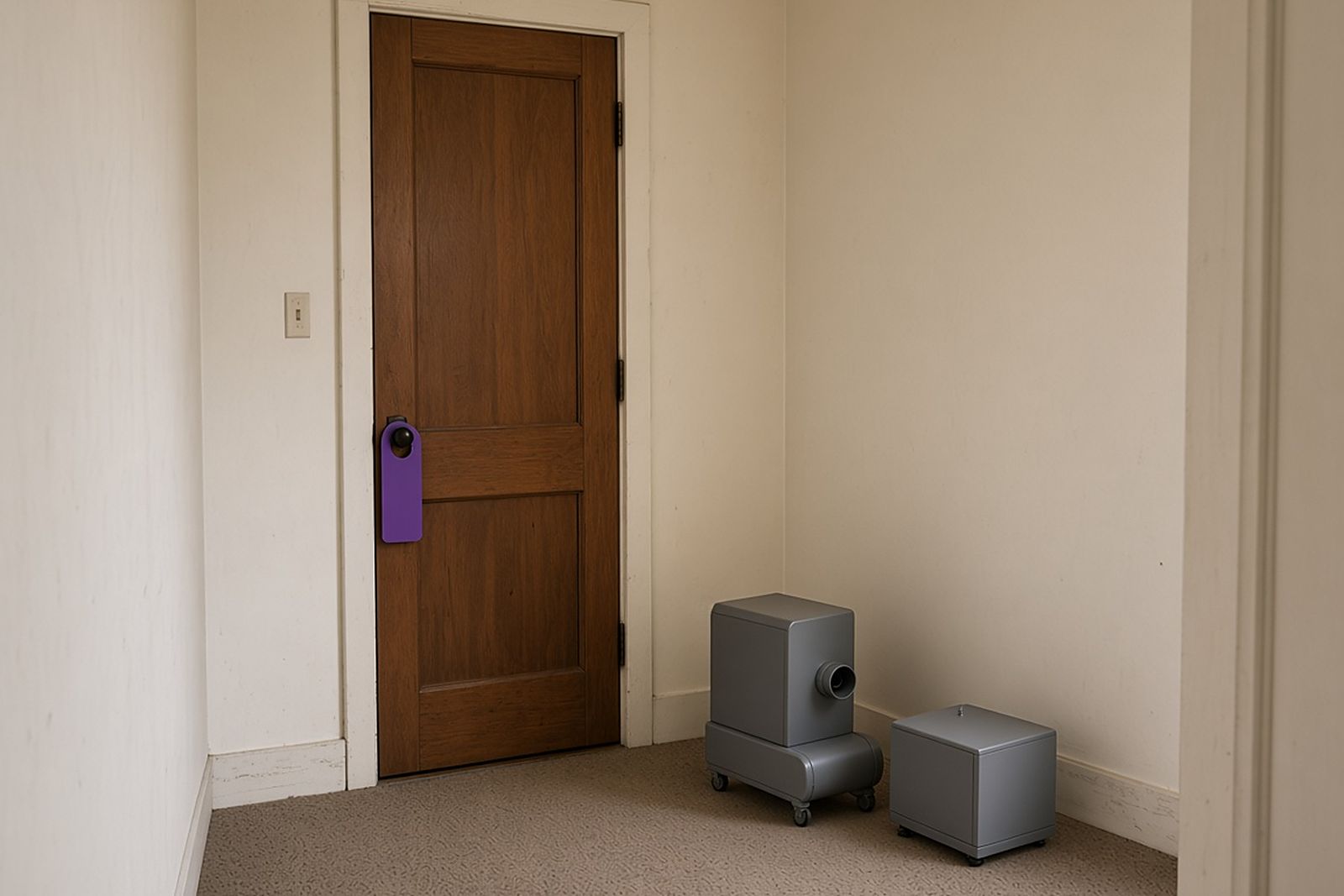
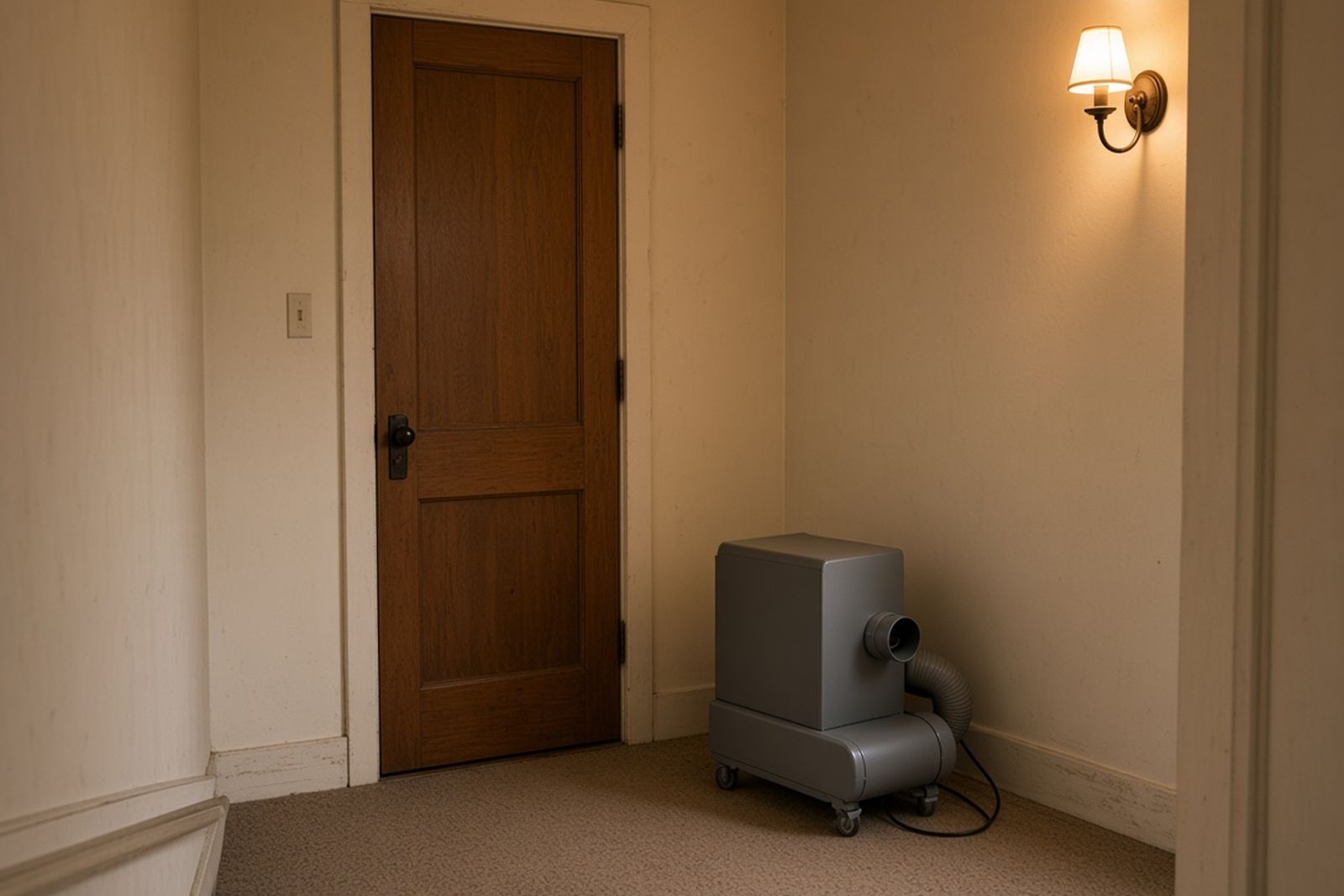
Air filters run the whole time. A closed-house check, after the heating cycles overnight, shows whether the smell is gone. You should receive photos of each stage and a list of products used.
Ask where the company plans to use enzymes or microbial products, which ones and why. Ask whether any contain live cultures, and whether that matters for anyone with health concerns who will live in the home. Ask in what order the biological step, disinfecting, drying and sealing will happen.
Ask how they will know the treatment worked, above all for smell, and what they will do if the smell returns. Ask how rinse water and residue will be thrown away. If the company is unsure, your local wastewater utility or county health department can say what is allowed. Look for a company that answers you clearly and never treats biological cleaners as a shortcut past removal. That is one you can trust with the rest of the job.