Great Falls, VA

Unattended Death Cleanup Planning in Great Falls, Virginia

What to do, who to contact, and what to ask in Great Falls.

A death found late on a Great Falls property? Learn who clears it in Virginia, why the lower level and barns get checked, and what the estate should keep.

Get an email reply about unattended death cleanup

Send a short message to the follow-up inbox. A coordinator can reply by email. This form does not send emergency help; call 911 first if anyone is in danger.

Tell us what you need help with. Share a short description; please leave out medical details, access codes, and other sensitive information.

A request does not confirm a booking. For immediate danger, contact local emergency services.

Or email info@quiethomerecovery.com

The short answer for Great Falls, VA

Great Falls homes sit on wooded acreage with long lanes, so a death may be found only after a trip or a hospital stay. If you are facing this, wait for Fairfax police and Virginia's medical examiner to clear the property. Then you can have the house, lower level and barns checked, and gather records for the estate, one building at a time.

What to do, step by step

  1. 1

    Wait for Virginia's clearance on the whole acreage

    Wait for word from Fairfax police that the property is cleared. Then the family signs for each building, one by one. Give the company your keys to every outbuilding. Tell them if anyone went into the well house, and whether any ducts are shared with the lower level. Ask for each doorway to be photographed before soft goods are shifted. On acreage like yours, that record of every building is what keeps later questions simple.

  2. 2

    Have the rec room and barns followed up

    Ask for the suite's carpet to be tested over a wide area and for your walkout basement to be checked. The foot paths matter too. A good company follows them into the mudroom, the garage, the workshop and any generator shed that was used. Outdoor fabric gets its own bags. Removal lines should rest on meter data. Ask for a short note on each building, even the ones where nothing was found.

  3. 3

    Ask how dryness will be proven under the trees

    Ask the crew to shut off the cooling zone for the suite and to keep the lower-level doors closed. Please do not aim a fan at wet carpet pad. No ozone until the source is off your land. Under the shade of the canopy, the air can feel dry when the framing is not, so ask for meter readings and go by those. Expect drying on the lower level to take longer than upstairs.

  4. 4

    Collect a file that covers every building

    It should hold removal lists, the lower-level moisture charts and notes on your barn. Your written choices on what stays belong there too, with pictures of the stripped rooms. Later woodwork should be billed apart from the cleanup. Ask too for a repair list sorted by building. It should mention the well or septic only where they affect the rebuild. With a Fairfax claim that spans several buildings, a file laid out this way saves you and your lawyer a great deal of time.

What cleanup is like in Great Falls

A Great Falls lot of several acres hides your house from the road. Even so, neighbors who know every regular car will notice a strange box truck. Yours may be a large house with a finished lower level and a barn used for storage. A death is more often found after a hospital stay or a long trip than after a missed bill. From the bedroom, your rec room is often the next place affected. Mudrooms then lead out to the other buildings. Tell the company about the paths down through the house and the foot paths outside before it prices the suite alone.

Humidity under the tree canopy, plus nonstop cooling, keeps your home sealed, and the lower level stays damp longer after wet work. Please do not prop the patio doors open while a wet mattress is still in the room. It thins the smell but can push odor into the guest rooms through open returns. Engineered hardwood over foam can hide a wet area that spread sideways. Ask for opaque bins to be kept far back on your private lane, away from the overlook pull-offs that visitors use.

Virginia's Office of the Chief Medical Examiner oversees Great Falls addresses, apart from the District's office and Maryland's statewide one. A local police hold may still control who enters. Your family should decide in writing what happens to any safe, guns or tools in the workshop. Ask for cleanup to be billed apart from barn or house upgrades. If responders walked into a workshop, have it named in the moisture charts, which helps with a claim covering several buildings. Your wellhead and drainfield matter later, for rebuild planning. They never take the place of the examiner's clearance.

What to expect for your type of home

  • Homes on a well and septic system: these affect how repairs are planned later. They do not replace moisture checks indoors or removing the carpet pad, so ask for both to be done first.
  • Properties with a workshop or barn: if anyone walked out there or stored things for a short time, ask the crew to walk through as well. Go with them if you can, and point out what was moved.
  • Homes with a finished lower level: when it lies under the bedroom, it needs its own tests and photos. Ask to see the ceiling readings from below next to the floor readings from above.
  • Homes on a long private lane: ask for a screened staging spot, so labeled bags stay out of sight of the road. The far end of the lane is usually better than the house end.
  • Homes with newer wood floors: a floor laid on a foam pad can hide moisture underneath. Ask the company to lift a board near the room and show you the pad.
  • Houses joined to outbuildings by a mudroom: the walk from suite to barn can be long. Ask for runners along the whole foot path, including the mudroom itself.
  • Lots next to the gorge overlooks: visitors are curious, and some will ask what is going on. You and the crew need only mention the schedule, if you answer at all.
  • Heavily wooded lots: shade slows drying indoors as well as out. Ask for meter readings, and be patient with a company that will not guess from the weather.
  • Properties with a generator shed or tool barn: if responders kept gear there overnight, ask for a quick look inside. It takes minutes and closes off one more question.

Papers and records to keep

  • Letters from Fairfax police and the state examiner releasing the Great Falls property
  • The executor's or trustee's sign-off to discard mattresses and rugs from the house and barns
  • Notes on the acreage, the house, lower level, workshop or barn, and any well or septic items
  • Dated photos of the suite, stairs, lower level and any fabric stored in outbuildings
  • Moisture readings for the room and for the lower level beneath it
  • What was removed, with the name of the building beside each entry
  • A note on how the suite's cooling zone was shut while the wooded lot stayed humid
  • The family's written word on the safe, guns, tools and keepsakes
  • Waste receipts if any, and a repair list for the house and each outbuilding

Local offices and official help

Common questions in Great Falls

We have a well and septic field. Does that change the clearance?

No. The state examiner and Fairfax police decide the release, wherever your water comes from. Wells and septic systems matter later, when repairs are planned, not for the legal release. Wait for the examiner or the police to confirm it before any flooring is cut. After that, the trustee's letter governs which tools, guns and keepsakes stay with the family.
It happened in the house. Why open the workshop?

Because responders and families often carry bedding out to a barn to air it. A blanket hung over a stall door can still hold odor long after the bedroom is stripped. A short walk-through with photos settles it. Ask for clean findings to be written down too. That keeps a returning smell from confusing an inspector when your Great Falls home is one day sold.

Where should bins wait on our long private lane?

Deep on the lot, where you can, out of view of the overlook and the road. Ask for opaque packing, and speak only about access times if anyone asks. Being discreet never replaces removing the source or waiting for the examiner's clearance. Have the staging spot noted in your file. If a neighbor asks about it months later, you will have a simple answer.

Why is the lower rec room part of the job?

Because many Great Falls homes have bedrooms above a finished lower level with carpet, a bar or a laundry room. Moisture and odor can move down through the floor even when the room below looks untouched. A lower level built into a hillside stays cool and dries slowly. Ask for checks on the ceiling and floor beneath the room, with photos. The estate can then show an adjuster why work reached downstairs.

How should our lawyer split the spending across several buildings?

Keep it to two papers. One bill should cover removal and cleaning at both the house and the workshop. Paint, new flooring and optional woodwork go on a remodel bid. Ask for photos of the bare surfaces after removal, taken in each building. A clear split like this cuts down on disputes when costs are spread across a house, a barn and a shed.

There were pets in the Great Falls house. What should we do?

See to them first, since they may have been alone for some time and may need care right away. Call a veterinarian or local animal services if the family cannot take them yet. Pet beds, crates and toys in the affected area may need to be thrown out. Tell the crew about any animals that were in the home, so it checks the other rooms where they spent time.

We are a long way from town. Does that affect the cleanup?

It affects the planning more than the work. Great Falls homes can be a long drive from suppliers and waste sites, so a good crew brings enough bins and gear for the whole job. You can help by agreeing on what to save before work begins. Settle where bins can sit safely on the property too. A clear plan avoids many trips up and down your private lane.

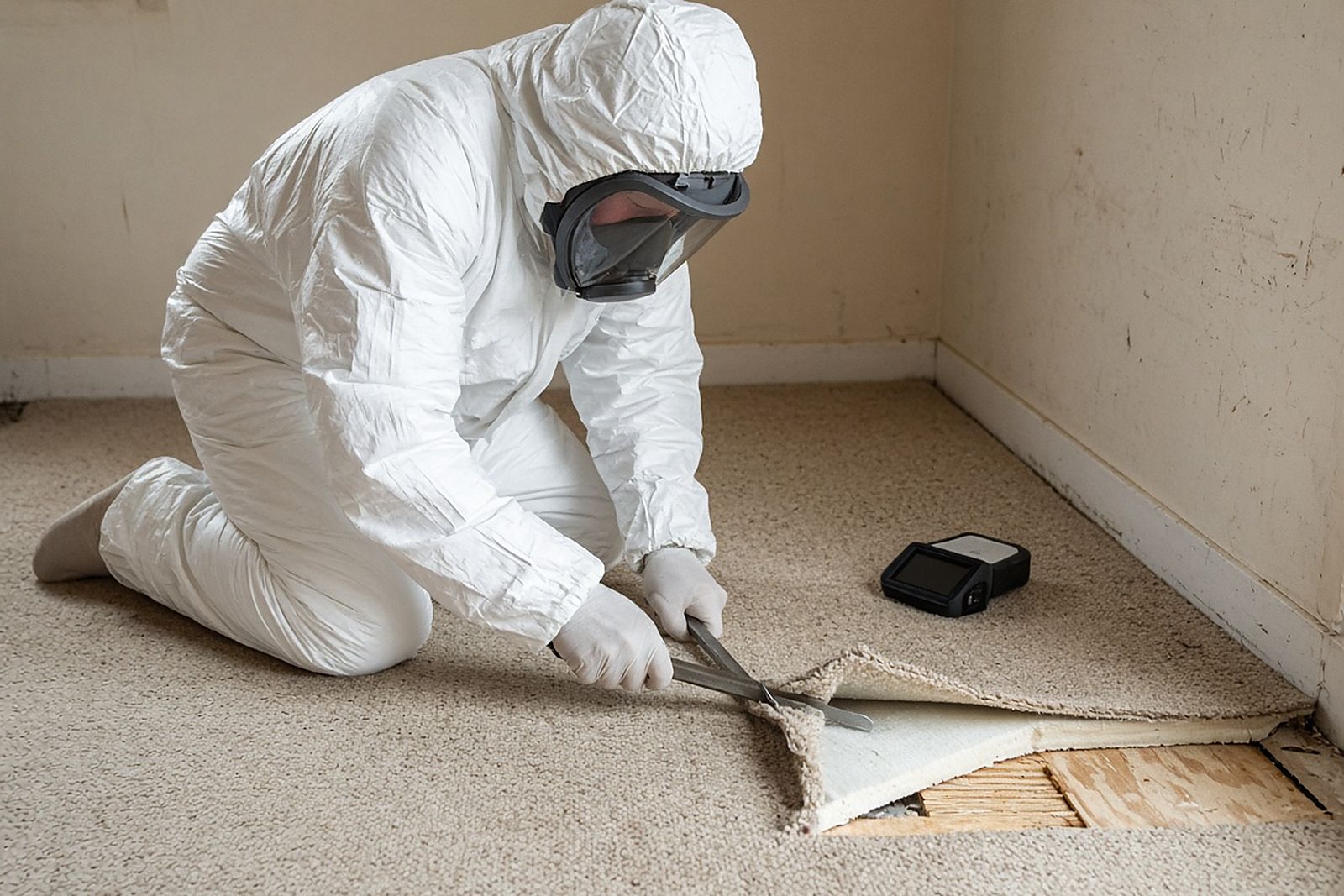
Technician in a full-face respirator cutting back carpet and pad to expose the subfloor
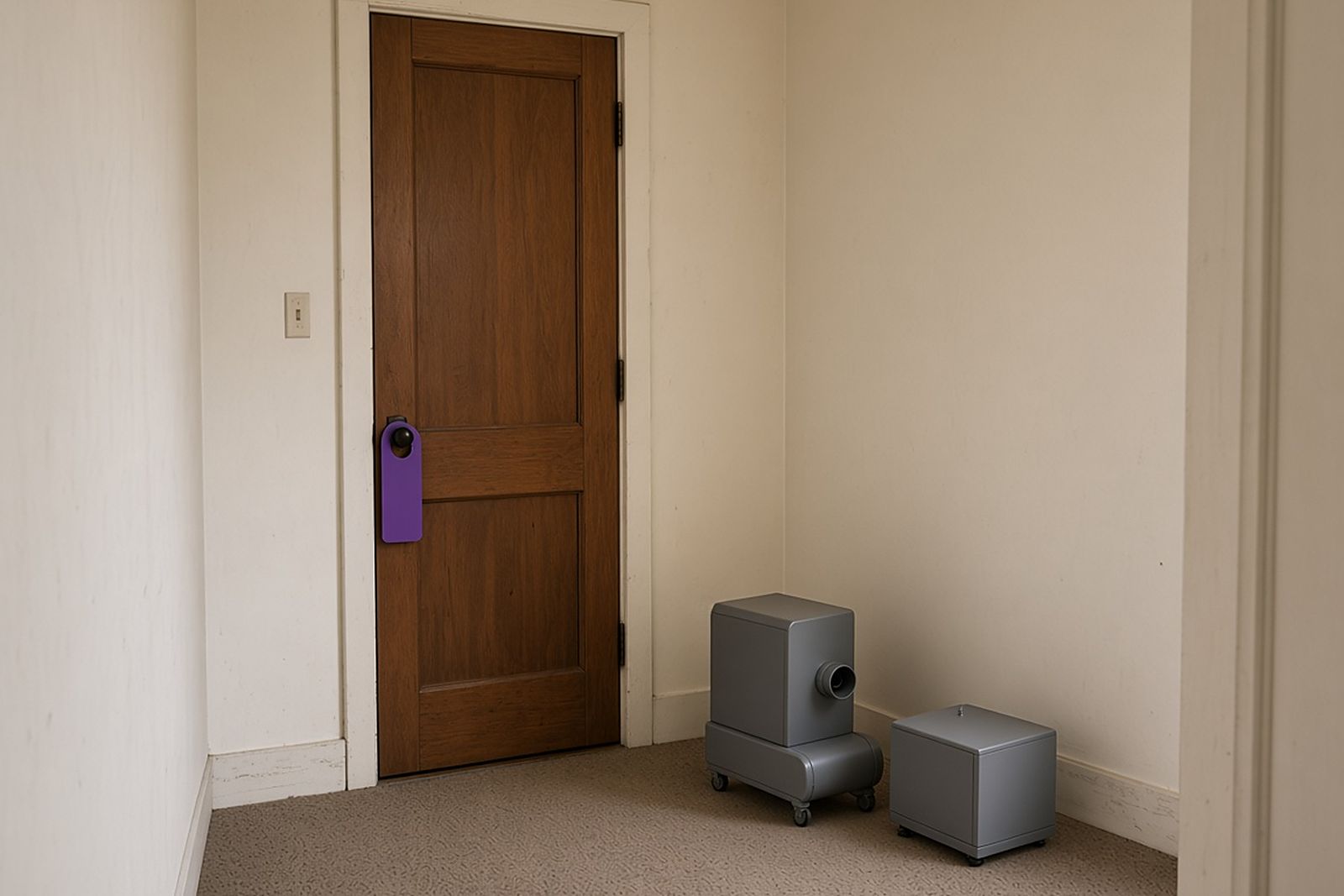
Air-filtration and odor-control units staged outside a closed door with a do-not-enter tag on the handle

Facts worth knowing

  • Fixr's 2025 guide lists unattended death cleanup at $200 to $300 per hour, and hoarding cleanup at $25 to $150 per hour or about $1,000 per day.

    Why it matters: These are rough estimates and local prices vary, so get a written quote that shows your hourly rate and expected hours.

    Source: Fixr, 2025

  • In a 2021 UK survey, 85% of people who claimed Bereavement Support Payment had not known about it before they used bereavement services.

    Why it matters: If you are in the UK, check the current government rules to see whether you can claim; many people did not know it existed.

    Source: UK Department for Work and Pensions et al., 2021

  • In a Swedish survey of parents bereaved by suicide, 430 of 446 who had viewed their child's body and answered the question said they did not regret it.

    Why it matters: If you want to see your loved one, this suggests regret is uncommon, though your own situation may differ.

    Source: Omerov et al., 2014

Tools that help right now

What would you do?

Poll results

Vote to see how other people answered. You can change your answer at any time.

Your experience

As a landlord, how long would you wait for the tenant's family before arranging cleanup yourself?

Be the first to vote
Process

Which part of an unattended death project would you find hardest to manage?

Be the first to vote

Need help in Great Falls?

Send a short message about the property to the follow-up inbox. A coordinator can reply by email with next steps.

Your request is sent to the follow-up inbox. A coordinator can reply by email.

If anyone is hurt or in danger, call 911 first.