Washington, DC

Unattended Death Cleanup Planning in Washington, DC

What to do, who to contact, and what to ask in Washington.

A death found late in a DC rowhouse, walk-up or condo? Learn who clears the home, why English basements get checked, and what papers to keep for probate.

Get an email reply about unattended death cleanup

Send a short message to the follow-up inbox. A coordinator can reply by email. This form does not send emergency help; call 911 first if anyone is in danger.

Tell us what you need help with. Share a short description; please leave out medical details, access codes, and other sensitive information.

A request does not confirm a booking. For immediate danger, contact local emergency services.

Or email info@quiethomerecovery.com

The short answer for Washington, DC

If someone was found late in a DC rowhouse, walk-up or condo, the home must first be cleared by the District's Office of the Chief Medical Examiner and the Metropolitan Police. Please wait for that before touching anything. Then the steps here help you get written approval, have the English basement checked, and keep papers for probate, the landlord or the board.

What to do, step by step

  1. 1

    Check that the District has cleared the home

    The District medical examiner and the Metropolitan Police each hold the home until their work is done, so nothing should be lifted yet. Afterward, a personal representative, landlord or condo board must sign off in writing before any mattress or rug is thrown out. Tell the company how loads will leave your home, whether by alley, stairs or dock. A careful crew takes photos at the doorway before anything is moved. Ask for a set, since probate and insurance may both need to see the starting point.

  2. 2

    Have every level checked, basement included

    In a DC home, flooring should be opened beyond the mark, and foam beneath newer vinyl tested. In a rowhouse, the English basement should be checked as well. Have the contents of your storage cage listed. The removal line should come from meter readings. Ask too which way soiled items will go. They should stay off polished lobby stone and off a stoop that faces the street, for your neighbors' sake and for your own privacy.

  3. 3

    Ask how the vents will be handled while things leave

    A good crew seals the supply and return vents in the worst area and watches how the doors swing. Filtered air machines run inside the sealed rooms once the wet carpet pad is gone. Please do not aim a fan at soaked pad in the meantime. If ozone is planned, it should wait until every wet layer is out of your rowhouse. Ask the crew to tell you when the rest of the home is fine to use.

  4. 4

    Build one file for probate and one for the board

    Three things belong in it: what was taken out of the DC home, what you chose to keep, and photos of the bare surfaces. The health-related removal should be billed apart from later paint or flooring. Once the drying targets hold, ask for a room-by-room checklist of repairs. If a condo board or landlord is involved, give them their own copy. Keeping two tidy files means you are not searching for papers when the personal representative calls.

What cleanup is like in Washington

Rowhouses on Capitol Hill and in Shaw share brick party walls, and many have an English basement, a unit set half below ground. After a discovery upstairs, that lower unit often needs checking too. Northwest blocks near Dupont Circle still rely on walk-up stairs, so sealed totes pass other households. In Southwest and downtown towers, your concerns are dock bookings and lobby runners instead. Someone living alone may go unnoticed until the utilities lapse or a welfare check is asked for. Meanwhile the cooling keeps the house shut. Before anyone prices a simple wipe, say whether yours is a rowhouse, a walk-up or a tower.

In July and August, air conditioning moves odor into shared halls whenever a unit door is left open, so please keep yours closed. In winter, a heat pump causes the same sealed-house problem. Fabric carried to a bike room or basement storage cage on the first visit is easy to forget, and it keeps smelling. In a remodeled rental, floating vinyl over foam can hide a wet area wider than the bed. A good crew seals the worst area and checks moisture in every room, your basement included. Soaked layers come out first. A store-bought odor gadget comes last, if you use one at all.

The District of Columbia Office of the Chief Medical Examiner covers only addresses inside the District. Maryland's statewide examiner in Baltimore and Virginia's districts cannot clear your address, and Metropolitan Police holds may still block entry. Once cleared, you and the landlord, condo board or personal representative should write down what to save, such as papers and valuables found near affected soft goods. Ask for covered carts in the rear alley, since a scene on the front stoop feeds talk on a crowded block. Have the bare surfaces photographed for probate and your insurer.
What to expect for your type of home

  • Rowhouses with an English basement: after a discovery on the parlor floor, the unit below needs checking for drips. Arrange access with the tenant downstairs before the company's first visit.
  • Walk-up buildings: sealed totes pass the doors of people still living there. Ask for protective runners on each landing, and for the other households to be told the hours.
  • Condo and apartment towers: the dock and service elevator need to be arranged with the building ahead of time. Ask management for its rules in writing and hand them to the company.
  • Rooms on a party wall: the shared brick wall needs a moisture check even when the paint looks untouched. It gives you an answer if the neighbor ever raises a concern.
  • Buildings with a bike room: bedding moved during the first welfare visit is often left there. Ask the company to look in the bike room and list what it finds.
  • Homes with softwood plank floors: the seams between planks let moisture travel sideways, past the mark you can see. Expect the company to measure outward before it sets a line.
  • Homes that load out by the alley: your neighbors use the same lane every day. Ask for opaque wrapping on everything, and for the truck to come only when loads are ready.
  • Rentals and condos: before any finish is torn out, get written approval from the landlord or the board. Without it, the work can be stopped partway through.

Papers and records to keep

  • Letters from OCME and MPD clearing the DC address
  • A letter from the estate, landlord or board approving disposal of soft goods
  • A note of the type of home, rowhouse, walk-up or tower
  • Photos of the affected rooms, the English basement and the alley staging
  • The moisture chart, covering floors, shared brick walls and openings
  • The soft goods removed from each room, with the room's name beside them
  • A log of which vents were sealed during the cooling or heating season
  • The signed sheet showing which personal belongings stay and which go
  • Waste handling records if any were needed, plus the repair checklist

Local offices and official help

Common questions in Washington

Is a DC home cleared by the District or by a nearby state?

By the District. The District of Columbia Office of the Chief Medical Examiner clears homes inside the city, and Maryland's statewide office and Virginia's districts have no authority here. Confirm the District clearance and any Metropolitan Police hold before removal starts. Afterward, the personal representative still controls what is saved. Keep both letters with your claim.

It happened upstairs. Why check the English basement?

Because moisture and tracked residue often reach the rooms below, above all when responders left that way. Meter readings and photos from downstairs keep a parlor-only job from failing when the unit is rented again. If the basement turns out to be fine, ask for that to be written down too. A complete file helps you with the landlord, the tenant below and the insurer.

We load out through the alley. How is that different from a driveway?

An alley is shared. Neighbors, couriers and building staff pass within arm's reach of the bins, which a suburban driveway avoids. Ask for opaque wrapping, and keep any talk to the schedule. That spares your family further hurt. Being discreet outside does not replace the work inside, though. Sealing and removal still have to happen.

The vinyl floor is shiny. Why does the room still smell?

Most likely the foam under the vinyl is holding moisture well past the outline you can see. Wiping the top layer leaves that source where it is. A good company lifts the edges, measures outward and cuts back to a clean line it has checked. Ask for photos of the wet foam. They help your insurer accept that more of the floor had to come up.

How do a DC condo board and the estate divide the bills?

Put the health work on one bill and the upgrades on another. Removing soaked materials, disinfecting hard surfaces, proof of drying and waste handling all belong on the cleanup bill. Paint, new finishes and upgrades belong on a remodel bid. Ask for pictures of the stripped floors. They tend to settle later arguments between the board and the estate before those arguments start.

Will a humid Washington summer slow the drying?

Yes, it often does. Washington summers are hot and humid, and a closed rowhouse depends on air conditioning to control moisture. After the soaked materials are out, subfloors and walls may take longer to dry than you expect. A good crew uses dehumidifiers and takes readings over several days before new flooring or paint. Rushing the finishes can trap the smell and invite mold.

Our rowhouse is in a historic district. Do we need special approval?

For cleanup inside, usually not, since it does not change the outside of the house. If the work means replacing windows, doors or other features seen from the street, check with the District's historic preservation office first. Indoors, original plaster, trim and heart pine floors can sometimes be cleaned and kept. Ask the crew to photograph those features and talk through the options with you before any removal.

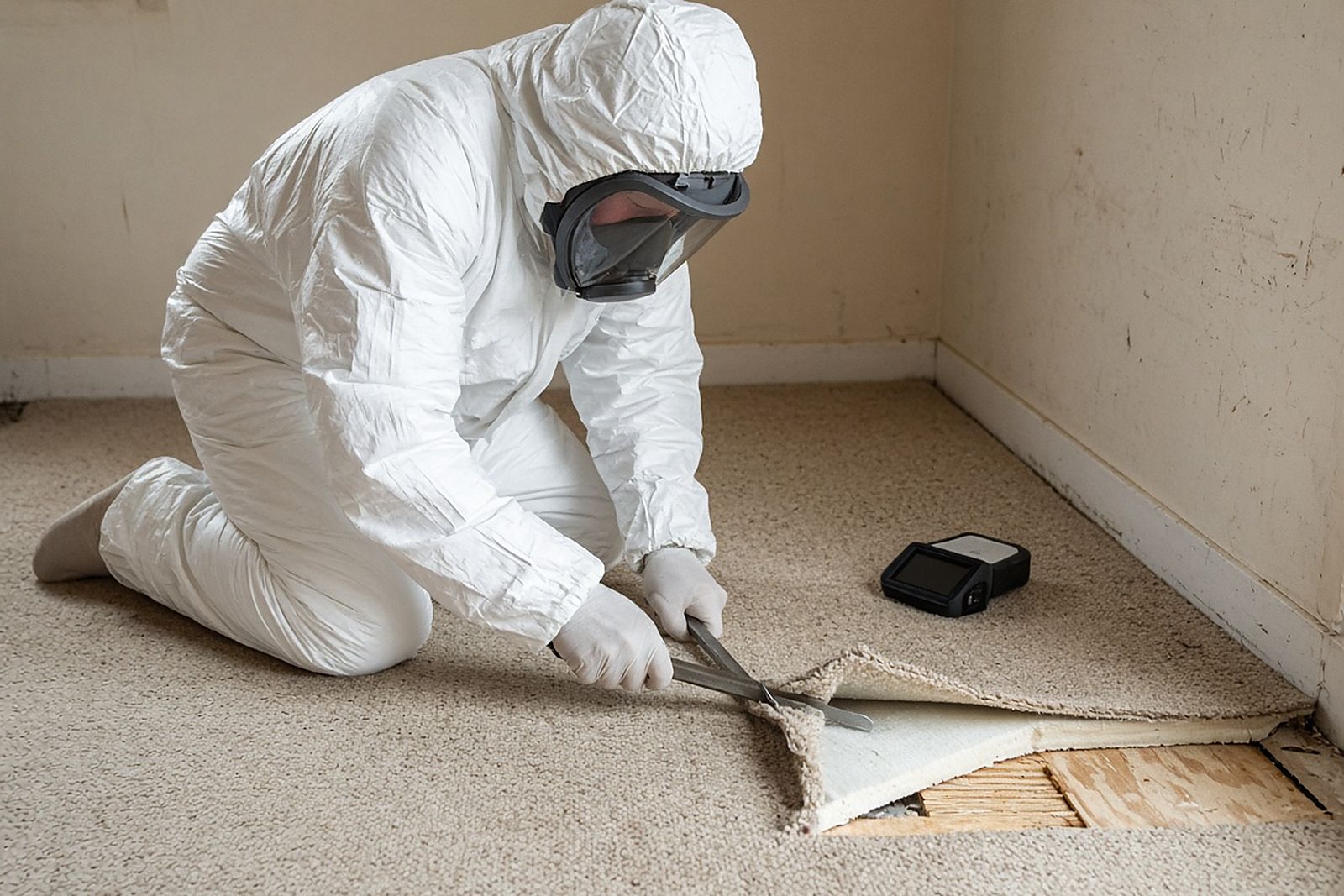
Technician in a full-face respirator cutting back carpet and pad to expose the subfloor
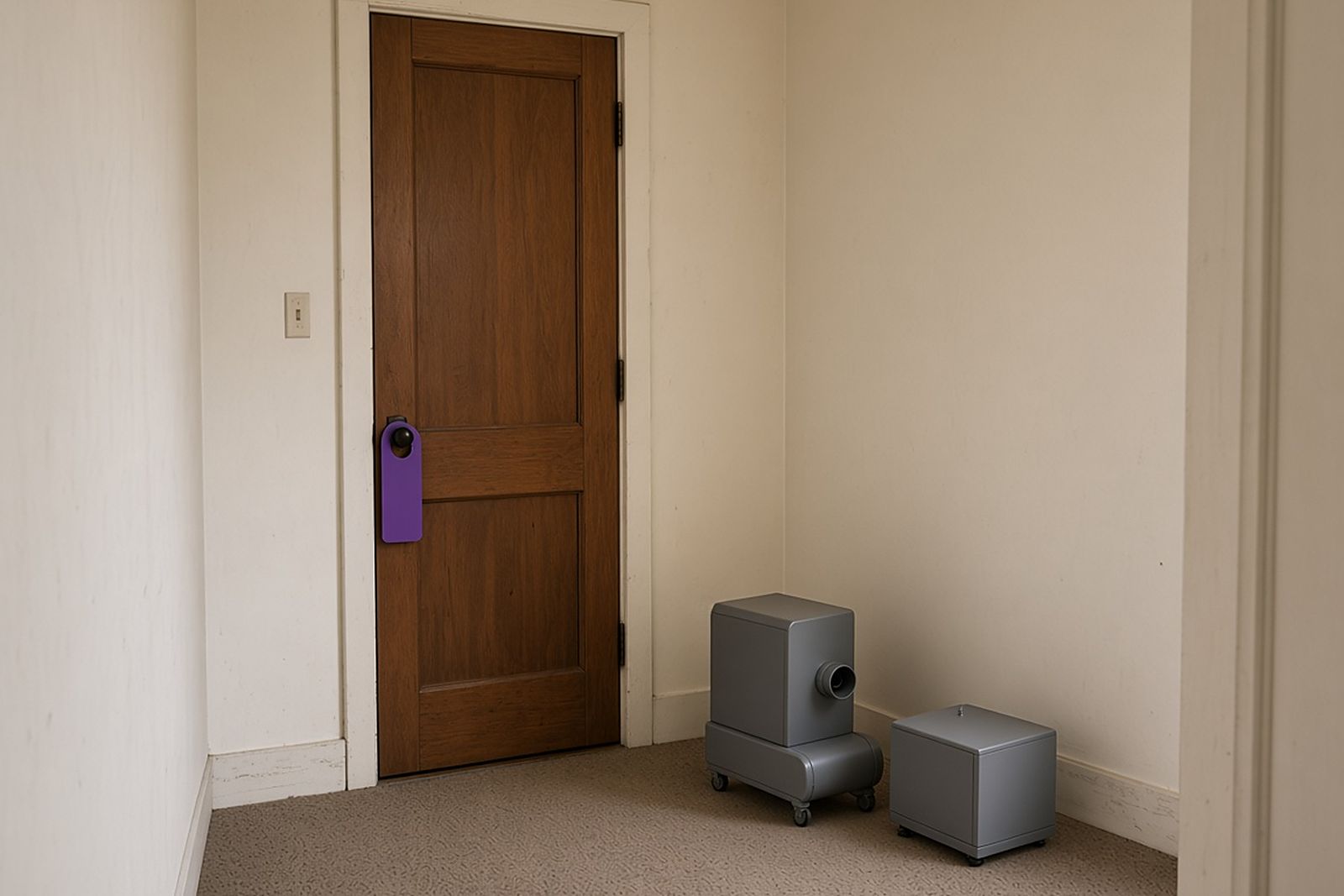
Air-filtration and odor-control units staged outside a closed door with a do-not-enter tag on the handle

Facts worth knowing

  • In a Swedish survey of 666 suicide-bereaved parents, those who viewed their child's body reported nightmares about the death more often than those who did not; cause is unproven.

    Why it matters: Viewing can leave hard images for some people, so you may want support in place before and after you go.

    Source: Omerov et al., 2014

  • In a UK interview study, 35 of the 49 bereaved people who chose to view or identify the body said it was the right decision; nine had mixed feelings.

    Why it matters: If you are unsure about viewing, it may help to know most people in this small study felt they chose right.

    Source: Chapple et al., 2010

  • In a 2021 UK survey, 57% of people who claimed Funeral Expenses Payment had not known about that benefit beforehand.

    Why it matters: If you are in the UK and paying for a funeral, check current government rules to see whether you qualify.

    Source: UK Department for Work and Pensions et al., 2021

Tools that help right now

What would you do?

Poll results

Vote to see how other people answered. You can change your answer at any time.

Your experience

As a landlord, how long would you wait for the tenant's family before arranging cleanup yourself?

Be the first to vote
Process

Which part of an unattended death project would you find hardest to manage?

Be the first to vote

Need help in Washington?

Send a short message about the property to the follow-up inbox. A coordinator can reply by email with next steps.

Your request is sent to the follow-up inbox. A coordinator can reply by email.

If anyone is hurt or in danger, call 911 first.