Wellesley, MA

Unattended Death Cleanup Planning in Wellesley, Massachusetts

What to do, who to contact, and what to ask in Wellesley.

A death found late in a Wellesley home? Find out who releases the house, why the finished basement gets checked, and what records the executor should keep.

Get an email reply about unattended death cleanup

Send a short message to the follow-up inbox. A coordinator can reply by email. This form does not send emergency help; call 911 first if anyone is in danger.

Tell us what you need help with. Share a short description; please leave out medical details, access codes, and other sensitive information.

A request does not confirm a booking. For immediate danger, contact local emergency services.

Or email info@quiethomerecovery.com

The short answer for Wellesley, MA

If someone has been found late in a Wellesley home, wait for local police and the state medical examiner to say you may begin. Then you can bring in a cleanup company, have the finished lower level checked along with the bedroom, and keep the estate's papers in order. The notes here are written for families, executors and landlords in town.

What to do, step by step

  1. 1

    Wait until police and the state say you may start

    Please leave every floor and wall in the Wellesley house untouched until police and the state medical examiner say you may start. Then the executor gives written approval to remove carpet and furniture. Write down the alarm codes for the crew. Tell them whether your basement has its own door, and which returns serve the bedroom suite if you know. A good crew takes photos at the doorway before any fabric is moved. Ask for copies for the estate file.

  2. 2

    Have the path to the basement followed

    Ask the company to pull up the suite's hardwood well beyond the dark patch, so it can reach the foam. The laundry and playroom carpets below should be tested as well. Any fabric piled in your garage should be listed. The clean edge for removal comes from the meter readings. If the only way to the driveway is through your kitchen, ask how soiled bags will be kept off that path. Floor covering and sealed bins are the usual answer.

  3. 3

    Stop the heating from recycling the smell

    In a Wellesley winter, the boiler or forced air will keep moving the odor until someone stops it. Ask the crew to shut the boiler zone or the air vent for that room, and to filter the air inside plastic sheeting. If an ozone machine is used, it should run only after the soaked materials have left your house. Otherwise a few heat cycles will spread the smell from an unfinished job again. Ask when it is safe for you to use the rooms nearby.

  4. 4

    Put together a file for the estate's lawyer

    Your Massachusetts lawyer will want the removal list, the basement meter chart, the family's signed keep list, and pictures of the stripped floors. Remodel quotes belong on separate paper. Ask the company to end with a repair list sorted by room. That lets probate spending cover the health work first, before any cosmetic upgrades are weighed. Keep your own copy at hand, since relatives often ask the same questions weeks later.

What cleanup is like in Wellesley

In Wellesley, school and college calendars shape how a death comes to light. During exam weeks a quiet house looks normal, so a person living alone may not be missed for days. Homes near the center-village shops differ from the larger lots toward the Weston and Natick borders. Even so, most of these losses happen inside one colonial or contemporary house with a finished basement. For you, that means the damage may travel down through soft wood floors toward the laundry and playroom. Ask the company to trace those downward paths early. There is no freight elevator here, so your driveway sets the plan.

Your heating runs hard in January and February, whether it is forced air or hot water. Propping the back patio doors open on a February afternoon may ease the smell for an hour. It can also push it into your study or guest room through open returns, so please keep them shut. Many Wellesley remodels used engineered hardwood on a foam pad, and that pad can be affected well past what shows. Ask for opaque bins to be parked deep on your driveway, away from the sidewalks that students and parents use.

A death in Wellesley goes to the same statewide examiner's office that serves all of Massachusetts, and local police may also control who enters. If you are the executor, write down how diplomas, devices and jewelry found near affected soft goods should be saved. Keep your cleanup bill apart from later paint and flooring quotes, so each can be read on its own. Ask for moisture charts that name the basement playroom. They help a Massachusetts adjuster see why the work went beyond one bedroom.

What to expect for your type of home

  • Rentals near the colleges: a house can sit unnoticed through exam weeks or a break. Write down how long you think it sat, and put that note in the claim file for your adjuster.
  • Colonials with a basement playroom or laundry nook: if these sit under the bedroom, ask for separate moisture tests down there. Carpet in a playroom can hold odor without showing a mark.
  • Remodels with engineered hardwood: the boards can look perfect while the foam pad under them still smells. Ask the company to lift a plank and test the foam before it decides.
  • Homes with baseboard hot-water heat: the nooks behind baseboard heaters on outer walls can trap residue at the edge of a room. Ask whether the covers were taken off and checked.
  • Homes near the center village: ask for sealed carts to be moved at mid-day, well away from school dismissal. Fewer people on the sidewalk means more privacy for your family.
  • Houses with an attached two-car garage: bedding aired out on the first visit often ends up there. Have it listed and photographed before you decide what to throw away.
  • Newer open-plan additions: the kitchen and the bedroom suite may share air returns. Ask the company to find the dampers early, so cooking smells are not the only thing moving around.
  • Lots with rocky or root-filled driveways: there may be few places a roll-off container can sit. Ask the company to check the turning room before any equipment arrives.

Papers and records to keep

  • The release date from Wellesley police and the state medical examiner
  • The executor's approval, spelling out the right to remove soft goods
  • Notes on the house type, how the basement is used, and any gap tied to the college calendar
  • Photos of the suite, stairs, basement playroom or laundry, and fabric piled in the garage
  • Moisture readings from before and after the soft materials came out
  • A list of what was removed, with the room for each item
  • Which boiler zone or air vents served the suite, and when they were shut
  • Your family's written choices on which belongings are kept, cleaned or let go
  • Hauler receipts if any were needed, and the Wellesley repair list

Local offices and official help

Common questions in Wellesley

Does Wellesley have its own medical examiner?

No. These deaths fall under the statewide Massachusetts Office of the Chief Medical Examiner, with local police holds where needed. Your home and your driveway are nothing like a Boston triple-decker, but the office that releases the house is the same. Confirm the state's clearance before any removal. After that, a letter from the executor still controls what is saved. Out-of-state examiner contacts will not help you here.
How could nobody notice for so long near the colleges?

Because quiet is normal there at certain times. During exam weeks and breaks between terms, dark windows do not stand out. A person living alone may not be missed until a landlord, a relative or an unpaid bill leads someone inside. If you know roughly how long it was, have it noted in the file. It helps explain why the damage is wider. It is never a reason to skip the moisture checks.

The floor was remodeled. Why can it not just be cleaned?

Because the foam under a remodeled floor can stay wet far beyond a mark that looks tiny. Cleaning the top leaves the source in place, and the smell returns when the heat comes on. A good company pulls up planks well past the mark and tests the foam. Ask for photos of that foam layer. They help your adjuster see why more than one board was opened.

Can we open the patio doors and skip removing things?

No. A short draft from outside does not take away what is in the carpet pad and furniture, and open doors can push odor into your clean rooms. The room needs to be sealed and the soaked materials removed. Hard surfaces you keep are then cleaned and dried to measured readings. Extra air treatment is considered after that, and only if the readings still call for it.

We live near a campus route. How do we keep the driveway low-key?

Ask for opaque bins parked deep on your own pavement, and for sealed carts to move outside the busiest student walking times. If anyone asks, speak only about access hours. These habits cut down on rumor. They do not change what the crew must do inside, which is to wear protective gear, seal the work area and remove the source. Privacy and safety go together here.

Why check the finished lower level of our colonial?

Because many Wellesley colonials have a carpeted family room or guest bedroom right under the main floor. If the death happened on the first floor, moisture can travel through the subfloor to the ceiling below, and odor can settle in the cooler lower level. Ask for moisture readings on the ceiling and walls beneath the affected room. Anything found there should be added to the written plan and the price.

Can we hold a memorial gathering at the house during cleanup?

Often yes, if the affected area is fully closed off and far from where guests will gather. Keep that room sealed, turn off the air handler that serves it, and ask the crew to pause for the day. If you can smell anything in the main living spaces, think about holding the gathering somewhere else. Your comfort and your guests' comfort matter more than the Wellesley work schedule.

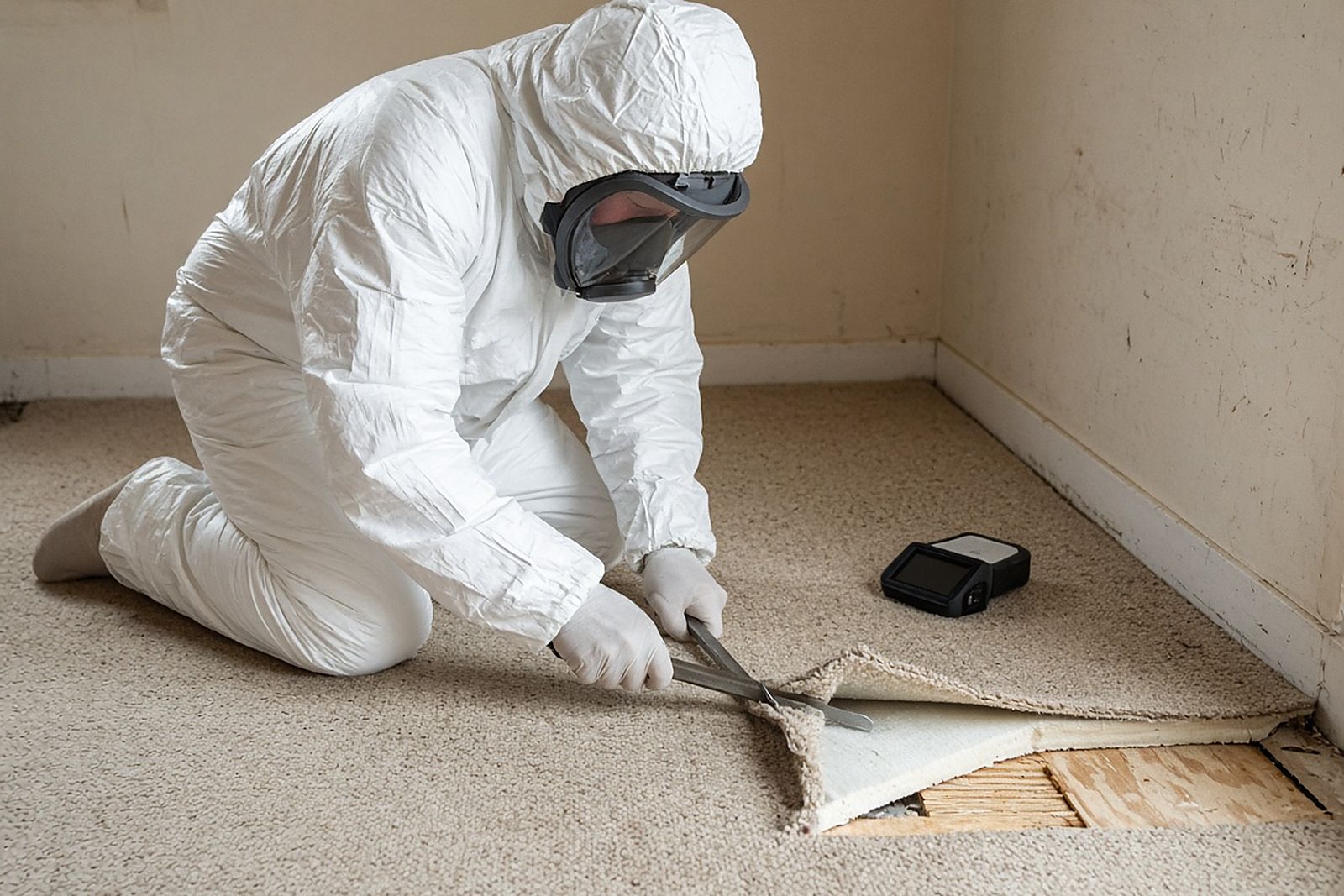
Technician in a full-face respirator cutting back carpet and pad to expose the subfloor
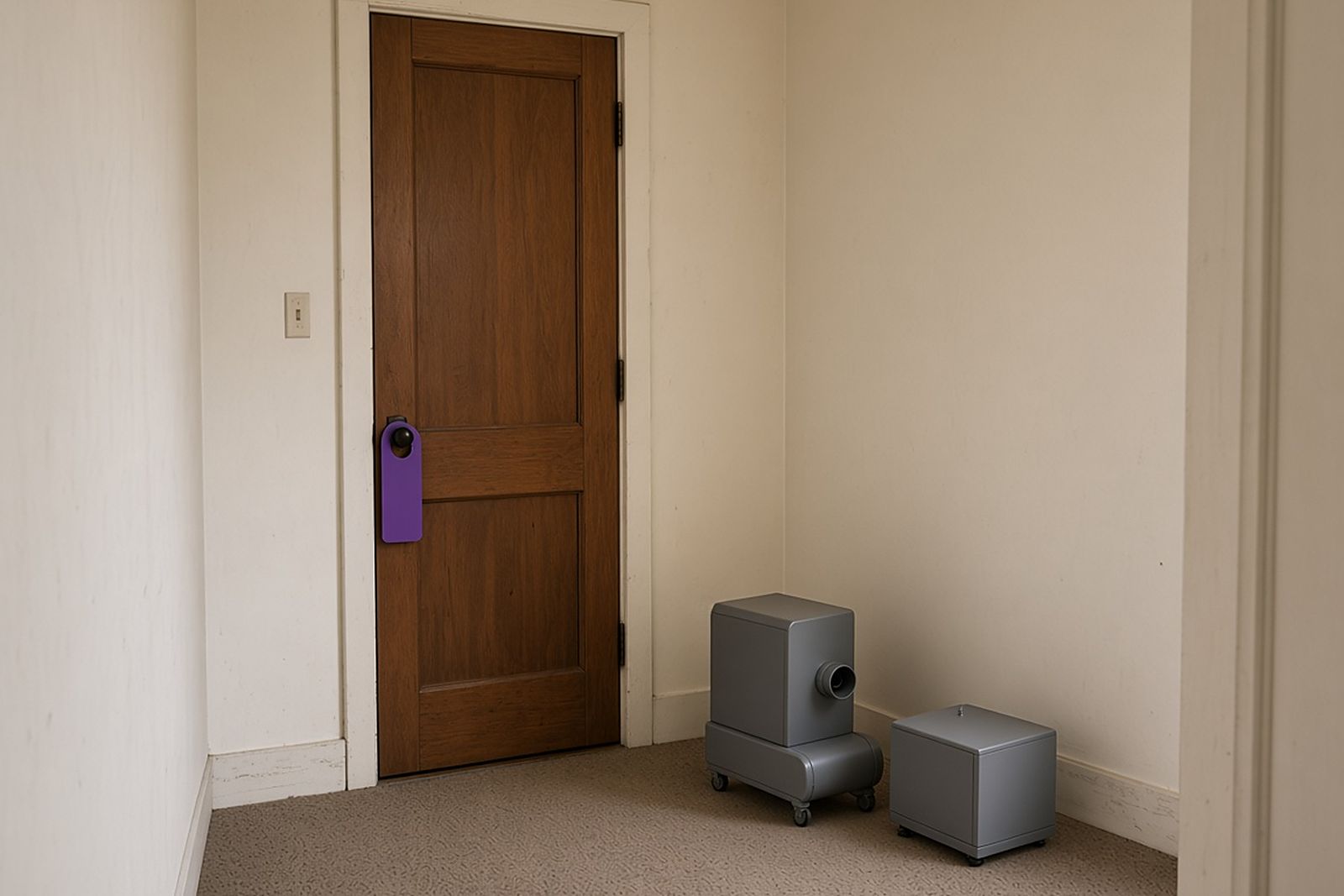
Air-filtration and odor-control units staged outside a closed door with a do-not-enter tag on the handle

Facts worth knowing

  • Fixr's 2025 guide lists unattended death cleanup at $200 to $300 per hour, and hoarding cleanup at $25 to $150 per hour or about $1,000 per day.

    Why it matters: These are rough estimates and local prices vary, so get a written quote that shows your hourly rate and expected hours.

    Source: Fixr, 2025

  • In a 2021 UK survey, 85% of people who claimed Bereavement Support Payment had not known about it before they used bereavement services.

    Why it matters: If you are in the UK, check the current government rules to see whether you can claim; many people did not know it existed.

    Source: UK Department for Work and Pensions et al., 2021

  • In a Swedish survey of suicide-bereaved parents, some who regretted viewing their child's body wished they had been better prepared for it.

    Why it matters: Before a viewing, you can ask staff to describe exactly what you will see so nothing comes as a shock.

    Source: Omerov et al., 2014

Tools that help right now

What would you do?

Poll results

Vote to see how other people answered. You can change your answer at any time.

Your experience

As a landlord, how long would you wait for the tenant's family before arranging cleanup yourself?

Be the first to vote
Process

Which part of an unattended death project would you find hardest to manage?

Be the first to vote

Need help in Wellesley?

Send a short message about the property to the follow-up inbox. A coordinator can reply by email with next steps.

Your request is sent to the follow-up inbox. A coordinator can reply by email.

If anyone is hurt or in danger, call 911 first.