Short answer
Storing biohazard waste at your home or business, and having it picked up, can make you worry about privacy, neighbors, safety, and the rules. You can ease that stress. Set a steady pickup schedule and choose a storage spot out of sight. Ask about low-profile service where rules allow. Learn what your paperwork means. And let a trained hauler handle anything that feels unsafe.
Why waste pickup can feel so stressful
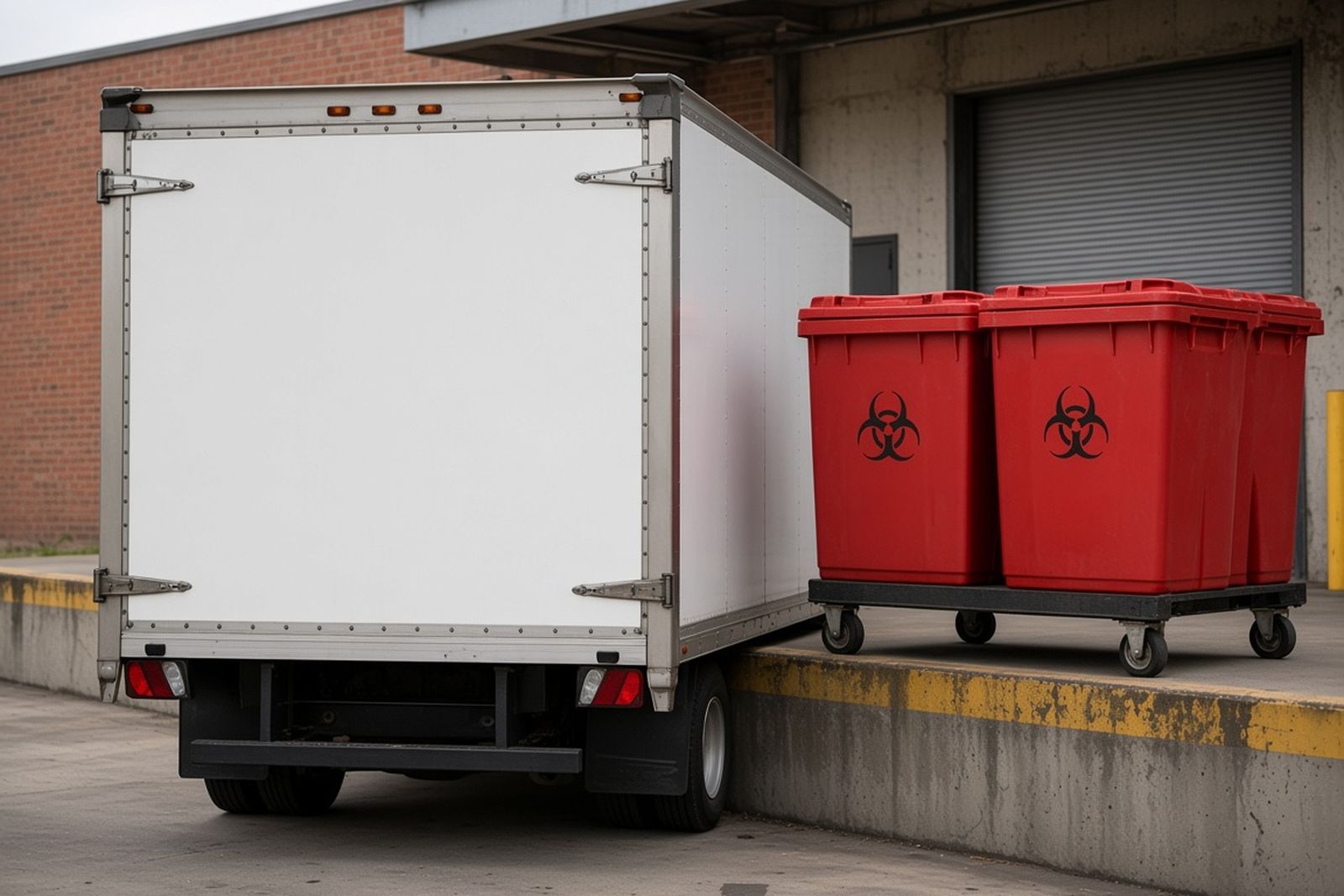
For most people, trash just goes away without much thought. Biohazard waste is different. It comes in bright containers with warning symbols. You must store it with care. It leaves on a truck that may carry its own markings. Each of those details can draw attention to something you would like to keep private.
Often the stress is less about the waste and more about what it stands for. If you care for someone at home, sharps and soiled supplies remind you of illness every day. After a cleanup that followed a death, the boxes on the porch hold materials from a painful event. If you own a small business, a pickup can bring worry about whether your paperwork is right.
Knowing where the stress comes from is the first step to easing it. The practical steps below are grouped around the most common worries: privacy, safety at home, following the rules, and the emotional weight of it all.
Keeping pickups private
Privacy is one of the most common concerns, mostly in home neighborhoods and small storefronts. Ask your hauler what it can do to keep service low-profile. Some can schedule pickups at quieter times of day, use a smaller truck, or park in a less visible spot. Truck markings and container labels are often required by law. So there are limits to how low-profile any hauler can be.
Think about where your waste is stored before pickup. A locked closet, garage, or utility room keeps containers out of sight and out of reach. If containers must be set outdoors for collection, ask whether the driver can pick them up from an indoor area.
If a neighbor or customer asks, a short, calm answer usually ends the talk. You might say, "It is routine medical waste service." That is honest and does not invite more questions. You do not have to explain more.
- Ask about pickup windows at quieter times of day
- Store your containers indoors in a locked spot used only for them
- Ask whether the driver can collect from inside and not from the curb
- Prepare a simple sentence for curious neighbors
- Keep your paperwork in a closed folder, not out on display
What if I am worried about safety while waste is stored at home?
If you care for someone at home, you may worry about children, pets, or visitors touching used needles or soiled materials. That worry makes sense. Many caregivers never get clear instructions. In a 2018 study by Huang and colleagues of patients with diabetes, 34% reported no formal sharps-disposal training.
A few habits can lower the risk. Keep sharps containers on a high shelf or in a locked cabinet. Close them when they reach the fill line shown on the container. Do not pack them full. Never reach into a container or try to recap needles. Keep bags of soiled supplies sealed and away from food areas.
Ask your hauler or your loved one's care team to show you what goes into each container. Hearing it from someone who does this every day can take much of the doubt out of the routine. If a container is damaged or leaking, set it aside in a larger bag or bin. Call the hauler before pickup. Do not try to repack it yourself.
Compliance anxiety for small business owners
If you own a small clinic, studio, or cleanup company, you may carry a steady worry about inspections. Did I label that box correctly? Do I have the right records? What if the hauler makes a mistake? That worry can stay with you long after the truck leaves.
Clear systems ease that worry. Keep one folder, on paper or on a computer. Put in it your hauler agreement, your registration details, and every pickup record, sorted by date. Set a monthly reminder to check that each pickup has matching paperwork. Post a simple chart near your containers that shows which waste goes where.
Your hauler can be a resource. A good one will answer your questions and explain your state's rules in plain words. It will let you know when rules change. When a question goes beyond what the hauler can answer, your state environmental or health department can settle it.
A tidy folder, labeled containers, and a hauler you can name make it far easier to answer questions calmly if an inspector ever visits. Getting ready turns a vague fear into a short checklist you already know you have covered.
What if the waste is tied to a loved one's illness or death?
Sometimes the waste being hauled away is the last physical trace of a hard chapter. After a loved one's long illness at home, the final pickup of medical supplies can bring a wave of grief. After a death and the cleanup that followed, seeing sealed boxes leave the house can feel like both relief and loss.
You do not need to be there for the pickup. Ask a friend or family member to meet the driver. Or ask the hauler whether it can collect from a garage or side door while you are away. If a cleanup company is arranging the transport, it can often handle the whole process for you.
Give yourself room for whatever you feel. It can help to talk with a friend, a hospice bereavement coordinator, a counselor, or a faith leader. If you are struggling with thoughts of suicide, or feel you cannot cope, you can call or text 988 to reach the 988 Suicide and Crisis Lifeline at any hour.
A calmer, more predictable routine
Caregivers often dread the first pickup. You may fear a large truck in front of the house and neighbors asking questions. A single phone call to the hauler can change that.
Explain your concerns to the dispatcher. Ask for a regular pickup at a time of day when the street is quiet. Ask whether the driver can collect from a garage or side door. Ask for a one-page guide that shows which containers hold what. At home, clear and label a shelf for containers, and keep your pickup records in one folder. Once those pieces are in place, a pickup can become ordinary. The driver loads the containers, hands you a receipt, and leaves.
Not knowing what will happen is a major source of stress. When will the truck arrive? Do you need to be home? What happens if you miss a pickup? Questions like these can make the whole thing feel heavier than it is.
Ask your hauler for a regular schedule and a clear pickup window. Ask how you will be told about changes and what happens if a pickup is missed. Ask whether you need to sign for each collection. If you travel or your volume changes, ask how easy it is to adjust.
Write the schedule on your calendar and set reminders the day before. When you know just what to expect, a stressful event turns into a routine one.
If several people share your home or workplace, make sure each of them knows the routine. Put a short note on the storage door with the pickup day and the hauler's phone number. Then no one is caught off guard when the driver knocks. And no one has to guess what to do with a full container.
When something goes wrong
Mistakes happen. A pickup may be missed. A container may crack. A driver may leave without paperwork. A plan for those moments keeps a small problem from becoming a big worry.
For a missed pickup, call the hauler and ask for a new date. Keep the waste stored securely until then. For a damaged container, do not try to move the contents yourself. Set it in a larger sealed bag or bin and ask the hauler what to do. For missing paperwork, ask for a copy in writing.
If a needlestick or other exposure happens, wash the area with soap and water and contact a health care provider promptly. Fast medical advice matters after any possible exposure.
When is it worth asking for extra support?
Most of the stress around waste pickup eases once a routine is in place. But worry may keep you up at night, or the situation behind the waste may weigh on you. If so, it is worth reaching out. Caregiver support groups, hospice teams, small business associations, and counselors can all help in different ways.
You are managing something that many people never have to think about. Asking for help, whether practical or emotional, is a fair part of doing it well.