Short answer
When your regulated medical waste needs to go fast, secure it first. Keep people away. Put on gloves and contain any leak with absorbent material. Place damaged bags into a new approved container without squeezing them. Keep sharps in hard containers, and lock the storage area. Then call your hauler and write down what happened. Check your state's storage and reporting rules before the pickup.
What counts as urgent
Most waste pickups are routine. But sometimes something goes wrong, and your waste needs attention before the next scheduled visit. If you can spot those moments, you can respond calmly and correctly.
Several things can make it urgent. A missed pickup leaves your storage area full. A bag tears or leaks. A sharps container is overfilled or punctured. An unusual event leaves a large amount of waste. Or sharps and medical waste turn up where they should not be, such as in a home being cleared after a death.
Each case calls for the same first priority: protect people from exposure. Only after the area is secure should you turn to schedules and paperwork.
If anyone has been stuck by a needle or splashed with fluid, that comes first. Wash the area right away with soap and water. Flush eyes or mouth with water if they were affected. Contact a health care provider or work health service promptly.
It also helps to name one person on each shift who is in charge of waste problems. When something goes wrong, your staff know just whom to tell. That person knows where the spare containers, gloves, and hauler's phone number are kept.
Securing a leaking or damaged container
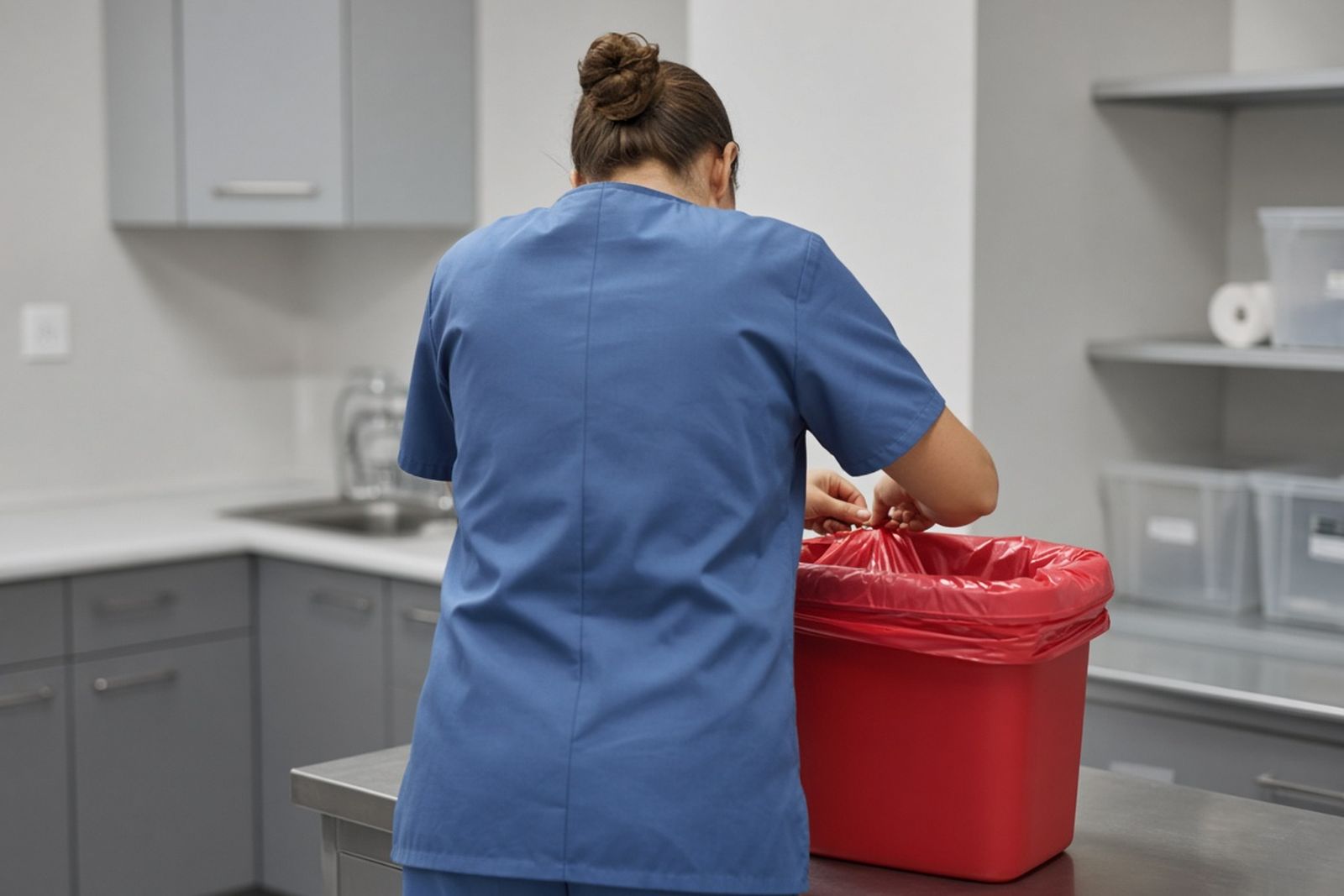
Put on disposable gloves. Add eye protection if anything could splash. Keep other people out of the area.
If a bag is leaking, place absorbent material around it to contain the fluid. Do not squeeze or press the bag. Your hauler may have left you spare containers. If so, place the damaged bag and any absorbent material into a new approved container. Close it the way the hauler's instructions say, and label it.
Clean the surface where the leak happened with a suitable disinfectant. Keep it wet for the time on the label. Put used gloves, wipes, and absorbent material into the regulated waste container, not the regular trash.
Stop if the leak is large, if it involves an unknown substance, or if you do not have the right supplies. Call your hauler or a biohazard cleanup company for help.
What should I do with loose or found sharps?
Sharps are the most dangerous item in medical waste because they can pierce skin. Injuries are common in health care. CDC estimated in 2008 that 385,000 needlestick and other sharps injuries occur each year among hospital-based healthcare personnel, about 1,000 per day.
If you find loose sharps, do not pick them up with bare hands, and never recap needles. Use tongs or a similar tool. Place each item point-first into a hard sharps container that needles cannot poke through. Close the container once it reaches the fill line.
Never push sharps down into a full container, and never reach into one. A container may have been punctured or overfilled. If so, place the whole container into a larger approved container if you have one, and call your hauler.
You may be clearing a home and find many sharps, or find them in places that are hard to see, like furniture cushions. Stop and call a biohazard cleanup company. Searching by hand is where injuries happen.
What if my scheduled pickup was missed?
Call your hauler right away and ask for the next open pickup time. Note the date and time of the missed pickup and the name of the person you spoke with.
While you wait, keep all waste in closed, labeled containers in your secure storage area. Do not let bags sit outside containers or in hallways. If you run out of space, ask the hauler whether it can deliver more containers before the pickup.
Check your state's rules for how long you may store regulated medical waste. Check whether cold storage is required for longer storage. If a missed pickup could put you over a storage limit, tell the hauler. The medical waste program at your state health or environmental department sets those limits. It can tell you what to do if you are close to one.
Put repeated missed pickups in writing. They may justify a service credit, a contract review, or a change of haulers.
If your hauler cannot come soon enough, ask whether it can refer you to another licensed hauler for a one-time pickup. Some haulers will arrange this themselves to keep your business. It keeps waste from piling up while the problem is sorted out.
Six shortcuts to avoid while you wait
A few common shortcuts create bigger problems than the one you are trying to solve.
- Do not put regulated medical waste into regular trash or a dumpster, even for a short time
- Do not haul the waste yourself unless your state clearly allows it and you meet its rules
- Do not squeeze bags or boxes to make more room
- Do not pour liquid waste down a drain unless your permits and local rules allow it
- Do not leave waste in unlocked areas where the public, patients, or pests can reach it
- Do not throw out damaged containers without replacing them with approved ones
What to tell the transporter
Clear information helps the hauler send the right containers and the right truck. It helps the driver get ready for anything unusual.
This may be a one-time pickup from a place with no account, such as a home after a cleanup. If so, the hauler will also need a contact name, address, and billing information.
Before the driver arrives, set your containers near the pickup point if your storage rules allow it. Make sure every label can be seen. A quick, orderly pickup lowers the chance of a refusal on a day when you can least afford one.
- Your account number and where the waste is
- What happened: a missed pickup, a damaged container, an unusual amount, or found waste
- About how many containers are ready for pickup, and what type
- Any waste outside your normal service, such as tissue or drug waste
- Whether any containers are leaking, damaged, or overfilled
- Any access problems, such as locked gates or limited parking
When problems stack up: the order of operations
Urgent problems rarely come one at a time. A busy week fills your containers faster than usual. The scheduled pickup is missed because the hauler is short of staff. Then a red bag tears at the bottom in a storage room that is already full. The order in which you respond matters more than speed.
Deal with the leak first. Put on gloves and eye protection. Place absorbent pads under the bag. Move it into a spare approved box if the hauler left one on its last visit. Close and label the box, then disinfect the floor.
Next, call the hauler. Explain both the missed pickup and the full storage area. Ask for a pickup date and extra containers. Write down times, names, and what was promised. Put the missed pickup on the list for your next contract review.
If the leak is heavier, or there is no spare box, reverse the order. Call the hauler first and ask what to do before you move anything. Making do with unapproved containers can cause a refusal at pickup. That creates a second problem on top of the first.
Do I need to report anything?
It depends on what happened. A missed pickup rarely triggers a report on its own. But going over a state storage limit might. A large spill or release could have reporting rules. Any worker exposure should be recorded under your exposure control plan.
Your hauler, your state environmental or health department, and your work health company can help you understand what applies. Keep a written record of the incident either way.
Keep copies of any incident notes with your waste shipping records and certificates for that pickup. If an inspector later asks about a gap in your records, you will be able to explain it clearly.
When in doubt, ask the agency directly. Do not guess.
Preventing the next one
Keep spare approved containers on hand at all times. Keep gloves, absorbent material, and a disinfectant that suits the surfaces in your storage area. Post a short set of written steps on the storage room door.
Review how often you get pickups when your volume changes. A new service, an extra company, or a busy season can quickly outgrow your schedule.
Train your staff on what to do if a bag tears, a sharps container overfills, or a pickup is missed. A few minutes of planning turns an urgent event into a routine one.
After any urgent event, spend a few minutes going over what happened with your staff. Ask what slowed them down and what would have helped. Then update the posted steps so your next response is smoother.