15 questions, each with an explanation

Crime Scene Cleanup quiz and study guide

Find out what you already understand, then read the parts you missed.

This quiz checks if you understand the ideas that matter most when a crime scene needs cleanup. It is not a license and does not qualify anyone to do the work. It helps you spot the moments when a choice could protect someone or put them at risk. Examples are going in before release, wiping a stain with a household cleaner, tossing a bloody towel in the kitchen trash, or trusting a spoken promise that a room is clean. Each question comes from the study guide below, so read that first if the terms are new. Take the quiz as often as you like. The goal is to talk with a company, an adjuster, or a detective already knowing what the words mean.

Get an email reply about crime scene cleanup

Send a short message to the follow-up inbox. A coordinator can reply by email. This form does not send emergency help; call 911 first if anyone is in danger.

Tell us what you need help with. Share a short description; please leave out medical details, access codes, and other sensitive information.

A request does not confirm a booking. For immediate danger, contact local emergency services.

Or email info@scenerecoveryhelp.com

Crime scenes differ from other biohazard jobs because two sets of rules apply before any cleaning starts. First, the police control access until they release the scene. Second, worker safety rules govern how workers handle blood and other body fluids that can carry disease. Add police products, possible tear gas from a standoff, and the emotional weight of the event. It becomes easy to make a mistake you could have avoided. The quiz questions focus on these overlapping concerns. If you miss several, the study guide explains the reasons in plain words. The linked tools let you apply the same ideas to your own case.

Crime Scene Cleanup knowledge check

15 questions about real crime scene cleanup situations: staying safe, what happens, cost, choosing help and the rules. Every answer comes with a short explanation.

Why this quiz matters

Knowing these basics makes it easier to spot bad advice and ask a company the right questions. This quiz is educational — it does not certify anyone. After the quiz, review the explanations for questions you missed. For professional guidance on your specific situation, use the contact form at the top of the page for an email reply.

Progress1 / 15
SafetyQ1

Police dusted a doorframe with black fingerprint powder. What is the safest way to deal with it?

Study guide: the six ideas behind the questions

Read these before or after the quiz. They cover the concepts every question draws on, written for crime scene cleanup specifically.

1Recognizing the hazards a crime leaves behind

Blood is the obvious hazard, but it is rarely the only one. Dried blood can flake and float into the air when it is disturbed. So a stain that looks stable is not always safe. Broken glass, knife pieces, and bullet debris can cut or puncture skin and turn a cleanup into a medical emergency. Police powders irritate the airway. Tear gas and pepper spray (CS or OC) can become active again in humid air. Blood also travels. It follows the path a hurt person walked. It gets onto shoes and hands, into air returns, and down into the subfloor. The first skill you need is to see all of these, not just the stain in the middle of the room.

2Scene release and who has authority

Until the police release the site, it is a crime scene under their control. It is not a property you may clean. Release can be spoken or written. It may also be partial, covering some rooms but not others. Ask the officer or detective in charge to confirm release, and write down the date, time, and name. If a seal, tape, or notice is still up, do not go in. Once the site is released, control passes to whoever legally controls the property. That may be the owner, an estate representative, a landlord, or a business. That person approves the cleanup. If possible evidence turns up during work, good companies stop and call the police instead of going on. Rules vary by state and county, so check with the local authority.

3Containment: keeping a problem from spreading

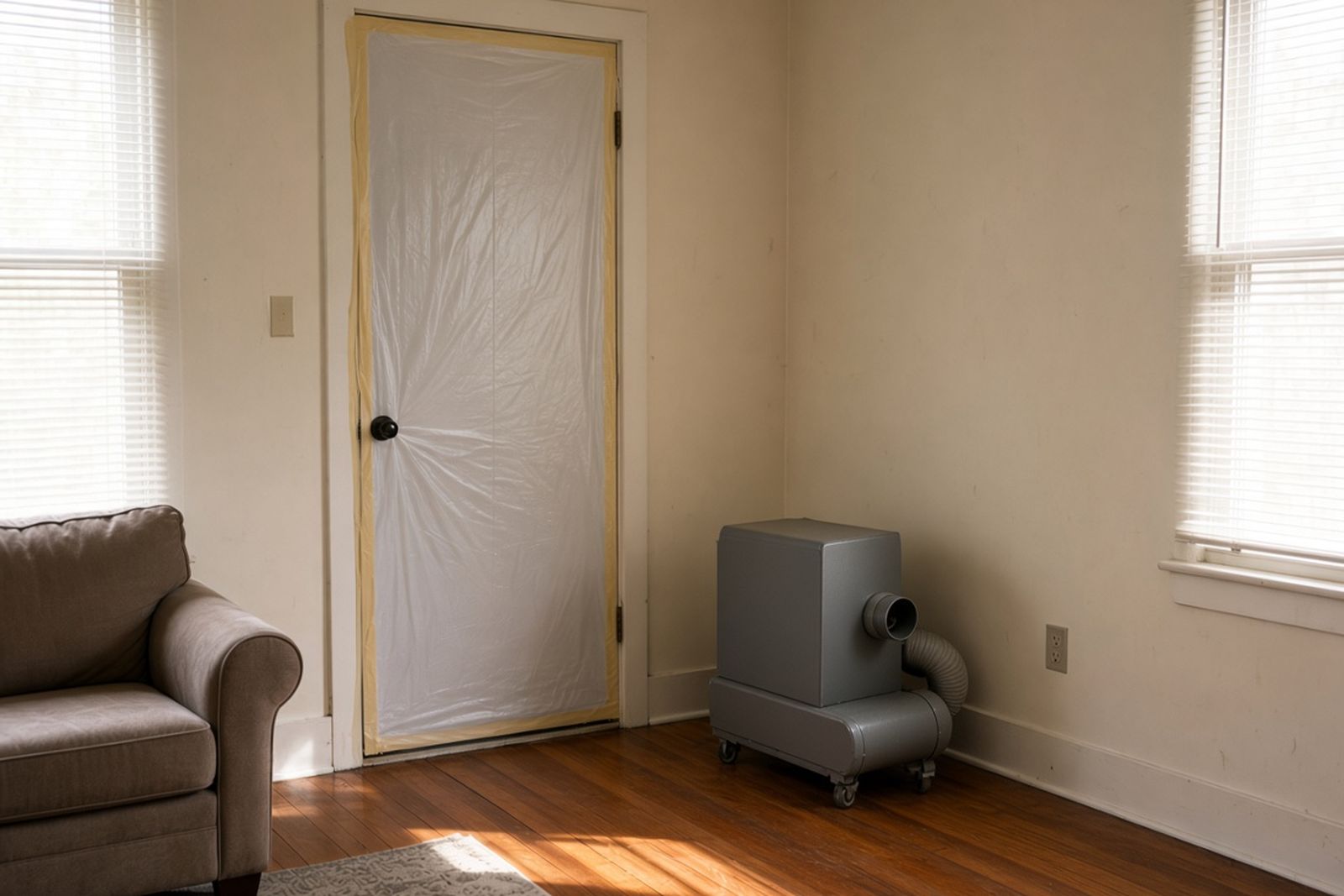
Containment means sealing off the affected area so germs and dust stay inside while work happens. In practice, that means air filters and plastic walls that keep dust inside the work area. Workers hang plastic over doorways and lay down protected walkways. Often a filtered air machine pulls air out of the zone so dust and mist do not drift into clean rooms. Containment also covers the heating and cooling system. If it ran during or after the event, its filters and returns may already hold blood dust or police powder. The company should check them. For people living there, the lesson is simple. Do not walk through the affected room. Do not point fans toward the rest of the house. Keep children and pets on the clean side of the barrier.

4Cleaning versus disinfecting: why order matters

Cleaning removes dirt. Disinfecting kills the germs left on a surface after it is cleaned. Disinfectants do not work well through blood, tissue, or heavy grime. That is why a pro first removes what you can see. Then they apply an EPA-registered product at the strength and contact time on its label. Contact time is how long the disinfectant must stay wet to work as the label says. Wiping it dry too soon defeats the purpose. Soft materials such as carpet pad, drywall, and furniture often cannot be disinfected all the way through. That is why they are often removed rather than treated. Air freshener and fogging do not replace either step.

5Where the waste goes

Items soaked with blood or other body fluids that can carry disease are usually treated as regulated medical waste. So are used safety gear, absorbent pads, and sharps. They are packed in labeled, leak-resistant containers. Sharps go into boxes that needles cannot poke through. A licensed hauler takes them, with a waste shipping record, to a permitted treatment site. Items with tear gas or other chemicals may go to a different kind of disposal. In most places, normal trash pickup is not a legal way to get rid of any of this. Rules vary by state and county, so check with the local health or environmental office. For a property owner, the key is paperwork. Ask for the hauler's name and the shipping or treatment record, and keep it with your property file.

6Documentation and verifying the result

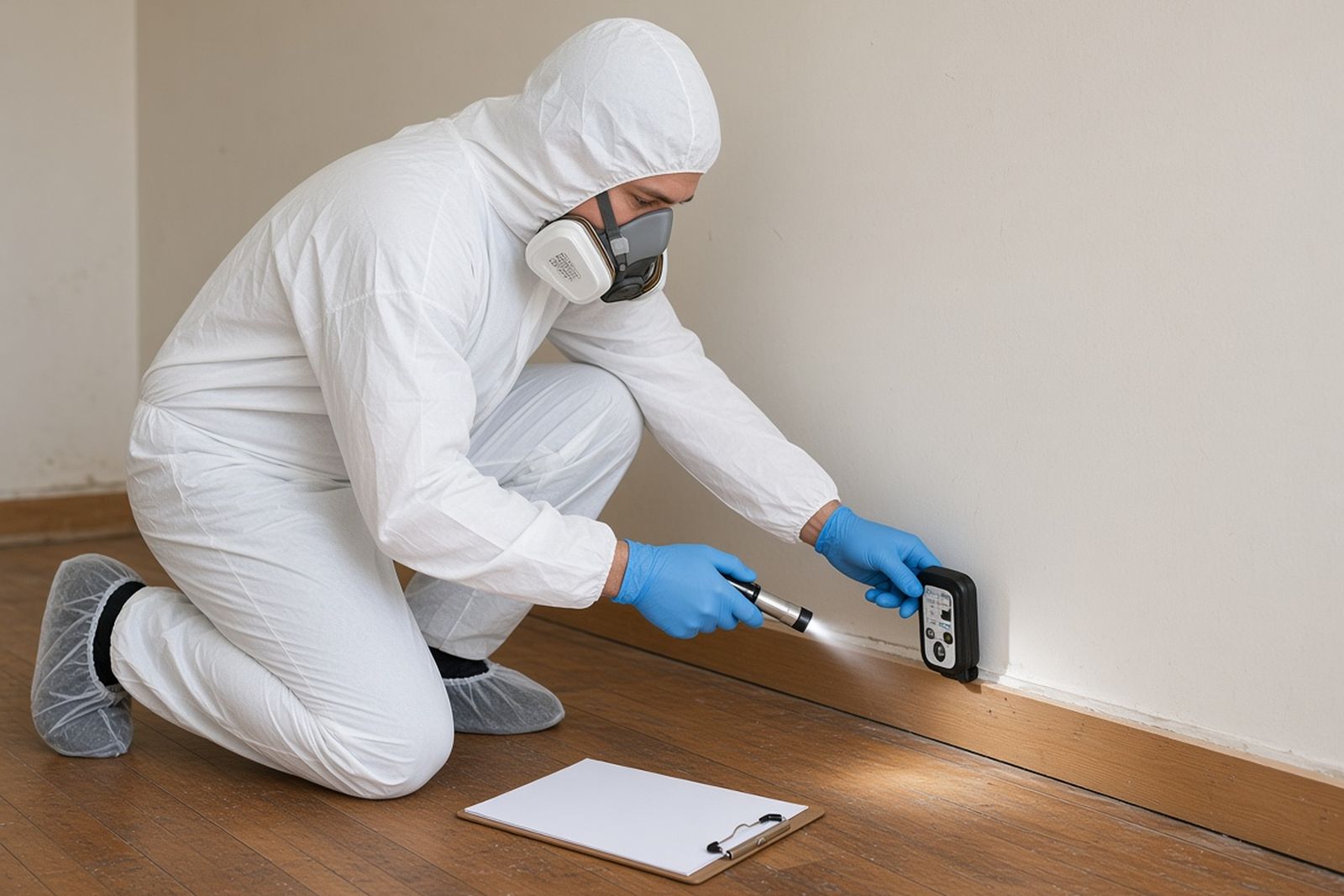
Looking clean is not the same as being clean. Verification means the company measured something after the work and wrote it down. A common method is a quick swab test that shows leftover organic residue on hard surfaces. It does not detect germs. Readings taken on the same spots before and after show if the cleaning worked. The paperwork should also list rooms, items removed, products used and how long they stayed wet, and waste records. Photos matter for insurance and for telling future buyers or tenants. Before work starts, take your own photos too, without moving anything. They show how things looked at the start. A company that will not put the job plan and the agreed finish line in writing is telling you how the job will go.
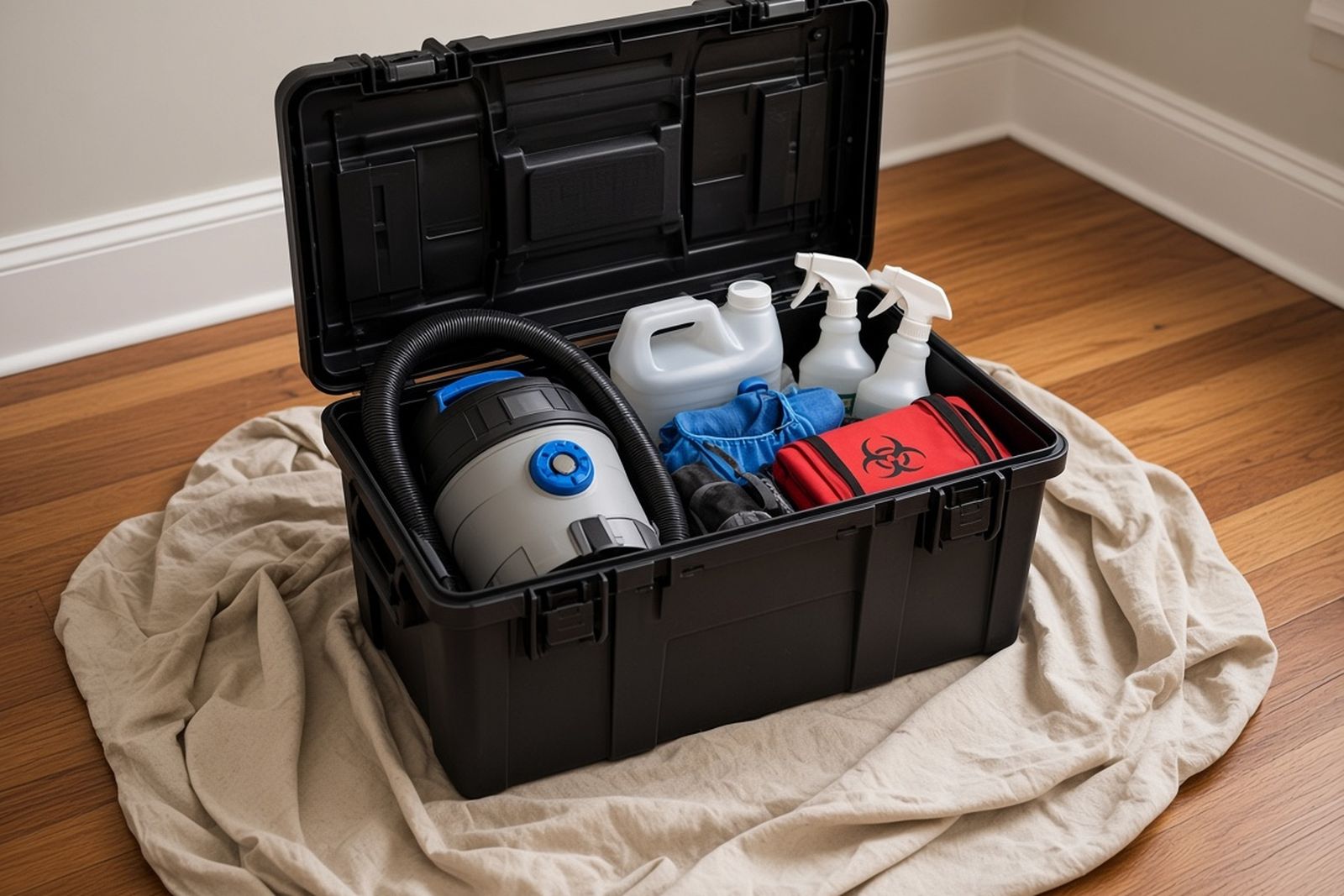
Open equipment case on a drop cloth holding a HEPA vacuum, disinfectant jugs, spray bottles and red biohazard bags

Facts worth knowing

  • Federal law requires every disinfectant sold in the United States to be registered with the EPA.

    Why it matters: You can ask a company which disinfectant it uses and check the label for an EPA registration number.

    Source: EPA, 2025

  • EPA says homeowners can usually handle moldy areas smaller than about 10 square feet themselves, while larger areas call for professional guidance.

    Why it matters: Measure the moldy area before you decide; this rule does not cover sewage or biohazard contamination, which needs different handling.

    Source: US EPA, 2026

  • The CDC says washing hands with soap cuts the number of people who get sick with diarrhea by 23% to 40%.

    Why it matters: Wash your hands with soap after any cleanup or contact with a contaminated area.

    Source: CDC, 2024

Questions about the crime scene cleanup quiz

Does passing this quiz mean I can safely clean a crime scene myself?

No. The quiz tests your grasp of ideas. It does not test your skill with safety gear, sealing off a work area, disinfectants, or handling regulated waste. Blood cleanup work also comes with legal duties for employers and disposal rules for everyone. Those apply no matter how well someone knows the theory. Use the DIY risk check tool to think through your own case before you decide.

Why does the quiz ask about scene release so often?

Because it is the mistake with the most serious results. Cleaning before release can destroy evidence, get in the way of a case, and cause you legal trouble. None of that can be undone once it happens. Repeating the idea in different forms helps it stick when emotions run high and someone is urging you to start.

What does the phrase "other potentially infectious materials" mean, and why do companies use it?

The phrase means blood and other body fluids that can carry disease. It comes from the OSHA bloodborne pathogens standard (29 CFR 1910.1030). It covers body fluids and tissue other than blood that can carry germs. Workers often shorten it to four letters. The quiz sticks to plain words, but companies and adjusters use the phrase often. Knowing what it means helps you follow their job plans and reports.

Are the quiz answers based on a specific state's rules?

No. The quiz covers basics that apply almost everywhere. Wait for release before cleaning. Seal off the work area. Clean first, then disinfect. Handle regulated waste the right way. Get the results in writing. Rules for licenses, disposal, and who must be told vary by state and county. So check local rules with the right office. Do not treat any quiz answer as a statement of the law where you live.

Can I use the quiz to evaluate a company?

Not directly, but the ideas behind it make good interview questions. Maybe a company cannot explain how long its disinfectant must stay wet. Maybe it cannot describe how it will seal off the work area, or is vague about where the waste goes. The study guide gives you enough background to notice. Pair it with the company vetting checklist tool for a step-by-step approach.

How is this quiz different from the homicide cleanup quiz on the sister site?

This quiz covers the whole range of crime scenes. That includes burglaries with injury, assaults, residue from police searches, tear gas from standoffs, and vehicles. The homicide quiz focuses on what families, estates, and landlords face after a killing. Examples are longer police holds, victim support programs, and privacy concerns. The two share the basics but focus on different cases.

Is there a way to get results explained rather than just a score?

Yes. After you answer each question, a short note explains it and points back to the matching part of the study guide. Reading the notes for questions you missed is more useful than your final score. It shows exactly which idea needs another look before you talk to a company or an adjuster.

What other people chose

Poll results

Vote to see how other people answered. You can change your answer at any time.

Your experience

What was the hardest thing to figure out in the first day after the scene was released?

Be the first to vote
General

Which type of incident brought you to this topic?

Be the first to vote