Short answer
The cost depends mostly on how much material there is and how carefully it must be sorted with the person who lives there. It also depends on what hazards are hidden underneath, how much of it is regulated waste, and how many trips it takes to haul everything away. Access, pests, mold and repairs add more. Ask for a written room-by-room estimate, and plan the work in phases you can afford.
Why is hoarding cleanup priced so differently from a regular cleanout?
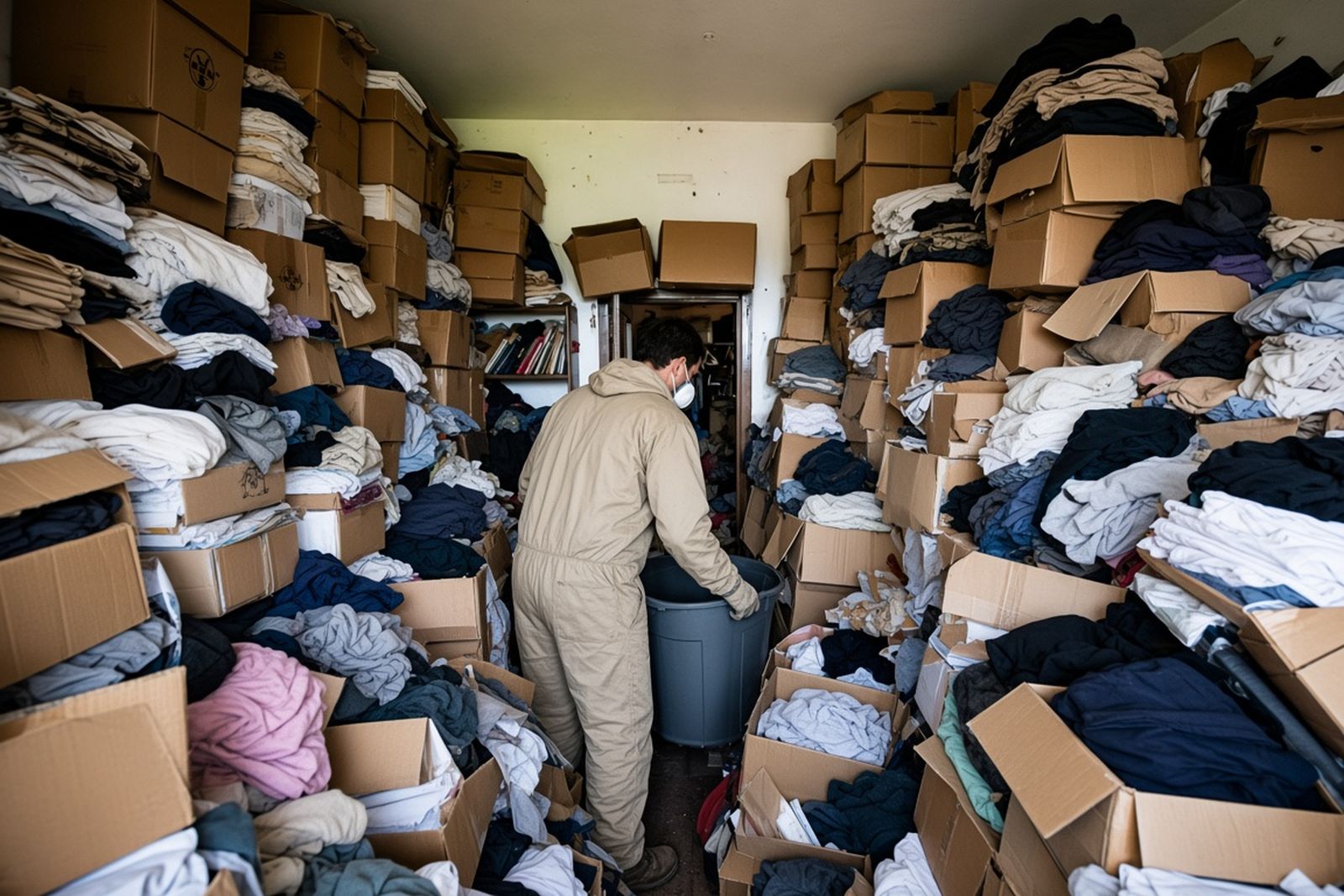
A standard cleanout company fills a truck and leaves. A hoarding cleanup is closer to a series of careful projects. The crew sorts belongings with the person who lives there or a family member allowed to decide. They look for documents and valuables. They separate what to keep, donate or throw away. They deal with hazards that were hidden under the piles.
That extra care is where much of your cost comes from. Sorting a room with the person who lives there, at a pace they can manage, takes far longer than clearing it without them. It is also the approach most likely to keep trust and stop the home from filling up again.
When you compare quotes, check whether each one assumes sorting with consent or a fast trash-out. The two approaches can lead to very different totals. They can also lead to very different results for the person involved.
Factors that drive the estimate
Most companies build their price around a few main factors. Once you understand them, you can see why quotes differ and where you might have room to change the work plan.
- Volume: how many rooms are affected and how high things are stacked. This is often estimated in cubic yards or truckloads.
- How closely things are sorted: whether you review every item, or agree that whole categories can be thrown away.
- Hazards under the clutter: human or animal waste, spoiled food, needles, mold from blocked airflow and damage to the building.
- Pests: rodents, cockroaches or other pests that call for a licensed pest control company.
- Kinds of waste: separating ordinary trash, recycling, donations, hazardous household items and regulated biohazard waste.
- Access: stairs, narrow hallways, apartment elevators, long carries to the truck and parking limits at your building.
- Deep cleaning and odor removal once your surfaces are finally uncovered.
- Repairs found along the way, such as damaged flooring, plumbing or wiring.
How much does the sorting pace affect the total?
Pace is often the biggest factor families underestimate. A person who hoards may need time to make decisions. Rushing them can cause real distress. Many families choose a slower pace on purpose, even though it costs more per room.
Cooperation differs widely from one home to the next. When it is hard to come by, the work tends to take more visits, more talks and more planning between everyone involved.
Ask each company how it handles hesitation. Ask how many decisions it expects the person to make per session. Ask what happens to the schedule if a session ends early. Those answers tell you more about your final bill than the hourly rate alone.
Some companies charge by the hour. Others charge by the room or by the truckload. None of these is wrong, but each one shifts the risk in a different way. Hourly pricing rewards a patient pace. Per-load pricing rewards speed. Choose the one that fits how your family wants the work to feel.
Hidden hazards that change the price
In the worst rooms, a crew usually cannot see the floor, the walls or the fixtures until it starts removing material. Your estimate should say plainly that hidden conditions may change the work plan.
Common finds include animal waste soaked into carpet and the subfloor beneath it. Crews also find human waste in containers or in bathrooms that stopped working. They find spoiled food in a broken refrigerator, mold where moisture could not dry, and needles or medical supplies mixed in with ordinary items.
Each of these has its own handling rules. Biohazard material may need to be packaged and thrown out apart from household trash. Mold may call for sealing off the area and removing damaged materials. A good company will stop, photograph what it found and give you a revised written price before it goes on.
Surprises in the building itself can cost you the most. Heavy stacks can overload floors. Water from a leak nobody noticed can rot the floor beams. Blocked vents can damage appliances. The cleanup crew may not be licensed to fix these problems. So your estimate should say whether they will refer you to a contractor and whether their own work pauses during repairs.
You can help the company plan by sharing what you already know. Mention pets that live or lived in the home and any history of plumbing problems. Mention medical conditions that involved needles or supplies, and rooms no one has entered in a long time. Nothing you share will make the estimate perfect. But it can cut the number of changes later.
Phasing around a fixed budget: an example
To show how this works, take a made-up family. A son lives out of state. He learns that his mother's home health aide can no longer safely enter the house. His mother agrees to accept help, but the full cleanup estimate is more than he can pay at once.
He asks the company to split the work into phases. Phase one is about safety. It clears a path from the front door to the bedroom, kitchen and bathroom. It frees the stove area of stacked paper and opens access to the electrical panel. His mother sorts with the crew in short sessions over several days.
Phase two is set for two months later. It covers the living room and a spare bedroom. Phase three, still undecided, would deal with the garage. Each phase has its own written estimate and its own consent list signed by his mother.
Phasing like this lets the most important safety work happen now. It keeps the person involved and spreads your cost over time.
Why does disposal cost so much?
Hauling and disposal fees add up quickly when a home holds years of belongings. Landfill or transfer station charges, dumpster rentals, fuel and the labor to load everything all appear somewhere in your estimate.
Separating items adds labor but can offset some disposal cost. Donating, recycling and reselling items the person chooses to release may shrink the load that goes to the landfill. Hazardous household items, such as old paint, chemicals and batteries, usually need their own disposal route. Regulated medical waste follows its own rules.
Ask the company to show disposal as a separate line from labor. Then you can see whether a higher quote reflects better sorting and recycling or simply more trips to the dump.
In apartment buildings and dense neighborhoods, logistics add cost too. A crew may need to reserve a freight elevator or protect shared hallways. It may need smaller vehicles because a large dumpster will not fit. If you ask about these details up front, you can avoid a surprise charge on the first day.
What a written estimate should include
A clear estimate protects both your family and the person who lives in the home. It should show what was agreed, what could change and who has the right to approve changes.
- A room-by-room work plan with the goal for each space.
- How things will be sorted, and the categories the person who lives there has agreed to.
- The name of the person allowed to make decisions and approve changes.
- Separate lines for labor, disposal, biohazard handling, pest control visits and deep cleaning.
- How hidden hazards will be handled and priced if your crew finds them.
- What is left out, such as structural repairs, appliance replacement or long-term storage.
- What the schedule assumes, including how long your sessions run and how cancellations are handled.
Paying for it, and keeping it from repeating
Most hoarding cleanups are paid for privately. Homeowners insurance usually does not cover the clearing itself. Still, it is worth looking into every option that exists where you live.
Local area agencies on aging, adult protective services, county hoarding task forces and mental health programs sometimes know of aid or volunteer help. A case manager who already works with the person may be able to connect you with resources. If a separate event such as a fire or burst pipe damaged the home, an insurer might review part of that damage.
The most expensive hoarding cleanup is the one that has to happen twice. Without ongoing support, many homes fill up again. A fast trash-out can make that more likely, because it leaves the person feeling powerless.
Pair the cleanup with a plan for afterward. That may include regular check-ins, a therapist who knows hoarding, a peer support group or a monthly upkeep visit. Ask the company whether it offers upkeep cleaning and how it works with clinicians. If the person you are helping talks about feeling hopeless or about ending their life, you can call or text the 988 Suicide and Crisis Lifeline at any time.