Free homicide cleanup tool
Homicide Cleanup Insurance Claim Organizer
A guided checklist from finding the policy to tracking the insurer’s decision, with a printable summary of where the claim stands.
Paying for cleanup after a homicide can involve more than one insurance policy, and the organizer is built around that fact. Its steps help you find every policy that might apply. These include homeowners, landlord, renters, and business coverage. A separate step asks whether a state victim compensation program may apply. It then covers describing the cause of loss accurately, notifying the insurer, recording the property's condition, getting a written plan, and tracking each decision. A progress checklist keeps the steps in order. A printable summary gathers everything for the estate, the adjuster, or the program. The insurer and the program decide coverage and who qualifies. This tool never does.
Estates add a layer that other claims do not have. If the victim was the named insured, the insurer may need proof that the person calling has authority before it discusses the claim. That proof is often letters of appointment from the probate court. If no estate has been opened yet, the organizer notes what can be done in the meantime, such as notifying the insurer and saving records. Landlords face a different question. Is the loss covered under their policy? Did the tenant have renters insurance that covers belongings? The organizer asks about each of these, so nothing is filed under the wrong policy or left unfiled. Rules vary by state and county. Check with the insurer, the program, and, if needed, the probate court.
How to use it
- 1Gather every policy tied to the property or the victim, including any renters insurance. Write down the insured names and policy numbers.
- 2Do the victim compensation step. Contact the program in the state where the crime happened, and note the deadlines and required papers.
- 3Work through notice, records, and the written plan. Write down claim numbers, dates, and the names of everyone you speak with.
- 4Track insurer and program decisions in the last step. Print the summary for the estate file or landlord records.
Prefer to ask a person?
Your request is sent to the follow-up inbox. A coordinator can reply by email. Not for emergencies; call 911 first if anyone is in danger.
Organize an insurance claim
Homicide Cleanup insurance claim organizer
A checklist to keep the claim orderly. It stores nothing on our servers; copy the summary to your own notes.
0 of 18 steps recorded (0%)
Print or paste the summary into your own records. Coverage is the carrier's decision under the policy; keep every answer in writing.
A worked example
Here is a made-up example. A woman's husband was killed in the home they owned together. She is staying with her sister and cannot face the house, so her sister uses the organizer for her. The first step finds the homeowners policy. Both spouses are named on it, so the insurer can speak with the surviving spouse directly. The victim compensation step prompts a call to the state program. The sister learns that cleanup may be a covered cost and that there is a deadline to apply. She also learns the program wants an itemized bill and the police report number. The cause-of-loss step is filled in with facts that match the report. The insurer is notified, and the claim number and the representative's name are written down. For records, the sister checks off the company's photos from before the work. She also checks off the room-by-room plan, the list of thrown-away belongings, and the waste shipping record promised at the end. The written plan step reminds her to have cleanup and future flooring replacement listed separately. The program and the insurer may treat them differently. In the last step, she notes that the insurer has asked for the final report and the program application is pending. The printed summary goes into a folder her sister can pick up whenever she is ready.

Facts worth knowing
In 2024, OSHA's top fines were $16,550 for each serious violation and $165,514 for each willful or repeated one.
Why it matters: If you have your own staff clean up blood or chemicals without required training and gear, you may face fines like these.
One January 2025 cost guide puts the average U.S. biohazard cleanup at about $4,000, usually $3,000 to $5,000, with extremes from $1,500 to $25,000.
Why it matters: Use this range to sanity-check a quote, but expect your price to depend on the size of the job and local rates.
Employers must offer the hepatitis B vaccine within 10 working days of putting an employee in a job with exposure to blood.
Why it matters: Before asking your own employees to clean up blood, check whether this duty and other OSHA rules apply to you.
Insurance Claim Organizer questions for homicide cleanup
What if the victim was the only named insured on the policy?
The insurer will usually need to see that whoever contacts them has the right to act for the estate. This is usually shown by letters from the probate court. Until then, you can still report the loss, save records, and ask the insurer what steps are allowed in the meantime. The organizer points this out so the estate does not lose time waiting.
Can I apply for victim compensation and file an insurance claim at the same time?
Often, yes. But programs usually see themselves as the last source of payment. They may ask what insurance covered before they pay anything back. Some pay companies directly, and others pay back the person who applied. Contact the program in the state where the crime happened. Ask how it works with insurance, and write down the answer. Rules vary by state and county.
Does a homicide count as a covered peril?
That depends entirely on the policy wording. Some policies cover damage from a violent act on the property. Others have exclusions or lower limits that apply. The organizer helps you describe the loss with facts and give the police report number, so the insurer can make its decision. No tool or network can promise coverage.
I am the landlord. Which policy do I file under?
File under your landlord or business property policy for the unit itself. The tenant's renters policy may cover their belongings, if one existed and the family can access it. The organizer reminds you to find both. Keep costs for the unit separate from costs for belongings, because each policy will review its own part.
What documentation do carriers and programs most often ask for?
They often ask for the police report number and photos of the condition before work. They also want an itemized written plan, the final report with test results, waste shipping records, and receipts. A list of thrown-away belongings helps with claims for contents. The organizer lists each of these, so you can collect them as they come in instead of hunting for them later.
Should the organizer include costs the family paid before filing a claim?
Yes. Record every cost related to the loss. Examples include a temporary place to stay, new locks, travel to meet the adjuster, or items bought because belongings could not be used. Keep receipts with each entry. Insurance or a compensation program may pay back some of these costs, and not others. But a complete record lets the insurer or program decide, instead of something being left out.
How can the organizer help if more than one relative is filing paperwork?
It gives everyone one shared record of claim numbers, contacts, deadlines, and papers sent. Agree on who files each claim and who updates the organizer. That way, double filings or mixed-up information do not slow things down. If you can, keep one main copy and share view-only copies with others. Clear teamwork protects the family from delays during an already painful time.
Related community polls
Vote to see how other people answered. You can change your answer at any time.
What was hardest to arrange after the scene was released?
When did you first learn that a victim compensation program might help?
Other homicide cleanup tools
Cost Range Estimator
Set the affected area, surface types, severity and extras to see a rough cost range and what pushes it up or down.
OpenCompany Vetting Checklist
Fifteen questions to ask any cleanup company, a score that shows how ready you are to hire, and a list of what is still unanswered.
OpenFirst 24 Hours Planner
Tell the planner a few facts about the situation and get an ordered list of who to call, what not to touch, and what to photograph.
OpenWaste & Disposal Classifier
Five questions about the material point to the likely waste category and which authority to confirm the rules with.
OpenDIY or Call a Pro? Risk Check
Eight yes-or-no questions that produce a risk level and explain when professional help is the safer choice.
OpenMore on homicide cleanup
Homicide Cleanup services
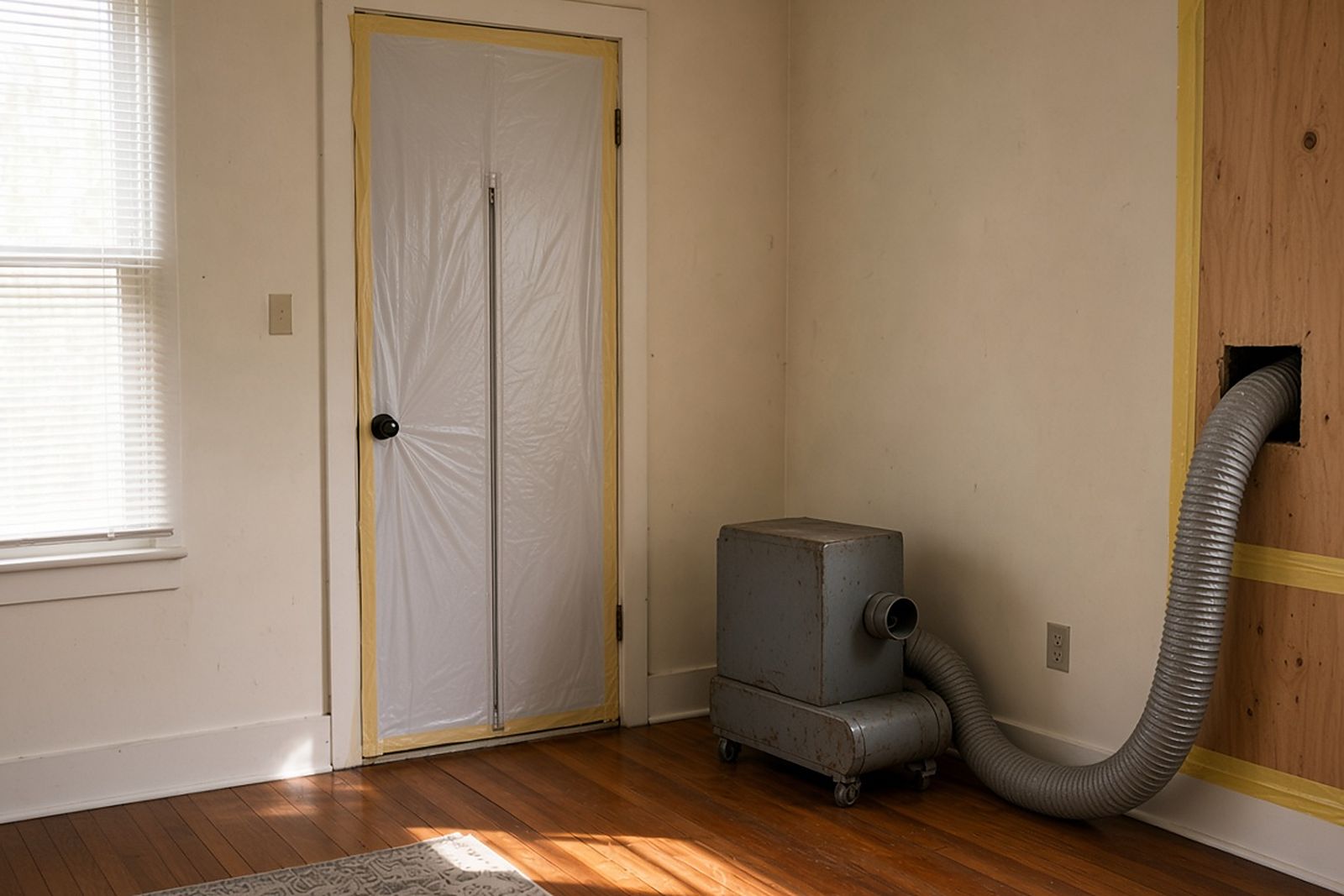
Learn what homicide cleanup involves for families, estates, and landlords. Topics range from sealing off several rooms to lists of belongings and final records.
Costs explained
What drives the price, published cost ranges, and how to read a written quote line by line.

Insurance and payment
Which policies may respond, how to document a claim, and what to do if coverage is denied.
Community polls
Shared experience from families, advocates, and landlords on what was hardest after a homicide and what help mattered.
Knowledge quiz
A calm review of police holds, authority, sealing off work areas, disinfecting, waste, and records. The study guide is written for grieving families and the people helping them.
Articles and resources
Articles on the family and landlord side of a homicide. Topics include release timing, belongings, privacy, compensation programs, disclosure, and renting a unit again.