Short answer
Several things drive the cost. How far did blood and fluids spread across your equipment and floors? Must machines be taken apart under lockout? Are process chemicals or oils mixed in? How much material must be thrown out? What level of protective gear is needed? Must the work happen overnight so you can restart? An itemized work plan that prices each of these apart is the best way to compare companies.
Why is a plant harder to price than a home?
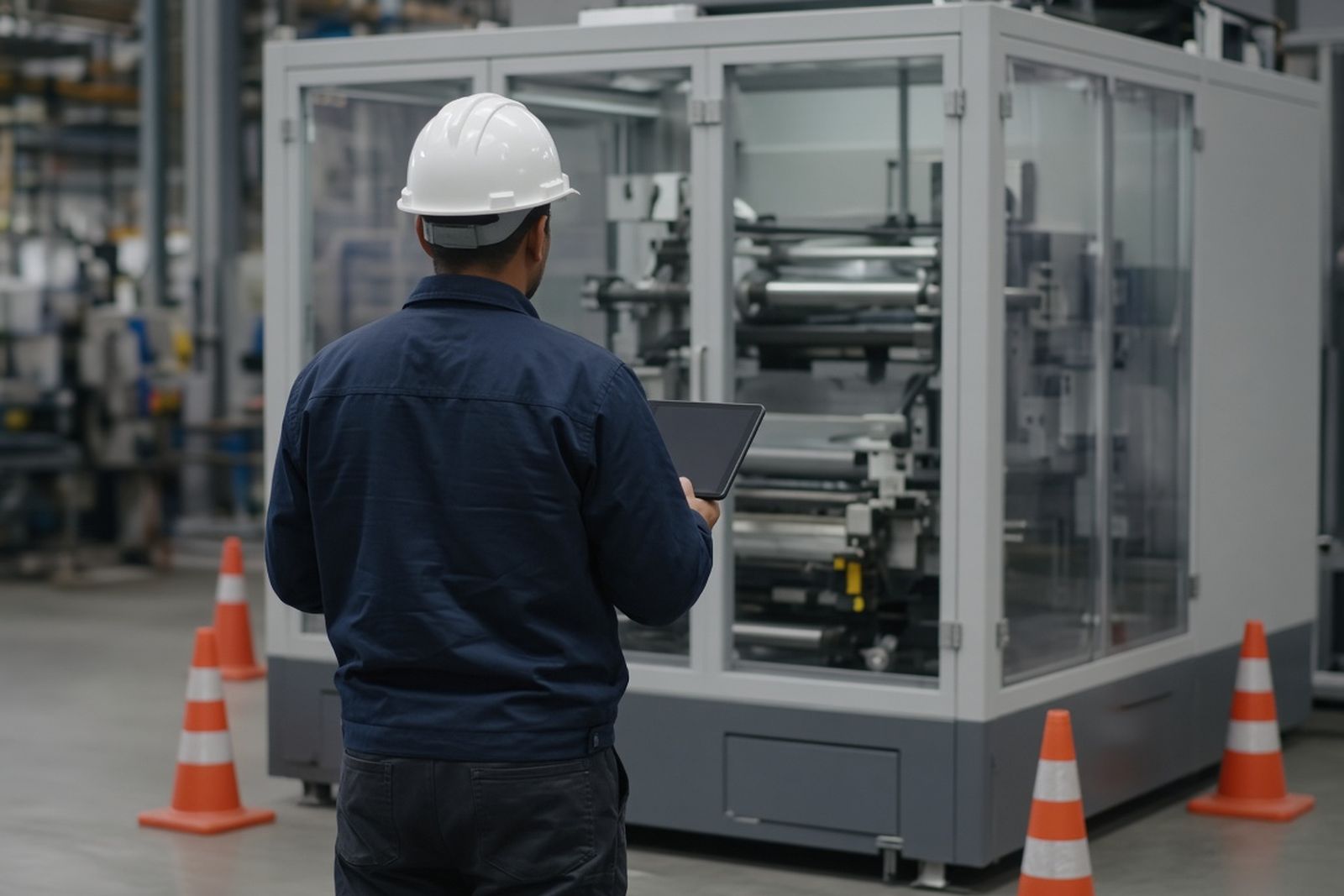
Most biohazard cleanup prices are built around rooms: floors, walls and furniture. Your plant adds machines with guards, rollers, belts and hollow spaces where fluid can travel. It adds surfaces coated in oil, coolant or dust. Those coatings change how cleaning and disinfecting work.
A company walking your floor has to estimate more than the area it can see. How much of a machine will need to be opened? How long will lockout and checking take? Can soiled parts be cleaned, or must they be replaced? Often no one can fully answer those questions before the work starts.
That is why plant quotes often come with ranges, assumptions and triggers for a change order. If a company gives you one flat number and never asks about the equipment, it has either seen a very similar job before or it is guessing.
What published cost ranges can and cannot tell you
Published figures can give you a rough frame, as long as you keep in mind they are national averages across many kinds of work. Fixr reported in 2025 that hazmat cleanup projects cost a national average of about $4,000, with a typical range of $3,000 to $5,000 and extremes of $1,500 to $25,000.
Labor rates rise with the level of hazard. The same Fixr guide noted that Biosafety Level 3 cleanup labor is priced at roughly $50 to $150 per hour, versus $25 to $50 per hour for Level 1 work. A plant accident scene with a lot of blood and complex equipment tends to sit toward the harder end of that range.
Use these figures to check whether a quote is in a sensible range. Do not use them to predict yours. One spill limited to a conveyor may look nothing like an event across several machines in a food plant, or a death in a confined space.
Eight things about your site that drive labor
Every plant scene is different. But the same handful of things tends to move the number the most. Ask each company which of these apply to your accident and how it priced them.
The more of them apply, the more it matters that the company walks the scene in person before you agree to a work plan.
- Taking equipment apart, such as guards, belts, rollers and housings that hide blood.
- Working out lockout and tagout with your maintenance team before and during the job.
- Mixed messes, such as blood with hydraulic fluid, coolant or process chemicals.
- Absorbent materials that must be thrown out, such as wooden pallets, cardboard, insulation or product.
- Work up high on mezzanines, catwalks or racking.
- Confined spaces, pits or tanks that need permits and added safety steps.
- Food-contact or drug-making surfaces that need certain products and rinsing.
- Overnight or weekend work to meet a restart deadline.
Lockout, getting into equipment, and the clock
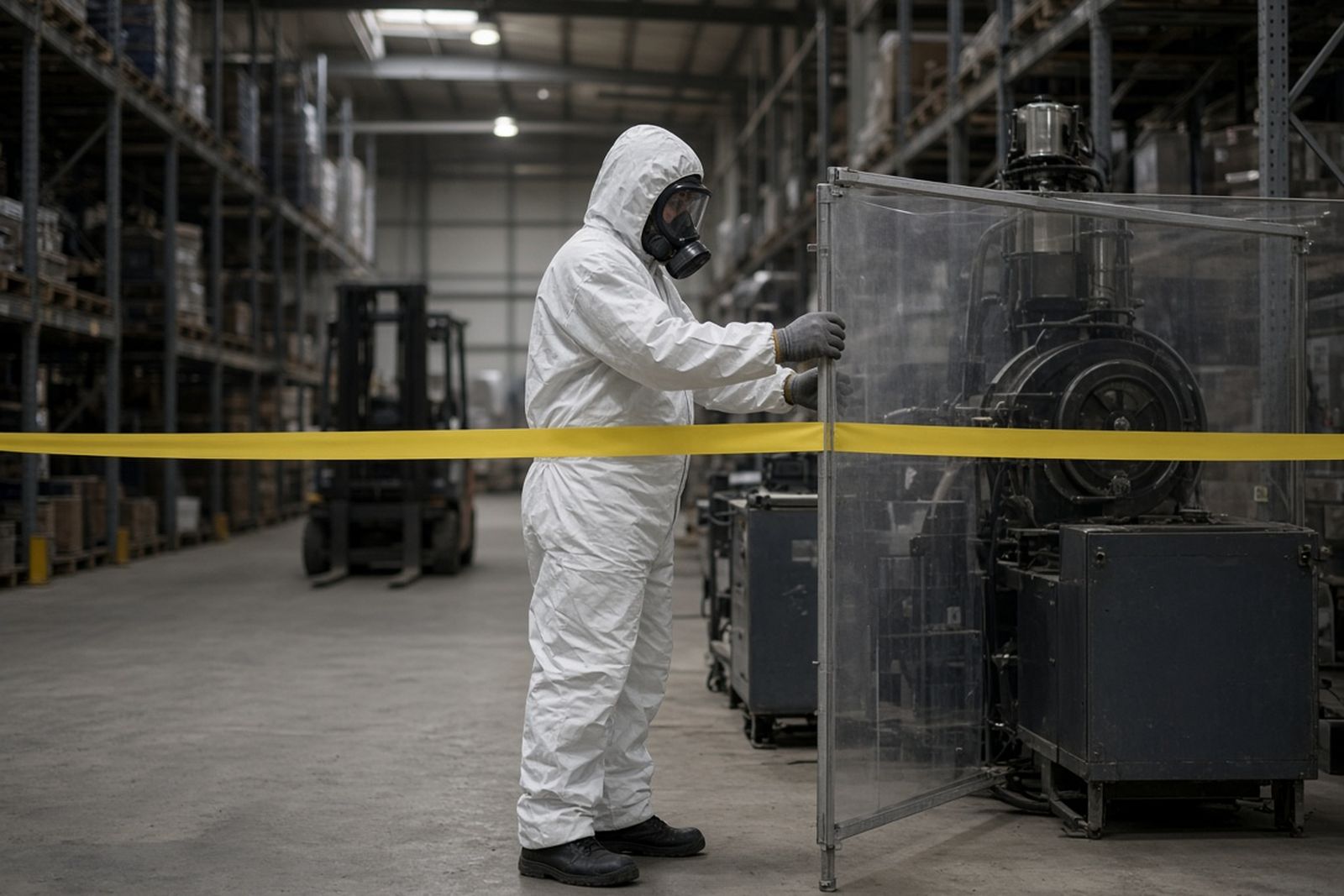
A cleanup crew should never work on a machine that could move, cycle or release stored energy. So before cleaning begins, the power sources must be cut off and checked. Your maintenance team does this, or the crew does it under your steps.
Lining up lockout takes time. The crew may have to wait while your team cuts off several power sources, removes guards and confirms zero energy. The equipment may be complex. Or the maker's service technician may need to be there. Then that wait can become a large part of your bill.
Talk this through ahead of time. Agree on who puts on locks, who removes guards, who checks and who signs off when the crew is done. Clear roles prevent both delays and dangerous guesses.
Why do chemicals and oils make the cleanup harder?
Blood and body fluids act differently when they mix with plant fluids. Oil and coolant can spread the mess over a larger area and carry it into drains. They can form films that ordinary cleaning will not lift. Some disinfectants work less well on oily surfaces. So the crew may need to degrease first and then disinfect.
The products must also be safe together. The company needs to know which process chemicals are present. Otherwise it could pick a cleaning or disinfecting product that reacts with them. Share the safety data sheets for anything in the area.
Mixed waste can also change disposal. Material that carries both germ and chemical hazards may need different handling than either one alone. Ask your environmental team how that waste must be handled before the crew starts filling containers.
Should downtime be part of how you judge the cost?
The company's invoice is only one part of what an accident costs your operation. Every hour a line, a work cell or a dock door stays closed has its own price in missed orders, overtime and rescheduling. That pressure is real. It often shapes how you and other managers look at cleanup quotes.
It is fair to ask a company how fast it can get a crew to you and whether it can work overnight or in shifts. Ask how it will order the work so the least critical areas wait. Some companies can hand a critical machine back to you first, with records, and finish the floors and outer areas afterward. That may be worth a higher rate.
What you should not do is let downtime pressure cut short the steps that make the area safe. Do not skip taking equipment apart. Do not cut the time the disinfectant must stay wet. Do not reopen before the crew signs off. Any of these can lead to a second shutdown if blood is found later, or to a coworker being exposed.
When you show the cost to your leaders, show both numbers. Give the cleanup invoice and the estimated downtime with and without overnight work. That comparison usually makes the right choice clearer than either number alone.
Example: a warehouse quote that changes mid-job
This example is for illustration and does not describe a real job. At a distribution center, a worker is badly hurt when a pallet jack pins them against a conveyor. After the scene is released, the operations manager calls a cleanup company. The first walk-through shows blood on the conveyor frame, the floor and several pallets of boxed product.
The company's first work plan covers cleaning and disinfecting the outside of the conveyor and the floor. It also covers bagging the affected pallets for disposal. Then maintenance locks out the conveyor and takes off a side guard. The crew finds fluid inside the frame and on a drive belt.
The crew stops and takes photos of what it found. The company sends a written change order. It describes working with maintenance to replace the belt and cleaning the inside of the frame. The operations manager approves it before work goes on. The final invoice matches the revised plan, and the photo log explains each addition.
The lesson is not that quotes always go up. It is that the hidden areas in your equipment are where surprises live. So the change process should be written down.
What an itemized work plan looks like
A good work plan splits the job into pieces you can understand and question. That makes it easier to compare companies and explain the cost to your leaders. It also makes it easier to share the plan with your insurer or company safety team.
Look for the affected areas and equipment and how much will be taken apart. Look for the level of protective gear. Look for the cleaning and disinfecting products, with their registration numbers and how long each must stay wet. The plan should also list materials to be thrown out, how waste is packed and disposed of, who handles lockout, the work schedule and what triggers a change order.
Ask what the final report will look like too. You will want photos, a list of removed materials and disposal records. You will also want a sign-off that says which equipment was cleaned and handed back to your control.
If two companies' totals are far apart, lay their plans side by side. Look for the lines that show up in one but not the other. Taking equipment apart, disposal and overnight labor are the usual causes. Once you can see those gaps, you can ask each company to price the same work and compare fairly.
How can you keep cost under control without cutting corners?
Speed helps. Blood and fluids that dry into equipment and absorbent materials take longer to remove, and more items end up thrown out. Once investigators release the scene, move quickly to bring in a qualified company.
Getting ready also helps. Have maintenance ready for lockout and the safety data sheets on hand. Clear a path for the crew to bring equipment in and waste out. All of that cuts idle time. Name one person on your team as the company's contact.
Last, do not give in to the pressure to have your employees do the cleanup to save money. There is the exposure risk and the strain on coworkers. On top of that, it can raise questions about training and protective gear that cost far more than the company's invoice. A professional work plan and report protect your people and your records at the same time.