Free industrial accident cleanup tool
Industrial Accident Cleanup First 24 Hours Planner
Tell the planner a few facts about the situation and get an ordered list of who to call, what not to touch, and what to photograph.
The first day after a serious injury or death on the floor is a string of choices. They come faster than most managers can think them through. Medical response comes first. But almost right away, someone has to decide several things. Is the area on hold? Who reports to OSHA, and when? Does the affected shift keep working nearby? What do you tell coworkers who saw it happen? Did anyone touch something they should not have? This planner takes a few facts about your situation. Have investigators released the scene? Are workers still in the area? Is there an odor or a chemical involved? Are sharp objects or broken tools on the floor? It then gives you an action list, in order, built for those facts.
The list covers who to call and in what order. It covers what to leave alone and what to photograph from where. It is careful on purpose. When an investigator might still need the scene, it tells you to hold instead of clean. It does not replace your written emergency plan or your company incident procedure. It cannot know your state's reporting rules, which vary and should be checked with the agency. Use it as a checklist next to your own procedure. Save the result, so the next shift's supervisor gets the same plan instead of a spoken handoff. If your facility has an assigned incident commander, give them the saved list and let them adjust who does what.
How to use it
- 1Answer each question honestly, including whether the scene has been released and who is still in the area.
- 2Read the action list from the top, and give each item to a named person.
- 3Follow the photo guidance to take pictures from the edge of the area before anything is moved.
- 4Copy or print the list. Note the time each item was done, and add it to the incident file.
Prefer to ask a person?
Your request is sent to the follow-up inbox. A coordinator can reply by email. Not for emergencies; call 911 first if anyone is in danger.
Plan the first 24 hours
Industrial Accident Cleanup: first 24 hours planner
Answer a few questions and the planner orders the next steps. It does not dispatch help and cannot replace emergency services.
Your ordered plan (6 steps)
- 1
Keep people and pets out of the affected area
Close the door and keep the area sealed until a qualified provider assesses it.
- 2
Photograph from the doorway before anything moves
Take wide shots first, then closer shots of stains, damage and belongings. Do not step into the area to do it. These photos support insurance and estate records.
- 3
Report the loss to your insurer and get a claim number
Ask the adjuster whether they need to inspect before materials are removed, and whether they have a list of approved remediation providers. Coverage depends on the policy and the cause of loss.
- 4
Call a qualified remediation provider for an assessment
Describe what happened, the rooms involved, and any odor, fluids or sharps. Ask which OSHA standards apply to industrial accident cleanup and for proof of training and insurance before work starts.
- 5
Start a written log
Record who you spoke to, when, and what they said. Keep receipts for lodging, boarding, locks and any emergency purchases.
- 6
Look after the people involved
If a death or violent event is involved, victim assistance programs, hospice bereavement teams and the 988 Suicide & Crisis Lifeline can help. You do not need to manage this alone.
A worked example
Here is a made-up example. At a construction site, a worker has fallen from a scaffold and died. Blood is on a concrete slab and on some guardrails and tools below. The site superintendent is on the phone with emergency services and the general contractor's safety director at the same time. He opens the planner. He notes that the scene has not been released and that other trades are still working on nearby floors. He notes that no chemicals or odor are involved. He notes that tools, and possibly sharp debris, are in the area, and that the site is not a rental property. The planner gives him a list. It starts with confirming that emergency responders are done. Next, he should block off an area larger than what he can see. Then he should report to OSHA within the time limit in 29 CFR 1904.39. He should also check with the agency and local police whether the scene is on hold. The list tells him to keep every trade away from that level and the level below. He should take photos from outside the barrier in one steady sweep and collect the names of witnesses. He should not move tools, harnesses, or guardrails. Choosing a contractor comes further down, and only after release. He assigns each item and logs when each one is done.

Facts worth knowing
The CDC says washing hands with soap cuts the number of people who get sick with diarrhea by 23% to 40%.
Why it matters: Wash your hands with soap after any cleanup or contact with a contaminated area.
OSHA cited its Lockout/Tagout rule, which covers shutting off machine power before service, 2,443 times in fiscal 2024, fifth among its most-cited rules.
Why it matters: Review your lockout steps and training before work restarts after an accident, because inspectors often look at this rule.
Private employers in the US reported 2.6 million nonfatal work injuries and illnesses in 2023, or 2.4 cases for every 100 full-time workers.
Why it matters: You can compare your own site's recordable rate with this figure to see whether your safety program may need attention.
First 24 Hours Planner questions for industrial accident cleanup
Why does the planner ask whether the scene has been released?
Release status changes almost everything. OSHA, police, a medical examiner, or your own investigator may still need the area. If so, cleaning must wait, and the list focuses on keeping the scene as it is. If every hold has been lifted, the list shifts to sealing off the area, bringing in a contractor, and planning the restart. Getting this answer wrong is the most common way managers create problems for themselves.
What should I photograph, and what should I avoid?
Photograph the edges of the area, where equipment sits, guards, signs, lighting, and the general condition of the space. Take the photos from the same spots outside the barrier each time. Avoid close-ups of injuries or body fluids beyond what you need to show how far things spread. Keep the images in a folder with limited access. The goal is to record conditions, not to create graphic images that could get passed around.
Does the planner tell me how to report to OSHA?
It reminds you that deaths and certain severe injuries have short reporting deadlines under 29 CFR 1904.39. It points you to the agency's current ways to report. It does not file anything for you. It also does not cover differences in state-run programs, which you should check directly. Write down the time, how you reported, and the name of the person you reported to.
How do I handle employees who want to help clean up?
Thank them and steer them elsewhere. Cleaning without training exposes them to germs carried in blood. It also disturbs the scene and can make the investigation harder. The planner includes a step for briefing the shift. It covers what happened in general terms, which areas are off limits, and where to find support. Only staff named in your exposure control plan should go near soiled material, and only after release.
Should I involve the family or the union in the first day?
Company procedure and your lawyer should guide those conversations. The planner marks them as items to assign to someone. It does not tell you what to say. Timely, honest communication with the family, and with union representatives where they exist, tends to reduce conflict later. Name a single contact person, so the family does not get mixed messages from several managers.
Can I print the planner as a quick reference for supervisors?
Yes. Many facilities print a blank version of the planner's steps. They keep it in the emergency response binder or at supervisor stations, so the steps are familiar before anyone needs them. Add your own contact names and phone numbers. After an accident, run the planner with the real facts. Keep that result in the incident file along with the printed sheet supervisors used.
What if several steps in the plan are happening at the same time?
That is normal in the first hours. The planner lists steps in order of importance. But different people can work on them at the same time. Give each step an owner. For example, one person secures the area while another makes the calls. Use the planner as a tracker. Mark who is handling each item and when it is done, so nothing falls through the cracks.
Related community polls
Vote to see how other people answered. You can change your answer at any time.
After a serious injury on the floor, what was your hardest early decision?
How did your facility handle cleanup after a serious blood incident?
Other industrial accident cleanup tools
Cost Range Estimator
Set the affected area, surface types, severity and extras to see a rough cost range and what pushes it up or down.
OpenCompany Vetting Checklist
Fifteen questions to ask any cleanup company, a score that shows how ready you are to hire, and a list of what is still unanswered.
OpenInsurance Claim Organizer
A guided checklist from finding the policy to tracking the insurer’s decision, with a printable summary of where the claim stands.
OpenWaste & Disposal Classifier
Five questions about the material point to the likely waste category and which authority to confirm the rules with.
OpenDIY or Call a Pro? Risk Check
Eight yes-or-no questions that produce a risk level and explain when professional help is the safer choice.
OpenMore on industrial accident cleanup
Industrial Accident Cleanup services
See how workplace injury cleanup, chemical spill response, equipment cleaning, and confined space work are planned and ordered for plants and job sites.
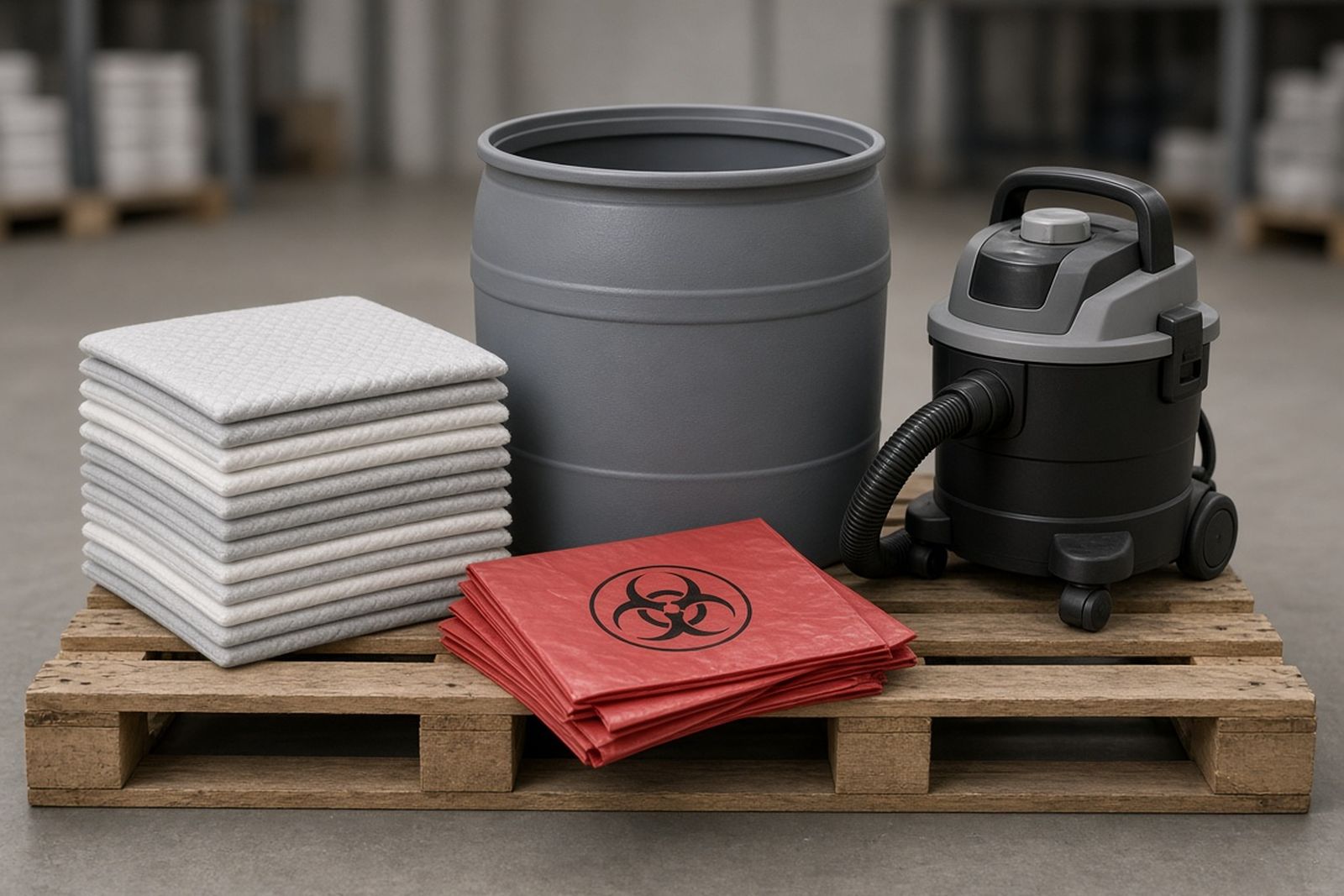
Costs explained
What drives the price, published cost ranges, and how to read a written quote line by line.

Insurance and payment
Which policies may respond, how to document a claim, and what to do if coverage is denied.
Community polls
Compare your instincts with other operations and safety leaders on scene holds, restart pressure, choosing a contractor, and supporting affected workers.
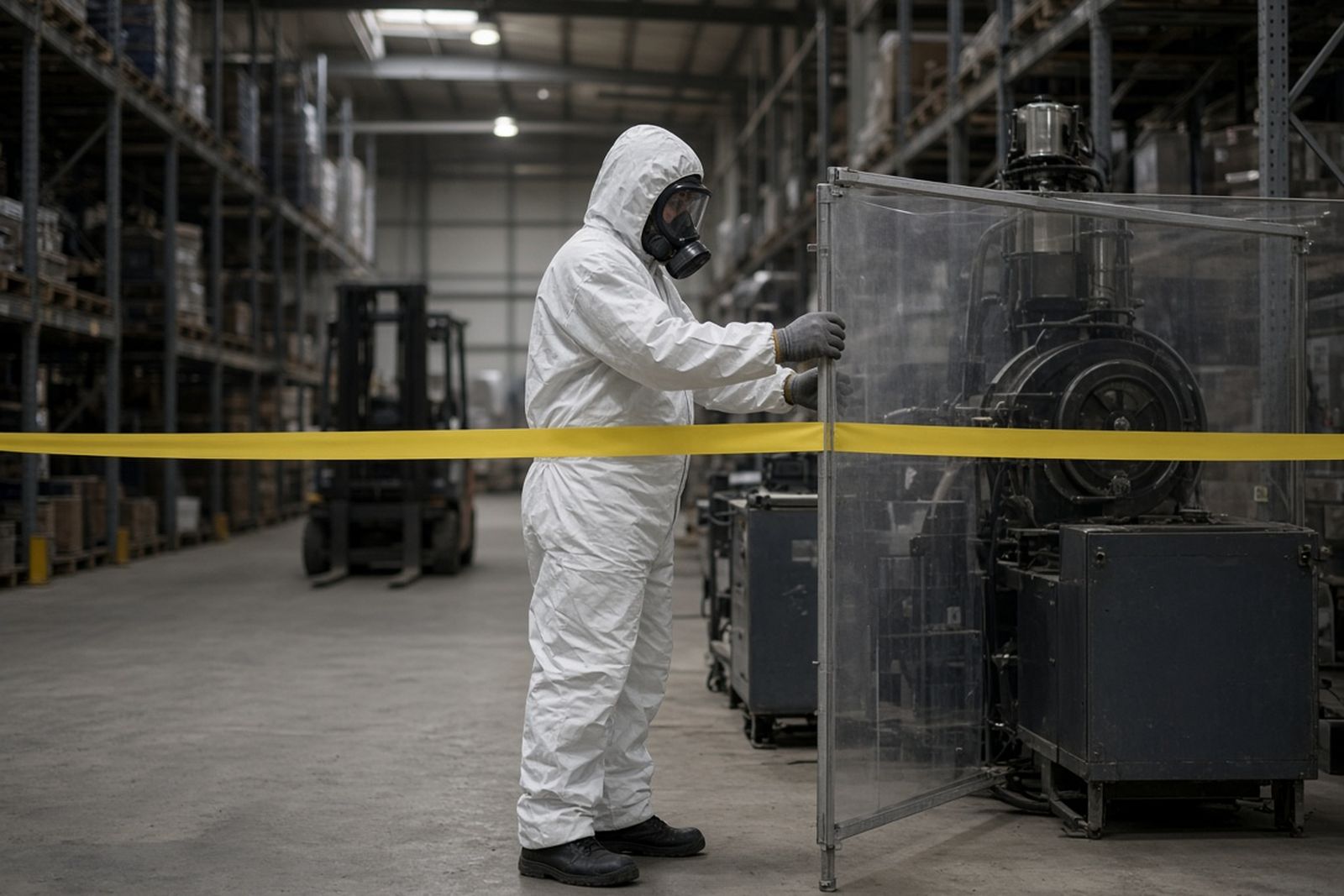
Knowledge quiz
Test what you know about spotting hazards, scene control, sealing off areas, disinfecting, waste paths, and records before an accident puts it to use.
Articles and resources
Practical articles on OSHA report deadlines and working with investigators. Others cover sites shared by several employers, planning the restart, and hard lessons other plants learned.