Arlington, VA

Infectious Disease Disinfection Planning in Arlington, VA

What to do, who to contact, and what to ask in Arlington.

Illness on your Arlington office floor or in your tower? See what to clean first, how to time the closure, and what to tell staff and tenants.

Get an email reply about infectious disease disinfection

Send a short message to the follow-up inbox. A coordinator can reply by email. This form does not send emergency help; call 911 first if anyone is in danger.

Tell us what you need help with. Share a short description; please leave out medical details, access codes, and other sensitive information.

A request does not confirm a booking. For immediate danger, contact local emergency services.

Or email info@facilitydisinfectionguide.com

The short answer for Arlington, VA

If people got sick on your Arlington office floor or in your tower, begin with what many hands share: badge readers, booking touchscreens, hot-desk kits and restrooms. Get those washed before any disinfectant goes on, and read the label to see that it fits the illness. Here is how to plan the work around hybrid schedules and what to tell staff and residents.

What to do, step by step

  1. 1

    Chart the path from badge to hot desk

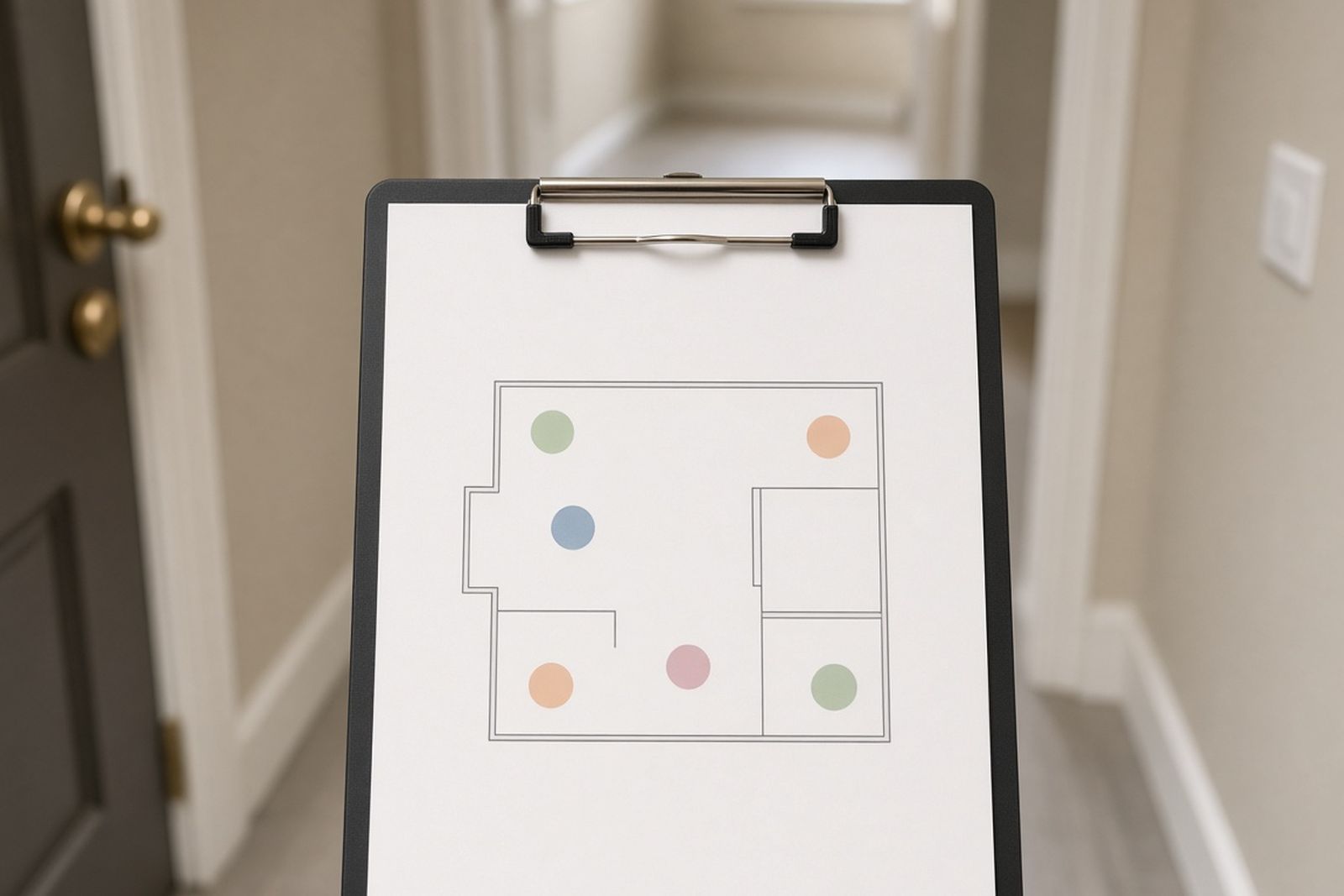
    Trace how people arrive: from the Metro or garage, through the badge lobby, past the booking panel and on to their desk area. Mark the badge readers, the mouse kits and any restroom where someone was sick as the places to be scrubbed first. Write down which floors are in the job, so untouched reception art is not taken as finished work. You can note the pattern of illness, such as several stomach cases in one week. Do not try to diagnose your coworkers.

  2. 2

    Check that the label matches the outbreak

    Ask the company which products it plans and read the labels yourself. List N is a COVID-19 reference only. It will not tell you which products are labeled for norovirus or for germs that form spores. If a doctor or nurse raises a spore concern, the product needs a spore claim printed on its label. A good company will show you that claim without being pushed. If it cannot, ask for a different product before any work is booked.

  3. 3

    Guard the wet time from the meeting calendar

    Block the treated area in the booking system for as long as the label and the safety data sheet require. In humid summer air, follow the sheet's fresh-air steps before people return. Staff with asthma or strong reactions to smells may need longer, and you can offer them another place to work. Sending people to a restroom on another floor only helps if that restroom was not used by anyone sick, or was treated too. Tell teams the reopening time once, in writing.

  4. 4

    Keep a facilities packet for later questions

    File the product names, the EPA numbers, the desk areas treated, the cleaning notes and the wet-time log with your tenant records. If a swab was taken from a restroom tap off the badge lobby, it checks for grime only. It does not name germs. When staff ask medical questions, send them to their own clinician, to Arlington County Public Health or to the Virginia Department of Health. Your packet answers a simpler question: what was cleaned, with what, and when.

What cleanup is like in Arlington

On contractor floors in Crystal City and Rosslyn, illness questions come down to a few shared things. Badge readers, touchscreen booking panels, hot-desk USB arms and shared mouse kits pass between hybrid workers all week. If you manage a floor, list those before you think about the sculpture nook in reception. That list is what you hand to a cleaning company. Arlington County Public Health can help you with facts for a tenant notice. It will not turn your office into a sterile clinic, and you should not expect a company to promise that.

Pentagon City homes that link to mall parking and Metro tunnels have package rooms and amenity keypads too. Overnight staff feel pressure to reopen them fast. Humid summers also change how quickly smells clear. If you sit on a board or manage a building, let the label set the reopening time. A standup meeting or a pile of parcels should not. Soft booth cushions and headset ear pads are a separate matter. They need washing, new covers or a few days out of use, because products for hard surfaces are not labeled for them.

Some mixed towers have a wellness clinic that shares elevators with the apartments and offices. Your office floor and your amenity room are still ordinary shared spaces, and CDC's advice for those is what applies to you. The clinic's rules are its own. One more thing can change the job. If blood is found on a Rosslyn office floor or in a Pentagon City amenity room, tell the company before the crew arrives. Its workers may then fall under OSHA's bloodborne pathogen rules and bring extra protection.

What to expect for your type of home

  • Contractor office floors: Badge readers, booking touchscreens, hot-desk USB arms and shared mouse kits go at the top of your list. Tell the company which desk areas were in use that week.
  • Offices with phone booths and headsets: Choose whether booth cushions and headset ear pads get new covers before any product goes on. Ask your supplier for spare covers, since fabric cannot simply be sprayed.
  • Hybrid workplaces: Conference rooms need to stay empty through the wet time, even when staff return in waves. Block them on the booking panel, so nobody walks in between meetings.
  • Office kitchenettes: Counters may need a rinse after disinfecting, which hot desks do not. Ask whether the company uses one product for desks and another for the kitchenette, and why.
  • Pentagon City residential towers: Night staff need one clock for the package room and the amenity keypads. Ask management to post it at the desk, so a late delivery does not reopen a wet room.
  • Towers with a wellness clinic: A notice for the contractor floors should say nothing about the clinic's own cleaning. Ask that it describe only your floors and when they reopen.

Papers and records to keep

  • A list of hand-contact spots in the badge lobby and the hot-desk areas
  • What the nightly janitors did, set apart from the special cleanup
  • EPA numbers, germ claims and wet times for products used on desks, lobbies and amenity rooms
  • A sign-off that mouse kits, booking panels and restrooms were washed before disinfecting
  • The hour each conference room was treated and the hour it reopened
  • The reopening time given to overnight staff for package rooms and amenities
  • Copies of the Crystal City tenant notices, with health facts taken out
  • Notes on headset pads and booth cushions that were left out or given new covers

Local offices and official help

Common questions in Arlington

We sprayed a Crystal City hot-desk area at lunch. Can it reopen between standups?

Only if the desks were washed before treatment and nobody sat there until the label's timing ran out. A spray between standups, while contractors keep using the same hot desk, does not meet that bar. Block the area on the booking panel for the afternoon. Save the product names and times with your lease records. When clients ask, say the floor was cleaned and disinfected. Do not say it was sterilized.
Several people had a stomach illness. What do we do with the shared mouse kits?

Collect the kits and wipe off visible grime. Then disinfect them with a product that is safe for electronics, and check that its label lists the germ involved. A product on List N is not shown to work on norovirus unless its own label says so. Soft ear pads and fabric booth cushions usually need washing or replacing. Put the kits back once they are dry, and reopen the whole area at one written time.

A contractor on our Rosslyn floor had COVID-19. Is a List N product the whole answer?

No, it is one part. List N tells you a product is on EPA's COVID-19 list. Check the EPA number. Then follow the wet time and surface directions for screens, laminate and badge readers. The floor still needs cleaning first and an empty period while the product works. And List N does not cover the stomach bugs that can move through a shared office later.

Our tower has a clinic. How do we keep its cleaning out of our office notice?

Write the notices separately. A wellness clinic in the tower cleans its rooms under its own rules. That has no bearing on the contractor floors or apartments that share the elevators. Your office notice should list only the badge lobby, conference rooms and kitchenettes that were cleaned, and when they reopen. Leave out any mention of clinical cleaning, and never call the building sterilized.

What proof is fair to expect after the badge lobby is disinfected?

A short file is fair. It should list the products and labels used on badge readers, turnstiles and lobby restrooms. Add the cleaning steps, the wet times and the hour the lobby reopened. A couple of photos help. Swab readings show film and nothing more. Refuse a certificate that promises the lobby is germ-free. Leave out the names of anyone who was sick, and keep the file where your facilities team can find it.

I work in Arlington. How do I clean a shared headset or hot-desk kit before I use it?

Wipe the headset band, microphone arm, keyboard and mouse with a disinfectant wipe your office provides. Keep each surface wet as long as the wipe's label says. If the ear pad covers are fabric, replace or remove them, since wipes do not work well on cloth. Let the kit dry before you use it, and wash your hands afterward. If you are not sure which wipes are safe for electronics, ask facilities which product they approve.

I live in Pentagon City. What should I expect when a building amenity closes for disinfection?

Expect a notice from building management. It should say which amenity is closed and when it reopens, and it may suggest other rooms you can use. Management should not say who was sick. The closure follows the product's wet time and return directions, so it may last longer than a quick wipe-down would. If you have allergies or breathing problems, you can ask for the product name and its safety data sheet.

Clipboard showing a room plan with color-coded dots marking high-touch surfaces
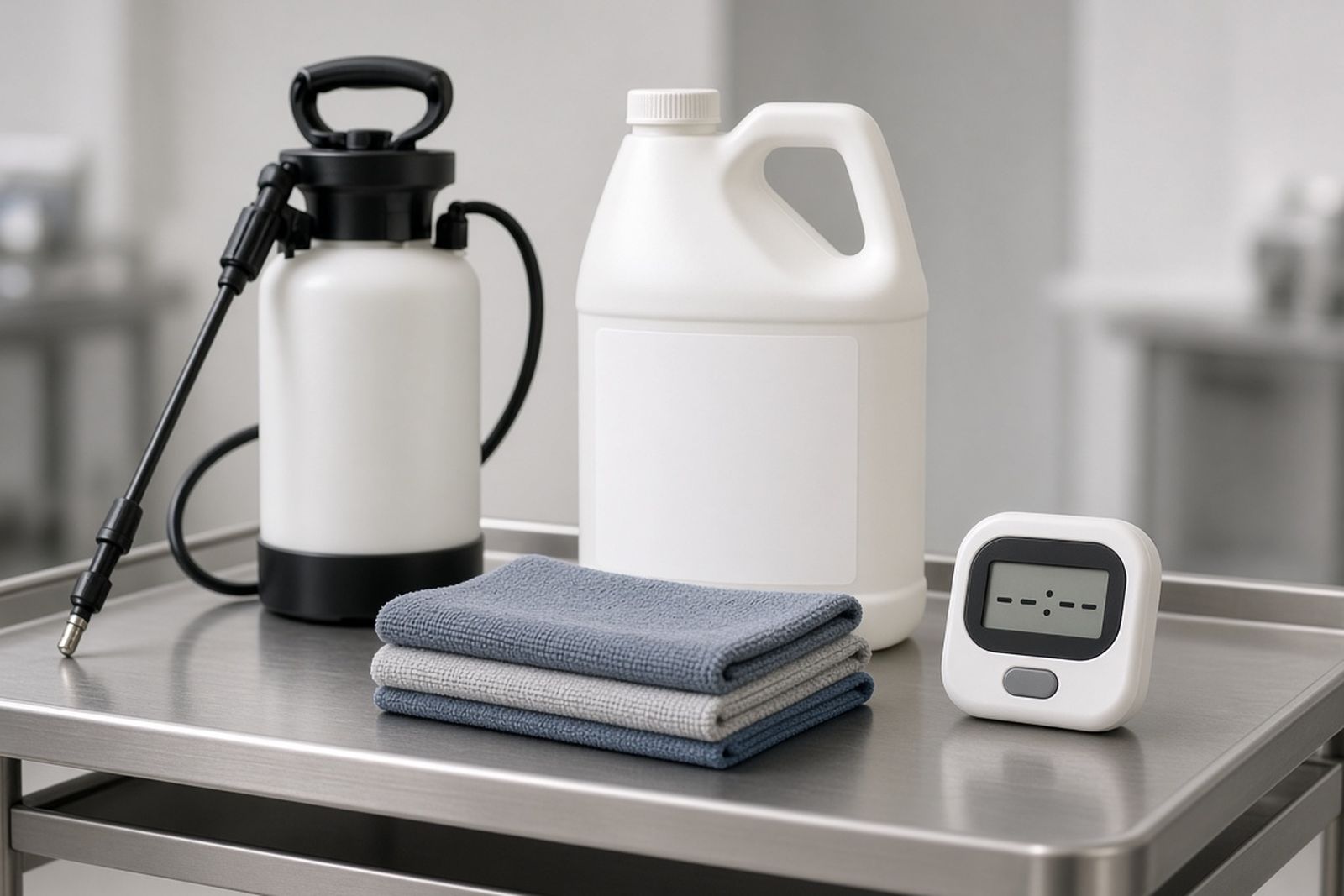
Pump sprayer, disinfectant jug, folded cloths and a contact-time timer on a steel cart

Facts worth knowing

  • A cleaning trade group's December 2025 price guide lists electrostatic disinfection at $0.10 to $0.30 per square foot for commercial buildings.

    Why it matters: Use this as a rough range to compare quotes; your price may differ by region, size and how often you need service.

    Source: ISSA, 2025

  • HomeAdvisor says disinfecting a home costs from $15 to $400 or more, depending on whether you do it yourself or hire a professional.

    Why it matters: The range is wide, so ask for a written quote, and expect specialized biohazard work to cost you more.

    Source: HomeAdvisor, 2026

  • In lab studies, MRSA lasted 7 days to 7 months on dry surfaces, C. difficile spores 5 months, norovirus up to 7 days, and flu 1 to 2 days.

    Why it matters: Waiting may not clear some germs, so you may need to disinfect surfaces a sick person touched.

    Source: BMC Infectious Diseases, 2006

Tools that help right now

What would you do?

Poll results

Vote to see how other people answered. You can change your answer at any time.

Your experience

When your facility had an illness cluster, how did you handle cleaning?

Be the first to vote
Process

How did you decide whether to close all or part of the facility?

Be the first to vote

Need help in Arlington?

Send a short message about the property to the follow-up inbox. A coordinator can reply by email with next steps.

Your request is sent to the follow-up inbox. A coordinator can reply by email.

If anyone is hurt or in danger, call 911 first.