Great Falls, VA

Infectious Disease Disinfection Planning in Great Falls, VA

What to do, who to contact, and what to ask in Great Falls.

Illness in your Great Falls home? See what to clean first, how to manage deliveries and septic concerns, and what to ask a cleaning company.

Get an email reply about infectious disease disinfection

Send a short message to the follow-up inbox. A coordinator can reply by email. This form does not send emergency help; call 911 first if anyone is in danger.

Tell us what you need help with. Share a short description; please leave out medical details, access codes, and other sensitive information.

A request does not confirm a booking. For immediate danger, contact local emergency services.

Or email info@facilitydisinfectionguide.com

The short answer for Great Falls, VA

On a wooded Great Falls lot, illness usually travels through the garage boot room, the home-office keyboard and the bath, not the formal dining room. Start your list there. Those spots need soap first. After that, use a disinfectant and check that its label matches the illness. Here is how to plan around deliveries, a long driveway and a septic system.

What to do, step by step

  1. 1

    Trace the path from boot room to work desk

    Note the rooms and objects that were touched during the illness. Then describe the illness in general terms, such as a stomach bug or a cold or flu. You do not need to name coworkers or classmates. Ask the company for an EPA-registered product labeled for that kind of illness. List N speaks to COVID-19. A stomach bug moving through your household may need a product with a stomach-germ claim instead. If you need a letter for an insurer, make sure it does not call your lot sterile.

  2. 2

    Ask for detergent on grit and keyboard film first

    A boot room shows why CDC tells you to wash before you disinfect. Grit from the woods and the sticky film on a keyboard both shield germs from the product. A good crew will wash those away first, using something safe for your electronics on the desk. Only then does the disinfectant go on. Ask the crew to tell you how long each product needs to stay wet, and to note the times for the baths and the hard desk surfaces.

  3. 3

    Keep rooms empty even when deliveries arrive

    Treated rooms stay off limits to your family and to couriers until two things are done: the product's timer and the return notes on its safety data sheet. Set one clock for the household. That beats a rushed buffing so a courier can reach the porch. A guest bath is a fine stand-in for a few hours, but only if it was not used during the illness or was treated as part of the job. Tell regular drivers to leave packages at the garage.

  4. 4

    Keep a Fairfax file that includes waste notes

    Start a folder with your room list, each product's name and the wet times. If the company swabbed a faucet, the result only checks that grime went down. Add a note on how waste was packed when a heavy mess left your property. Give your vendors the hours the rooms are closed, and nothing more. If a landscaper asks how to fog their own truck, do not hand out recipes. The Fairfax County Health Department can answer general health questions.

What cleanup is like in Great Falls

Many wooded lots off Georgetown Pike hold a federal-contractor desk used for hybrid work and a generator room. Now and then an overlook guest visits and never sets foot in the formal dining room. The real hand path in your home often runs through the garage boot room, the home-office keyboard and the utility switches near the septic system. Think back over the days someone was sick and note which of those were touched. That short list is what a company should work from. Formal rooms nobody used can be left alone, which saves you money and chemical smell.

A long driveway brings its own pressure. Packages and landscapers show up while your surfaces are still wet. Shade and humidity slow the drying, so people get impatient and buff a tap dry early. That breaks the wet time on the label. Plan ahead by holding deliveries at the gate for a few hours. Studio throws, outdoor cushions stored indoors and desk-chair cushions are soft goods. They need washing or setting aside, since sprays for hard surfaces are not made for them. And a quick wipe of the boot room, while useful, does not sterilize anything.

If your home is on a septic system or a private well, you may wonder whether disinfecting changes anything there. It does not turn the job into wastewater work. Surfaces are still cleaned first and disinfected second, the way CDC describes for homes. What does change is how waste leaves your property. After a heavy mess, soiled towels and cleanup materials should be bagged and hauled away lawfully, not flushed. Ask the company how it will pack and remove that waste, and keep its answer with your records.

What to expect for your type of home

  • Wooded lots on septic: The garage boot room, the home-office keyboard and the septic-shed switches matter more than formal dining decor. Tell the company which of these were used while someone was ill.
  • Properties with a studio office or guest loft: Ask for separate lines for the main house, the studio office and any guest loft. That shows you which buildings were treated and which were left alone.
  • Homes with porch furniture stored for winter: Chair pads and porch cushions brought indoors should be washed before hard surfaces are treated. Ask the company to wait until your laundry is bagged and out.
  • Home offices: Kitchen counters may need a rinse after disinfecting. A desk and keyboard need a wipe that is safe for electronics instead. Ask which product is planned for your work equipment.
  • Gated driveways: The gate stays closed to deliveries that can wait until the wet time ends. Let regular couriers know where to leave packages, so nobody walks into a treated room.
  • Homes near septic fields: When heavy mess is removed, ask how the waste was packed and where it went. Keep that note, since bagged waste should leave the lot and not enter a drain.

Papers and records to keep

  • A list of touched spots in the boot room, the home office and the septic shed
  • A short account of what happened, with no coworker or family names
  • EPA numbers and the germ claims on the labels chosen for your home office and baths
  • Notes on the detergent steps used on gritty entries and desks
  • Wet-time records for the baths and the hard desk surfaces
  • The household reopening time, tied to deliveries or school runs
  • A note of what was washed, what was aired and what was stored away
  • How soiled waste was bagged and taken off the lot instead of going down a drain

Local offices and official help

Common questions in Great Falls

We wiped down the generator room. Does that take care of the office keyboard upstairs?

No. The work has to follow where hands went while someone was sick. Keyboards, boot-room levers and bath taps on that path need cleaning first. After that comes a product matched to the germ, kept wet for the full time. An office is not clean because a utility room smells like cleaner. Note which rooms were done and which were not. Keep in mind that List N covers one virus only.
Can a courier come up our long driveway while treated rooms are still wet?

Yes to the driveway, but not into rooms that are still drying. Ask regular couriers to leave packages at the garage or at a porch you did not treat. Hold the gate for anything that can wait. Treated rooms stay closed until the wet time and return period on the label have passed. If a surface is wiped dry early to let someone in, the work is lost. Note the times you really used.

We are on septic. What do we do with the waste after cleaning up vomit?

Treat it as ordinary waste that leaves in a bag. Soiled towels and cleanup materials go into sealed bags and out with the trash. They do not go down the toilet or a sink that drains to the septic tank. That keeps large amounts of mess and cleaning chemicals out of the system. Disinfecting surfaces does not change how your septic system works. Keep the product's safety sheet handy, and bring medical questions to a doctor.

What does List N cover after a COVID-19 exposure in my Fairfax home office?

For your home office, List N marks the products on EPA's COVID-19 list. They count only when used as the label says. Confirm the EPA number. Then follow the wet time and surface directions for the keyboard, desk and utility switches. The list does not extend to a stomach bug that might pass through your household later. Wipe the desk clean first, keep the office door shut while the product works, and air the house afterward.

If there was blood in the home office or garage, what changes?

The crew's safety rules change. OSHA's bloodborne pathogen rules apply when workers expect to handle blood or similar material, such as after an injury in the garage or generator room. Describe the mess when you call. If there is blood, the crew should bring protective gear and sealed waste bags and follow its written safety steps. With no blood, the job is scrub first and treat second. Keep hospital words out of any note for an employer.

Our Great Falls home is on a private well. Does that change how we clean?

Not for the surfaces. Disinfecting inside the house does not affect your well water. Just do not pour large amounts of disinfectant or soiled rinse water into drains that feed a septic system, since strong chemicals can upset it. Follow the disposal directions on the label. If the illness was a stomach bug and you wonder whether the well is involved, have the water tested by a certified lab. The county health department can guide you.

What should we do in Great Falls if a courier or landscaper shows up during the cleanup?

Put a sign at the front door asking for deliveries to be left outside. Send your regular landscapers and couriers a quick message that the house is closed for cleaning for a few hours. They do not need details. Keep the garage and side doors shut while products are wet. If someone must come in, show them which rooms to avoid. Once the label's return time has passed, collect your packages and wash your hands after opening them.

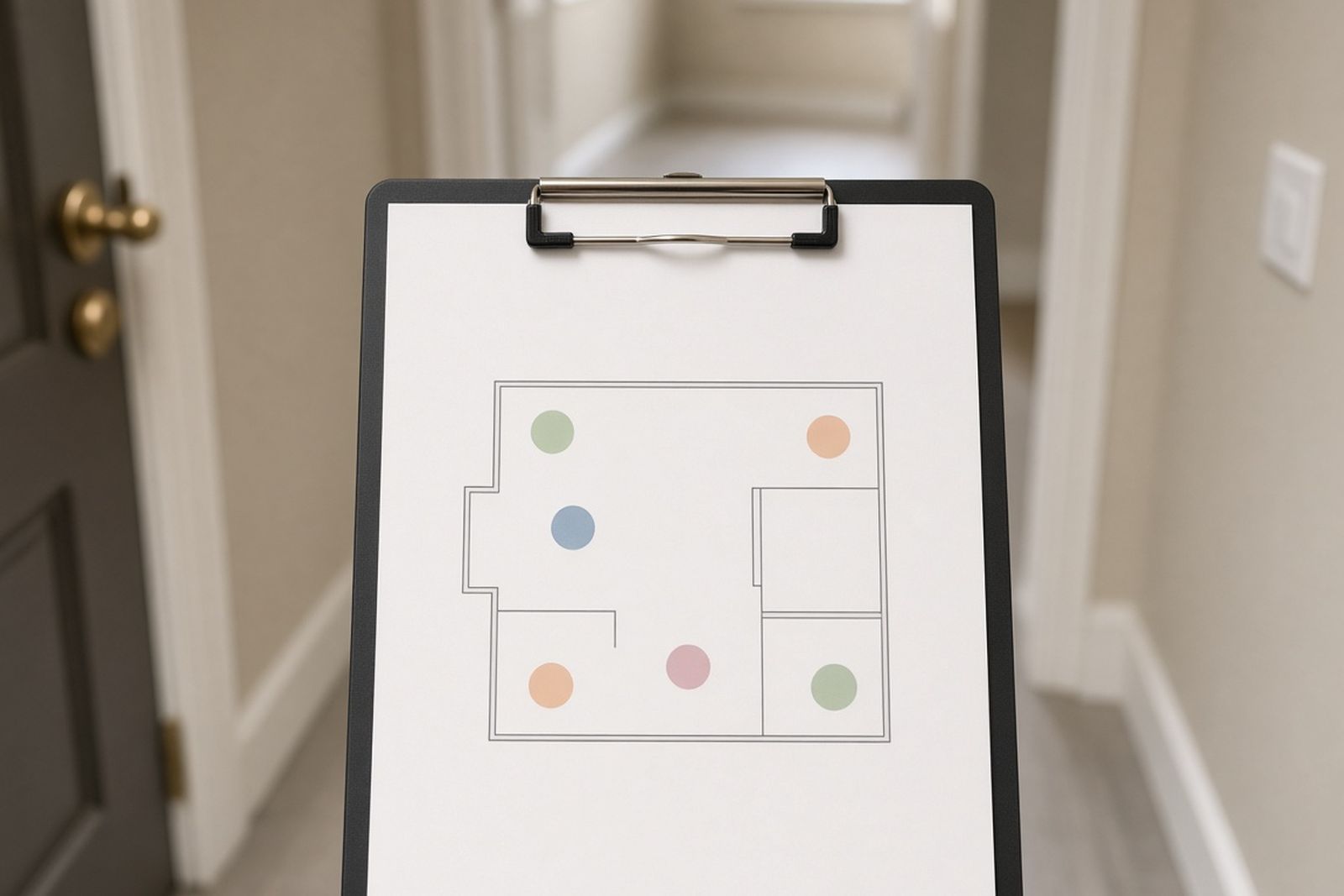
Clipboard showing a room plan with color-coded dots marking high-touch surfaces
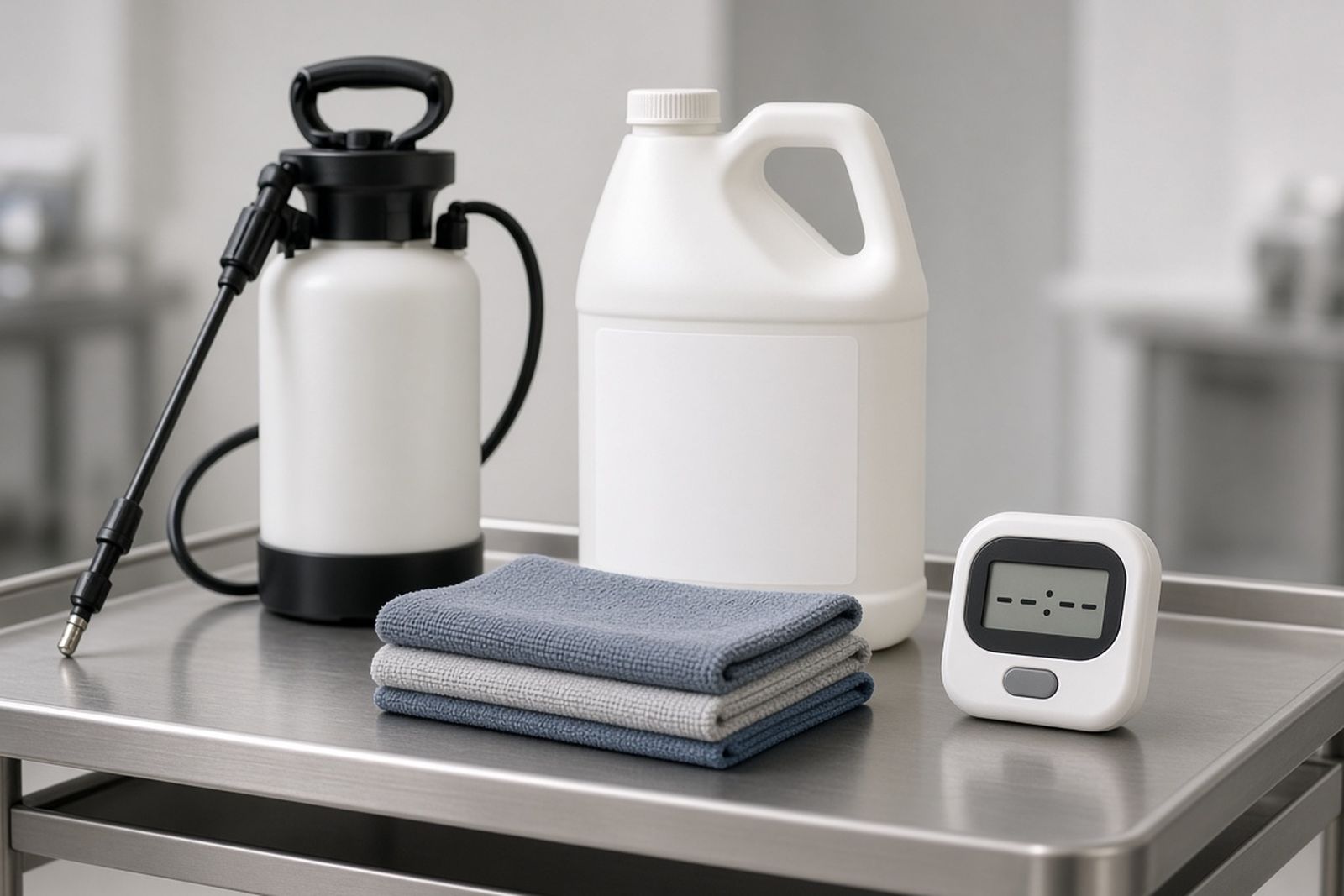
Pump sprayer, disinfectant jug, folded cloths and a contact-time timer on a steel cart

Facts worth knowing

  • In one field test published in 2023, wiping by hand passed the study's disinfection test on 98.1% of surfaces, compared with 75.5% for a UV-C light device.

    Why it matters: If a company offers you UV light treatment, ask whether surfaces are also cleaned and wiped by hand.

    Source: Knobling et al., 2023

  • In a lab test of eight disinfectant wipes on healthcare plastics, published in 2024, every wipe contained ingredients able to make stressed plastic crack.

    Why it matters: Before wipes are used on your plastic equipment, ask whether the equipment maker approves that product.

    Source: Jennings et al., 2024

  • In a 2019 survey of 47 US hospital cleaning departments, 81% said they used bleach on high-touch surfaces in contact-isolation rooms.

    Why it matters: Ask which disinfectant a company uses on handles, switches and other often-touched surfaces, and whether it suits your germ.

    Source: Han et al., 2021

Tools that help right now

What would you do?

Poll results

Vote to see how other people answered. You can change your answer at any time.

Your experience

When your facility had an illness cluster, how did you handle cleaning?

Be the first to vote
Process

How did you decide whether to close all or part of the facility?

Be the first to vote

Need help in Great Falls?

Send a short message about the property to the follow-up inbox. A coordinator can reply by email with next steps.

Your request is sent to the follow-up inbox. A coordinator can reply by email.

If anyone is hurt or in danger, call 911 first.