Greenwich, CT

Infectious Disease Disinfection Planning in Greenwich, CT

What to do, who to contact, and what to ask in Greenwich.

Illness at your Greenwich home? Find out which buildings and rooms to treat, what to ask a disinfection company, and when your family can return.

Get an email reply about infectious disease disinfection

Send a short message to the follow-up inbox. A coordinator can reply by email. This form does not send emergency help; call 911 first if anyone is in danger.

Tell us what you need help with. Share a short description; please leave out medical details, access codes, and other sensitive information.

A request does not confirm a booking. For immediate danger, contact local emergency services.

Or email info@facilitydisinfectionguide.com

The short answer for Greenwich, CT

When illness reaches your Greenwich home, guest cottage or staff quarters, think about every building people moved through, not one sickroom. Have surfaces washed, then disinfected with a product whose label lists your germ. Here is what to ask a company, how to time the work, and which records your household should keep.

What to do, step by step

  1. 1

    List the buildings and rooms you want treated

    Write down each building and room that belongs in the job, then walk it with the company. Bathrooms, kitchens, remotes and handrails come first. Be clear about what is left out, such as a pool house nobody entered. A cottage that was never treated should not be described as done just because it sits beside one that was. If the paperwork you get says the whole estate was handled, check it against your own list.

  2. 2

    Check the label against your germ

    Ask the company which EPA-registered product it plans to use and why. List N is the right reference when the virus that causes COVID-19 is your worry and the directions are followed. For any other germ, read that label's own claim and make sure your illness is on it. If the label does not list it, ask for a different product. A guarantee of a sterile home is a reason to keep looking for another company.

  3. 3

    Set a schedule for empty rooms and fresh air

    Ask for a room-by-room schedule showing when each space must stay empty. Every cottage and wing on your property needs airing out after treatment, following the label and the safety data sheet. Match commuter returns and guest arrivals to the written reopening time. Pets and family members who are sensitive to smells may need longer, so say so early. In winter, agree on how doors will be opened without freezing the house.

  4. 4

    Keep records your insurer can use

    For your own files, hold on to product names and numbers, wet-time logs, a map of the areas treated and copies of any notices. A swab test on a few fixtures can back up that grime was cleaned away. It does not find germs or prove they are gone. If neighbors or staff have health questions, point them to the Greenwich Health Department or CT DPH. The cleaning company should not be handing out medical advice.

What cleanup is like in Greenwich

Many Greenwich properties have a main house, guest cottages, a pool house and staff quarters, each on its own HVAC zone. Illness in one of your buildings can still travel through the shared laundry, the cars and the kitchen service path. So when you talk with a company, describe how your family and staff move between outbuildings. The bedroom where the sick person slept is only the start. For public health questions, your local office is the Town of Greenwich Health Department. The Connecticut Department of Public Health covers the state.

Plenty of Greenwich households commute into New York City and have visitors most weeks. After an exposure, you will need to plan around family coming home at different hours, vendor visits and school schedules. If you do not, freshly treated rooms get dirty again the same day. A house sealed for winter holds chemical smells longer, and so does one closed up for air conditioning in summer. Ask for fresh-air steps and a return time in writing. Dry to the touch does not mean it is time to go back in.

Some Greenwich families have a private nurse or an in-home caregiver. That does not turn your house into a licensed health care facility. It does call for more care. Products should be chosen with the patient in mind, and nobody should fog a room with a person in it. Talk with the clinician about where cleaning ends and medical care begins. A nurse's supplies or an injury can leave blood or other body fluids behind. Workers who might touch that are covered by OSHA's bloodborne pathogen rules, so tell the company ahead of time.

What to expect for your type of home

  • Estates with outbuildings: Germs can ride along the paths between the main house, guest house and staff kitchen. Describe those routes to the company so the walkways' door handles and shared rooms are not missed.
  • Homes with older family members: Stair-lift chairs, stair rails and bathroom grab bars are gripped hard and often. Ask that they sit near the top of the list of surfaces to treat.
  • Sickroom bedding: Settle how sheets, blankets and towels from the sickroom get washed before anyone talks about disinfectant brands. Laundry carries more than most people expect.
  • Commuter households: Line up vendors and train-riding family members so nobody walks into a room during its wet time. A text with the reopening hour can save the whole job.
  • Homes with a nurse or caregiver: The caregiver's medical tasks are one thing and surface cleaning is another. Ask that the paperwork describe only the cleaning, in plain words.
  • Rooms full of soft furnishings: Hard-surface disinfectant labels leave out sofas, rugs and drapes. Have the company write down which soft pieces were not covered and what you should do with them.

Papers and records to keep

  • A building-by-building list covering the main house and each outbuilding
  • The list of high-touch surfaces, including the routes your staff use
  • EPA registration numbers, the germs each label lists and the contact times
  • Cleaning notes, plus which soft items were washed or thrown out
  • A record of how long surfaces stayed wet in each room
  • The fresh-air and return instructions your household was given
  • Caregiver notes that keep medical care apart from the surface cleaning
  • The wording of any notice given to guests or vendors

Local offices and official help

Common questions in Greenwich

Only a visitor in our guest cottage was sick. Does the main house need treating too?

Not automatically. It depends on where the visitor spent time and which services both buildings share, such as laundry, kitchen or cars. High-touch surfaces along those paths need washing and a labeled disinfectant kept wet for the full contact time. Skipping the shared laundry because the bedroom was fogged leaves a likely source behind. Ask whether the machines were wiped after the visitor's bedding was washed. Each building should be aired and reopened on its own written schedule.
We have an in-home caregiver. How do we keep cleaning and medical care straight?

Treat them as two separate jobs. Surface disinfection lowers germs on treated surfaces when products are used as labeled. It is not treatment, testing or a vaccine. Your caregiver and doctors still make the medical calls. Share the reopening time and the product safety sheets with everyone staying on the property. Do not ask cleaning workers for a diagnosis. Move bathing and meal help out of any room that is still in its wet time, and never let a fragile person be fogged around.

What paperwork should I keep after a disinfection job on our property?

Keep EPA registration numbers, product names, the rooms treated and the cleaning notes. Add timed wet-period records, what was done with fabrics, the fresh-air steps and the reopening times. Photos of the prep work show that grime came off before any product went on. A swab test, if used, is a grime check only. List the carriage house and pool house if they were left out. Then your insurer will not assume one building's invoice covered the whole estate.

Does a closed-up winter house change how the work is done?

Yes, mostly in timing. Cold, sealed houses dry slowly and trap smells. That can tempt staff to wipe surfaces dry early so the house feels ready, which undoes the disinfecting. The label's wet time still has to be met, even if rooms stay empty longer. Radiator heat and closed storm windows hold odors in, so ask which doors or fans will be used afterward. Soft items may need extra drying time. Have the real times written down.

What should we tell household staff and vendors while rooms are closed?

Tell them which buildings or rooms are closed, when the return period ends and which entrance to use. Say which gates and kitchens stay shut and when deliveries can start again. Leave out the diagnosis and the name of whoever is sick. You can add that surface work lowers risk but cannot promise nobody gets ill. Offer the product safety sheets to any vendor coming in soon after. Keep a copy of the notice with your disinfection records.

Should we clean the cars used to drive a sick relative to appointments?

Yes, if the sick person rode in them. Door handles, seat-belt buckles, window switches and the center console are hard surfaces people touch without thinking. Clean them with a product labeled for car interiors, follow its contact time and leave the doors open for fresh air. Leather and fabric seats may need a cleaner made for those materials instead of a disinfectant. Put the estate cars in your written plan so drivers know which ones are finished.

How do we keep our school-age children safe while the house is being treated?

Plan the work during school hours or an afternoon when the children can be at a relative's house. Keep them out of treated rooms until the label's return time has passed. Store bottles, wipes and sprayers in a locked closet, not on a kitchen counter or mudroom bench. Toys that go in a child's mouth need a product labeled for that use, or simply a hot-water wash. Tell the children plainly which rooms are closed and why.

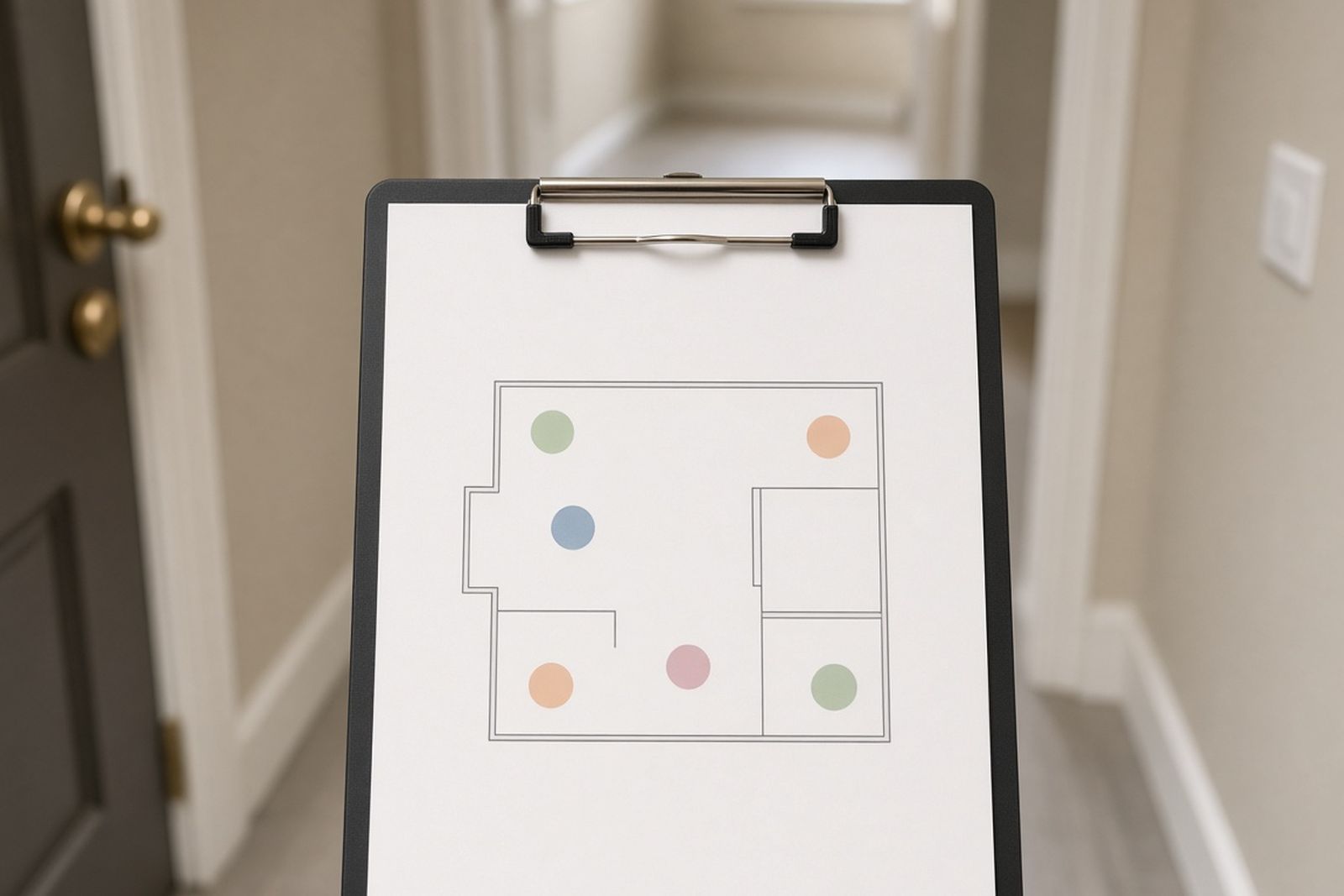
Clipboard showing a room plan with color-coded dots marking high-touch surfaces
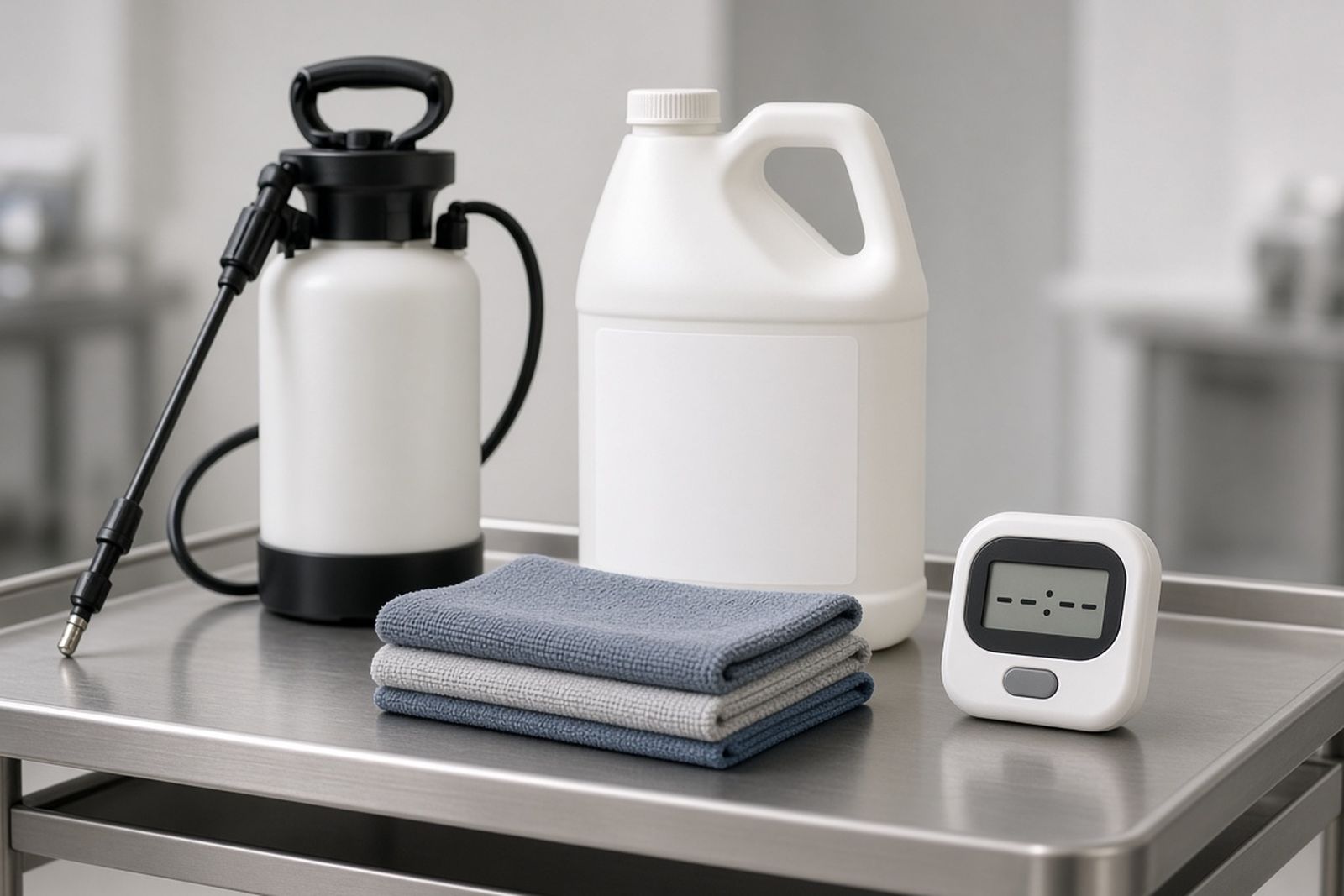
Pump sprayer, disinfectant jug, folded cloths and a contact-time timer on a steel cart

Facts worth knowing

  • In a 2019 survey of 47 US hospital cleaning departments, floors were disinfected less consistently than high-touch surfaces.

    Why it matters: If body fluids reached your floor, ask the company to confirm the floor will be disinfected, not just mopped.

    Source: Han et al., 2021

  • In a small Arizona survey of cleaning staff published in 2023, changing how disinfectant was applied, such as fogging or spraying, was linked with being woken by coughing.

    Why it matters: If you or your staff fog or spray disinfectant, ask about breathing protection and airing out the room.

    Source: Wilson et al., 2023

  • In the same lab test of eight wipes, products with the same main disinfectant ingredient did not always treat plastics the same way.

    Why it matters: You may need to check each product by name against your equipment maker's list, not just its main ingredient.

    Source: Jennings et al., 2024

Tools that help right now

What would you do?

Poll results

Vote to see how other people answered. You can change your answer at any time.

Your experience

When your facility had an illness cluster, how did you handle cleaning?

Be the first to vote
Process

How did you decide whether to close all or part of the facility?

Be the first to vote

Need help in Greenwich?

Send a short message about the property to the follow-up inbox. A coordinator can reply by email with next steps.

Your request is sent to the follow-up inbox. A coordinator can reply by email.

If anyone is hurt or in danger, call 911 first.