Stamford, CT

Infectious Disease Disinfection Planning in Stamford, CT

What to do, who to contact, and what to ask in Stamford.

Illness on your Stamford office floor or in your condo building? See what should be cleaned first, how long rooms stay closed, and what to ask.

Get an email reply about infectious disease disinfection

Send a short message to the follow-up inbox. A coordinator can reply by email. This form does not send emergency help; call 911 first if anyone is in danger.

Tell us what you need help with. Share a short description; please leave out medical details, access codes, and other sensitive information.

A request does not confirm a booking. For immediate danger, contact local emergency services.

Or email info@facilitydisinfectionguide.com

The short answer for Stamford, CT

If illness is reported on your Stamford office floor or in your Harbor Point condo building, the fix is unglamorous. Rooms sit empty for the label's wet time, and kitchenette counters get handled apart from desks. Read on for what to ask facilities or your board, and how to tell real work from a scented fog.

What to do, step by step

  1. 1

    Start where office and amenity hands meet

    Trace your weekday path from the Transportation Center through the lobby, the conference floor and the amenity deck. Hands meet first at the door handles, elevator buttons and room booking screens along that route. Ask facilities or your board to list those before anything else. The restroom closest to where the illness was reported should be marked too. If you know where it started, say so, without naming the person.

  2. 2

    Ask about the label before the scent

    The product should be EPA-registered and labeled for the germ behind the report. A stomach bug on a conference floor calls for a different label claim than a cold. A pleasant scent tells you nothing about whether a product worked. Ask what the label's contact time is before anyone starts wiping. If facilities cannot tell you which germ claim was relied on, that is worth raising with the property manager.

  3. 3

    Protect the wet time from calendar pressure

    Treated conference rooms and amenity decks stay empty until the wet time and the label's return steps are met. In a sealed building, the safety data sheet's fresh-air guidance matters. Block the rooms on the shared calendar so a hybrid meeting does not land in one. A backup restroom only helps you if its fixtures were part of the job. Ask which one that is.

  4. 4

    Make sure a real record is filed

    Look for a facilities file with the product names and EPA numbers, which floors and amenity rooms were done, the cleaning notes, and when each wet period began and ended. A swab of a conference-floor restroom tap checks for grime. It does not prove germs are gone. As a tenant or owner, you can ask to see that file. A board or manager who kept one will not mind showing it.

What cleanup is like in Stamford

Stamford is Connecticut's largest city, and weekday illness questions here come from hybrid offices and waterfront condo amenity decks. Conference tables, shared mousepads, touchscreen room boards and gym consoles pass through many hands between Metro-North arrivals and late video calls. When your floor reports a stomach bug, those spots are washed with detergent first. A product matched to the germ follows. Both come before anyone sells a scented fog of the whole podium. The City of Stamford Health Department and Connecticut DPH can back a factual tenant notice. Neither office can declare a condo gym sterile.

Harbor-area amenity decks add poolside showers, bike rooms and package lockers, and overnight staff feel pressure to reopen them. In the office, the weak point is timing. On a hybrid floor, someone may spray at noon while your coworker keeps typing. That desk is dirty again within minutes. Sealed winter buildings and chilled summer air both trap smells when the fresh-air steps on the safety data sheet are skipped. Ask when the work will happen and how long your floor or deck will stay closed.

Near the downtown office towers, some wellness tenants share a lobby with apartments. Medical device cleaning language belongs to those clinic tenants. It is not a standard for clearing your home or an ordinary office, and it should not appear on your building's notices. If blood turns up in a harbor-side office restroom or an amenity locker room, workers may need an OSHA bloodborne pathogen plan. That is true even though no one would call the space a clinic. Report what you saw so the right crew is sent.

What to expect for your type of home

  • Corporate conference floors: Room boards, shared keyboards and booking screens are handled all day. Ask facilities to list them ahead of finishes that few people ever touch.
  • Condo amenity decks: Poolside showers and bike rooms should stay closed for the full labeled wet time, even on a busy hybrid return day. Look for a posted reopening hour.
  • Office kitchenettes: Counters that touch food need a rinse step that desks do not. Ask that the kitchenette be handled as a separate task from general desk wiping.
  • Towers with overnight staff: One reopening time for the podium crew keeps the gym deck from being released in the middle of its wet time. Ask your board to post it.
  • Amenity rooms with fabric seats: Seat covers can be changed or the seats removed for a while. Either way, it should be settled before any product goes on.
  • Mixed downtown blocks: Clinic device rules belong to the clinic. Ask that your condo's amenity notices leave them out and describe only the building's own cleaning.

Papers and records to keep

  • A list of conference rooms and amenity-deck spots people touched, and where the illness started
  • A written line between routine office janitor work and outbreak disinfection
  • EPA numbers, germ claims relied on and contact times for every product used
  • Sign-off that every office floor and amenity room was washed before disinfecting
  • Timed wet-period logs for conference suites, kitchenettes and amenity restrooms
  • The airing log and the podium crew's single reopening time
  • Tenant notices that leave out personal health details
  • Notes on how vomit or other mess was bagged and removed from restrooms or showers

Local offices and official help

Common questions in Stamford

Disinfectant went on at lunch. Can our conference suite reopen for afternoon meetings?

Yes, but only if the room sat empty for the full labeled wet time and return period. Spots that were not scrubbed, or that dried early, do not count. A lunch-hour spray while the next meeting files in falls short. Have the EPA registration numbers and wet times filed. Do not tell clients the suite was sterilized. The next visitor through the door may bring a new exposure anyway.
Several residents had a stomach bug. What should our board do about the gym consoles?

Close the amenity and have any visible mess removed. The hard controls and nearby restroom fixtures are washed with detergent. Next, the gym gets a registered product whose label lists stomach germs, left wet until its timer ends. Yoga mats and fabric benches usually need washing or removal for a while, since hard-surface labels skip them. Reopen at one written time shared with overnight staff. Surface work lowers risk. It is not sterilization.

We had a COVID-19 exposure at our Harbor Point office. What does List N cover?

It covers one thing: products EPA has listed for the COVID-19 virus, used as the label says. Confirm the registration number, then follow the contact time and surface-type directions. The product should be paired with detergent cleaning, an empty floor during the wet time and fresh air before the Metro-North commuters return. Have the treated zones and any soft items left out written down. List N says nothing about other illnesses on your floor.

A clinic shares our block. How should its cleaning and our condo's be described?

In two separate notices. The wellness or medical tenant handles its own exam rooms under its own rules, and its cleaning says nothing about the condo floors above. Your condo notice should cover only the lobby, elevators and amenity deck. It says what was cleaned, when, and when each area reopens. The word sterilized stays out. If you want the product name or safety sheet, ask the management office for a copy.

What should our facilities team keep after outbreak work on a corporate floor?

Save product names, EPA numbers, germ claims, a map of the zones and proof of detergent cleaning. Add timed wet-period logs, fresh-air notes and the reopening time given to overnight staff. A swab test, if used, only checks for grime. Soft items left out of hard-surface claims go in the same packet. Broader health questions go to Stamford's city health office or the state DPH. Nobody should invent medical clearance.

There was an illness report and it is a busy move-in weekend. How should the elevator be handled?

Pad the elevator for moves as usual. The call buttons, handrails and cab panel are cleaned and disinfected before the moving pads go up, and again after they come down. Space out move-in times so the cab can sit empty through the product's contact time. Tell movers about the illness report only in general terms, without naming floors or people. Ask moving companies to have crews wash hands or use sanitizer between loads.

I think my office reopened too soon after disinfection. What can I do?

Send the facilities manager a calm message. Ask which product was used, how long surfaces stayed wet and when the area reopened. For the chemical facts, ask for the safety data sheet. If you are still worried, clean your own desk with an approved wipe and wash your hands often. Workplace safety concerns that are not resolved can go to HR. For serious hazards, you can turn to OSHA, which handles workplace safety complaints.

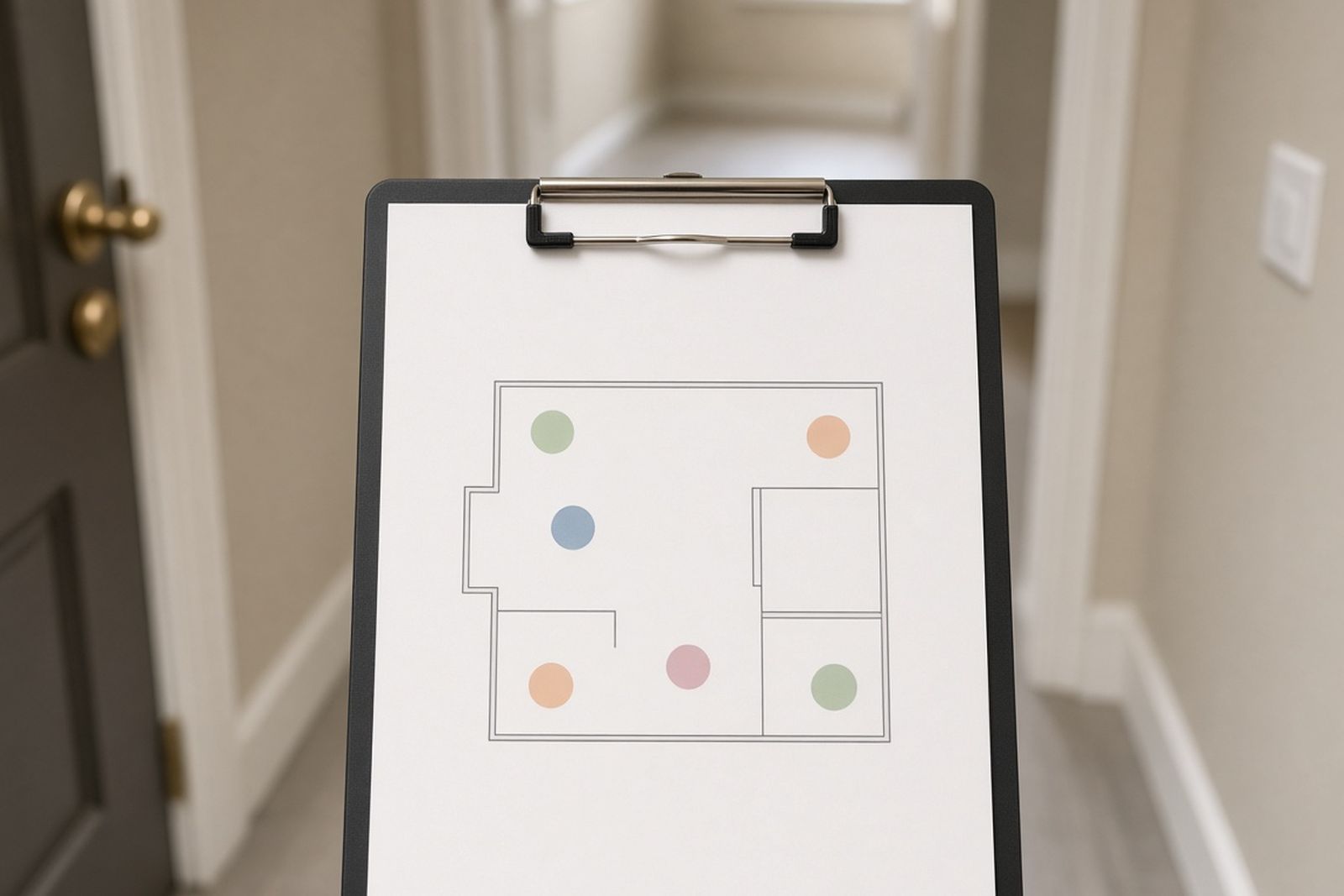
Clipboard showing a room plan with color-coded dots marking high-touch surfaces
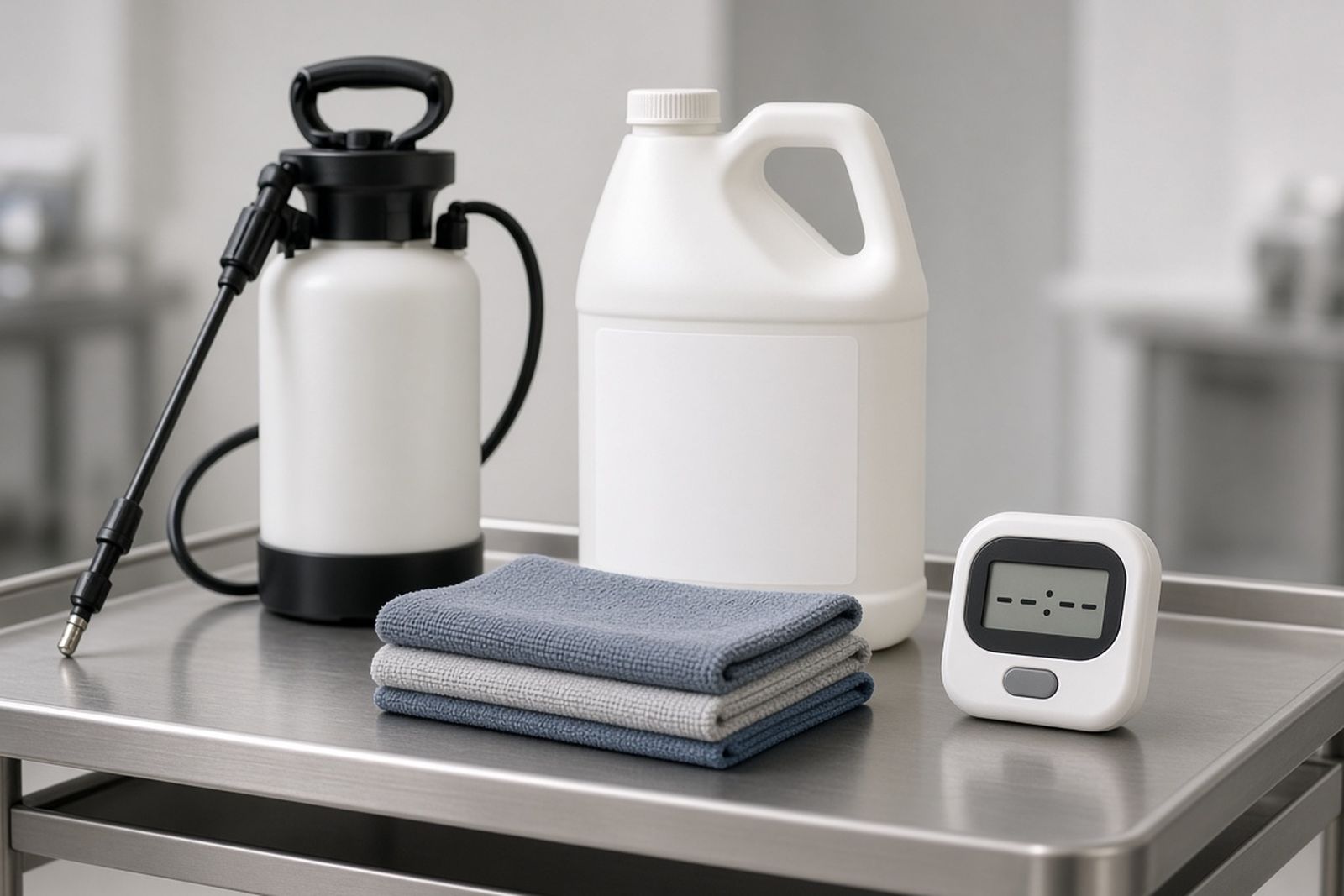
Pump sprayer, disinfectant jug, folded cloths and a contact-time timer on a steel cart

Facts worth knowing

  • A cleaning trade group's December 2025 price guide lists electrostatic disinfection at $0.10 to $0.30 per square foot for commercial buildings.

    Why it matters: Use this as a rough range to compare quotes; your price may differ by region, size and how often you need service.

    Source: ISSA, 2025

  • HomeAdvisor says disinfecting a home costs from $15 to $400 or more, depending on whether you do it yourself or hire a professional.

    Why it matters: The range is wide, so ask for a written quote, and expect specialized biohazard work to cost you more.

    Source: HomeAdvisor, 2026

  • In lab studies, MRSA lasted 7 days to 7 months on dry surfaces, C. difficile spores 5 months, norovirus up to 7 days, and flu 1 to 2 days.

    Why it matters: Waiting may not clear some germs, so you may need to disinfect surfaces a sick person touched.

    Source: BMC Infectious Diseases, 2006

Tools that help right now

What would you do?

Poll results

Vote to see how other people answered. You can change your answer at any time.

Your experience

When your facility had an illness cluster, how did you handle cleaning?

Be the first to vote
Process

How did you decide whether to close all or part of the facility?

Be the first to vote

Need help in Stamford?

Send a short message about the property to the follow-up inbox. A coordinator can reply by email with next steps.

Your request is sent to the follow-up inbox. A coordinator can reply by email.

If anyone is hurt or in danger, call 911 first.