La Jolla, CA

Infectious Disease Disinfection Planning in La Jolla, CA

What to do, who to contact, and what to ask in La Jolla.

Illness at your La Jolla condo, shop or office? See why garage lobbies and restrooms come first, what sprayers cannot do, and what to ask for.

Get an email reply about infectious disease disinfection

Send a short message to the follow-up inbox. A coordinator can reply by email. This form does not send emergency help; call 911 first if anyone is in danger.

Tell us what you need help with. Share a short description; please leave out medical details, access codes, and other sensitive information.

A request does not confirm a booking. For immediate danger, contact local emergency services.

Or email info@facilitydisinfectionguide.com

The short answer for La Jolla, CA

You may own a cove shop, a hillside condo or an office near the big labs in La Jolla. In each case, an illness cleanup should begin at the garage lobby buttons and the guest restroom. Learn what spray guns cannot do, why lab words do not fit your space, and what to ask before hiring.

What to do, step by step

  1. 1

    Start at the garage lobby and the visitor restroom

    Walk the path that day visitors and residents really take. It runs from the street entry or garage ramp to the elevator lobby, the mail nook and the amenity restroom, then on to your door. Those are the true hand-contact points, so share them with the company. If someone vomited in a shared restroom, the mess and waste are dealt with before any disinfectant. Treating ocean-view glass while garage buttons dry too early wastes your money.

  2. 2

    Say no to sprayer shortcuts on electronics and felt

    Electrostatic sprayers and foggers put product onto surfaces. They do not remove grime. Many keyboards, tablets and felt panels are not listed on labels as safe for a mist. Ask the company which items in your space will be wiped by hand and which will be skipped. Spraying a room while people are inside can expose them to fumes and still leave the disinfection unfinished. If that is the plan, ask for another one.

  3. 3

    Find out which germ claim the company is using

    When COVID-19 on surfaces is your stated concern, List N is a useful public reference if the label is followed. A stomach bug outbreak needs a stomach-germ claim on the bottle, such as norovirus or an accepted stand-in. A COVID list does not settle every case. Ask the company to write down which claim it relied on. If its sales talk calls your cove condo or boutique sterilized, look elsewhere.

  4. 4

    Close the job with facts for the file

    A reopening notice should name the closed amenities, the empty times and the return time taken from the label. Names and diagnoses stay out. Ask that the EPA registration numbers, proof of cleaning and start and stop times for each wet period go to your property manager. A swab on a restroom tap can check that grime went down. It cannot certify sterility. For wider questions, look to County of San Diego HHSA guidance.

What cleanup is like in La Jolla

Weekend crowds at the cove flow into boutique fitting rooms, cafe restrooms and the underground garage elevators that serve the hillside condos above the Prospect Street shops. If a stomach bug is linked to a shared amenity in your building, or a cold spreads through your small office, the useful targets are plain ones. Think garage call panels, restroom fixtures and reception door pulls. A scented pass over ocean-view glass does little. Salt air and nonstop HVAC keep many homes here sealed. Plan time for airing out before you reopen a guest room for visiting relatives.

La Jolla's institute and biotech neighbors can cause confusion. You may hear that the lab was cleaned and assume your whole mixed building was sterilized. It was not. Ordinary office floors and condo amenities are community settings, and CDC's community cleaning materials explain the clean-then-disinfect order for them. Nothing in those materials allows cleanroom or medical-device language on an HOA flyer. A regulated lab runs its own biosafety program. That program has no bearing on your condo's garage lobby, and you should not be charged as if it did.

The County of San Diego Health and Human Services Agency can help your manager word a closure notice. It does not certify private property as germ-free. Watch the soft things that move between your patio and living room. Woven lounge chairs, outdoor cushions brought indoors and felt wall panels in boutique offices usually fall outside hard-surface labels. They need washing, covering or a rest in storage. Once in a while a Prospect Street crew finds blood, and OSHA's blood rules then cover those workers. Wiping a salty powder-room faucet after a cold is another job entirely.

What to expect for your type of home

  • Hillside condos with underground garages: Call panels, elevator rails and package nooks are touched on every trip. Ask your HOA to treat them ahead of decorative glass and art nooks.
  • Village boutiques and cafes: Fitting rooms and restrooms take day-visitor traffic. If you own the shop, plan real empty time for them instead of a quick spray between customers.
  • Offices with felt panels and woven seats: These soft pieces need washing, covers or leaving out. A hard-surface claim does not reach them, and your paperwork should say so.
  • Mixed buildings near research institutes: Lab or institute cleaning has nothing to do with your amenities. Ask that HOA reopening notices leave regulated-lab work out completely.
  • Suites with kitchenettes: Food-prep counters follow the label's rinse rules, which desks do not have. Ask the crew to treat the counter as a separate step.
  • Sealed coastal homes: When salt-air HVAC keeps your windows shut, smells clear slowly after treatment. Allow extra time before family or guests settle back in.

Papers and records to keep

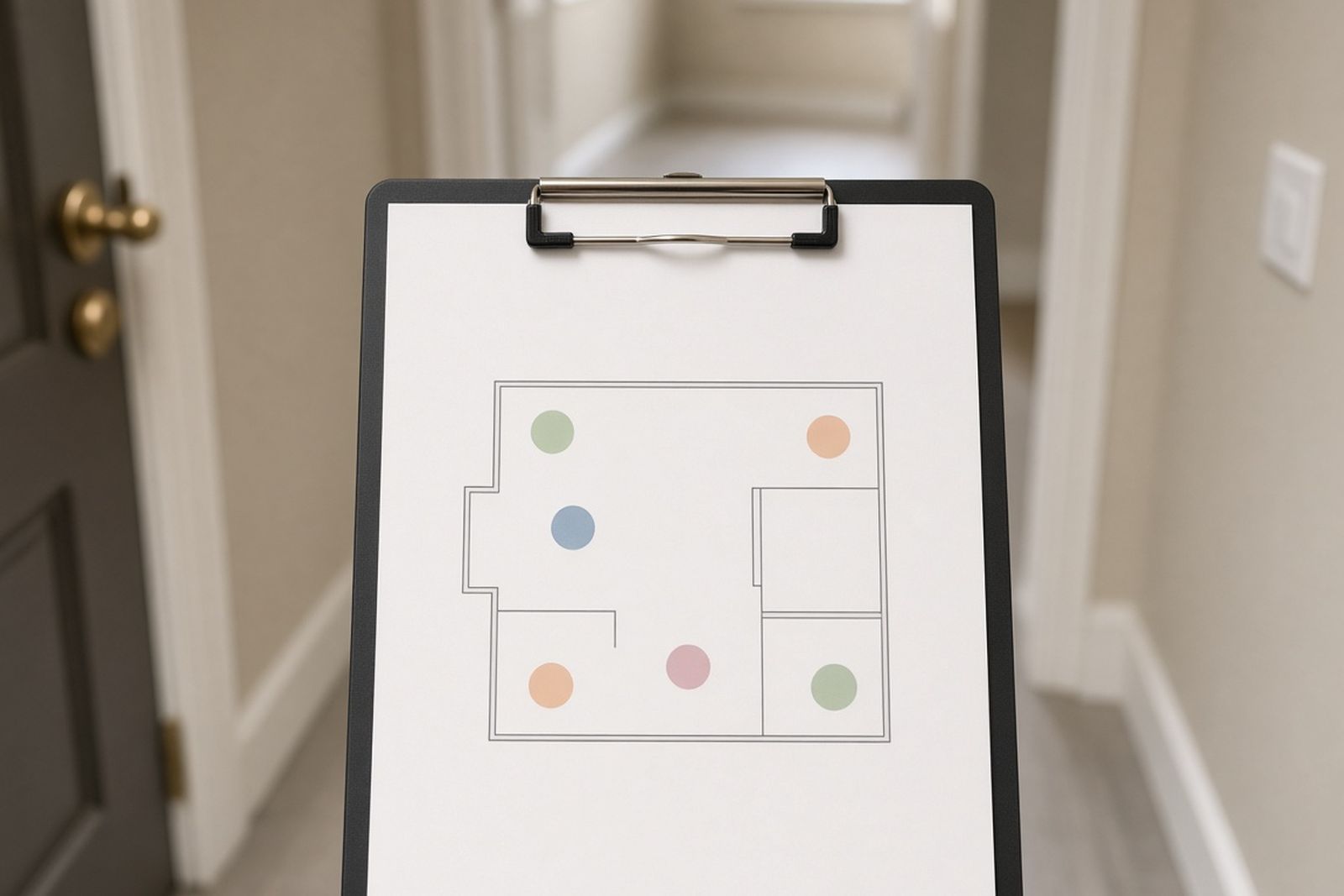
  • A map of touch points in the garage lobby, elevators and visitor restrooms
  • A written line between any lab or institute work and your condo or shop plan
  • Product labels for the garage elevator and boutique restroom work, with germ claims and wet times
  • A sign-off that salt film and sunscreen were washed off before disinfecting
  • Wet-time logs for garage hardware, amenity restrooms and reception door pulls
  • Which outdoor cushions and felt panels were washed and which were left out
  • Copies of HOA postings that name only the closed spaces and times
  • Fresh-air and return notes, tied to the safety data sheet, for sealed coastal homes

Local offices and official help

Common questions in La Jolla

Why should our condo's underground garage lobby get attention after an illness report?

Because every trip passes through it. In many hillside buildings, residents touch the same garage elevator lobby, call panel and package nook before they reach their floors. Those spots get far more hand contact than living-room decor. The lobby should close, or reopen in stages, with time for detergent cleaning and the labeled wet time on the hardware. Wiping a unit upstairs does not take care of the garage path. The reopening time can be shared without naming anyone.
Can fogging my boutique office replace wiping the door pulls and restroom fixtures?

No. A mist drifting through a small Prospect Street office will not scrub handprints off a reception door pull or grime from around a restroom faucet. Many printers, tablets and card readers are not meant to be fogged at all. The better plan is to close the suite and wipe the door pulls, counter and restroom fixtures clean. A labeled disinfectant then goes on with a cloth and stays wet as directed. Reopen once the label says staff and clients may return.

A nearby institute cleaned its labs. What should our HOA notice say?

The HOA notice should be about the condo's own spaces and nothing else. It can say which garage elevator, pool gate or lobby was cleaned and when it reopens. If a research institute or clinic nearby cleaned its labs, that is its own business. It does not mean your condo was sterilized. Residents who ask what products were used can be given the label or safety sheet. Any mention of who was sick stays out of the notice.

What records should we have after high-touch work in our cove condo?

Keep a short, honest file. It should list which garage lobbies, elevators and amenity rooms were cleaned, which products were used and for how long, and when each space reopened. A few photos of the setup help if the board asks later. No condo by the cove is germ-free for good, and the file should not suggest it. If a space such as the rooftop deck was left out, that should be stated plainly so nobody assumes it was done.

We bring outdoor cushions inside after the beach. Does the disinfectant used on tile cover them?

Usually not. Hard-surface disinfectant labels apply to the non-porous surfaces they list. Woven outdoor cushions, throws and similar soft items usually need a fabric-safe wash, some time in storage or a cover. A spray sold for tile and chrome is not the answer. Ask that this be written into the plan before work starts. Then you will not assume a fog pass took care of the porous things in your living room.

A sick guest stayed with me. How do I coordinate cleaning with my HOA?

Clean your own unit first. Wash the bathroom and kitchen with detergent, then disinfect handles, remotes and taps. If your guest used the garage elevator, pool or gym, let the HOA manager know a guest was ill. Leave out their name and diagnosis. The HOA decides how to handle common areas. Ask when those will be cleaned so you can pass the reopening time to visitors. Keep your own simple record of what you cleaned and when.

A customer was sick in one of my fitting rooms. Can I reopen the same day?

You can reopen the other rooms, but close the affected fitting room and the nearest restroom. Clean up any mess with detergent. Then disinfect the bench, hooks, mirror edges and door pull with a labeled product. Keep that room closed until the contact time and any return directions have passed. Set aside the garments the customer tried on for a few days, or wash or steam them per their care labels, before they go back on the floor.

Clipboard showing a room plan with color-coded dots marking high-touch surfaces
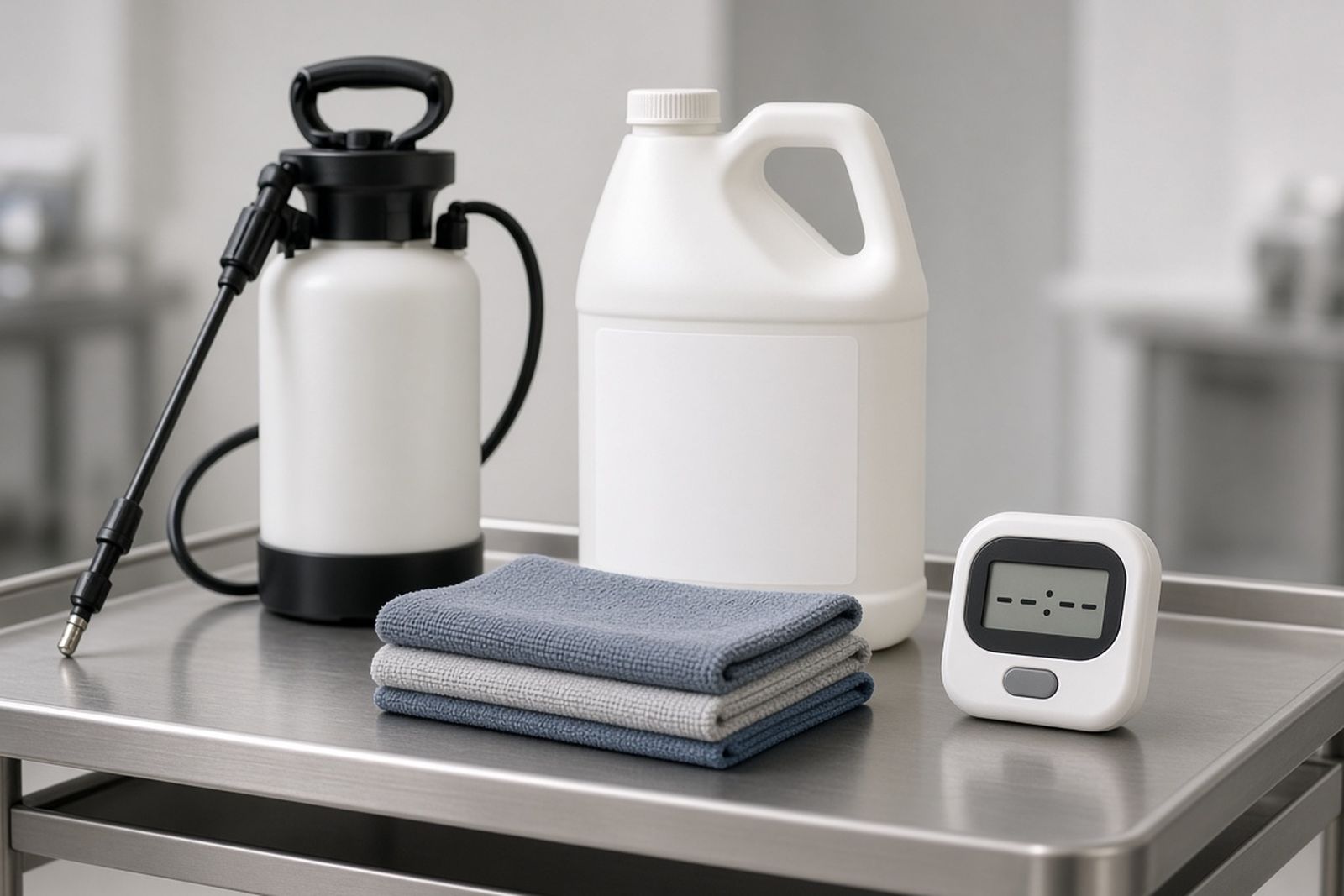
Pump sprayer, disinfectant jug, folded cloths and a contact-time timer on a steel cart

Facts worth knowing

  • HomeAdvisor says disinfecting a home costs from $15 to $400 or more, depending on whether you do it yourself or hire a professional.

    Why it matters: The range is wide, so ask for a written quote, and expect specialized biohazard work to cost you more.

    Source: HomeAdvisor, 2026

  • A cleaning trade group's December 2025 price guide lists electrostatic disinfection at $0.10 to $0.30 per square foot for commercial buildings.

    Why it matters: Use this as a rough range to compare quotes; your price may differ by region, size and how often you need service.

    Source: ISSA, 2025

  • For norovirus, the CDC recommends a stronger mix of 5 to 25 tablespoons of bleach per gallon of water, left on surfaces for at least 5 minutes.

    Why it matters: After vomiting or diarrhea in your home, use this stronger mix rather than the everyday bleach recipe.

    Source: CDC, 2024

Tools that help right now

What would you do?

Poll results

Vote to see how other people answered. You can change your answer at any time.

Your experience

When your facility had an illness cluster, how did you handle cleaning?

Be the first to vote
Process

How did you decide whether to close all or part of the facility?

Be the first to vote

Need help in La Jolla?

Send a short message about the property to the follow-up inbox. A coordinator can reply by email with next steps.

Your request is sent to the follow-up inbox. A coordinator can reply by email.

If anyone is hurt or in danger, call 911 first.