Los Altos, CA

Infectious Disease Disinfection Planning in Los Altos, CA

What to do, who to contact, and what to ask in Los Altos.

Sick family member or coworker in Los Altos? See what to clean first at home or in a Village office, how to read the label, and what to ask.

Get an email reply about infectious disease disinfection

Send a short message to the follow-up inbox. A coordinator can reply by email. This form does not send emergency help; call 911 first if anyone is in danger.

Tell us what you need help with. Share a short description; please leave out medical details, access codes, and other sensitive information.

A request does not confirm a booking. For immediate danger, contact local emergency services.

Or email info@facilitydisinfectionguide.com

The short answer for Los Altos, CA

In a Los Altos home or a downtown Village office, illness travels by hands, laundry and the mudroom, so start there and skip the scented fog. Check that any disinfectant's label lists the illness you are facing. You will see what to clean first, what to ask a company, and what stays with your doctor.

What to do, step by step

  1. 1

    Describe the illness without naming anyone

    Tell the company what you know. It may be a cold or flu exposure, a run of vomiting or diarrhea, or a germ your doctor named. Nobody's diagnosis needs to be shared with neighbors or other parents. Ask for an EPA-registered product whose label lists that germ. List N is EPA's list for COVID-19 and nothing more. If the pitch includes a sterile home, thank them and call someone else.

  2. 2

    Insist on detergent first, even in a small bathroom

    CDC's advice for homes puts removing grime ahead of disinfecting. In a small Peninsula bathroom, film left on the sink or toilet will block the product. After washing, the hard surfaces stay wet for the full contact time printed on the label. A written start and stop time for each bathroom and the kitchenette is worth requesting. That way nobody mistakes a clean smell for a finished job.

  3. 3

    Pick one reopening time for school and work returns

    Treated areas stay closed until the wet time and the label's return steps are done. Give your family, or your Village suite staff, one written reopening time. A backup restroom helps if the main bath is still wet when the kids get home. Then open up or ventilate the rooms as the product's safety data sheet says. That matters most on days when your windows have to stay shut.

  4. 4

    Keep proof of the work, not a sterile letter

    Save the EPA numbers, the germ claims the company relied on, a sketch of the areas treated, the cleaning notes and the wet-time logs. If other families or clients ask about the illness itself, point them to Santa Clara County Public Health and CDPH. Medical decisions stay with health care providers. A letter that says your home or office is sterile is not worth filing.

What cleanup is like in Los Altos

Family life around the Village, the local schools and the Peninsula commute shapes how illness moves through your Los Altos home. Backpacks land on the mudroom bench. Your kids refill water bottles at the same fridge handle. The shared bathroom taps get heavy use every morning. So begin by listing those hand-off spots from the days someone was contagious. Fogging a living-room corner nobody touches will not help you. Santa Clara County Public Health posts messages you can lean on when you tell other families. They do not turn a ranch house into a sterile clinic.

Downtown Village shops and second-floor office suites follow another pattern. Clients come by appointment, the restroom hardware is shared, and the reception counter passes through many hands. If you run one of these suites, plan to keep it empty long enough for the label's wet time. The food-prep kitchenette should be handled apart from ordinary desks. With hybrid work, watch out for the lunch-hour spray. If someone keeps typing at the same keyboard, it is dirty again within minutes and you have paid for nothing.

Older Peninsula homes often have small bathrooms, and on pollen or smoke days you may not be able to open a window. When smells linger, it is tempting to wipe surfaces dry too early. Try not to. Stuffed toys, throws and fabric dining chairs usually fall outside hard-surface labels, so plan to wash them or put them away for a while. If the job at your house turns up blood or other body fluids, tell the company, because OSHA's worker blood rules then apply. An ordinary cold-season wipe-down does not earn a sterilization certificate.

What to expect for your type of home

  • Family homes near the schools: Mudroom benches, backpack drop spots, fridge handles and shared bathroom taps come first. Decorative spots that few hands reach can wait until the end, if they are done at all.
  • Children's bedrooms: Work out how bedding, throws and washable stuffed toys will be laundered before any product comes out. Find out up front whether the company's quote includes that laundry.
  • Village office suites: On appointment days, the restroom has to stay empty for the full wet time on the label. Block that time on your booking calendar ahead of the visit.
  • Suites with a kitchenette: Food-prep counters have rinse directions that desks do not. Ask the crew to treat the two apart and to tell you which product touched the counter.
  • Hybrid-work households: Time the job so the school-morning rush and people returning from the office do not walk through a wet room. One shared time on the fridge door helps.
  • Rooms with fabric lounge seating: Soft chairs and couches are not covered by hard-surface germ claims. They can be washed, covered safely or simply left out, and the paperwork should say which.

Papers and records to keep

  • The illness pattern as you described it, with nobody named or diagnosed
  • The mudroom-to-kitchen list of high-touch spots, plus suite reception and restroom spots
  • Products used on mudroom benches and suite counters, with registration numbers and wet times
  • Proof that detergent cleaning came before any disinfectant
  • Timed wet-period records for bathrooms and shared kitchenettes
  • The written reopening time, set around school or appointment schedules
  • Which soft items were washed and which were left out
  • Any swab test notes, marked as a grime check and not proof that germs are gone

Local offices and official help

Common questions in Los Altos

My child caught a stomach illness at school. Which surfaces need attention first?

The bathrooms your child used while sick come first. Fridge handles, faucet levers, light switches on the way to those rooms and the mudroom hardware where backpacks land are next. Stuffed toys and throws usually need washing or a few days put away, not a hard-surface spray. Keep everyone washing hands as well. Surface work lowers the risk in your house. It does not sterilize anything, and no honest company will say it does.
Can my Village suite reopen between appointments if it was sprayed at lunch?

Only if the suite stayed empty for the full wet time and any return steps on the label. Even then, it counts only for surfaces that were cleaned first and truly kept wet. A quick spray while staff keep using the same keyboard and restroom does not meet that bar. Block the suite on your appointment calendar for the service window. Save the EPA registration numbers and wet times. Do not tell clients the suite was sterilized.

We had a COVID-19 exposure at home. How do I use List N?

Look up the product's EPA registration number on List N, or confirm it meets EPA's stated criteria for the COVID-19 virus. Then follow the label for contact time and surface types. That bottle does not stretch to every later stomach bug. Pair it with detergent cleaning, time out of the room during the wet period and fresh air. Testing and isolation choices stay with your doctor and public health. Write down what was treated and which soft items were skipped.

Can a swab test clear my home office for a medically fragile relative?

No. The quick swab test measures leftover organic grime. It can help show whether a desk was cleaned. It cannot find germs or prove anything is sterile. A low reading after wiping is not an all-clear for any one germ. If you use it at all, treat it as a cleaning check beside your label records. Decisions about a fragile relative belong with their doctors and Santa Clara County Public Health, not with a meter printout.

When does an ordinary wipe-down become a job that needs blood precautions?

When needles or certain spills put a crew near blood or other body fluids that can carry disease. At that point OSHA's bloodborne pathogen rules matter. Describe the mess in writing before the crew arrives at your house. If those fluids are present, expect protective gear, sealed waste packing and exposure-control steps. If they are not, the work is washing and then disinfecting, with honest germ claims and no hospital language.

How do we clean after an illness on wildfire-smoke days when the windows stay shut?

Pick a low-odor product with clear return directions. Treat one room at a time so the rest of your house stays usable. Run the HVAC on recirculate with a good filter. Keep the treated room shut until the label's contact and return times pass. Skip foggers entirely when you cannot air a room out. Once the air clears, open windows briefly to let out any smell. Soft items go in the washing machine instead of getting sprayed.

A sick child used our shared family computer. What should we do with it?

Turn it off and unplug it first. Check the maker's cleaning guidance. It usually allows alcohol wipes on keyboards and mice but warns against spraying liquid on the device. Gently wipe the keys, trackpad and mouse. Keep them wet only as long as the wipe's label requires, and let them dry before plugging back in. Wash your child's hands and your own afterward. A dishwasher-safe keyboard cover can make the next cleanup easier.

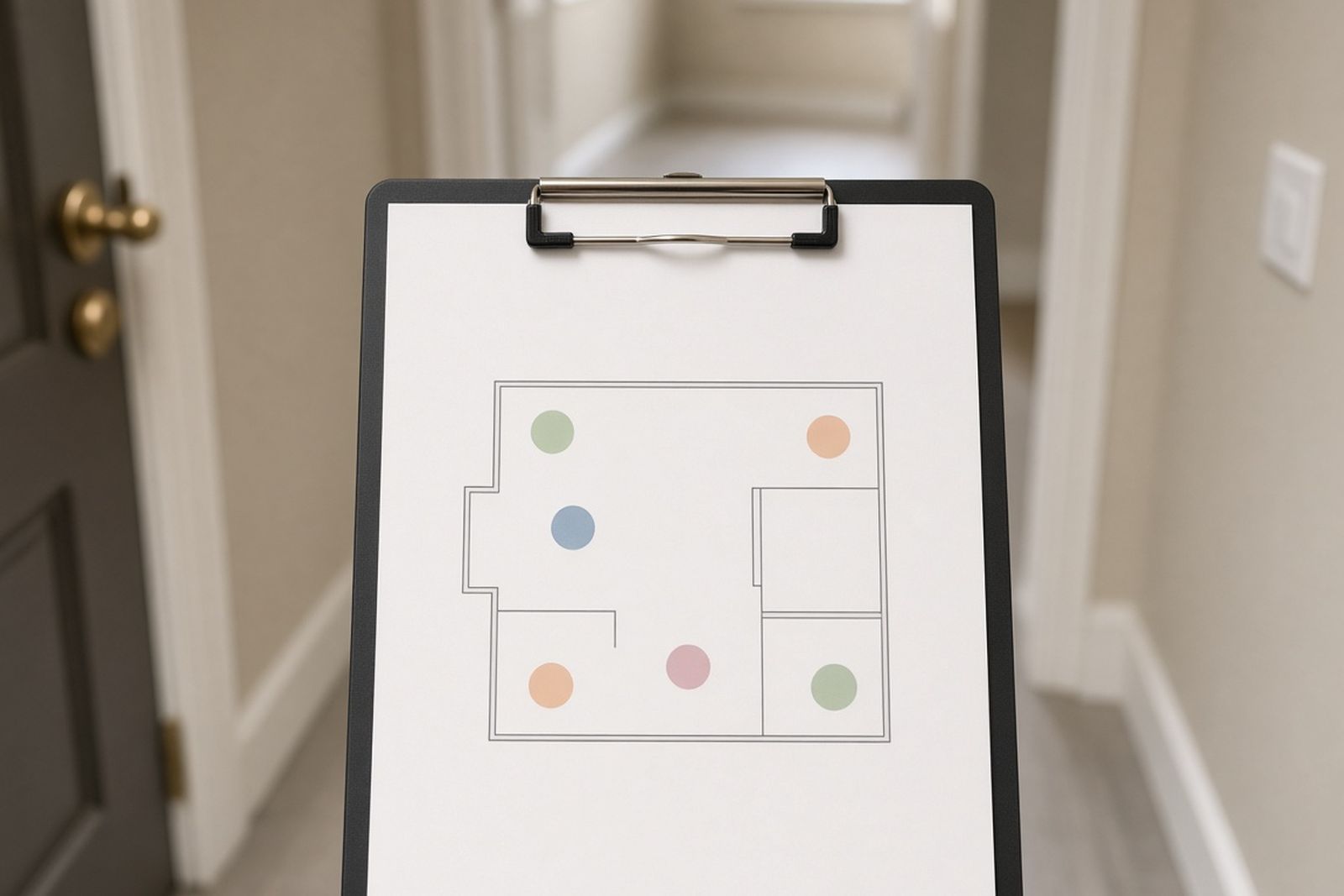
Clipboard showing a room plan with color-coded dots marking high-touch surfaces
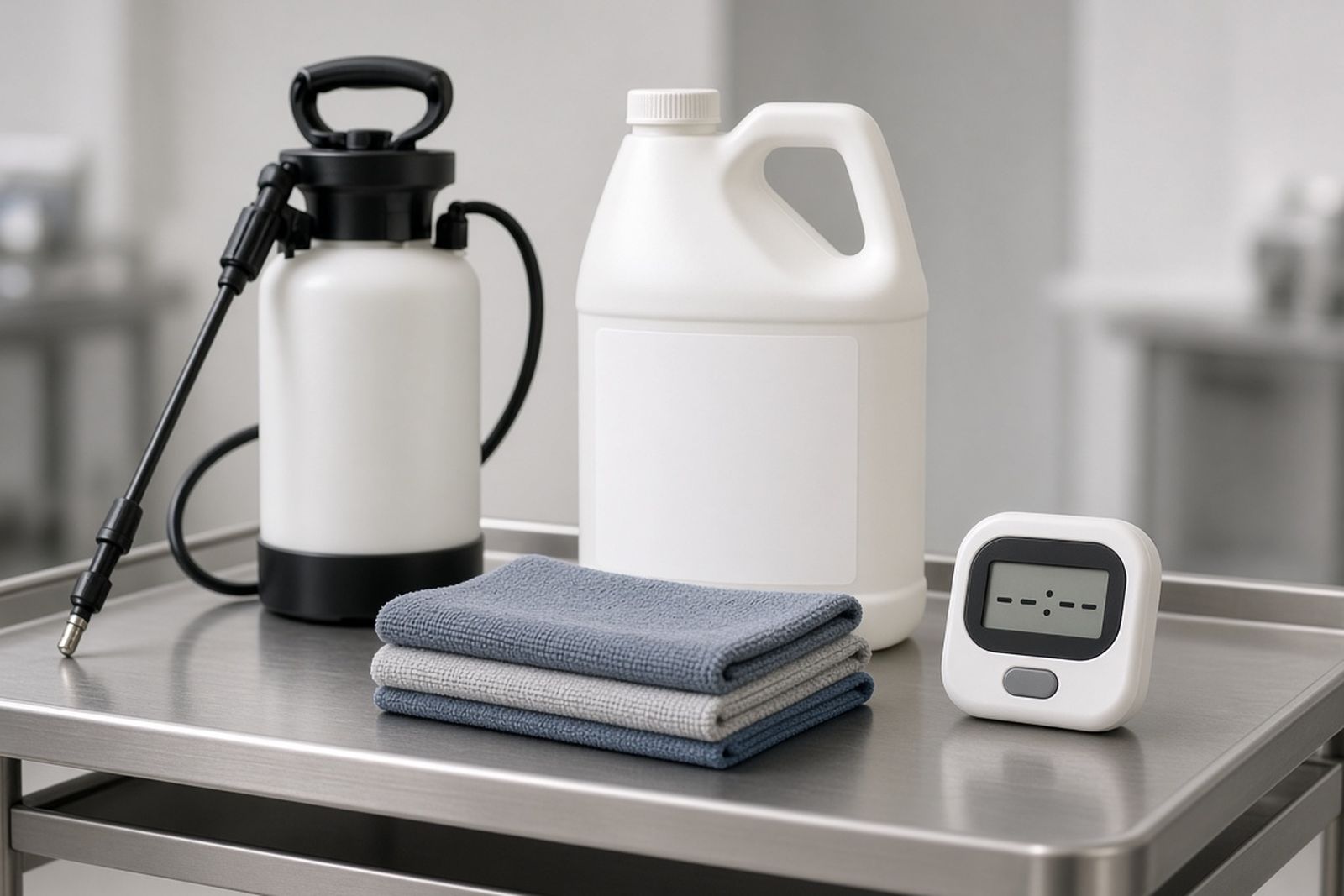
Pump sprayer, disinfectant jug, folded cloths and a contact-time timer on a steel cart

Facts worth knowing

  • In a lab test of six commercial wipe products, published in 2020, every product carried bacteria onto surfaces that had been clean.

    Why it matters: A used wipe can spread germs, so ask whether your cleaner changes wipes often rather than using one across a room.

    Source: Voorn et al., 2020

  • In a lab test published in 2020, wipes not sold as spore-killing moved C. difficile spores onto areas that had been clean.

    Why it matters: If you are dealing with C. diff, ask which spore-killing product the crew will use and how they avoid spreading spores.

    Source: Nkemngong et al., 2020

  • In one field test published in 2023, wiping by hand passed the study's disinfection test on 98.1% of surfaces, compared with 75.5% for a UV-C light device.

    Why it matters: If a company offers you UV light treatment, ask whether surfaces are also cleaned and wiped by hand.

    Source: Knobling et al., 2023

Tools that help right now

What would you do?

Poll results

Vote to see how other people answered. You can change your answer at any time.

Your experience

When your facility had an illness cluster, how did you handle cleaning?

Be the first to vote
Process

How did you decide whether to close all or part of the facility?

Be the first to vote

Need help in Los Altos?

Send a short message about the property to the follow-up inbox. A coordinator can reply by email with next steps.

Your request is sent to the follow-up inbox. A coordinator can reply by email.

If anyone is hurt or in danger, call 911 first.