Naples, FL

Infectious Disease Disinfection Planning in Naples, FL

What to do, who to contact, and what to ask in Naples.

Illness in your Naples seasonal home or clubhouse? See how to time disinfection around arrivals, handle humid rooms and lanais, and what to ask.

Get an email reply about infectious disease disinfection

Send a short message to the follow-up inbox. A coordinator can reply by email. This form does not send emergency help; call 911 first if anyone is in danger.

Tell us what you need help with. Share a short description; please leave out medical details, access codes, and other sensitive information.

A request does not confirm a booking. For immediate danger, contact local emergency services.

Or email info@facilitydisinfectionguide.com

The short answer for Naples, FL

If someone was sick in your Naples home or your golf community's clubhouse, pair plain cleaning with a labeled disinfectant. Time the work so rooms stay empty before seasonal guests fly in. You will find what to ask your house manager, the HOA and any company you hire, plus what to keep on file.

What to do, step by step

  1. 1

    Line up the work with arrival dates

    Choose days when your guest suites or the amenity can stay empty for cleaning, the wet time and the label's return period. Have your house manager check the key handoffs against the HOA calendar. An early linen drop or an early check-in puts hands back on handles before the wet time ends. If a flight cannot move, tell the company so the plan can change before work begins.

  2. 2

    Have grime removed before disinfecting in humid air

    Your bathroom and kitchen grime comes off first. So does the gritty film on lanai sliders, which can block the product. Next comes an EPA-registered disinfectant matched to the germ you are worried about. Surfaces must stay wet for the full time, even with pressure to reopen for a snowbird check-in. Ask that rooms be aired the way the safety data sheet directs before luggage lands in the great room.

  3. 3

    Ask whether the product fits the illness

    When COVID-19 is the illness, List N from EPA is a reasonable place to look. After a stomach bug tied to the dining room or locker room, ask to see that the label lists norovirus or another germ that fits. A COVID list alone does not answer that. If a seller tells you the club's air or its soft cushions were sterilized, you have learned something about the seller.

  4. 4

    Read the board notice and keep the records

    A good notice gives closure and reopening times for the clubhouse, gym and pool gates and names no resident. Ask the board to keep product and wet-time records, including which outdoor controls were treated or left out. A swab of the bag-drop counter only shows leftover film. It cannot find germs. Community health questions go to DOH-Collier or Florida DOH, not to the cleaning company.

What cleanup is like in Naples

Naples is full of seasonal estates, living rooms that open onto lanais, and gated golf communities. In peak season the clubhouse, gym and shared restrooms get heavy use. If a stomach bug is tied to an amenity, picture the path from the bag drop and cart return, through the locker room, to the dining room. A fogged ballroom does little while restroom grime stays put. Your house manager may hold keys for guest suites that reopen on different flight days, so empty-room plans must fit that calendar. The Florida Department of Health in Collier County is your local public health office.

Gulf humidity and sealed air conditioning keep some surfaces damp in your home, and germs can like that. The same damp air makes disinfectant smells last. Before your seasonal guests land, the wet time should be finished and the house aired out. Spraying a scented product into a great room full of people is not an answer. Lanai cushions, gritty slider tracks and beach-style fabrics often need washing, or they should be left off any hard-surface claim. Ask which it will be.

Golf carts, shared pool gates, outdoor shower handles and the bag-drop counter are all touched outdoors, then the same sunscreen-coated hands come inside. Ask whether those controls are part of the job. Ask too whether the product label allows weathered plastic and metal. Hospital sterilization wording has no place on a clubhouse job in your community. If blood turns up after an injury in the clubhouse, OSHA's worker rules on blood come into play for the staff. For an ordinary illness the work stays simple: wash, disinfect, and be honest about the label.

What to expect for your type of home

  • Seasonal homes with a house manager: Match the work to the key schedule and arrival dates. Your guest suites should sit empty through the wet time and the airing out, before anyone lands.
  • Golf-community clubhouses: Restrooms, pool gates, bag-drop counters and gym grips are where members' hands meet. If you sit on the board, ask that these lead the amenity list.
  • Sealed, air-conditioned rooms: Humid Gulf air slows drying. Expect a longer wait for surfaces to dry and smells to clear, and build that into your arrival plans.
  • Lanais: Ask whether the cushions will be washed or set aside. Ask also whether slider tracks and outdoor shower handles are included, since they are easy to leave out.
  • Homes inside an HOA: A crew that only entered the clubhouse did not treat your house. Make sure the records keep private homes and shared amenities apart.
  • Pool decks and cart paths: Fogging outdoors does nothing for your great room or the air in your ducts. Be wary of anyone who suggests it does.

Papers and records to keep

  • The house manager's key schedule, tied to empty times and reopening times for guest suites
  • A note separating amenity work from private-home work, such as clubhouse only
  • The high-touch list, including pool gates, bag-drop counters and club restrooms
  • Which product went on lanai furniture and which on clubhouse restrooms, with wet times
  • Cleaning notes, plus what was decided for lanai fabrics and slider tracks
  • Wet-time logs for the humid, air-conditioned rooms in your home
  • Fresh-air steps and written return instructions for your house manager
  • Board notices that stick to amenity reopening facts, with no personal health details

Local offices and official help

Common questions in Naples

How should our HOA time clubhouse disinfection around seasonal arrivals?

Set aside an empty period long enough for mess removal, detergent cleaning, the wet time and the label's return period. Aim to finish before the busy check-in days. Share the reopening time with members, with no word on who was sick. If arrivals cannot move, shrink the job to areas that can truly stay empty. Humidity may slow how fast smells clear, so plan for fresh air. House managers can book linen deliveries after reopening, so arriving staff do not cut the wet time short.

Do pool gates and golf cart steering wheels need the same product as my kitchen?

Not always. They belong on the list if people touched them while someone was contagious. But the product must match the use sites and materials on its label, and some weathered plastics and metals cannot take every disinfectant. Sunscreen and dirt film are cleaned off first. Indoor fogging does not reach outdoor hardware. Cart steering wheels travel between the bag drop and club dining. They should be wiped with a labeled method or pulled from use.

A company says it will sterilize my home. Why is that misleading here?

Sterilization is a defined process for medical devices. It is not another word for spraying a living room. Humid Gulf homes are full of soft furniture, and hard-surface disinfectants were never tested to sterilize porous things. Even on hard surfaces, results depend on cleaning, the right germ on the label and the wet time, not the scent. Honest paperwork names the treated surfaces, products and times. It also says your lanai cushions and drapes still need washing or setting aside.

What proof is reasonable after my seasonal estate is disinfected?

Reasonable proof is EPA numbers, rooms treated, cleaning notes, wet-time logs, fabric decisions, fresh-air steps and the time your house manager may reopen. Photos help. A swab test on a few counters can show that grime went down, nothing more. Ask for a list of the lanai rooms, guest suites and cart-barn controls left untreated. Keep the safety sheets beside the logs. Then whoever manages the house next winter will know what the work did and did not cover.

When does OSHA's bloodborne pathogen planning belong in a clubhouse cleanup?

It belongs there when blood or other body fluids that can carry disease are part of the mess. An injury in the fitness center is one example. Vomit cleanup during a stomach bug also calls for careful gear and waste handling, even if the formal blood rule may not apply. A wipe-down after a mild cold is a simpler job. Ask the club to log a gym injury and a cold-season wipe request as separate tickets, so the gear matches what happened.

A sick guest spent time on my lanai. What should I do out there?

Start by washing the lanai table, chair arms, door handles and outdoor kitchen controls with detergent and water. Pollen, sunscreen and pool water leave a film. Then use a disinfectant whose label allows outdoor use on those materials. Keep it wet for the full contact time, which may mean working in the shade. Wash the seat cushion covers or set them aside for a few days. The screen enclosure itself rarely needs disinfecting unless it looks dirty.

My house sat closed since someone was ill last spring. How do I get it ready?

Months of closure leave the house quiet, but they do not replace cleaning. Before you arrive, have someone open the house, run the air conditioning and check for moisture or mold. In a closed Gulf Coast home, mold is the more likely problem. After that, wash kitchens and baths with detergent and disinfect the spots people touch most. If last season's illness was a stomach bug, launder any bedding or towels left behind. Time alone did not take care of them.
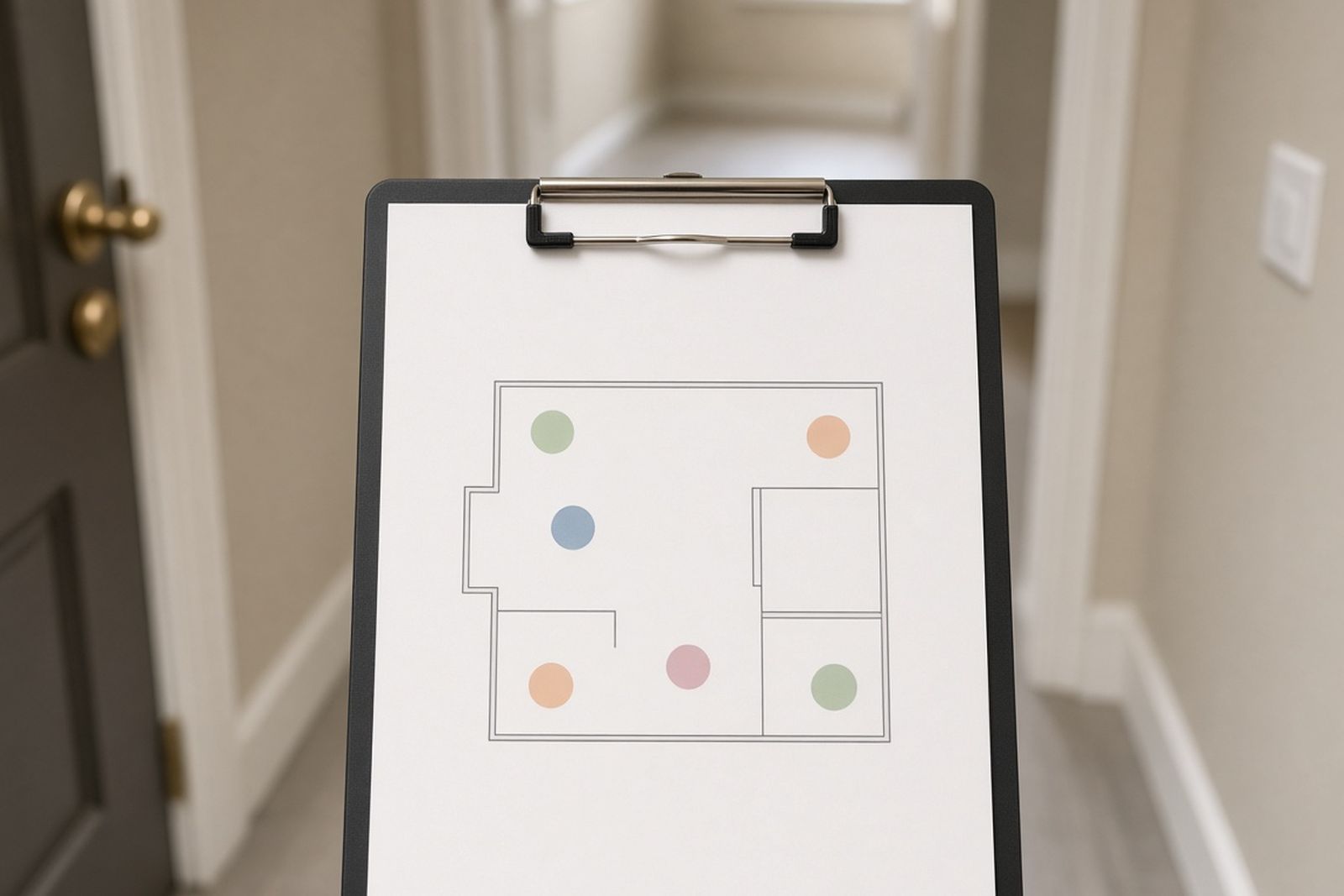
Clipboard showing a room plan with color-coded dots marking high-touch surfaces
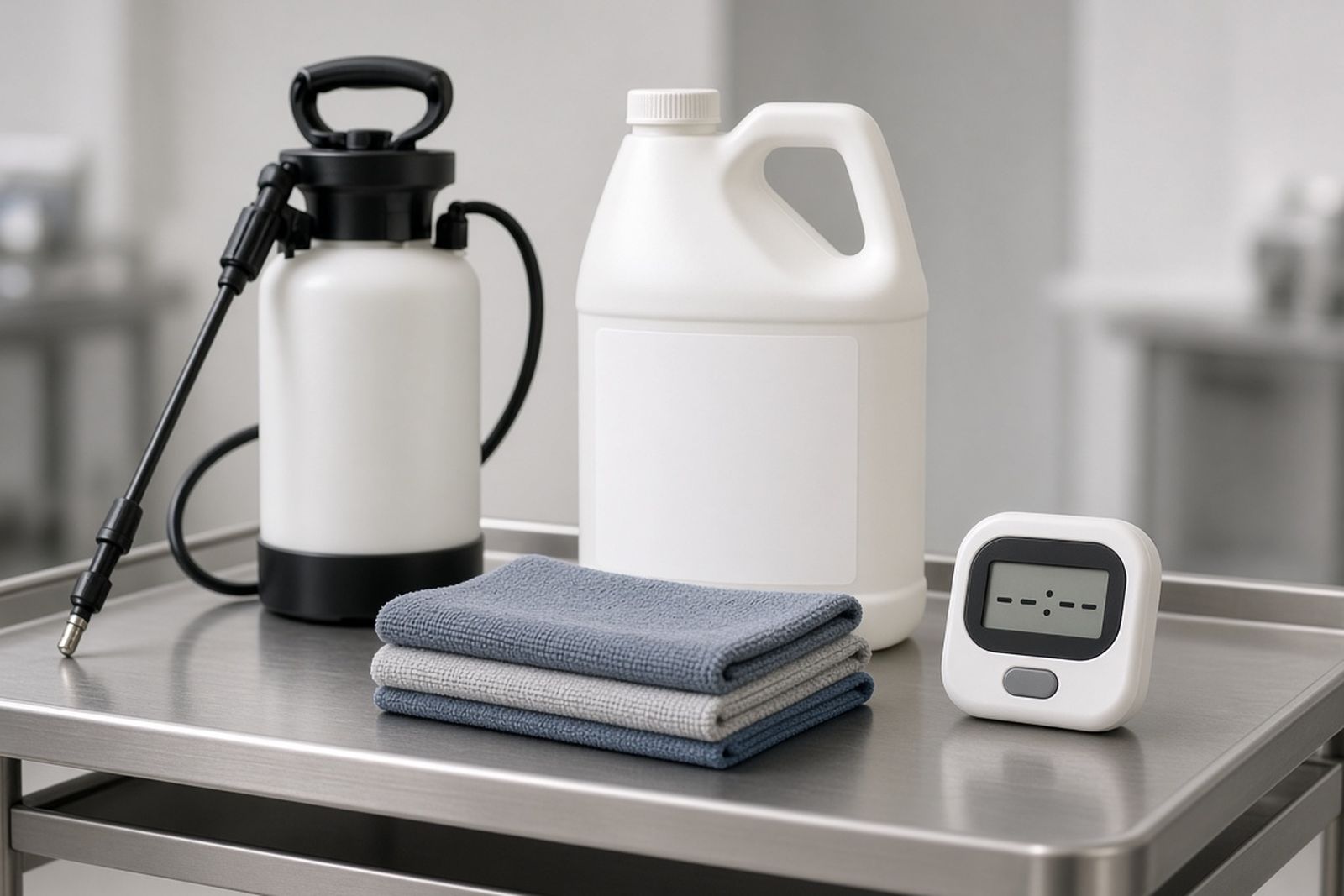
Pump sprayer, disinfectant jug, folded cloths and a contact-time timer on a steel cart

Facts worth knowing

  • The CDC says to mix 5 tablespoons (1/3 cup) of bleach per gallon of water, leave it wet at least 1 minute, and make a fresh batch every 24 hours.

    Why it matters: Never mix bleach with ammonia, and know that bleach can damage some of your surfaces.

    Source: CDC, 2024

  • CDC school guidance says flu virus can live on a surface, and possibly infect someone, for up to 48 hours.

    Why it matters: If someone in your home or building has flu, wipe down shared surfaces often while they are sick.

    Source: CDC, 2019

  • OSHA requires employers whose workers may contact blood to keep a written safety plan, offer hepatitis B shots within 10 working days, and train workers at least yearly.

    Why it matters: When you hire a cleanup company, you can ask whether its workers have this training and a written plan.

    Source: OSHA, 1991

Tools that help right now

What would you do?

Poll results

Vote to see how other people answered. You can change your answer at any time.

Your experience

When your facility had an illness cluster, how did you handle cleaning?

Be the first to vote
Process

How did you decide whether to close all or part of the facility?

Be the first to vote

Need help in Naples?

Send a short message about the property to the follow-up inbox. A coordinator can reply by email with next steps.

Your request is sent to the follow-up inbox. A coordinator can reply by email.

If anyone is hurt or in danger, call 911 first.