Santa Monica, CA

Infectious Disease Disinfection Planning in Santa Monica, CA

What to do, who to contact, and what to ask in Santa Monica.

Illness in your Santa Monica apartment, rental or building? See what to clean first, how sea air slows drying, and what to ask a company.

Get an email reply about infectious disease disinfection

Send a short message to the follow-up inbox. A coordinator can reply by email. This form does not send emergency help; call 911 first if anyone is in danger.

Tell us what you need help with. Share a short description; please leave out medical details, access codes, and other sensitive information.

A request does not confirm a booking. For immediate danger, contact local emergency services.

Or email info@facilitydisinfectionguide.com

The short answer for Santa Monica, CA

After an illness in your Santa Monica apartment, rental or hotel, the first job is plain cleaning. Disinfecting comes second, with a product whose label lists your germ. Damp sea air and shared hallways change the timing here. Read on for what to ask, what to expect and what to keep on file.

What to do, step by step

  1. 1

    Walk the building from the garage up

    Trace the path you and your neighbors take each day. Begin in the underground garage lobby, then the elevators, the mail area, the amenities and your own door. Note which spots many hands touch and share that list with the company. A restroom where someone vomited needs the mess removed before any disinfectant goes on. Ceiling corners do not need the same care. Handrails and lobby call buttons do, so ask that they are not rushed.

  2. 2

    Ask which germ the label lists

    Tell the company what illness you are facing and ask to see the product label. If the worry is COVID-19, the company can point to EPA List N, provided it follows the directions. For a stomach bug, check that the label lists norovirus or an accepted stand-in. A COVID list alone does not settle it. If anyone describes the result as sterile air, sterile garage lobbies or sterile fabrics, treat that as a warning sign.

  3. 3

    Get one reopening time in writing

    Near the ocean, closed windows and worry about salt damage tempt people to skip airing out. Ask the company to follow the label and safety data sheet for fresh air. Amenity rooms should reopen only after the wet time and any stated return period. If you or a guest have sensitivities, allow extra time. Give the front desk and night staff a single written time. Then a late check-in cannot cut short the work on elevators or in the laundry room.

  4. 4

    Keep the notice plain and the records complete

    If you manage a hotel or sit on an HOA board, post a short closure notice for the floors or amenities involved. Leave sick guests unnamed, and send medical questions to doctors and public health officials. Ask the company for its product list, wet times, the zones treated and whether garage lobbies were included. File these with the property records. An insurer or hotel brand may ask for them later. The paperwork should never claim more than the label supports.

What cleanup is like in Santa Monica

Santa Monica's damp, salty air keeps many windows shut and the HVAC running on recirculate. For you, that means surfaces dry slowly and disinfectant smells hang around longer. In the towers along the beach and the Wilshire corridor, the busiest touch points are downstairs. Think of the garage elevator lobby, the package room, the gym and the shared laundry. Neighbors touch them with sandy hands before they reach their own doors. If a stomach bug or cold is moving through your floor, ask that those shared spots be treated before anything decorative upstairs.

Hotels and short-term rentals near the ocean turn beds and baths over fast, often with a late check-in waiting. If you host or manage one, keep normal turnover apart from an illness cleanup. After illness you need a product matched to the germ, a full wet period and an empty room. Everyday turnover still rests on soap, water and careful laundry. Los Angeles County Department of Public Health cleaning guidance stresses EPA-registered products and contact time. It does not back anyone who says your hallway or condo gym was sterilized.

Santa Monica's shopping streets also hold outpatient and wellness storefronts. If you own a shop or office beside one, your cleanup is not medical work, and no company should bill it that way. A clinic in your building keeps its own infection rules and device duties. Your home, store or hotel follows the simpler community approach. Grime comes off, labeled disinfectant goes on hard surfaces, rooms get aired, and you receive records. Any notice to residents should give plain facts and nothing about who was ill.

What to expect for your type of home

  • Beach and Wilshire apartment towers: The garage elevator lobby, package lockers, gym grips and laundry buttons are shared by everyone. Ask your manager or the company to treat them as the top of the list.
  • Closed-window coastal buildings: Damp air slows drying and airing out. Expect the company to allow extra time, and ask how fresh air will move through the HVAC before your rooms reopen.
  • Short-term rentals: Keep your normal laundry and turnover routine apart from illness steps. Do not let a late check-in cut short the time a product must stay wet.
  • Buildings where elevators close for treatment: People will use stairs and balcony doors instead. Ask that those rails and handles be treated too, so nobody is sent onto surfaces that were skipped.
  • Condo gyms and yoga rooms: Fabric mats, padded benches and drapes are not covered by hard-surface labels. Ask which of them will be washed, removed for now, or left out of the job.
  • Mixed-use buildings with a clinic tenant: The clinic handles its own suite. Ask your manager to word resident notices so they never hint that the building got medical sterilization.

Papers and records to keep

  • A list of high-touch spots in amenities, garage lobbies and hallways near the illness
  • A note that separates routine turnover cleaning from the illness cleanup
  • Each product's EPA number, the germs its label names and its wet time
  • Proof restrooms were cleaned first, plus what was done with soiled fabrics
  • Wet-time logs for elevators, garage lobbies, gyms and laundry rooms
  • Humidity and fresh-air notes with the single reopening time given to desk staff
  • Copies of guest or resident notices, free of personal health details
  • Waste notes if vomit or other heavy soil was removed

Local offices and official help

Common questions in Santa Monica

Why does the damp sea air matter when my place is disinfected?

Damp air and closed windows slow drying and make chemical smells last. They also tempt staff to wipe surfaces dry early so a room can be rented again. A good company allows a longer empty period and follows the product's safety sheet for airing out. Fabrics in oceanfront units can hold moisture and smells, so ask what gets washed or set aside. One posted reopening time helps too. Then a night auditor on Ocean Avenue will not release rooms early.
What should our HOA do with the gym after someone reports a stomach illness?

Close the gym first. Any visible mess, including vomit, should be removed by someone with proper protective gear. Surfaces are then washed with detergent. Only then is the gym disinfected, with an EPA-registered product labeled for the stomach germ in question. Equipment grips, door handles and restroom fixtures must stay wet for the full contact time. Fabric benches and mats may need washing or removal for now. Tell residents the facts without naming anyone, and remind them that handwashing still matters.

If a company fogs our hotel hallway, are the guest rooms sterilized?

No. Sterilization is a defined process used mainly for medical tools. It is not a word for fogging a hallway. Lower risk in guest rooms still comes from cleaning grime, washing linens and keeping labeled disinfectant wet on hard surfaces. Fogging with people nearby or with poor air flow can expose them to fumes, and it can miss grimy film in the bathroom. If a brand inspector asks, show EPA numbers and wet-time logs for the surfaces treated.

I host a short-term rental. What should I write down after a sick guest leaves?

Keep a simple packet. Note the dates the unit sat empty and the cleaning steps done. List the disinfectant name, its EPA registration number, the germ on the label you relied on and the contact time you kept. Add how bedding and towels were washed and anything thrown out. Record when the next guest may enter. Say whether balcony handles and the building's package lockers were included. If blood or needles were left behind, call a company trained for that.

Our building has a clinic downstairs. Does its cleaning cover my apartment?

No. The clinic follows its own infection-prevention policies and device instructions inside its suite. Your apartment, the shops and the common areas follow community cleaning practices with EPA-registered products and recorded wet times. Shared elevators and lobbies can be part of the building's plan without any sterilization language. If blood or certain body fluids are found in any suite, OSHA's bloodborne rules may cover the workers there. Ask your manager for separate written plans for the clinic and the homes.

What do I do with trash while I'm sick in my apartment?

Double-bag used tissues, diapers and cleanup materials, and tie the bags shut. Then nobody has to handle loose waste in the trash room. Building staff should wear gloves in the chute room and wash their hands afterward. While you are ill, ask that the trash-room door handle and chute hatch be cleaned as often as the elevator buttons. Normal city pickup covers ordinary household waste. For larger soiled items, call the building's hauler and ask.

Can I just open the windows and let the ocean breeze air out my rental?

Open windows help, but they do not replace the return time on the label and safety data sheet. Salt air and marine fog can keep surfaces damp, so your unit may take longer to dry than you expect. Let the product sit wet for its full contact time first. Then air the unit out, and only then let guests in. If a strong breeze dries the product before its time is up, close the windows until the wet time ends.

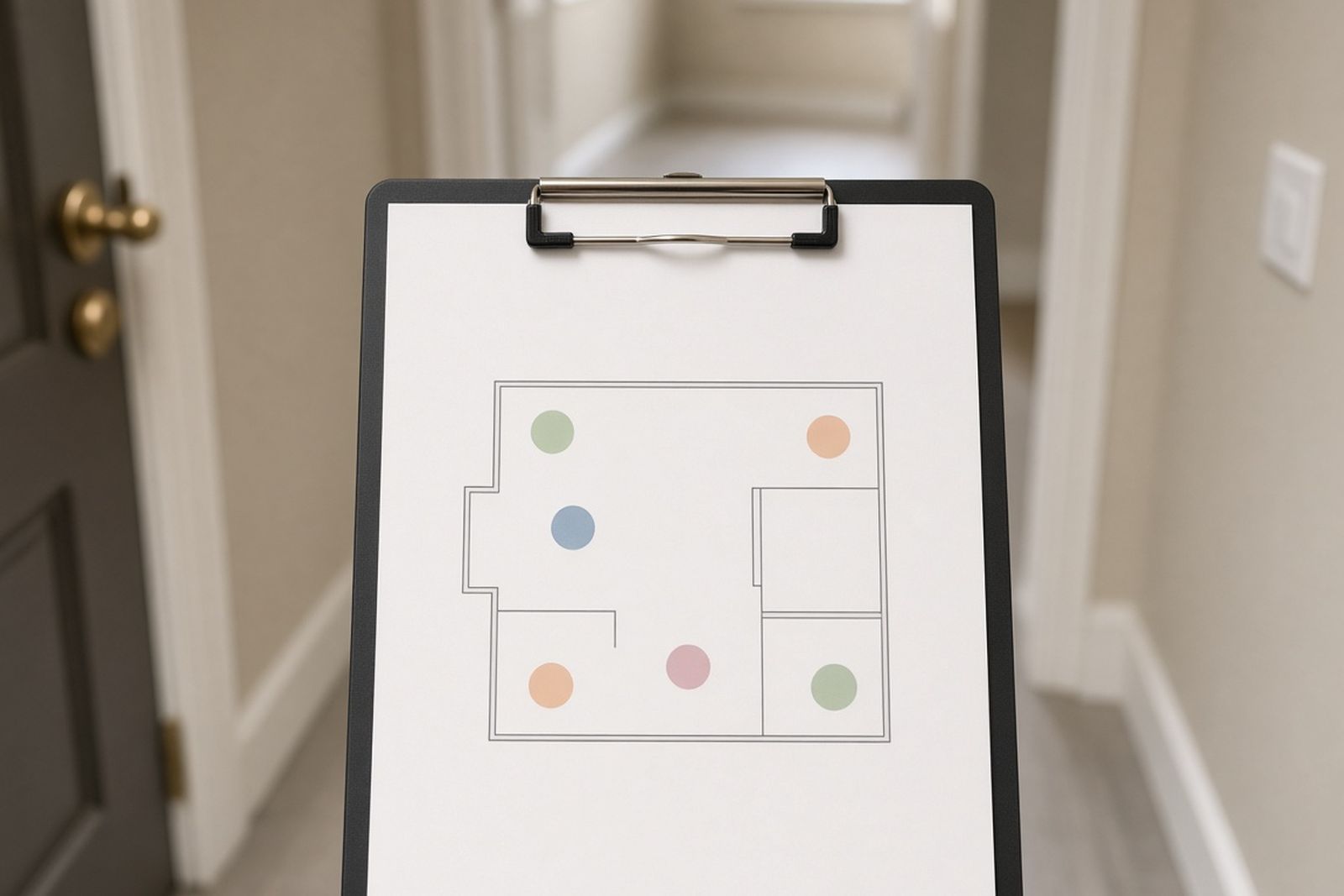
Clipboard showing a room plan with color-coded dots marking high-touch surfaces
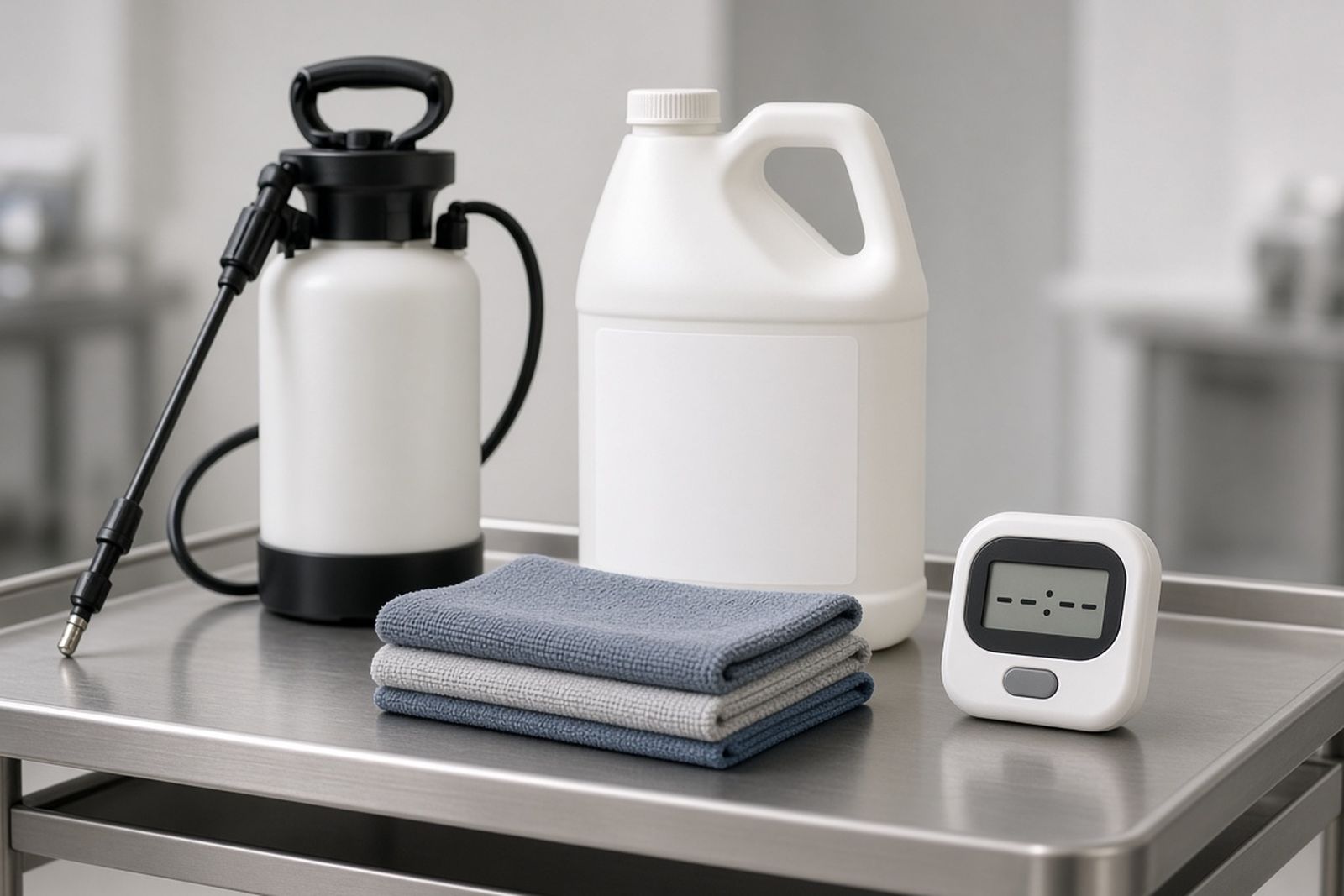
Pump sprayer, disinfectant jug, folded cloths and a contact-time timer on a steel cart

Facts worth knowing

  • HomeAdvisor says disinfecting a home costs from $15 to $400 or more, depending on whether you do it yourself or hire a professional.

    Why it matters: The range is wide, so ask for a written quote, and expect specialized biohazard work to cost you more.

    Source: HomeAdvisor, 2026

  • A cleaning trade group's December 2025 price guide lists electrostatic disinfection at $0.10 to $0.30 per square foot for commercial buildings.

    Why it matters: Use this as a rough range to compare quotes; your price may differ by region, size and how often you need service.

    Source: ISSA, 2025

  • In lab studies, MRSA lasted 7 days to 7 months on dry surfaces, C. difficile spores 5 months, norovirus up to 7 days, and flu 1 to 2 days.

    Why it matters: Waiting may not clear some germs, so you may need to disinfect surfaces a sick person touched.

    Source: BMC Infectious Diseases, 2006

Tools that help right now

What would you do?

Poll results

Vote to see how other people answered. You can change your answer at any time.

Your experience

When your facility had an illness cluster, how did you handle cleaning?

Be the first to vote
Process

How did you decide whether to close all or part of the facility?

Be the first to vote

Need help in Santa Monica?

Send a short message about the property to the follow-up inbox. A coordinator can reply by email with next steps.

Your request is sent to the follow-up inbox. A coordinator can reply by email.

If anyone is hurt or in danger, call 911 first.