Short answer
Compare bids by the work they cover, not by the total. Check which rooms and surfaces each bid includes. See how it handles soft items such as mattresses and clothing. Ask whether the heating and cooling system and ducts are cleaned, and which products break down the agent. Find out how the result is checked and what records you get for insurance or a government claim. A lower total often means a smaller job.
Why tear gas cleanup bids differ so much
Tear gas residue spreads farther than you might think. Fine dust and oily film settle on every flat and upright surface in the rooms where canisters landed. They drift through open doors and stairwells. They get pulled into your heating and cooling system. Soft things such as mattresses, padded furniture, curtains and clothing soak the agent up.
Because of that spread, two contractors can look at your home and propose very different jobs. One may plan to wipe down the rooms where canisters landed. Another may plan to clean every room and launder or throw out soft items. It may replace filters, clean the ducts and air handler, and check the result room by room. Their totals will differ to match.
Your first task is to understand what each company plans to do. Only then does the price mean anything.
Physical damage adds another layer. Broken windows, splintered doors and holes from projectiles may need boarding up and repair. Some tear gas cleanup companies include temporary board-up and glass cleanup. Others expect you to hire a separate contractor. Make sure you know which trades each bid assumes. A low number should not simply mean the repair work was pushed onto someone else.
What a written bid should include
Ask each company for an itemized work plan based on a walk through your whole building. It should not stop at the rooms with clear damage. The items below are the ones that most often separate low bids from high ones.
- Areas covered: every room, closet, stairwell, garage and attic space included, and how the company chose those limits.
- Surfaces: walls, ceilings, floors, cabinets inside and out, light fixtures and window coverings.
- Soft items: which ones will be cleaned, laundered, sealed up for a later decision or thrown out.
- Food and personal care items: what happens to exposed pantry food, medicines and toiletries.
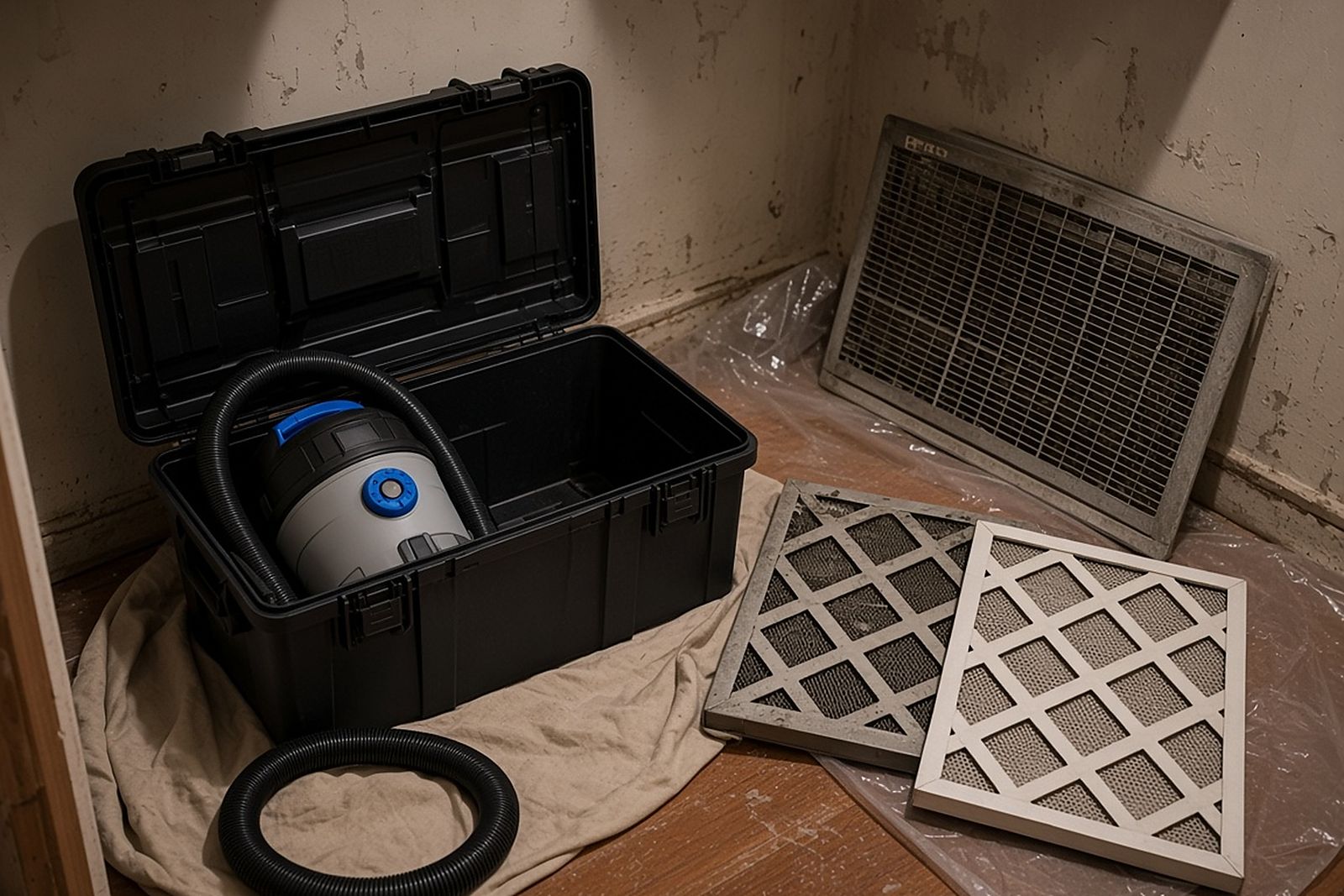
- Heating and cooling: filters, vent covers, return vents, ducts and the air handler, and whether each is cleaned or replaced.
- Cleaning products: the solutions used to break down the agent and how your surfaces will be rinsed.
- Final check: how the company will confirm you can move back into the building.
- Records: photos, item lists and reports for your insurance or a claim against the agency.
Soft items and air systems: where bids differ most
Mattresses, pillows, padded furniture, curtains, rugs and clothing soak up tear gas residue. Some items can be laundered or professionally cleaned. Others may not be worth saving, above all mattresses and padded furniture that took a heavy dose. Handling hundreds of items takes labor, and hauling them away adds cost.
A lower bid may leave soft items out and leave you to deal with them. Or it may plan to vacuum and spray your sofa and chairs, not clean or remove them. A higher bid may include listing your items, bagging them for laundering or disposal and recording what was lost.
Ask each company how it will handle soft items and whether you will get a written list. That list can matter for an insurance claim. It can also matter for any claim against the agency that used the gas.
Did your heating or cooling system run during or after the gas was used? Then residue has likely traveled through the ducts and landed in rooms the gas never reached directly. If the crew cleans surfaces but skips the system, the rooms can be dirtied again as soon as it runs.
Cleaning the heating and cooling system can be one of the larger items on a bid. It is also where low bids often cut back. Some include only a filter change. Others clean the vent covers and return vents but not the ducts or the air handler. Full bids cover all of these parts. They may also suggest replacing flexible duct runs that are hard to clean.
Ask each contractor three things. Did the system run after the incident? How does that change the plan? Which parts, exactly, are included?
Electronics and appliances are a related gray area. Residue can settle inside televisions, computers, range hoods and refrigerator coils. Ask whether each bid deals with these items, suggests professional electronics cleaning or leaves them out.
Do the cleaning products make a difference?
Yes. CS residue breaks down much faster in alkaline conditions, which means the opposite of acidic. A contractor that uses the right alkaline solutions, and leaves them on long enough to work, has the chemistry on its side. It is not just moving residue around with water.
OC residue, from pepper spray, is oily. It responds to detergents that cut grease. When both agents may have been used, a contractor may plan different steps for different surfaces.
Ask each bidder which products it plans to use and why. A bid that explains its products shows you the company understands the problem. A bid that says only "clean and deodorize" may describe a process that hides the smell and does not break down the agent.
The final check, and why it affects price
The final check is how you know the building is ready for your family or your employees. Companies do it in different ways. In some, workers take off their masks for a short time in each room to see whether anything stings. Others rely on a visual inspection and a record of each step. Formal sampling for tear gas residue is less standardized than it is for some other hazards. So ask each company exactly what it will do.
A bid with a planned final check, and notes on each room, costs more than one that ends when the crew leaves. Say you pick the lower bid and your family still has stinging eyes or coughing afterward. You may then need a second round of cleaning.
Ask what happens if symptoms go on after the job is done. Some companies include a return visit. Others charge for it.
A higher bid is not always the better one. A contractor may propose throwing out furniture that could be cleaned. It may want to replace ducts that another bidder thinks can be cleaned well. Ask it to explain why. Good contractors can tell you why each step is needed for your building in particular.
Bid A vs Bid B for a two-story house
Two bids for one example house show the difference in practice. Police entered a family's two-story house to serve a warrant on a person who no longer lived there. Several tear gas canisters were fired into the living room and an upstairs bedroom. The furnace ran for two days before anyone turned it off.
Bid A is lower. It covers the living room and the upstairs bedroom. The crew would wipe walls and floors, replace the furnace filter and vacuum the sofa. Bid B is higher. It covers every room. Ceilings, cabinets and fixtures are cleaned with an alkaline solution and then rinsed. Soft items are listed and bagged for laundering or disposal. The ducts and air handler are cleaned, and flexible duct runs are replaced. Exposed open food and medicines are thrown out. The job ends with a room-by-room walkthrough and a photo report.
The family asks the Bid A company about the rooms that got drift through the ducts. It offers to add them for an extra charge. They ask about the ducts themselves. It says that would be a separate service. The house is only an example, but it shows how a lower number can describe a smaller job.
Claims, and a checklist for comparing bids fairly
Insurance coverage for tear gas damage varies. Some insurers review it under certain parts of the policy. Others point to exclusions. Some owners also file a claim against the city or agency that used the gas. Those claims can have short notice deadlines. Payment is not guaranteed. The outcome depends heavily on local law and the facts of your case.
A detailed bid with photos and item lists supports any claim you make. Ask the agency's claims or risk management office about deadlines and steps early. Think about speaking with an attorney if the damage is large.
Before you choose, make sure each bid describes the same finished result. Then compare price.
- Confirm every bid covers the whole building, including rooms reached through the ducts.
- Compare the surfaces included, above all ceilings, cabinets and fixtures.
- Compare how each bid handles your soft items, food and medicines.
- Compare the heating and cooling work part by part.
- Ask which cleaning products each company uses and why.
- Confirm how the result will be checked and whether a return visit is included.
- Check that every bidder carries workers' compensation and liability insurance.
- Ask for photos and item lists to support your insurance or agency claims.