Los Angeles, CA

Crime Scene Cleanup in Los Angeles: Hillside Homes to Apartment Blocks

What to do, who to contact, and what to ask in Los Angeles.

After a violent crime in Los Angeles, wait for police to release the scene. See what to ask a cleanup company, from canyon homes to Valley apartments.

Get an email reply about crime scene cleanup

Send a short message to the follow-up inbox. A coordinator can reply by email. This form does not send emergency help; call 911 first if anyone is in danger.

Tell us what you need help with. Share a short description; please leave out medical details, access codes, and other sensitive information.

A request does not confirm a booking. For immediate danger, contact local emergency services.

Or email info@scenerecoveryhelp.com

The short answer for Los Angeles, CA

If a violent crime happened at your Los Angeles home, rental or business, wait until police release the scene. Then call a trained biohazard cleanup company instead of cleaning blood yourself. Below you will find what to ask, what to keep, and how hillside lots and apartment blocks change the job.

What to do, step by step

  1. 1

    Make sure police have released your Los Angeles property

    Do not go in to clean until the scene is officially released. Ask the officer or detective for the release date and write down who told you. Then walk the property with a simple sketch. Mark each room, closet, bathroom and balcony, plus any ADU or garage conversion someone could have entered. In an apartment building, note the hallway and elevator lobby too, since the work area often reaches them. Take photos before any furniture moves. Your insurer may want to see the rooms as they were.

  2. 2

    Ask how the crew will get in and keep things private

    Before any tear-out, ask the company where workers will suit up, where dirty tools leave, and how waste gets out. The route should not cross a playground, pool deck or busy lobby. Your hillside address may need one controlled stair route. Your podium building may need freight elevator time booked in writing. If your property has parking attendants or gate codes, write down who holds temporary access. That keeps delivery drivers and curious neighbors out of the work zone.

  3. 3

    Know what gets cleaned and what gets removed

    A good crew removes heavy soil first. Hard surfaces that do not absorb fluid can then be cleaned and disinfected with EPA-registered products, kept wet as long as the label says. Soft materials that stay soaked should be removed and packed as regulated waste, not covered with scented sprays. Ask your crew about leftover fingerprint powder as well. It needs a HEPA vacuum and dust controls, which differ from wet blood cleanup. At the end, you should get written notes on what was checked and a list of what was torn out for other trades to rebuild.

  4. 4

    Gather your records for the insurer, estate or manager

    Put together a file an LA adjuster or estate lawyer can follow without a visit. Include photos tied to the floor plan, the written work list, the disinfectants used, waste tracking notes, and any cautions about moving vulnerable people back in. Ask the company to bill biohazard cleanup apart from later finish work. That way no one mistakes the cleanup for a remodel promise. Store it with your deed or lease papers, and ask your lawyer or insurer how long to hold on to it.

What cleanup is like in Los Angeles

Los Angeles is home to about 3,820,000 people. Its housing runs from canyon houses with long private drives to packed apartment blocks in Mid-City and the Valley. That mix changes your cleanup. In newer homes, blood often soaks into engineered wood, carpet pad and drywall. In older soft-story and hillside homes, it can hide behind baseboards, in crawl spaces or along sloped subfloors. So your job is rarely one stained board. Before work starts, you need three things. Get proof the scene is released. Make a room-by-room list of what is soiled. Find out who can approve tearing out soft materials.

Privacy and access often pull against each other here. On hillside streets near the Hollywood Hills, Mount Washington or the canyons by Pacific Palisades, your crew may get only a short stretch of curb or a shared turnout. Along the Wilshire, Vermont and Van Nuys corridors, apartment work depends on booked elevators, covered courtyards and quiet parking. Ask the company how it will protect hallways and keep waste carts out of view. This is regulated biohazard work under OSHA's bloodborne pathogen rules, not a housekeeping visit. Careful routes protect your neighbors' health and your privacy.

Expect several people to ask you for records. A landlord, estate, HOA board, insurer or corporate manager may each want photos tied to a floor plan, product names and a short list of what was removed. Your home may also have an ADU, garage conversion or extra room that never made it onto the lease. Tell the company about it if anyone went in there. Weather matters too. Warm, dry spells can turn residue into dust that moves on shoes. Foggy marine-layer mornings near the coast slow drying. Let your schedule follow the cleanup and checks, not the date the painters can come.
What to expect for your type of home

  • Hillside and canyon homes: Stepped foundations and outdoor stairs can turn into tracking paths. Ask the company how it will keep dirty shoes and tools from carrying residue downhill into your yard or a shared drive.
  • Garden-style and podium apartments: In the Valley and central Los Angeles, elevators and stairwells need cover. Ask your manager for written permission before a hallway is closed so waste carts can pass lived-in units.
  • Stucco homes on slab floors: Blood can seep under doorways where you cannot see it. Ask the crew to check door sweeps, patio edges and the garage-to-house door if the harm happened near an entry.
  • ADUs, converted garages and in-law suites: Tell the company about each one. They may share plumbing walls or air returns with the main house, even with a separate lock or mailing address.
  • Older soft-story and mid-century wood-frame homes: A good crew may need to pull up carpet, pad and the lower drywall when blood reaches the seams. Paint over a stain does not fix soaked layers.
  • Courtyard buildings with close neighbors: Expect people to watch. Ask for waste containers no one can see through, and find out who lives next to the worst area before loud demolition is scheduled.

Papers and records to keep

  • Written proof that police released your Los Angeles property, with the date and who got the notice.
  • Photos of every room matched to a simple floor plan, including closets, balconies, ADUs and garages.
  • A list of soft materials taken out and hard surfaces cleaned in place.
  • For each disinfectant: its name, what the label covers, and how long it stayed wet in your LA home.
  • Notes on fingerprint powder or police test chemicals and how the crew removed them.
  • Waste records: container types, labels, and hauler or treatment papers when you can get them.
  • An access log with elevator bookings, hallway covers, gate codes shared, and who let vendors in.
  • A move-back-in summary of what still needs rebuilding and which rooms should stay empty.

Local offices and official help

Common questions in Los Angeles

When can cleanup start after a crime at my Los Angeles home?

Only once police have officially released your property can the work begin. Going in sooner can disturb evidence and put you at risk. In Los Angeles, police may give the release to a homeowner, landlord, on-site manager or estate representative. Ask for the date and keep that note with your claim file. Then take photos and find out who can approve removing floors or drywall. If something that looks like evidence turns up during demolition, stop and call the police again.

My house is on a hillside or in a canyon. Does that change the cleanup?

Yes, LA hillside and canyon homes change both access and where blood travels. Narrow streets and long outdoor stairs mean equipment may sit on a short strip of curb or in a garage below the living level. Gravity can pull fluid toward lower rooms, crawl spaces or garage slabs. Ask the crew to follow the slope past the stain you can see. Neighbors may look across the canyon, so ask for covered waste bins and one controlled stair route. Expect rebuilding to take longer when materials go up stairs.

I manage an apartment building or sit on an HOA board. What should I have in writing before demolition?

Get more than a spoken okay. Confirm the release, then write down who can approve removing soft materials inside the unit and who controls shared areas under the lease or HOA rules. Photograph hallways, elevator interiors and unit entries before work, so you can tell new tracking from old wear. Ask for a written work list that separates cleaning from tear-out. Note elevator bookings and after-hours cart routes. Give residents plain facts about timing and closed areas, without graphic details.

Which materials usually have to go after heavy bleeding?

Soft materials that stay soaked are usually removed, not cleaned. That often means carpet, pad, fiber underlayment, badly soaked drywall and fabrics. In Los Angeles homes, engineered wood and laminate can look fine while the seams hold residue underneath, so ask the crew to check edges and baseboards. Sealed tile, many metals and some sealed finishes can often be cleaned and disinfected. The choice is not about looks. It is about whether a surface can be checked after cleaning. Rebuilding comes later as a separate job.

When is it safe for babies, older adults or sick family members to come back?

Wait until cleanup is complete and any dusty demolition is done. A room that looks clean is not proof. Ask for written notes on what was cleaned, what was removed, which disinfectants were used and how waste left. In an LA apartment building, ask whether shared laundry rooms or hallways served as carry routes. If floors or drywall were cut out, hold off on moving furniture back until openings are closed and dry. Follow any re-entry advice on the product labels.

I rent a rent-controlled apartment in Los Angeles. What should I do?

Tell your landlord or property manager in writing as soon as the release is confirmed. The landlord usually arranges cleanup of the unit and shared areas, but you should be asked about your belongings before anything is removed. If you must stay somewhere else, save receipts and note each date away from your unit. Ask in writing about your right to return. The city's housing department or a tenant rights group can explain the local rules that apply to you.

Does fire season or high heat change the cleanup?

Yes, hot and dry Santa Ana days can turn dried residue into dust that travels on air and shoes. Ask the contractor to keep windows shut, use filtered air equipment and do heavy work in cooler hours. If a red-flag warning or evacuation order covers your area, work may pause. Sealed waste should wait inside the garage, not outdoors. Heat does not shorten the drying or checking steps, so do not let anyone rush them.

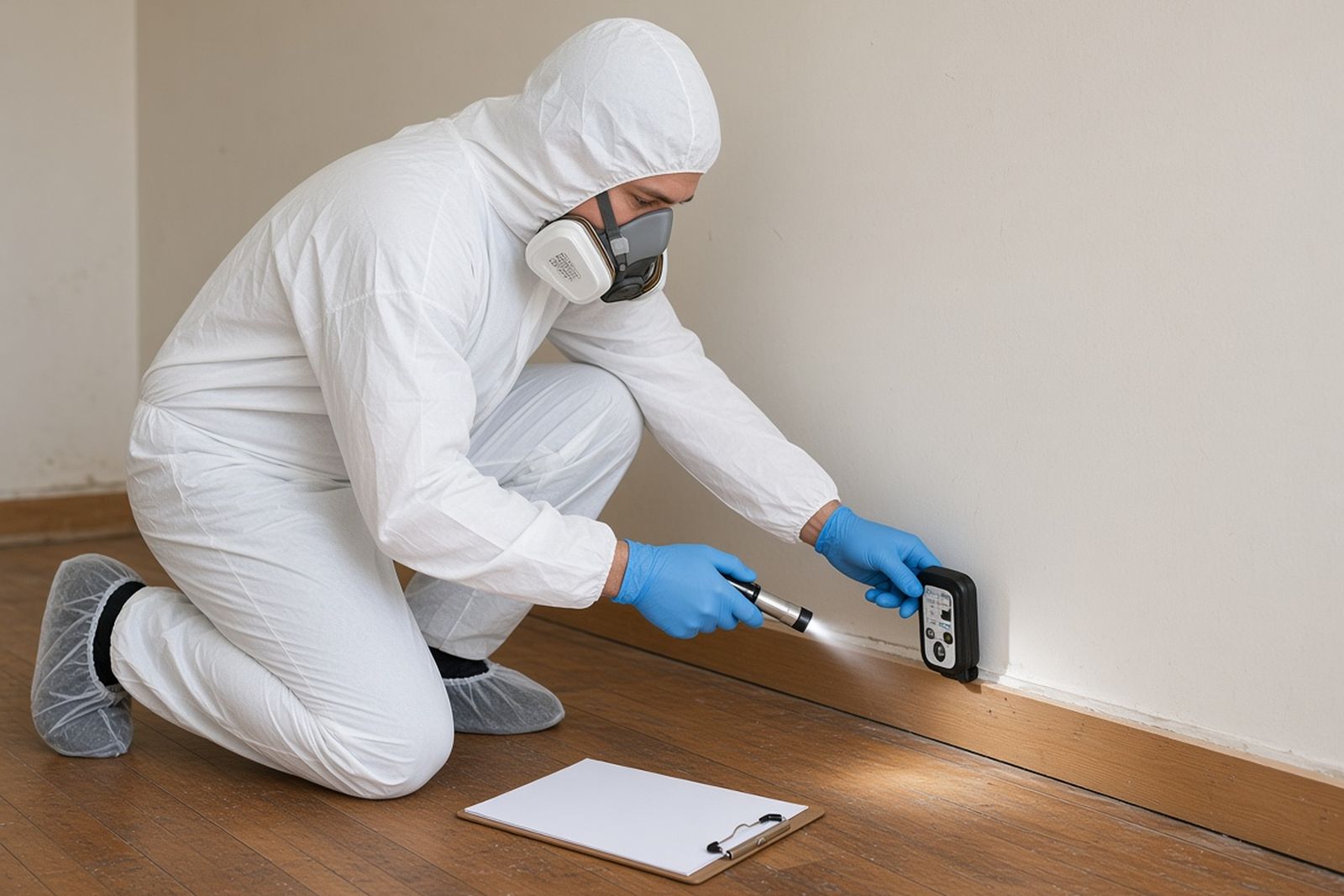
Technician in coveralls and a half-face respirator checking a baseboard with a flashlight and moisture meter
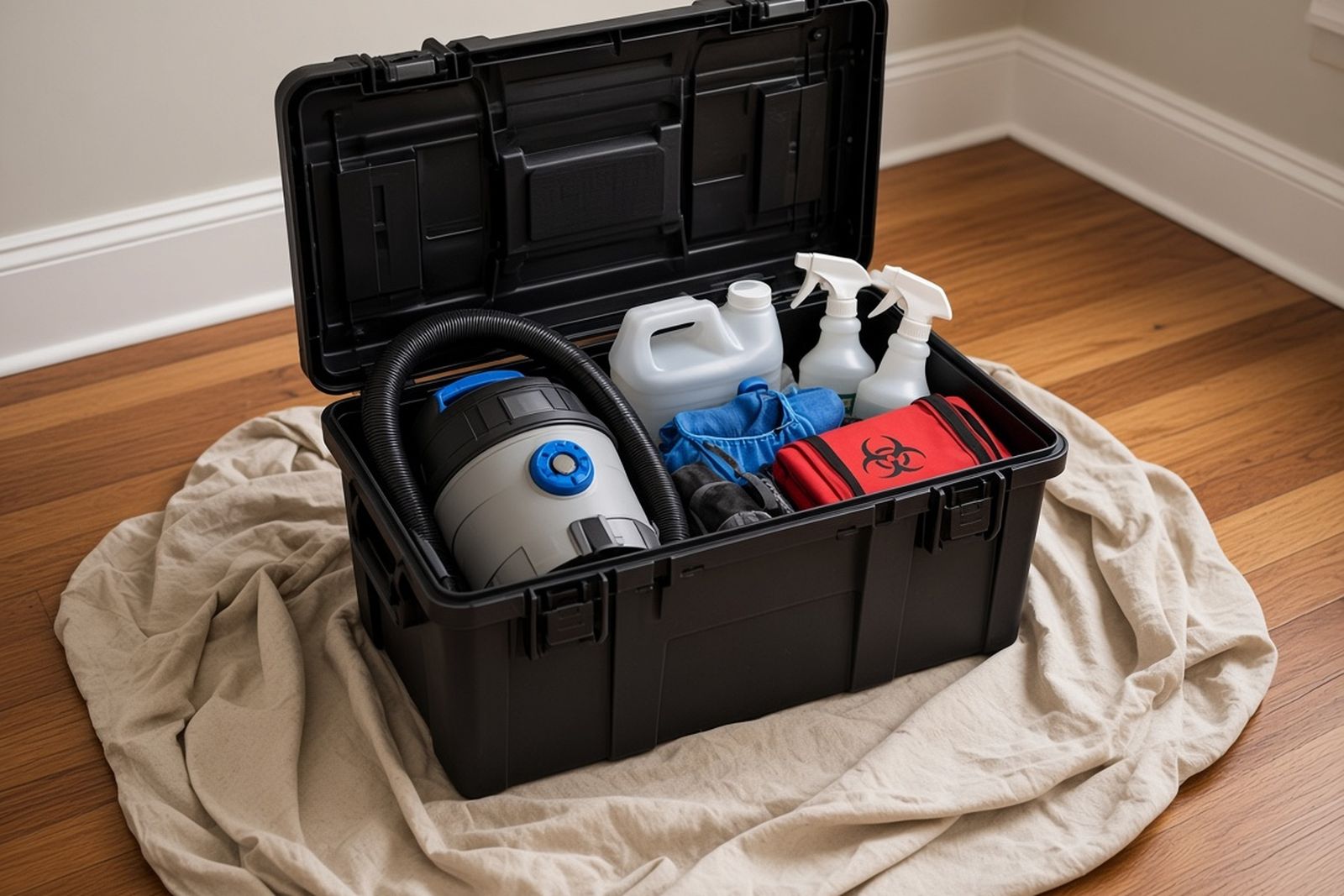
Open equipment case on a drop cloth holding a HEPA vacuum, disinfectant jugs, spray bottles and red biohazard bags

Facts worth knowing

  • In a UK survey of adults bereaved in 2020, 56% of those who sought help from bereavement services had trouble getting it.

    Why it matters: Support can be hard to reach, so you may need to ask more than once or try more than one service.

    Source: Harrop et al., 2021

  • California's victim compensation program pays back up to $1,709 per claim for crime scene cleanup, for applications filed on or after July 1, 2022.

    Why it matters: If you are an eligible victim in California, keep your cleanup invoice and ask about filing a claim; other states pay different amounts.

    Source: California Victim Compensation Board (CalVCB), 2022

  • Fixr's 2025 guide reports an extra charge of $500 to $1,000 per visit for 24-hour emergency biohazard cleanup.

    Why it matters: Ask whether an after-hours fee applies to you and whether waiting until business hours is safe and cheaper.

    Source: Fixr, 2025

Tools that help right now

What would you do?

Poll results

Vote to see how other people answered. You can change your answer at any time.

Your experience

What was the hardest thing to figure out in the first day after the scene was released?

Be the first to vote
General

Which type of incident brought you to this topic?

Be the first to vote

Need help in Los Angeles?

Send a short message about the property to the follow-up inbox. A coordinator can reply by email with next steps.

Your request is sent to the follow-up inbox. A coordinator can reply by email.

If anyone is hurt or in danger, call 911 first.