Malibu, CA

Crime Scene Cleanup in Malibu Canyon, Bluff and Beach Homes

What to do, who to contact, and what to ask in Malibu.

After a violent crime at a Malibu beach or canyon home, see when cleanup can start, how PCH access and ocean air affect it, and what to keep.

Get an email reply about crime scene cleanup

Send a short message to the follow-up inbox. A coordinator can reply by email. This form does not send emergency help; call 911 first if anyone is in danger.

Tell us what you need help with. Share a short description; please leave out medical details, access codes, and other sensitive information.

A request does not confirm a booking. For immediate danger, contact local emergency services.

Or email info@scenerecoveryhelp.com

The short answer for Malibu, CA

A violent crime at your Malibu beach or canyon home is hard enough without guessing what comes next. Once investigators release the scene, a trained biohazard company can take over the blood cleanup. Here you will learn what to ask about Pacific Coast Highway access, steep drives, ocean air and decks, and what to keep for your insurer.

What to do, step by step

  1. 1

    Wait for the release, then sketch the house and slope

    Start after the official release. Sketch your rooms plus the decks, outdoor showers, garage and any guest house. Note which way the ground slopes, since fluid may flow that way. Before work, photograph the setup spots along the highway or your private road. Then your file shows why a certain pad was chosen. If a caretaker opened the gate for investigators, write down who it was and when.

  2. 2

    Keep waste off the highway pullouts

    Ask the company to pick a controlled driveway or a screened pad for sealed bins. Labeled waste should stay out of public view along the highway, and public beach pullouts are never the place to hold it. A good crew sets up clean and dirty zones so workers are not walking up and down your open outdoor stairs over and over. Log the gate codes you give out for a private road, and shut them off when the work is done.

  3. 3

    Ask how wind and dust will be handled

    A good crew lifts the heavy soil first, then disinfects tile and stone that can be saved, keeping them wet for the label time. Soaked materials are sealed before they travel down your canyon drive. On windy bluff or canyon days, dust control should be tightened during demolition and powder cleanup, with doors kept shut while sawing. Ask that deck boards and doorways be checked for residue outside. Rinse water should not reach the sand or the ocean, so ask how it will be collected.

  4. 4

    Allow for ocean-air drying, then save the file

    Allow extra drying time when ocean air keeps materials damp. Ask for a write-up of the final checks, the waste records and a hand-off for your rebuild crew. The hand-off should list what is still open without claiming coastal permits are done. Save the package for your insurer or trustee, who may read it from far away. A rushed finish helps no one. An honest timeline protects whoever lives in your Malibu home next.

What cleanup is like in Malibu

Malibu is a beach community in Los Angeles County with about 12,000 people. Your home may sit near the sand, on a bluff, or up a narrow canyon road above Pacific Coast Highway. After police release it, the land shapes your cleanup as much as the finishes inside. Think of tight turnarounds, decks that hang over slopes, building details meant to resist slides and fire, and a long drive for any waste truck. Ocean air keeps materials damp longer than inland, which stretches drying after demolition. The job falls under OSHA's blood rules and EPA label directions. It does not include wildfire ash cleanup unless you add that work separately.

Privacy and logistics are tied together here. Tour buses and beach traffic on the highway can put curbside setup in front of thousands of people. Up in the canyons, your neighbors may still notice lights or repeat truck trips. You may have a steep driveway, a shared private road, or a parking pad cut into the slope. Ask the company for one exit route for dirty items, and make sure sealed waste stays off public beach-access pullouts. Gate or HOA road rules apply where streets are private. Because outdoor living is central in Malibu, your decks, balconies and sandy entries often belong in the check.

Your records may go to trustees, a coastal HOA, an insurer, and sometimes a lender who watches high-value losses closely. For local questions, the City of Malibu and LA County health offices are the places to start. If fluid or shoes moved outdoors, have the undersides of your decks and the stair runs photographed. Ask that wind be noted during dusty demolition. Later coastal rebuilding may face complex permits, so keep it apart from the biohazard cleanup. Your cleanup file should not try to settle coastal building rules. It only needs to show what was done and what is still open.
What to expect for your type of home

  • Homes on narrow canyon roads: Turnarounds are few, so vehicle spots must be planned ahead. Sealed waste should never sit in a highway pullout or block emergency access.
  • Homes with steep driveways and outdoor stairs: These become downhill tracking paths. Ask how shoes and tools will be contained before residue reaches your lower deck or a shared private road.
  • Beach and bluff homes: Sandy entries, outdoor showers and deck doorways need a check even when the main scene was indoors. Point them out to the crew.
  • Homes in damp ocean air: Malibu drying takes longer after wet cleaning. Ask for confirmation that things are dry before any wall or floor opening is closed.
  • Fire-hardened or rebuilt homes: Yours may have unusual underlayment and sealants. Ask the crew to write down what was removed so your rebuild crew knows what was opened.
  • Canyon lots with guest houses or ADUs: Have them included in the check when paths across the slope connect them to your main house. Shoes can carry residue along those paths.
  • Homes with close neighbors' decks: Salt air and open windows can carry odors next door. Ask about privacy screens and careful airing while the disinfectant sits wet.
  • Homes on private canyon roads: The road or its HOA may cap truck size and set work hours. Have those limits recorded, since they shape where the crew sets up.

Papers and records to keep

  • Release date from the sheriff's investigators or other agency, plus who opened the gate.
  • Photos of rooms, decks, outdoor showers, garages, guest houses and stair runs.
  • A site sketch showing the slope, the setup pad and the dirty exit path to the road.
  • One list of removed soft materials and one of hard surfaces that were cleaned.
  • Products used indoors and on decks, and how many minutes each stayed wet.
  • Wind and humidity notes that affected dust control and the timing of the final check.
  • Private-road or HOA access limits and a log of temporary codes.
  • Waste packing and tracking records for the trip down the canyon drive.
  • A note naming rooms and ocean-facing decks that stay closed until repairs are done.

Local offices and official help

Common questions in Malibu

Why can't the crew just set up along Pacific Coast Highway?

Because the highway frontage and beach pullouts are very public. Sealed waste or an open truck bed there is easy for drivers to see and can block emergency or beach-access traffic. Ask for a driveway pad or screened court on your lot instead. When loading at the highway edge cannot be avoided, curb time should be short. If a private road is the only way out, the HOA's vehicle rules apply, and bins should stay covered all the way down. Have the setup spot and the reason written down.

Our lot is on a canyon slope. How does that change the check?

Gravity pulls spilled fluid and footprints downhill, toward crawl spaces, the garage or the deck below. The check should follow your slope instead of stopping at the first stained upstairs floor. Outdoor stairs and retaining wall edges can carry residue between levels. Ocean gusts on the ridges can carry cutting dust, so doors should stay shut while sawing. Ask for photos of lower landings even if they look clean at first glance. Rebuilding will also need a plan for carrying materials up steep routes.

Does the damp ocean air delay the final check?

Yes, it often does. Ocean air in Malibu can keep cleaned surfaces and demolition openings damp longer than at inland homes. Checking or closing walls too soon can lead to returning odor, or to mold that has nothing to do with the incident. Ask for drying time in the plan and written notes on what was seen. New floors should wait until openings are dry. Damp air does not waive the scene release or proper waste handling. On a tight bluff lot, airing out should respect your neighbors' privacy.

Do my decks need to be part of the cleanup?

They do whenever the incident, police or residents used them, or when fluid inside moved out through a doorway. The same goes for balconies and outdoor showers. Salt-worn deck cushions and outdoor rugs that soaked up fluid usually go. Composite or sealed wood decking can often be cleaned. Deck undersides and stair supports can hide tracking. Approval may differ for shared HOA decks and private ones, so sort that out before work moves outside. Take photos before cleaning for your insurance file.

What should a trustee or insurer receive for a coastal estate?

They should receive a file that shows the release date, photos of rooms and decks, and what was removed. Add the products used and how long each stayed wet, how waste went up the drive, and which areas still wait on repairs. Note any weather that affected drying or dust control. Keep coastal permit questions apart from the biohazard sign-off. Skip graphic storytelling. A remote adjuster should be able to understand the work without visiting your canyon or bluff. Store the file with the trust or estate papers.

What if the road closes or fire risk is high during cleanup?

Ask the contractor to plan for delays. Pacific Coast Highway and canyon roads can close for fires, slides or crashes. Sealed waste should wait for pickup locked in your garage, not outdoors. On red-flag days, tools that make sparks or heat should not be used near dry brush. If an evacuation order is issued, leave right away. Go back to the work only when officials allow access again.

Our beach house gets a lot of salt air. What should we know?

Salt air and ocean moisture slow drying and can rust some metals. Keep your windows closed during the work and run dehumidifiers as the contractor advises. Beach houses often have decks and outdoor showers that people used after the incident, so have them included in the check. Rinse water must not reach the sand or the ocean, so ask how the contractor will collect it. Allow extra time before the final check.

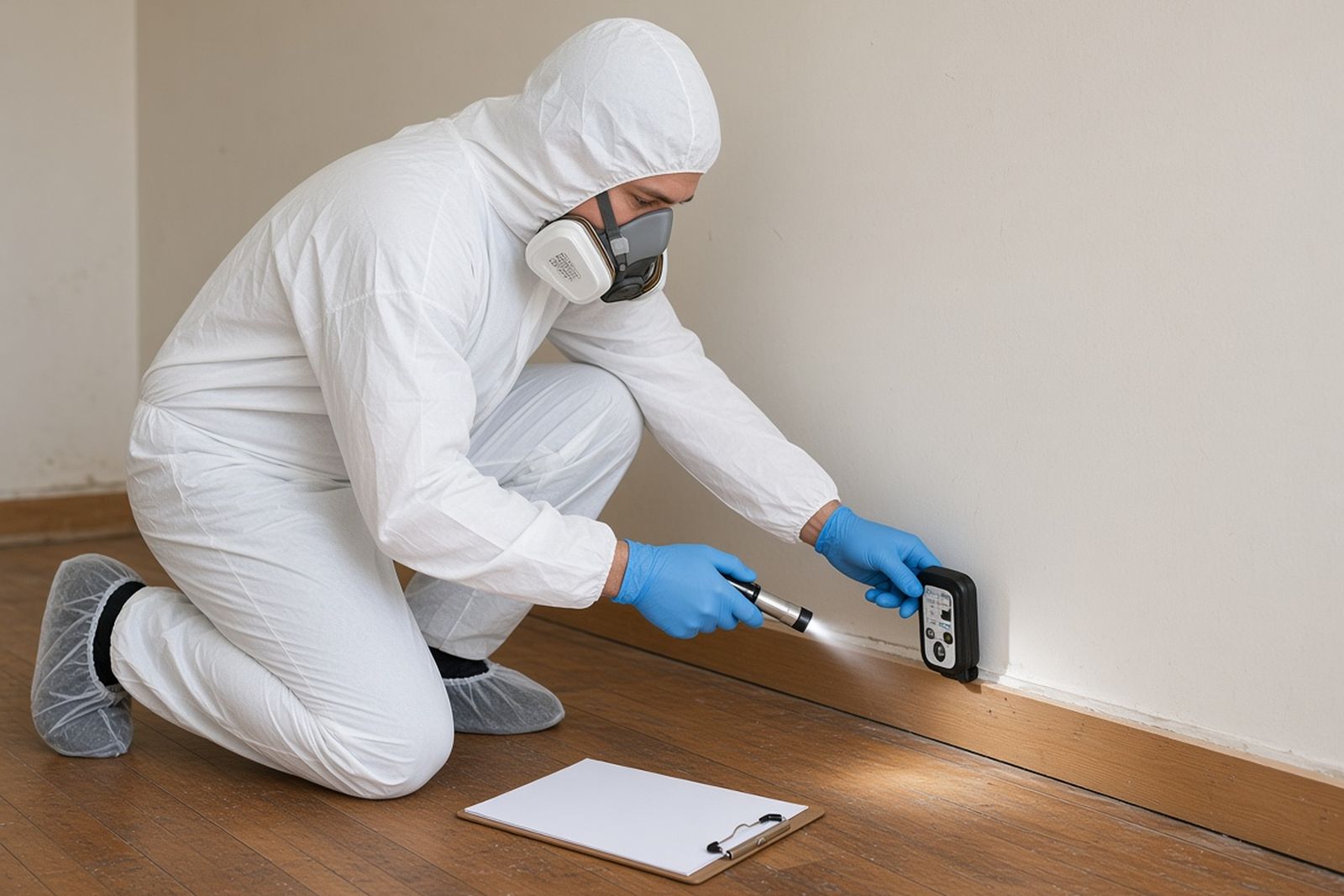
Technician in coveralls and a half-face respirator checking a baseboard with a flashlight and moisture meter
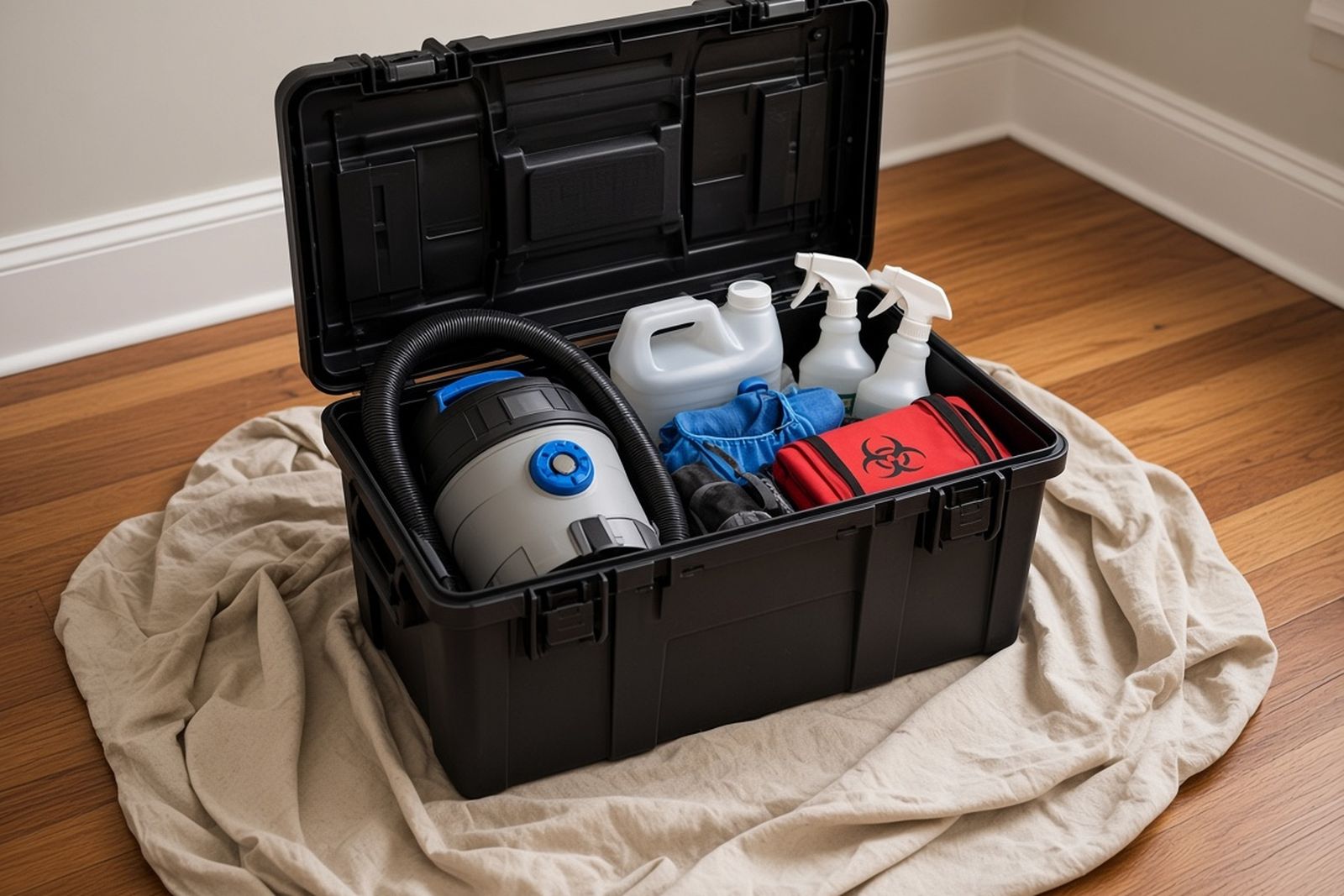
Open equipment case on a drop cloth holding a HEPA vacuum, disinfectant jugs, spray bottles and red biohazard bags

Facts worth knowing

  • California's victim compensation program pays back up to $1,709 per claim for crime scene cleanup, for applications filed on or after July 1, 2022.

    Why it matters: If you are an eligible victim in California, keep your cleanup invoice and ask about filing a claim; other states pay different amounts.

    Source: California Victim Compensation Board (CalVCB), 2022

  • Utah's Office for Victims of Crime paid $4,869 in total for crime scene cleanup across all claims in its 2024 reporting year.

    Why it matters: Cleanup help from these programs may go unclaimed, so ask your state's victim program whether you qualify.

    Source: Utah Office for Victims of Crime, 2024

  • Insured flood victims in a study published in 2022 said slow insurance inspections held up their cleanup.

    Why it matters: Ask your insurer how soon an adjuster can come, and whether you may start urgent cleanup after taking photos.

    Source: McKenzie et al., 2022

Tools that help right now

What would you do?

Poll results

Vote to see how other people answered. You can change your answer at any time.

Your experience

What was the hardest thing to figure out in the first day after the scene was released?

Be the first to vote
General

Which type of incident brought you to this topic?

Be the first to vote

Need help in Malibu?

Send a short message about the property to the follow-up inbox. A coordinator can reply by email with next steps.

Your request is sent to the follow-up inbox. A coordinator can reply by email.

If anyone is hurt or in danger, call 911 first.