Short answer
Before you look at price, make sure each bid covers the same work. Check that each one cleans the full compartment, the portable equipment, and the soft items. Check which registered products are used and how long they stay wet. Ask how needles and waste are handled, how long your unit is really out of service, and what records you get. A low bid often leaves steps out. A high bid should explain its extra work.
Why quotes differ, and what a thin one leaves behind
You may be surprised when two companies look at the same ambulance, fire truck cab, or patrol car and send back very different numbers. Sometimes one company is simply faster. More often, the two bids describe two different jobs.
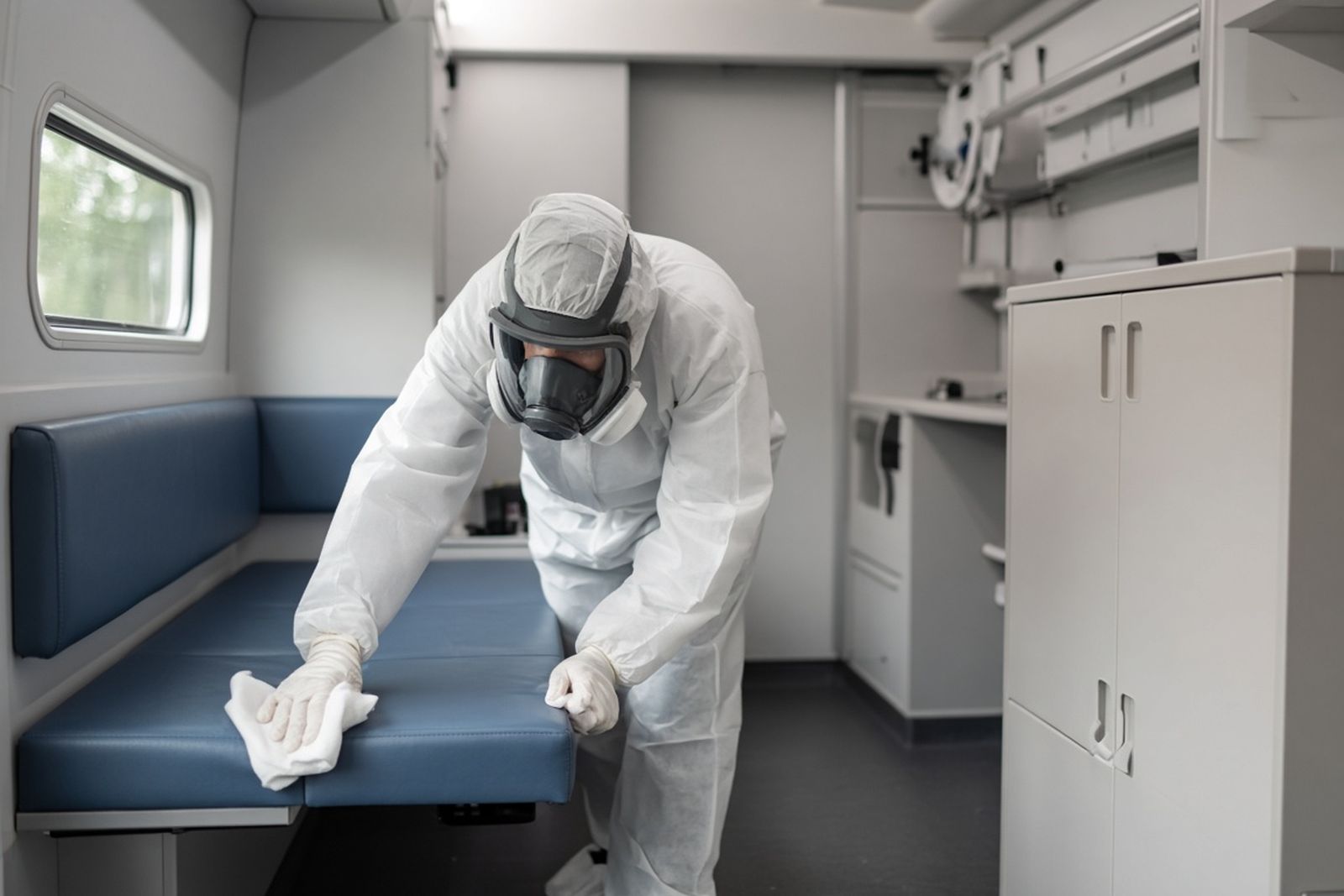
One quote may assume a wipe of the mess you can see and a quick return to service. Another may pull the cot mattress and bench cushions and empty the cabinets. It may clean monitors and cables, search for needles, keep every surface wet for the full label time, and give you a written record. Both are called decon, short for decontamination. Only the second is a full deep clean, often called a terminal clean.
Your job is to turn each bid into a list of tasks. Then you can see where the gap comes from. Only then does comparing prices mean anything.
The way a company charges adds another layer. Some charge per unit. Some charge by the hour, and some by how heavy the mess is. Others pair a base fee with separate charges for replacements, waste, travel, or after-hours calls. Two bids that look alike on page one can end up far apart once those extras are added.
A thin bid can leave germs behind, and research shows how much depends on the steps and not on good intentions. In a 2015 tracer study of emergency medical response, Valdez and colleagues found that existing decontamination left 26 of 48 sites tracer-positive. When an added hydrogen-peroxide wipe protocol was used, 19 of 48 sites remained tracer-positive.
A tracer is a harmless marker that shows where a mess has spread. Those results suggest that even careful cleaning misses a lot. They also suggest that a more thorough method makes a difference you can measure. A bid that is low because it skips steps does not save you money if the unit goes back out still dirty.
Time pressure plays a part too. A Danish study of 80 ambulances, published in BMC Infectious Diseases in 2018, found that crews adhered to thorough-cleaning guidelines only 35% of the time, though between-patient moderate cleaning adherence was 100%. Thorough cleaning is the step most likely to get squeezed. That is often the very thing you pay an outside company to do right.
Making the bids cover the same work
Send every company the same written request. Describe your vehicle types, your usual kinds of mess, and what you expect a deep clean to include. Ask them to answer line by line, not with one total.
When the bids come back, build a simple table. Mark each item as included, left out, or billed separately. The gaps usually explain most of the price difference.
Put at least one real-life case in your request. For example, a unit comes back from a trauma call with blood on the floor, bench seat, and cot. Ask each company to say exactly what it would do. The answers show differences that a plain price sheet hides.
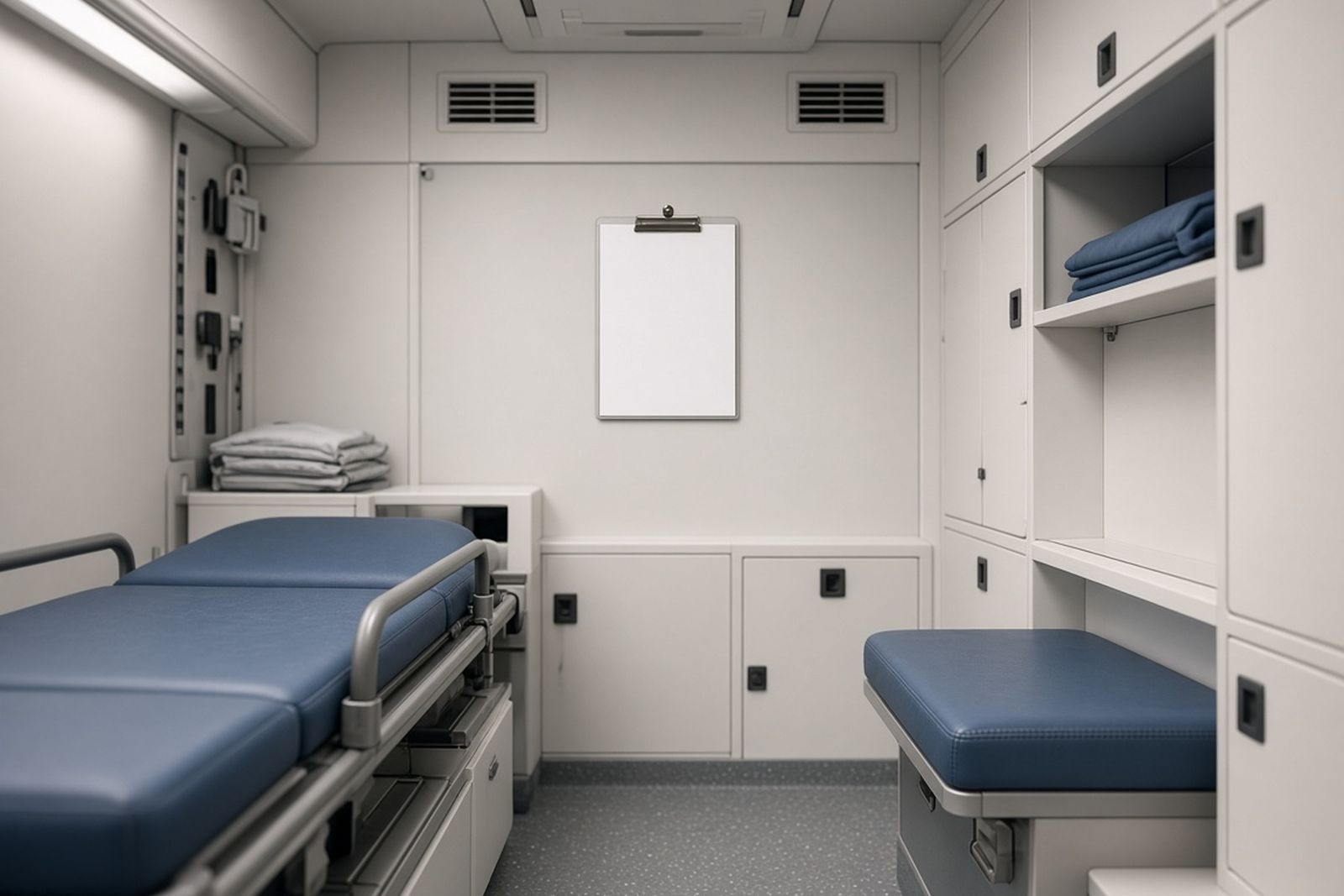
- Patient compartment surfaces, including the ceiling, walls, floor channels, and cabinets inside and out
- Cab surfaces, most of all where your crews touch controls with dirty gloves
- Cot, mattress, straps, and mounting hardware
- Bench seats, captain's chair, and seat seams
- Portable equipment such as monitors, cables, suction units, and stair chairs
- A search for needles and other sharp items, with a note of anything found
- A check of soft items and a decision on what to replace
- Packing and disposal of waste
- A written decon record for each unit
Products and wet time: what each bid should name
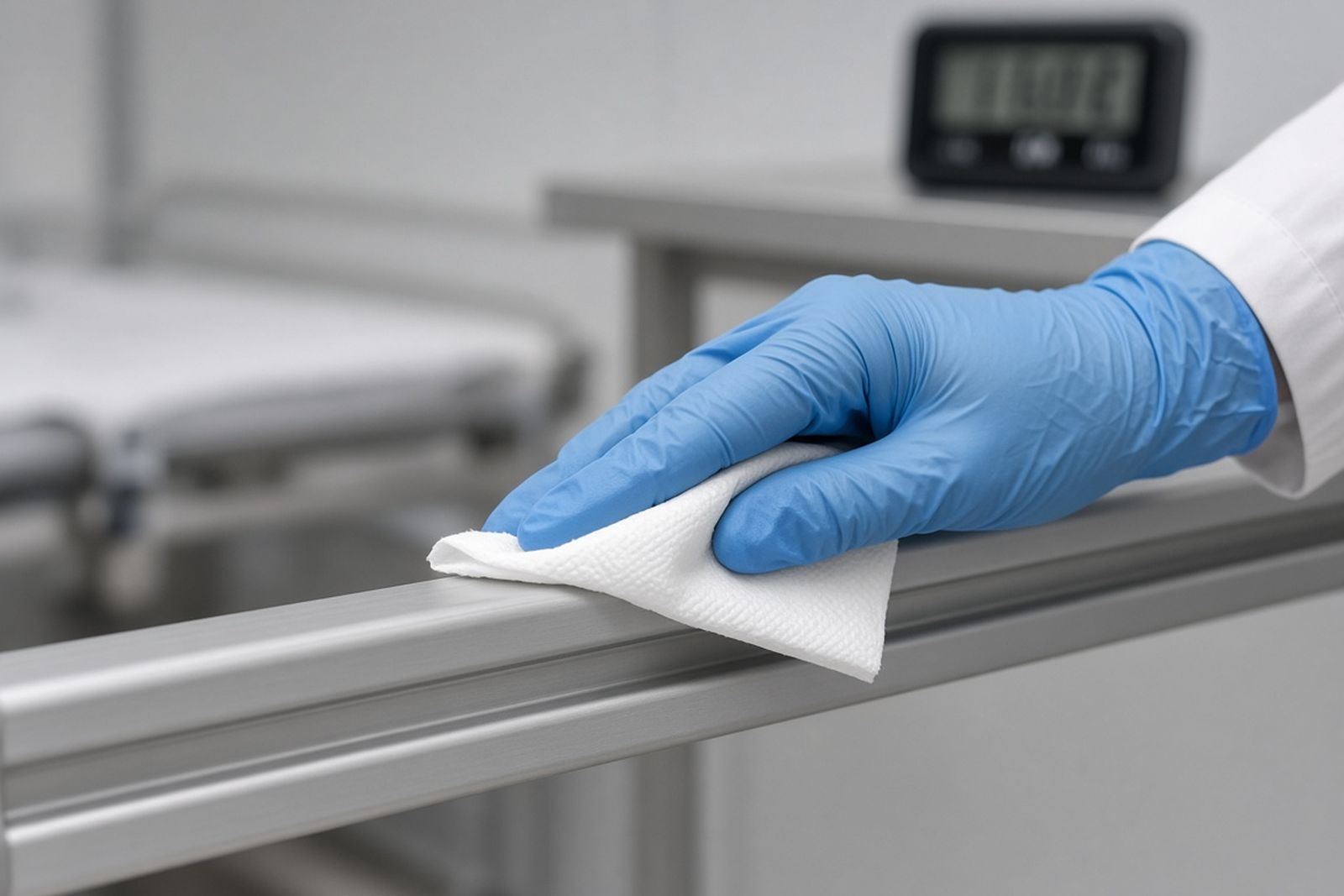
Ask each company to name the disinfectants it plans to use. Ask for the EPA registration numbers too. Ask how long the label says each product must stay wet for the germs you care about. That wet time is called contact time. A company that cannot answer has not planned the job with care.
Contact time is where cheaper bids most often cut corners, because you cannot see it afterward. A surface sprayed and wiped dry in seconds looks just like one that stayed wet for the full label time. Product runs off walls and ceilings quickly. Ask how the company keeps those surfaces wet and whether it applies the product again.
Also ask whether the products are safe for your surfaces. Some wear down vinyl seats, plastic cabinet faces, or screen coatings over time. A product that costs a little more but protects your interior can save you replacement costs later. Your infection control officer should review the product list before you sign.
How do soft items and equipment affect the final cost?
Soft items are the biggest source of surprise charges. A mattress with a torn cover, a bench cushion with a split seam, or soaked straps may need to be replaced, not cleaned. One bid may include a set amount for replacements. Another may bill them at cost plus a handling fee. A third may not mention them at all.
Ask each company how it decides whether to clean or replace an item. Ask whether it will photograph damaged items before throwing them out, and what approval it needs from you first. Set a dollar limit for approval in writing, so the invoice holds no surprises.
Portable equipment raises the same issue. Some companies clean monitors and cables as part of the job. Others expect your crews to do it. Make sure the bids treat this the same way.
Time out of service
Every hour a unit is out of service costs your agency something real. You may pay for a reserve unit, move crews between stations, or accept longer gaps in coverage. That cost belongs in your comparison even though it is not on the bid.
Ask each company for an honest timeline for a routine deep clean and for a heavy mess. Ask whether it comes to your station or needs units brought to it. A company that works on site may cost more per job but return your units faster.
Be careful with a time estimate that seems too short. A company may promise a full deep clean in far less time than the others. Ask how it fits full contact times, a needle search, and equipment cleaning into that window.
Think about your busy periods, too. A company that can handle one unit a week may struggle when several units are soiled on the same night. Ask how many units it can work on at once. Ask whether it has backup technicians, and how it decides who goes first when several agencies call together.
Two patrol car bids, compared line by line
Take, as an illustration, a mid-sized police department. It needs a contractor for patrol cars soiled during arrests, such as a rear seat with blood or vomit on it. It gets two bids, and one is far lower than the other.
The fleet supervisor lines them up item by item. The lower bid covers wiping the rear seat and floor with a general-purpose disinfectant. It does not mention the partition, door handles, seat belts, the gap under the molded seat, or a needle search. It gives no contact time. Its only paperwork is a one-line receipt.
The higher bid removes the molded rear seat where it can and searches for needles and other sharp items. It cleans the partition, door interiors, seat belts, and floor. It uses a registered disinfectant with a stated contact time. Its record lists the areas cleaned, the products used, and anything found. It also offers service on site at the department's garage.
The supervisor then adds the cost of moving cars to the lower bidder's shop and back. The gap narrows. Given the difference in the work and the records, the department picks the higher bid and asks for a review every quarter.
Warning signs, and what to ask for before you sign
A low price is not a problem in itself. Some companies work efficiently or have lower overhead. Worry when the price is low because the work list is thin, the protections are weak, or the paperwork is missing.
Do you see several of the signs below in one bid? Ask the company to walk you through how it would handle one of your units. Think about a supervised trial clean before you sign.
Once you narrow the field, ask the finalists for a sample decon record and references from other EMS, fire, or law enforcement fleets. Ask for proof of insurance and a summary of how their technicians are trained and protected. A company that is at ease being checked will often offer these before you ask.
Write what you agreed into the contract. Include the work list, the products, the approval limits, the expected timing, and the record format. That makes future invoices easy for you to check.
Public agencies may also have purchasing rules that govern how bids are requested, scored, and awarded. So bring in your purchasing office early.
Plan to look again after the first few months. Pull a handful of decon records and compare them with the agreed work list. Ask your crews whether returned units look and smell properly cleaned. That review tells you whether the price you accepted is buying the service you expected.
- One lump-sum price with no list of tasks
- No named products, registration numbers, or contact times
- No mention of needles, soft items, or portable equipment
- A return time that seems too fast for a full deep clean
- No sample decon record
- Vague answers about technician training and protective gear
- Not wanting your infection control officer to watch