Los Angeles, CA

Infectious Disease Disinfection Planning in Los Angeles, CA

What to do, who to contact, and what to ask in Los Angeles.

Illness in your Los Angeles building, shop or office? See how germs travel through elevators and laundry rooms, and what to ask your HOA or a company.

Get an email reply about infectious disease disinfection

Send a short message to the follow-up inbox. A coordinator can reply by email. This form does not send emergency help; call 911 first if anyone is in danger.

Tell us what you need help with. Share a short description; please leave out medical details, access codes, and other sensitive information.

A request does not confirm a booking. For immediate danger, contact local emergency services.

Or email info@facilitydisinfectionguide.com

The short answer for Los Angeles, CA

When illness moves through your Los Angeles tower, HOA amenity or street-level shop, think about how it travels: elevators, laundry rooms and package lockers. Check that the product's EPA label matches what people are sick with. You will see what to ask your board or a company, and which records are worth keeping.

What to do, step by step

  1. 1

    Trace how germs travel before a product is chosen

    List the high-touch points in the order you and your visitors move: parking elevator, lobby, mail area, amenity kitchen and unit doors. Note any restroom where a heavy mess centered. Share this with your board or the company. A product should be chosen only after that list exists and the illness pattern has been described. Nobody needs to be diagnosed or named for this step, and your neighbors' privacy depends on it.

  2. 2

    Match the EPA label to what happened

    Ask for an EPA-registered disinfectant whose label supports your concern. List N fits COVID-19 when directions are followed. It does not cover every spore-forming germ or stomach virus. If your doctor raises a spore concern, ask for a product whose label makes a spore claim. And if the pitch for your tower or office uses the word sterilization, treat it as sales talk and ask for the label instead.

  3. 3

    Put empty time and fresh air on one HOA clock

    Treated amenities and elevators should stay closed through the full wet time. Look for a factual closure notice in your building, with no names and no diagnoses. After the wet time, the space is aired the way the safety data sheet says, and only then reopened. If you see an elevator back in service early, tell the manager. One shared clock for the whole building keeps the desk, the vendors and the residents on the same page.

  4. 4

    Ask for records, not a door-hanger certificate

    Your HOA file should hold EPA numbers, a list of zones, proof of cleaning, clock times for each wet period and photos of the prep. Swabbing a lobby handle shows leftover film. It does not prove any germ is gone. Nobody should invent lab clearance the job never included. Notices are filed apart from any private medical details, so ask how your building stores them.

What cleanup is like in Los Angeles

Across the Los Angeles Basin, outbreak calls often come from HOA boards. Your board looks after package rooms, underground parking elevators and amenity kitchens that hundreds of hands touch each week. The most useful first step is a floor-by-floor list of what people touched while someone was contagious. An invoice to fog the whole building is not. Basin air quality and closed-window cooling can trap chemical smells on your floor. Ask for a reopening time that allows for airing out after the wet time ends, not one set by convenience.

Street-level shops and medical-style offices get short visits. If you run one, your reception counter, shared restroom and card reader see a steady stream of hands. A good crew works each restroom from dirty to clean and leaves it shut until the product's timer is done. Los Angeles County Department of Public Health materials say the same for community buildings: a registered product, left wet for its full label time. They do not turn a condo hallway or your storefront into a sterile operating room. Plan for some lost business hours while the restroom stays closed.

If you manage property, keep the wording for resident amenities apart from any clinic tenant's infection-prevention program. CDC guidance written for hospitals does not give your HOA board a standard for clearing a residential floor. Blood or other body fluids in a Wilshire tower unit bring OSHA's blood rules into play for the crew. An ordinary cold, flu or stomach bug is simpler for you to handle. Surfaces are washed and then disinfected with a label that lists the germ. No one makes sterile-tower promises.

What to expect for your type of home

  • Apartment and condo towers: Elevator cabs, laundry controls, package lockers and amenity kitchen handles outrank decor that few people touch. Ask your board to put them in that order.
  • Amenity lounges: Upholstery and drapes cannot be handled like a countertop. Have the building settle what happens to them before anyone sells you a fog pass.
  • Amenity kitchens: Counters that touch food follow rinse and use-site rules on the label. They should be treated as a separate step from other hard surfaces nearby.
  • HOA-managed buildings: A package delivery or vendor visit can break the wet time. Ask the front desk to hold access to treated areas until the clock runs out.
  • Rentals and mixed properties: Be exact about whether the job covers your private unit, a shared amenity or a commercial suite. The answer changes who pays and who must be told.
  • Mixed-use towers with a clinic: The clinic tenant's duties belong in a separate written plan. Your floor's cleaning should never be described in the clinic's terms.

Papers and records to keep

  • The property type and zones covered: private unit, amenity or commercial suite
  • The elevator-to-amenity list of high-touch spots, with porous items left out
  • The label for each product used in the tower, kept with the HOA minutes
  • Proof that package-room and parking-elevator grime was washed off first
  • Clock times for when each amenity kitchen and laundry room was treated and reopened
  • Fresh-air steps and the HOA reopening time, tied to the label and safety sheet
  • Waste notes for heavy mess or body fluids, when either was present
  • Board postings, reviewed so no resident's illness is revealed

Local offices and official help

Common questions in Los Angeles

Can our HOA say the tower is free of germs after one List N treatment?

No. A product being on List N does not mean it covers norovirus, C. diff spores or every other concern. It never sterilizes air, soft items or people. What your board can say is which hard surfaces were cleaned and kept wet for the labeled contact time. It can note which fabrics were washed or left out, and when the elevators reopened. Routine cleaning and handwashing still matter after the job is over.
Someone vomited near our amenity kitchen. How should it be handled?

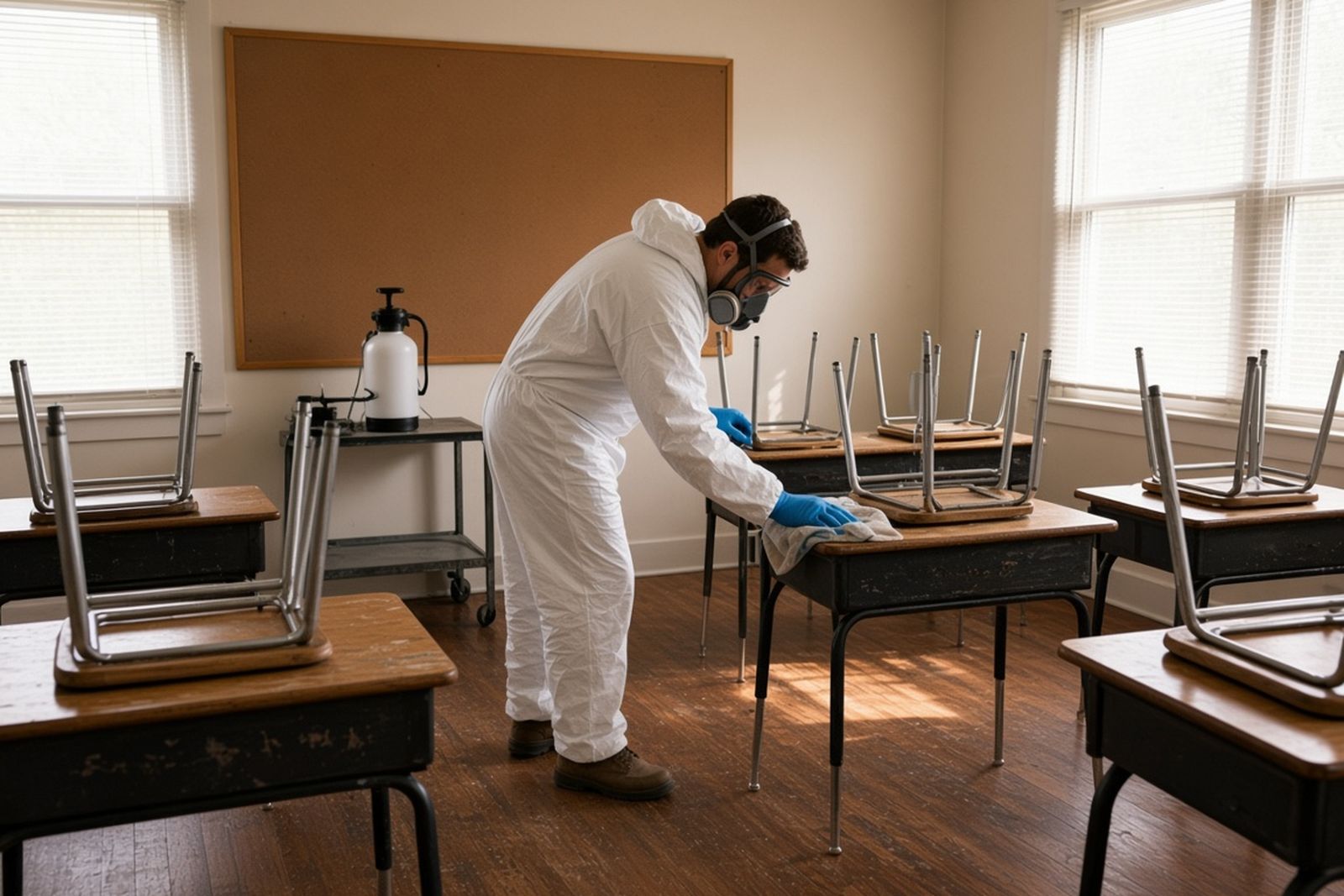
The amenity should close. Workers put on protective gear and bag the mess. Hard surfaces are washed with detergent. Next comes a registered product labeled for stomach germs. The counters, cabinet pulls and nearby restroom taps then sit wet for the whole labeled time. On surfaces that touch food, the label's rinse directions are followed. Soft seating may need washing or removal for a while. The kitchen reopens only at the written time, so check the notice.

What should a building notice say after disinfection work?

It should say which floors or amenities are closed, how long they must stay empty for the contact time and when they should reopen based on the label. It should not name sick residents or share a diagnosis. For anything beyond the building, residents can call the county public health department or CDPH. Product records stay in the building office. If the notice in your lobby says more than this, ask the manager to take it down and repost.

A clinic in our building does a deep clean. Why can't our floor get the same?

Because the two are different kinds of places. A licensed clinic or hospital has trained infection-prevention staff and strict rules for its medical devices. CDC's health care guidance supports those settings. It is not a standard for clearing homes. On your floor, the aim is lower risk on surfaces, using labeled products after grime is cleaned off. Hospital-sterile sales talk in a condo hallway misleads residents. It can also skip the wet time that really matters.

I manage a property. What counts as realistic proof the job was done?

A useful packet has EPA registration numbers, the rooms and surface types treated and proof of cleaning. It adds timed wet periods, prep photos, fresh-air notes and the reopening time. A swab test, if one was used, only checks for grime. No LA tower is germ-free forever, and a packet that says otherwise should worry you. Reset routine cleaning afterward. A single job is not an ongoing program.

My apartment has no windows that open well. How do I clean after an illness?

Pick a mild product with clear return steps. Avoid foggers and aerosol sprays in rooms you cannot air out. Use wipes or a cloth to put disinfectant right on handles, taps and counters. Run the bathroom fan and range hood if you have them. Keep inside doors open to move air. If anyone at home has asthma, ask a doctor or pharmacist which products may be easier to tolerate.

Who pays for disinfection in a rental after a tenant's illness?

That depends on your lease and where the work happens. Common areas are usually the landlord's or HOA's job. Cleaning inside a unit is often the tenant's. If you need professional help inside your unit, read your lease or ask the landlord in writing before you hire anyone. For questions about tenant rights, a local tenant-rights group or the city's housing office can explain the rules. Keep receipts and a short description of the work.

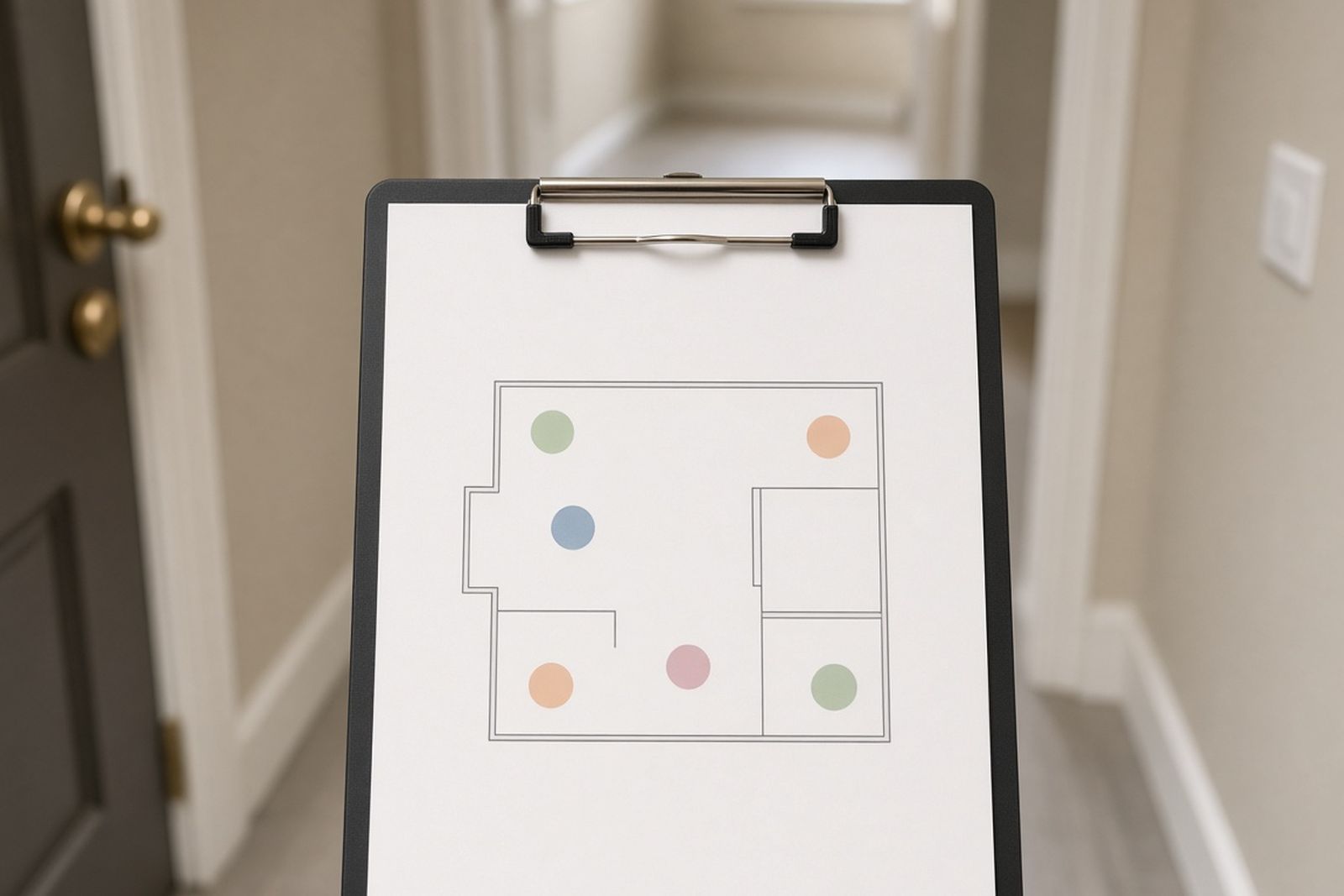
Clipboard showing a room plan with color-coded dots marking high-touch surfaces
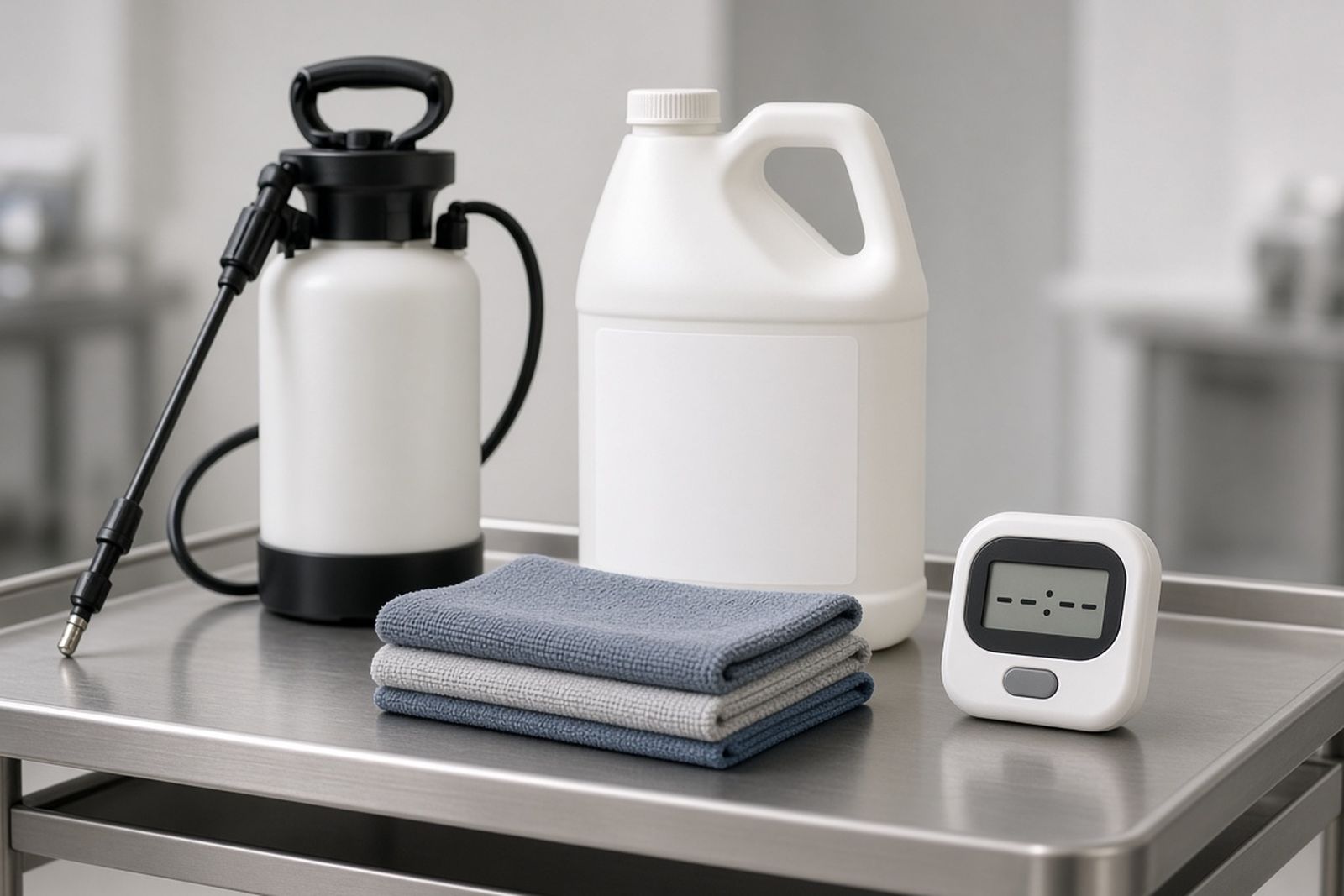
Pump sprayer, disinfectant jug, folded cloths and a contact-time timer on a steel cart

Facts worth knowing

  • CDC school guidance says flu virus can live on a surface, and possibly infect someone, for up to 48 hours.

    Why it matters: If someone in your home or building has flu, wipe down shared surfaces often while they are sick.

    Source: CDC, 2019

  • A disinfectant must be registered with the EPA before it can be sold in the U.S., and more than 4,000 germ-killing products are registered.

    Why it matters: Registration does not mean a product kills every germ, so check that the label lists the germ you are worried about.

    Source: EPA, 2025

  • OSHA requires employers whose workers may contact blood to keep a written safety plan, offer hepatitis B shots within 10 working days, and train workers at least yearly.

    Why it matters: When you hire a cleanup company, you can ask whether its workers have this training and a written plan.

    Source: OSHA, 1991

Tools that help right now

What would you do?

Poll results

Vote to see how other people answered. You can change your answer at any time.

Your experience

When your facility had an illness cluster, how did you handle cleaning?

Be the first to vote
Process

How did you decide whether to close all or part of the facility?

Be the first to vote

Need help in Los Angeles?

Send a short message about the property to the follow-up inbox. A coordinator can reply by email with next steps.

Your request is sent to the follow-up inbox. A coordinator can reply by email.

If anyone is hurt or in danger, call 911 first.