Short answer
OSHA rules apply to employers, not to you as a property owner. For crime scene cleanup, the key federal rule is the Bloodborne Pathogens Standard. It requires a written exposure control plan, training, an offer of hepatitis B vaccine, protective gear and records. Rules on breathing protection, general protective gear and chemical hazards also apply. You can ask a company to show how it meets each one before work begins.
Does OSHA regulate me, or the company I hire?
OSHA is the federal workplace safety agency. It regulates employers and the conditions their workers face. If you are a homeowner cleaning your own living room after a break-in, OSHA does not inspect you. But the moment you pay a company to send workers into that room, things change. The company becomes responsible for protecting those workers under federal law.
That difference matters to you for two reasons. First, it explains why a professional crew arrives with written plans, special equipment and paperwork that may seem like too much for a small area. Second, it gives you a practical yardstick. A company that cannot describe how it follows OSHA rules is telling you something about how it runs every other part of the job.
Business owners are in a different position. If an assault happens in your shop, warehouse or office and you ask an employee to clean it, you may have duties of your own. That is one reason many businesses call a trained cleanup company and do not hand a mop to staff.
The standard that matters most: bloodborne pathogens
The Bloodborne Pathogens Standard, 29 CFR 1910.1030, is the backbone of crime scene work. Bloodborne pathogens are germs carried in blood. The rule applies whenever employees can reasonably be expected to touch blood or other body fluids that can carry disease during their duties. That describes nearly every job after a violent incident, a burglary with injuries or a self-inflicted wound.
The standard asks employers to treat all such material as if it could spread disease. This approach is called universal precautions. Crews do not guess which stains are risky. They assume every one is and plan for that.
Several core requirements follow from that starting point:
- A written exposure control plan that names the tasks with exposure risk and explains how the company lowers it
- Safety equipment and work habits that limit exposure, such as containers for sharp objects and steps that limit splashing
- Protective gear suited to the task, provided and kept up by the employer
- Hepatitis B vaccine offered to exposed workers
- A medical check and follow-up if a worker is exposed
- Labels, training and records
Training and vaccination requirements
A single class at hiring does not satisfy the rule. OSHA's Bloodborne Pathogens Standard, in its 2001 text, requires bloodborne pathogen training at initial assignment and at least annually thereafter. The training must cover how diseases spread and the company's own exposure control plan. It must cover how to choose and take off protective gear and what to do after an exposure.
Vaccination has a clear timeline as well. Under 29 CFR 1910.1030, as published by OSHA in 2001, employers must offer the hepatitis B vaccine within 10 working days of assigning a worker to tasks with occupational blood exposure. Workers may say no. But the employer has to make the offer and record the answer.
When you interview a company, you do not need to see anyone's medical file. You can fairly ask two things. Has every worker on your job finished current bloodborne pathogen training? Has each one been offered the hepatitis B vaccine? A confident yes, with an offer to show training dates, is a good sign.
Which other OSHA rules come into play?
Crime scene cleanup touches several standards beyond bloodborne pathogens. Each one deals with a hazard that shows up often in this work.
The general PPE standard, 29 CFR 1910.132, covers protective gear. It requires employers to review workplace hazards, choose gear that fits them and train workers to use it. The respiratory protection standard, 29 CFR 1910.134, applies when crews wear tight-fitting respirators, which are fitted breathing masks. That often happens when drywall or carpet is cut out or strong disinfectants are used in a closed room. The rule calls for a written program, a medical check and fit testing.
Hazard communication rules, 29 CFR 1910.1200, cover the chemicals crews bring with them. Workers must be able to read the safety data sheets and understand the hazards of each product. Some jobs also involve broken glass, damaged fixtures or tight spaces. These raise ordinary safety concerns. OSHA handles those through the employer's general duty to keep workplaces free of known serious hazards.
State plans and the other layers
Many states run their own worker safety programs. OSHA reported in 2024 that it approves 29 State Plans, 22 covering private and public workers and 7 covering only state and local government employees. In states with their own plan, a state agency enforces worker safety. Its rules must be at least as effective as the federal ones. Some go further.
This means the exact rules a crew follows can depend on where your property sits. A company working in several states should know which plan applies at your address. It should know whether that plan adds anything to the federal rules.
Worker safety law is also only one layer. Other rules cover waste handling, hauling and business registration. Those come from other agencies, usually your state environmental or health department.
What compliance looks like on the job
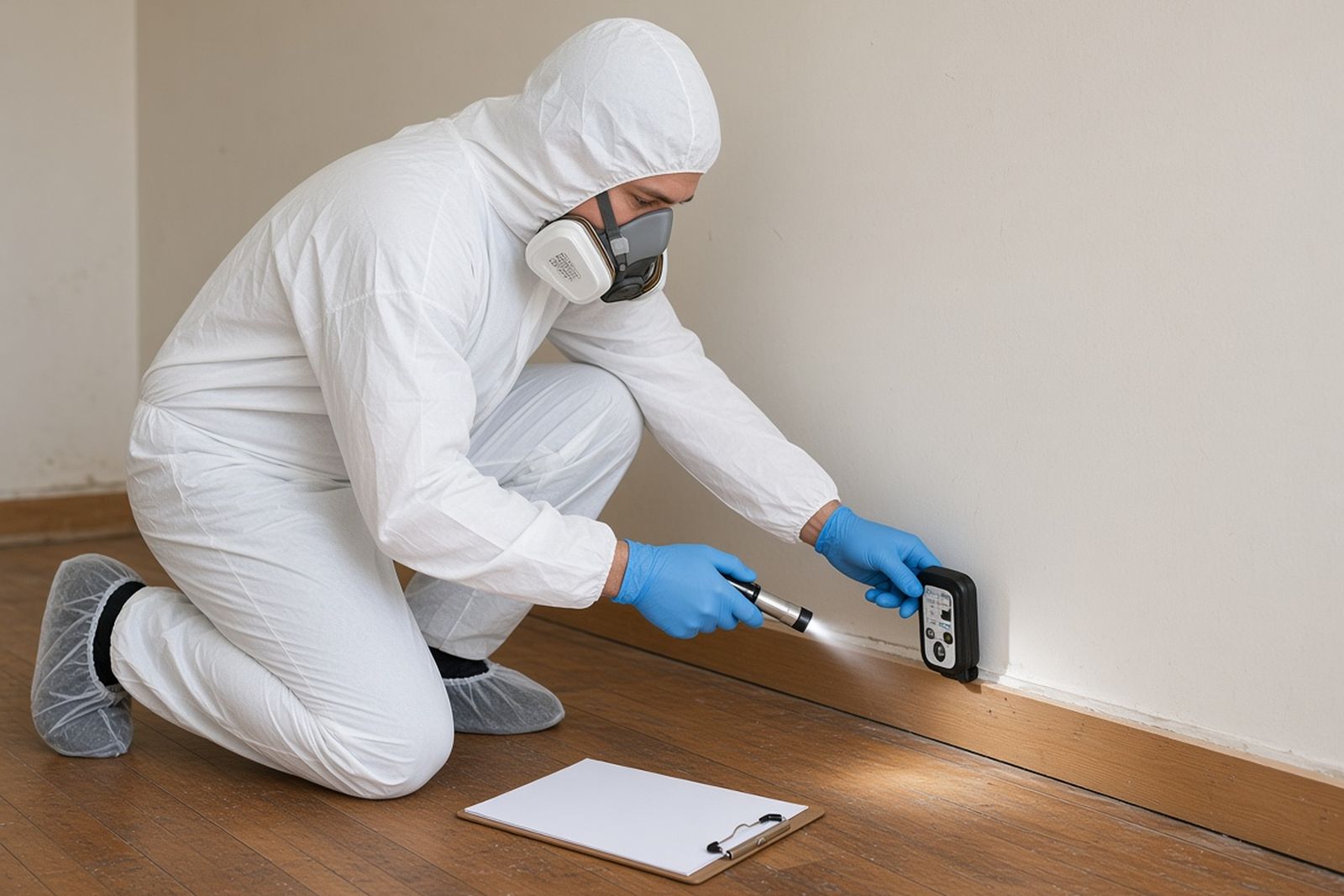
On a typical job, the crew lead begins with a walkthrough and a written review of the hazards. It notes broken glass and blood on shelving, merchandise or flooring. It notes any small room with poor airflow where a spray disinfectant would build up quickly.
That review decides the gear. Where glass is present, workers wear thin nitrile gloves under cut-resistant outer gloves, along with eye protection and fluid-resistant coveralls. Glass goes into hard containers that cannot be punctured. Anyone working in a space with poor airflow wears a fit-tested respirator.
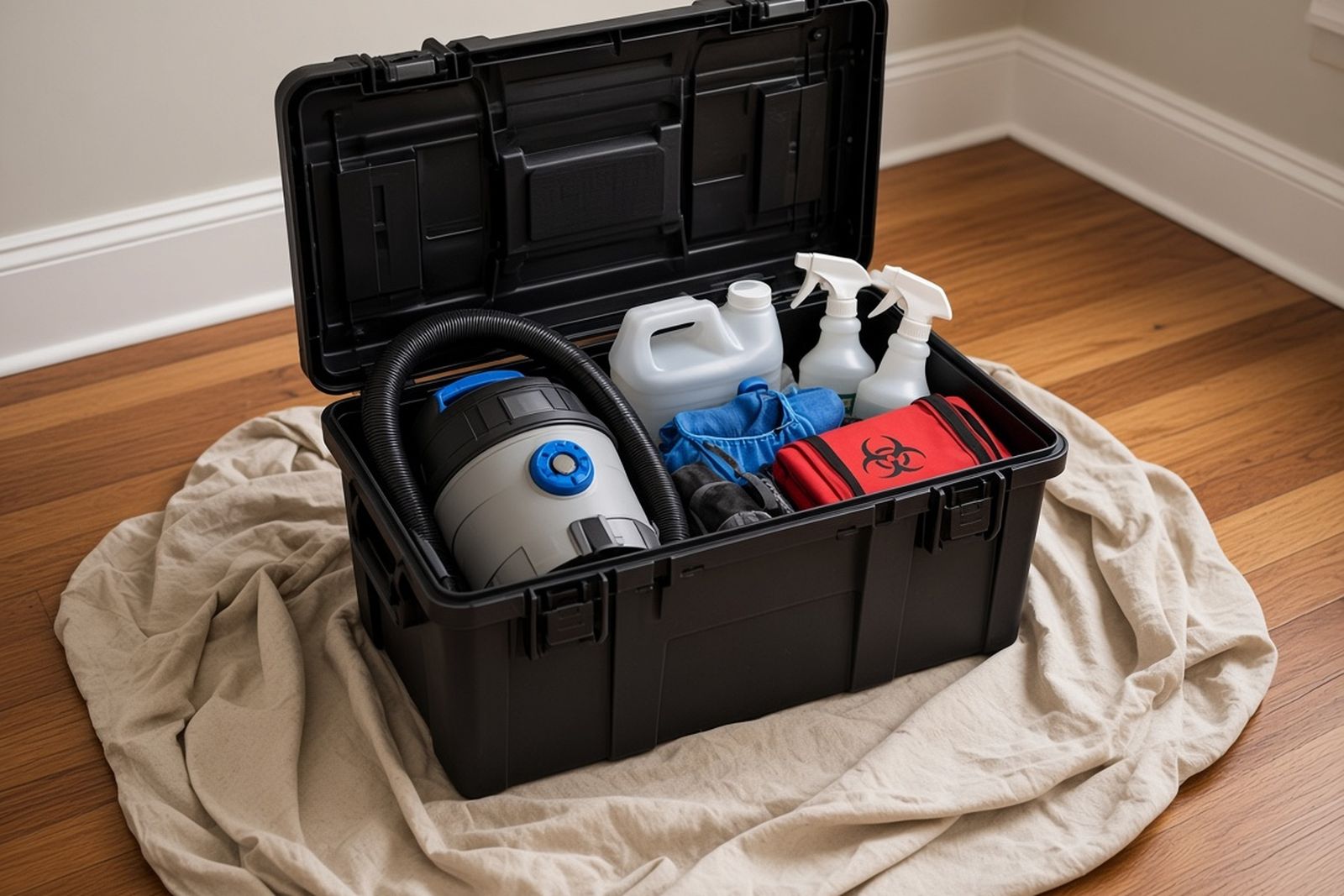
Safety data sheets for each product travel with the crew. Experienced workers go over them with newer ones before starting. Soiled items you agree to throw away are bagged and labeled as regulated waste. When the job ends, the lead records what was done, and the company logs the job in its exposure control records.
None of this will look like legal compliance to you. It simply looks like a careful, organized team. That is usually how good compliance appears from the outside.
When companies ignore the rules, and why the paperwork matters to you
For workers, the results can be serious. They include exposure through needle sticks or glass cuts, chemical burns, breathing irritation and infections that could have been prevented. For the company, OSHA can issue citations and penalties. Repeated or willful problems draw closer attention.
For you, the risk is indirect but real. A crew that skips barriers or makes do with household gloves may also skip steps in cleaning. It may spread the mess to clean rooms or leave material that should have been removed. Poor safety practice and poor cleanup quality tend to travel together.
Federal inspectors cannot visit every job. So the job of choosing a careful company falls largely on you, the customer. Asking a few pointed questions is one of the best protections you have.
It is easy to dismiss training logs and written plans as the company's private business. In practice, they leave a trail that can help you later. An insurer, landlord, victim compensation program or future buyer may ask how the property was restored. A company with disciplined records can usually describe the work in detail.
Records also reveal habits. Look for a company that updates its exposure control plan, tracks training dates and records each job. That company is more likely to record your cleanup with care too. Its records should show which materials were removed, how they were packed and where they went.
If you manage rental units or commercial space, keep a copy of whatever final report the company provides. It becomes part of the property's history. It can answer questions long after the crew has left.
What questions help you check a company's OSHA practices?
You do not need to become a safety expert. A handful of direct questions will show whether a company takes its duties seriously. Listen for specific, unhurried answers, not general comfort.
It is fair to ask for documents where they exist, such as a summary of the exposure control plan or training dates for the crew. A company may keep medical details private, as it should. It can still confirm that the vaccine was offered.
OSHA publishes the full text of the Bloodborne Pathogens Standard and its State Plans directory online. If your state runs its own plan, its job safety agency can explain what it adds. Both are useful if a company's answers leave you unsure.
Most of all, remember that these rules exist to protect the people who restore your property. Choosing a company that honors them helps make sure the work is done well. It also helps make sure no one else is harmed along the way.
- Can you describe your written exposure control plan and the date it was last reviewed?
- Has every worker on this job finished bloodborne pathogen training within the past year?
- Has each worker been offered the hepatitis B vaccine?
- Will anyone wear a respirator, and have those workers had a medical check and a fit test?
- How do you handle broken glass and other sharp objects?
- What happens if a worker is exposed on my property?
- Which state plan, if any, applies at my address?