Short answer
This quick swab test checks hard, sealed surfaces for leftover organic residue after blood has been removed. It does not detect germs carried in blood or prove that disinfection worked. It does not check for fingerprint powder or police test chemicals. It cannot see inside carpet, drywall or subfloor. Treat the readings as one piece of evidence inside a written plan for checking the work, not as a certificate of safety.
What is an ATP test actually measuring?
The letters stand for adenosine triphosphate. It is a molecule that living cells use to store and move energy. Blood, tissue and many other biological materials contain it. So do food residue, skin cells and bacteria. The swab test looks for that molecule on a surface as a stand-in for organic residue in general.
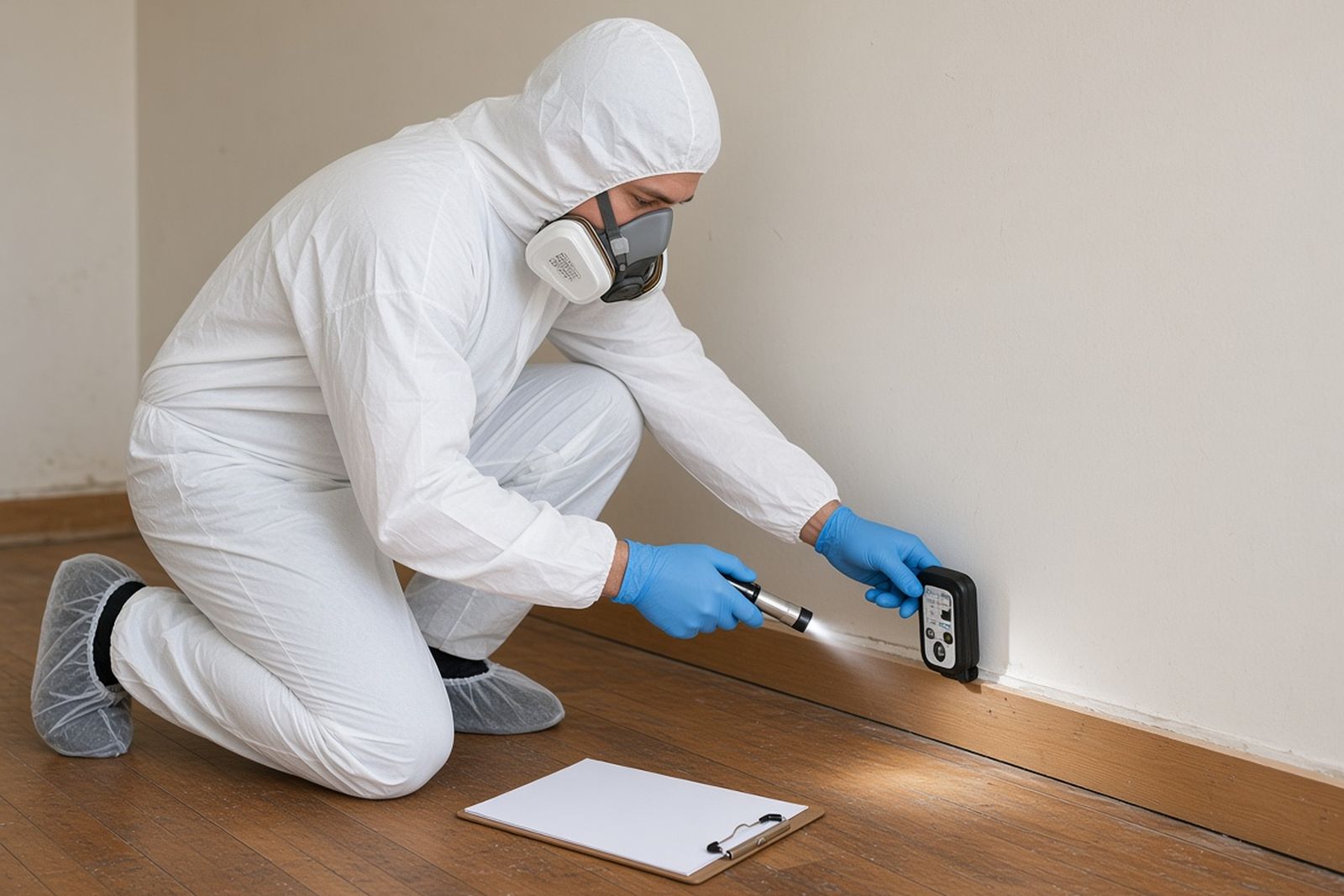
The swab holds a chemical with luciferase, the enzyme that makes fireflies glow. When the chemical meets the molecule, it gives off a small flash of light. A handheld meter, called a luminometer, reads that light and reports a number. The number is given in relative light units, usually shortened to RLU. More light generally means more organic residue on the spot that was swabbed.
That is the whole story of what the device knows. It cannot tell you whether the residue came from blood, a sandwich or a houseplant. It cannot say whether anything living in that residue could make you sick.
Where ATP testing fits in a cleanup
At a crime scene, the most useful moment for this swab test comes at a specific point. The crew has removed the blood you can see and cleaned a hard surface, but has not yet signed off on that area. A low, steady reading on a countertop, tile floor, stainless appliance or sealed door frame is a good sign. It supports the view that the organic soil was physically removed.
That matters because cleaning comes before disinfection. Disinfectants work poorly when blood or other organic matter shields the germs. The CDC states that cleaning alone removes most types of harmful germs from surfaces, while disinfecting kills germs that remain after cleaning. A swab reading gives the crew an objective hint about whether the cleaning half of that order was thorough.
Some companies also swab before cleaning, and again after, to show the contrast. Your report then includes a simple before-and-after comparison for a handful of sample spots.
The swab is also handy in the middle of a job. A worker may be unsure whether a rough surface, such as a stone threshold or a door handle, is truly clean. The worker can swab it on the spot and decide whether it needs another round of cleaning. That beats relying on how it looks under indoor lighting.
What can a swab reading never tell me?
It helps to be clear about the limits, because a number printed on a report can look more official than it is. A low reading is useful. But it is not a certificate that your home is cleared.
If a company presents swab results as proof that your home is free of disease, ask it to explain exactly what the test measured and what it did not. A careful company will describe it as one data point. It sits alongside visual inspection, photographs and records of each cleaning and disinfection step.
- It does not identify hepatitis B, hepatitis C, HIV or any specific germ
- It does not prove a disinfectant stayed wet for the time its label requires
- It does not detect fingerprint powder, police test chemicals or pepper spray residue
- It cannot see inside carpet pad, drywall, subfloor or the inside of walls
- It does not set one pass or fail line that applies to every home
- It only describes the exact spot that was swabbed, not the room around it
Why porous materials make results misleading
Porous materials are soft or absorbent ones. Blood behaves very differently on sealed tile than it does on carpet, couch fabric or unsealed wood. On a hard surface it sits on top, where it can be wiped away and sampled. On an absorbent surface it soaks down and sideways, often far beyond what you can see.
A swab only touches the top layer. Your carpet could give a modest reading on its surface fibers while the pad and subfloor beneath stay soaked. For that reason, decisions about absorbent materials are usually based on other things. These are how soaked the material is, visible stains, odor and the kind of material. They are not based on a swab number.
In most crime scene jobs, heavily affected soft items are removed, not tested and cleaned in place. These include carpet and pad, mattresses and padded cushions. An honest report will tell you that swab testing was limited to hard surfaces that can be cleaned.
Taking, recording and judging readings
Doing it the same way each time matters more than any single number. A reliable process follows the meter maker's instructions. Those cover how to handle the swab, how large an area to sample and how much time may pass between swabbing and reading. Changing any of those makes results hard to compare.
Leftover chemicals can also affect the reaction. Some disinfectants and cleaning products may weaken or change the light signal. So crews often test after the product has done its job and the surface has been rinsed or allowed to dry as the label directs. Ask your cleanup company how it accounts for this.
Each reading should be tied to a specific spot on a sketch or photograph, with the date, time, product used and result. If a reading is high, your report should show that the area was cleaned again and tested again. It should not simply note the failure.
Different test systems use different chemicals and scales. So RLU values from one brand cannot be compared directly with another. There is no single federal number that defines a clean crime scene. Any target number comes from one of three places: the company's own written program, the maker's guidance or a standard you agreed to ahead of time.
That is why the finish line should be written into your work plan before work begins. A good plan might say that hard surfaces in the affected rooms will be cleaned until no residue can be seen. It might add that they will be disinfected with an EPA-registered product as its label directs. Then they will be spot-checked with swab tests against the company's written target. Anyone who reviews the file later can then see how the decision was made.
A few local governments, insurers or property owners may ask for particular checks. Confirm with them if you are unsure what records they will want.
Does swab testing help me decide when my family can go back in?
It can add to that decision, but it should not be the only thing you rely on. Going home after violence is partly a technical question and partly an emotional one. A light meter speaks to only a small piece of the technical side.
On the technical side, you want to know several things. Was every soiled soft item removed? Was hidden spread under baseboards and flooring checked? Were hard surfaces cleaned and then disinfected as the product label directs? Was police residue dealt with? Swab readings support one of those items. Photographs, the waste shipping record and the crew's notes support the rest.
On the emotional side, many people find it helpful to walk through the space with the supervisor before moving back. You can hear what was done in each room and ask questions without feeling rushed. You may want to rearrange furniture, repaint or replace items that carry painful memories, even if they are clean. Those choices are yours. A thoughtful company will respect them. It will not point to a low number and declare the job finished.
Someone in your household may have a weak immune system, be pregnant or have other health concerns. If so, talk with their doctor about timing as well. The cleanup company can share its records so the doctor understands what was done.
Questions to ask about swab testing before you hire
You do not need to become an expert in light meters. A few questions will tell you whether a company understands the tool or is using it as a sales prop.
Listen for answers that admit the limits without being asked. A good company will say the swab is a helpful second check on hard surfaces but not a test for germs. That is the kind of honesty you want through the whole job.
- Which surfaces will you test, and why those spots?
- Which swab test system do you use, and what target do you compare readings to?
- Will you share every reading, including any that were high the first time?
- How do you check soft materials and police residue, if not with swabs?
- What else goes into your final report besides the numbers?