Short answer
Crime scene cleanup rests on a few simple facts. Blood can carry disease. Liquids soak into soft materials faster than they dry. Leftover blood and soil block disinfectants, and every product must stay wet for the time on its label. So a good crew closes off the area and removes what cannot be made clean. It cleans before it disinfects. Then it checks the results so your room is safe to use again.
Why is blood treated as a hazard even when it looks dry?
Blood is not just a stain. It can carry bloodborne pathogens, the germs carried in blood, such as hepatitis B, hepatitis C and HIV. You usually have no way to know whether the injured person carried any of them. That is why professionals apply what OSHA calls universal precautions. Every trace of blood and other body fluids is handled as though it could spread disease.
Drying does not make blood harmless. A dried film can still hold live virus. It can flake, crack or turn to dust when someone scrubs it, vacuums it or pulls up carpet. Those flakes can then reach a cut on your hand, your eyes or your mouth.
So the goal of cleanup is not to make a room look normal. It is to remove the blood and body fluids and bring any remaining germs down to a safe level. Both must be done without spreading the mess to rooms that were never affected.
Gravity and capillary action
Liquids follow two forces at a crime scene: gravity and capillary action, also called wicking. Gravity pulls fluid down through carpet into the pad and onto the subfloor. Wicking draws it sideways through fibers, wood grain, grout and the paper face of drywall. It often goes well beyond the edge of what you can see.
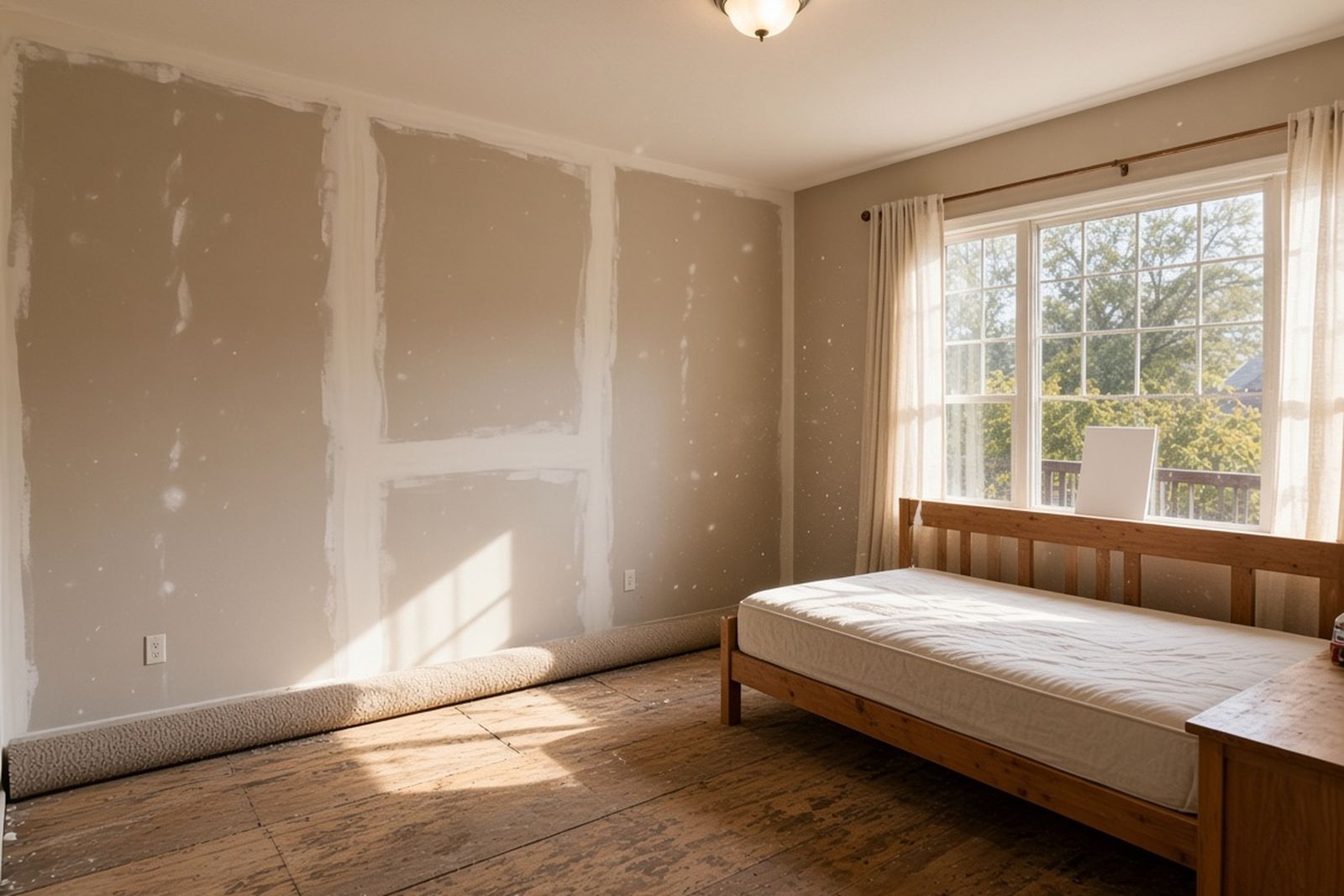
The type of material decides how deep the problem goes. Sealed tile, glass, stainless steel and finished stone resist soaking. Blood tends to stay on the surface, where it can be cleaned. Carpet, couch fabric, mattresses, unsealed wood, ceiling tiles and drywall soak up fluid. Once it is inside the pores, no surface wipe can reach it.
- Usually cleaned in place: sealed tile, glass, metal, many hard plastics, finished countertops
- Often removed: carpet and pad, mattresses, padded cushions, ceiling tile
- Case by case: hardwood, laminate seams, grout, baseboards, lower drywall
Time and temperature
Time and temperature matter too. As blood dries, its proteins bind to surfaces and become harder to lift. A warm room speeds drying and odor. A cool, humid room slows drying and can let fluid travel farther. That is one reason the crew will ask you when the incident happened and what the heating or cooling was doing afterward.
Why do technicians clean before they disinfect?
It sounds backward to scrub before applying the product that kills germs. But the order is on purpose. Disinfectants work by attacking germs chemically. When a surface is still coated with blood or tissue, that material soaks up much of the chemical and uses it up. Less is left for the germs the product is meant to kill. The coating can also shield the germs underneath.
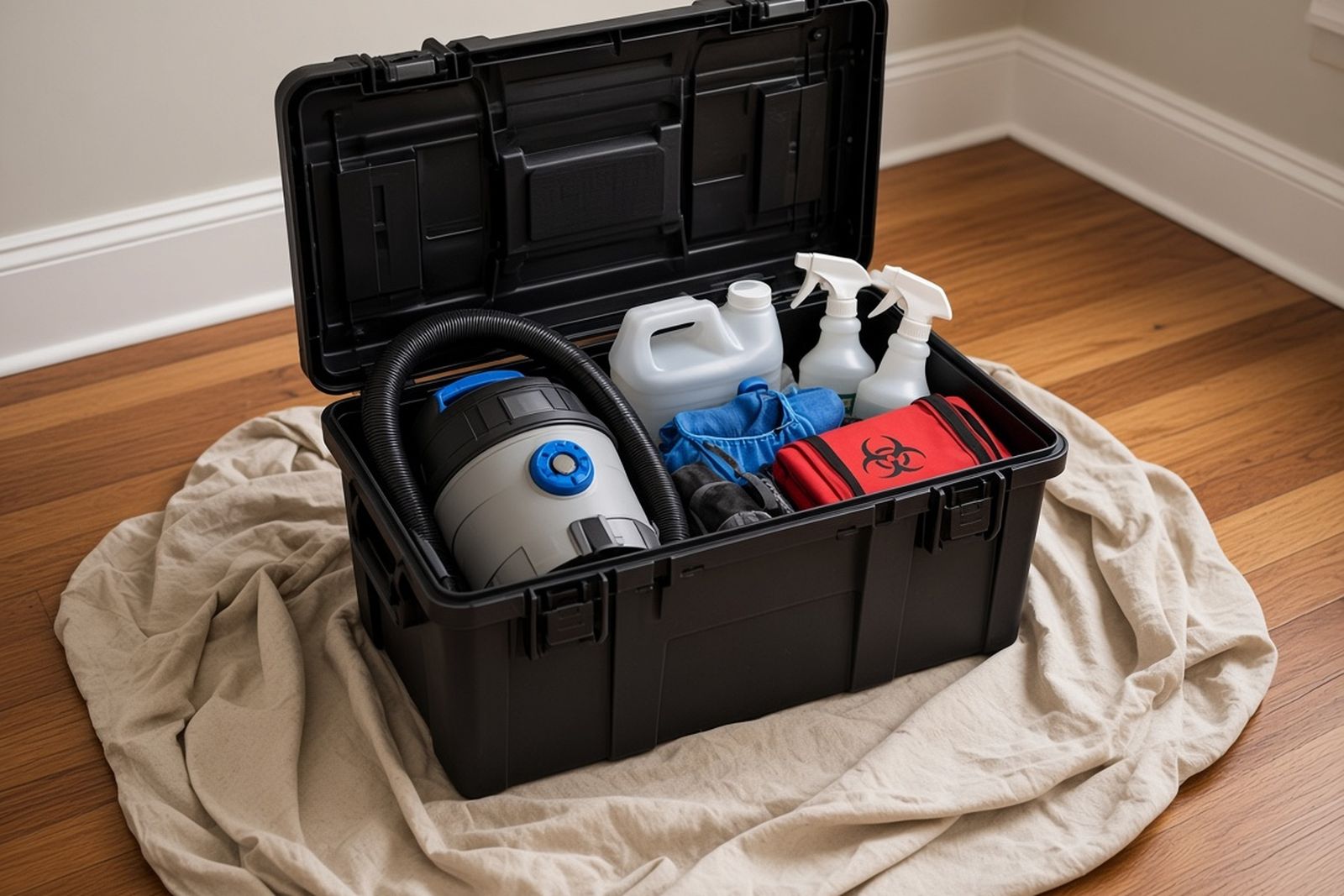
So the order is remove, clean, then disinfect. The bulk of the material is lifted and bagged. The surface is washed with a detergent or an enzyme-based cleaner that breaks down proteins and fats. Only then does the disinfectant go on, applied to a surface it can truly reach.
Skipping the cleaning step is one of the most common reasons a do-it-yourself effort fails. If you spray household disinfectant over a stain, it may freshen the area for a short time. But the product is used up on the soil, and the blood is still there.
Contact time, explained
Every EPA-registered disinfectant has a label. The label lists the germs the product is proven to kill and the contact time it needs. Contact time is how long the surface must stay visibly wet with the product for the claim to hold. If the product dries early or is wiped off too soon, the label claim no longer applies.
Professionals choose products whose labels list the germs found in blood, such as hepatitis B and HIV. They follow the label for how much water to add, the surface type and the wet time. On walls and other upright surfaces, or in warm rooms, they may apply the product again to keep the surface wet for the full period.
When you review an offer, it is reasonable to ask which disinfectant will be used and whether the crew records the wet time. A company that can name the product and explain the label is showing you something. It treats this step as science, not habit.
Fingerprint powder and other investigation residue
After an investigation, you may find dark or metallic powder on door frames, light switches, counters and glass. Investigators may also leave marks, tape residue or chemical traces from their work. None of this is your family's fault. Removing it is often part of the written work plan.
This residue behaves differently from blood. Fine powders smear easily when wiped with a wet cloth and can settle into textured paint and grout. Crews usually lift loose powder first. Then they clean with products suited to the surface, so they do not grind particles deeper or damage finishes.
Ask whether police residue is included in your estimate, and in which rooms. Powder is sometimes found far from where the incident happened, such as on entry doors, windows and vehicles.
How do crews keep contamination from spreading?
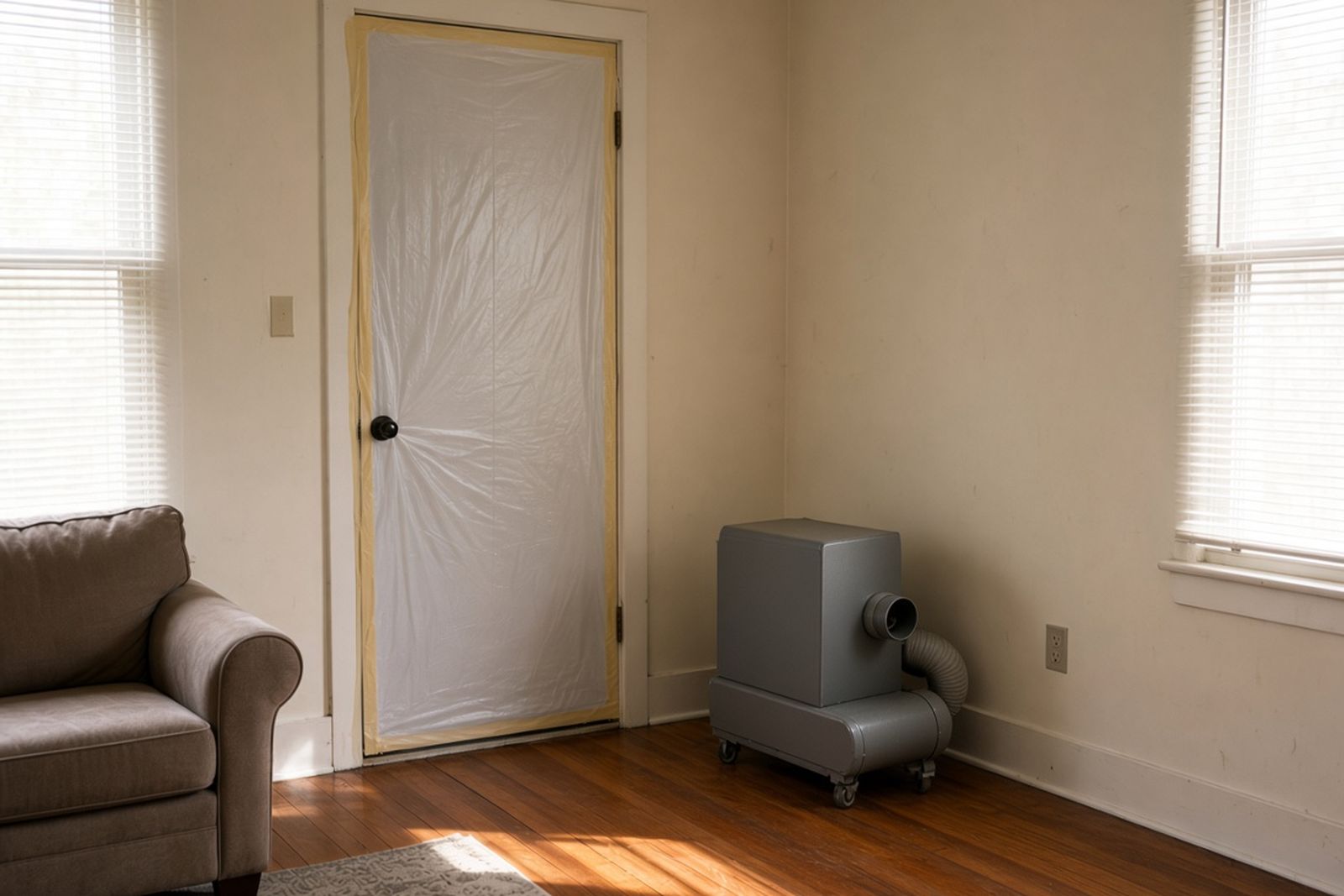
Closing off the work is applied science. Crews think of your property in zones. There is the dirty work area, a changing area where protective gear is put on and taken off, and the clean rest of the building. Plastic sheeting, floor protection and closed doors help keep those zones apart.
Air movement is part of the plan. Crews may shut off or seal nearby air return vents so particles and odor do not travel through your ductwork. When dust is expected, such as during flooring removal, they may run air machines with HEPA filters, which trap very fine particles. Some of these machines also pull air out of the work area so dust stays inside it.
Protective gear protects the worker, but it also protects your home. Throwaway suits, gloves and shoe covers are taken off inside the changing area and bagged. The mess then leaves the site sealed, not riding out on clothing and boots.
The science in one kitchen
A worked example makes the principles easier to see. After a burglary turns violent, a man is hurt in his kitchen and later treated at a hospital. Police finish their work the same evening and release the house. The next day, his sister calls a cleanup company for him.
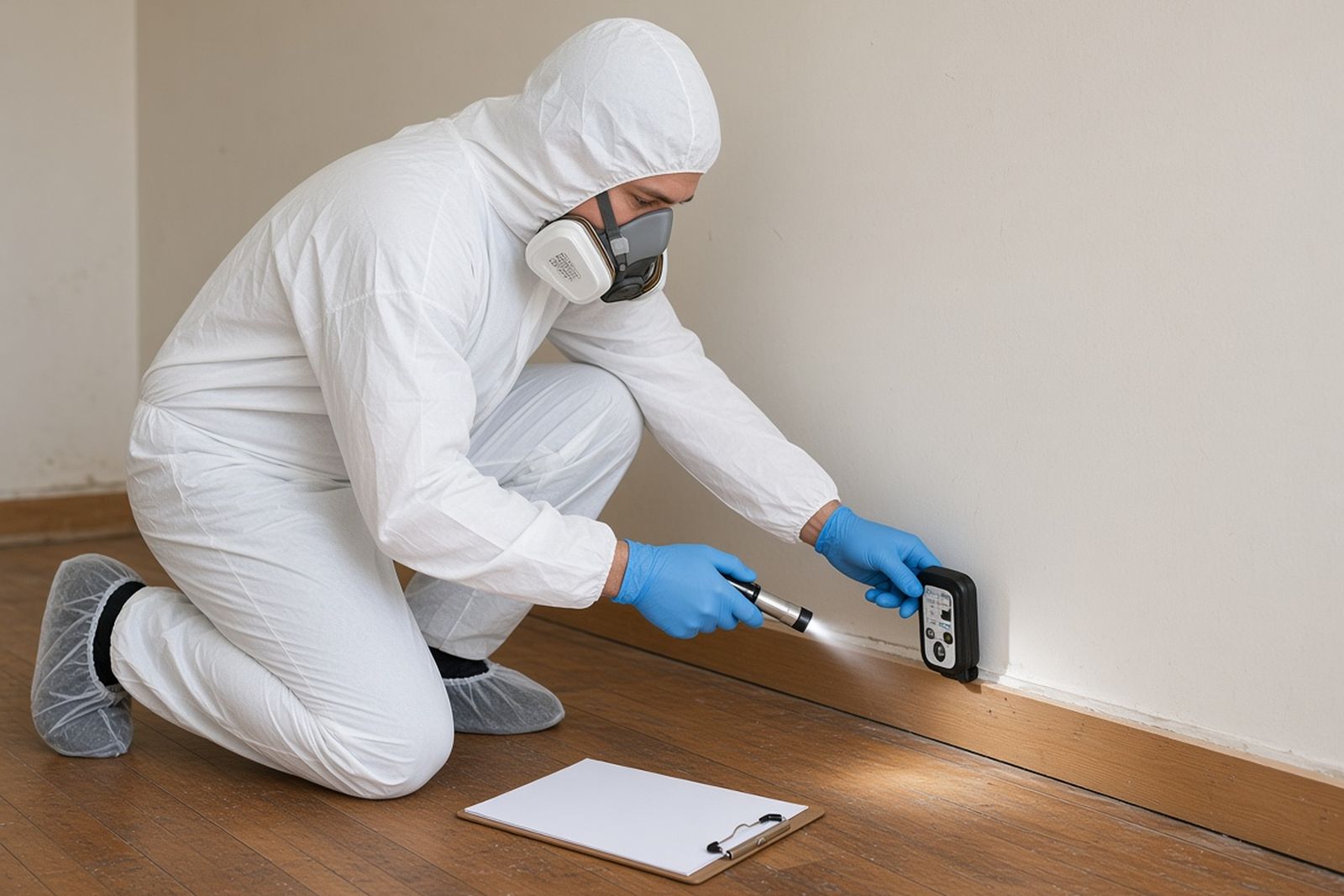
The worker who visits finds blood on vinyl plank flooring, a painted cabinet, a fabric chair cushion and a doormat. She finds fingerprint powder on the back door and a nearby window. Holding a flashlight at a low angle, she spots droplets on the lower cabinet faces that no one had noticed.
She explains that the chair cushion and doormat are absorbent and will be removed with the family's permission. The cabinets and counters are sealed and can be cleaned and disinfected in place. The vinyl plank is the open question, because fluid may have seeped into the seams. The crew lifts two planks and finds stains on the layer beneath. They remove a small section before disinfecting the subfloor.
When they are done, the crew records the product used, the wet time observed and the materials removed, with photos. The case is fictional and simplified. But it shows you how the type of material, not how it looks, drives the decisions.
Verifying the result before you move back in
A clean look is a starting point, not proof. Good companies inspect with bright light held at an angle and check the seams and edges where fluid hides. They confirm that nothing was left behind where soft materials were removed.
Some companies use a quick swab test that measures leftover organic residue. It does not identify specific germs. But a low reading suggests the surface was cleaned well, and it gives you an objective record, not just someone's word. Odor checks and a final walkthrough complete the picture.
You should receive a written closing summary. It should say what was removed, what was cleaned in place and which disinfectant was used. It should say how waste was packed and hauled away. It should list any repairs, such as new flooring, that fall outside the cleanup itself.
Why this matters for families after a violent crime
Violent crime affects a large number of households. The FBI estimated 1,221,345 violent crimes in the United States in 2024. The CDC National Center for Health Statistics recorded about 1.8 million emergency department visits for assault-related injuries in 2022. Behind each of those numbers is a place that someone has to return to.
Knowing the science helps you ask better questions and spot shortcuts. It also gives you permission to step back. You do not need to scrub a stain to prove you are taking care of your home. Let trained people handle the hazard. Then you can focus on your recovery, on the police process and on the people who need you.
Science-based questions for a company
If you talk with a cleanup company, a few science-based questions will tell you a lot. Ask how they decide whether a material is cleaned or removed. Ask which disinfectant they plan to use and what its label says about bloodborne pathogens. Ask how they keep surfaces wet for the full time on the label. Ask how they protect rooms that were not affected, and what proof of their final checks you will receive at the end.
Clear, unhurried answers are a good sign. Vague promises that everything will be sanitized, with no explanation of how, are a reason to keep looking.